

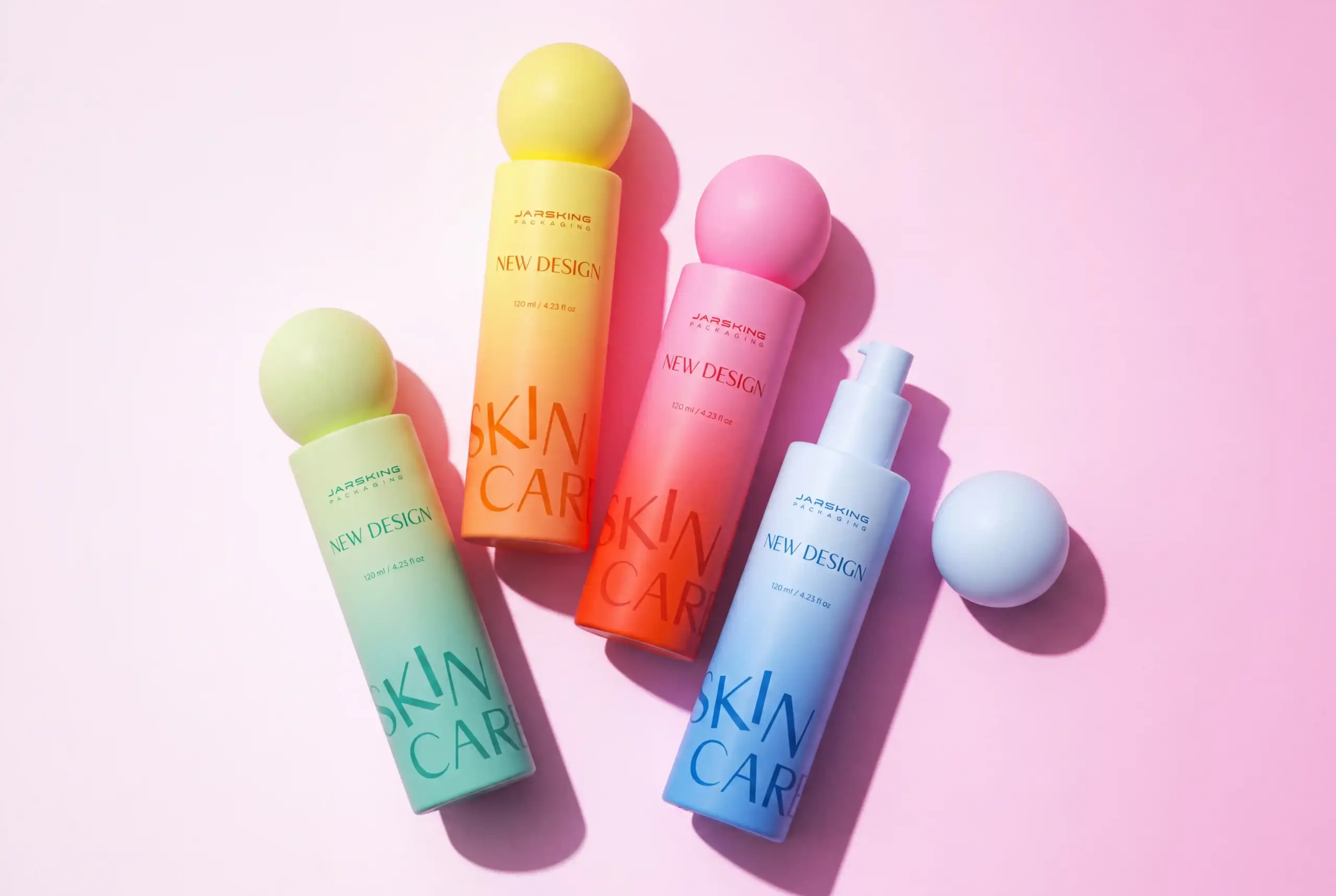

Every private label body care brand eventually runs into the same tension. The packaging needs to look distinctive enough to compete on a crowded shelf, but it also needs to fit a tight cost target, work reliably on the filling line, and stay easy to reorder as the range grows. Those three goals do not always pull in the same direction, and figuring out how to satisfy all of them at once is one of the quieter, less glamorous parts of building a beauty brand.
It is tempting to solve the shelf-appeal problem by giving every fragrance or variant its own bottle color, its own cap style, its own decoration treatment. It feels like the safest way to make each product feel special and worth its price. In practice, it is usually the fastest way to make a packaging program expensive, slow, and difficult to manage. The complexity does not show up in the first sample review. It shows up three months later, when the brand is trying to reorder one fast-selling scent and discovers that the minimum order quantity for its custom bottle color is twice what the SKU actually needs.
This blog walks through a common private label scenario: a body care brand developing a multi-scent collection across body wash, body lotion, and hand cream, working to protect margin without making the range look plain. The scenario reflects patterns we see often in cosmetic packaging development, though every brand’s specific costs, timelines, and outcomes will differ based on formula, order volume, target retailer, and market. The point is not the exact numbers. The point is the decision-making pattern, because that pattern repeats across almost every private label range we have seen struggle with the same issue.
1. The Problem With Treating Every SKU as Its Own Project
The brand’s original concept was ambitious in a good way. Four fragrances, each with its own color story, its own cap finish, its own decorative detail. On a moodboard, it looked cohesive and premium. The vanilla-coconut lotion had a warm amber bottle with a matte gold cap. The citrus body wash used a bright, almost neon yellow resin with a chrome-accented pump. The lavender cream leaned into a soft lilac bottle with a debossed floral pattern on the cap. The eucalyptus wash used a cool, translucent green with a rubberized soft-touch finish.
Every individual choice made sense on its own. Together, they turned a single four-SKU launch into what was functionally four separate packaging development projects, each with its own mold color, its own component sourcing, and its own approval cycle.
Once the team priced it out, the complexity showed up everywhere, and not in ways that were obvious from the initial creative brief.
Four separate bottle colors meant four separate resin batches, each with its own minimum order quantity. A supplier willing to run a custom amber PET bottle at a reasonable price per unit still needs a minimum batch size to justify the color-matching and machine setup. When a brand splits its total volume across four colors instead of concentrating it in one, none of the four batches reaches the volume where unit price starts to drop meaningfully. The brand was, in effect, paying a small-batch premium four times over instead of a bulk-order discount once.
Different cap and pump styles across the range meant four separate component specifications to source, inspect, and track. A chrome-accented pump is not simply a colored version of a standard pump. It often involves a different plating process, a different supplier, and its own quality-control checkpoints. Multiply that by four distinct closures, and the sourcing team is now managing sixteen individual specifications across bottles and closures combined, rather than four or five shared ones.
Multiple decoration methods meant more setup costs, more scrap risk, and more time spent on approvals. Debossing, soft-touch coating, chrome plating, and standard printing are four different production processes, each requiring its own tooling, its own trial run, and its own color or texture approval round. Every additional process is also another point where a batch can go wrong, whether that is an inconsistent deboss depth, a soft-touch coating that scuffs during transit, or a chrome finish that shows fingerprints under retail lighting.
Because volume was split four ways, none of the SKUs reached the order quantity needed for better pricing. This is the compounding effect of everything above. Small orders do not just cost more per unit. They also tend to get lower priority in a supplier’s production schedule, which can quietly extend lead times right when a brand most needs fast turnaround to catch a seasonal window or a retailer’s replenishment deadline.
None of these problems came from bad taste or poor design instincts. They came from designing each SKU as if it were an unrelated product launched in isolation, rather than as part of one connected system that needed to share resources, timelines, and production capacity.
2. Why This Pattern Is So Common in Private Label Development
It is worth pausing on why this happens so often, because it is rarely a mistake born of carelessness. Most founders and brand managers come to packaging development from a marketing or product mindset, where differentiation is the goal and uniqueness is treated as inherently valuable. That instinct is correct at the level of brand strategy. A body care line does need each fragrance to feel like its own experience.
The mistake is applying that differentiation at the structural level of the packaging instead of at the surface level. A founder reviewing four gorgeous, uniquely colored bottle renderings will naturally feel that each one represents the brand well. What is much harder to see in a rendering is the operational shadow each unique structural choice casts: the tooling cost, the minimum order quantity, the separate supplier relationship, the separate quality-control standard, and the separate reorder timeline.
This is also where many first-time private label brands underestimate how retail buyers and manufacturing partners actually evaluate a line. A buyer looking at four SKUs is looking for a coherent story and a dependable supply chain, not necessarily four structurally unique containers. A contract manufacturer filling those four SKUs cares far more about whether the bottles share a neck finish and fill height than whether the resin color is warm amber or cool green. The visual distinctiveness that feels essential from a branding seat is often less load-bearing than it appears, and the operational cost of achieving it structurally is almost always higher than expected.
3. The Fix: Separate What Needs to Stay the Same From What Can Change
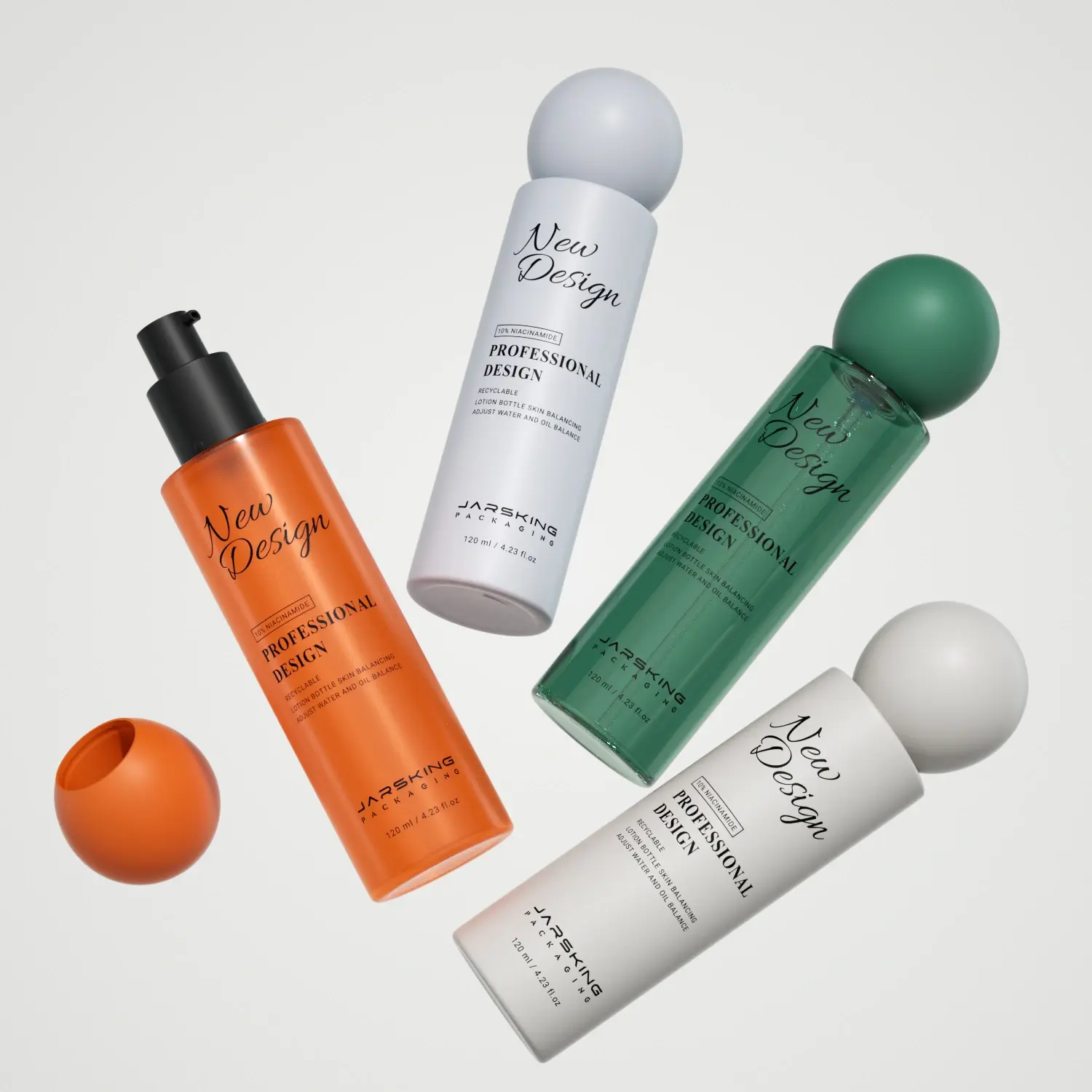
The adjustment the brand made was simple to describe, even though it took real discipline to execute across a creative team that had already fallen in love with four distinct bottle concepts: keep the bottle, the closure, and the pump identical across the whole collection, and let the label carry the differentiation.
This is not a compromise in the sense of settling for less. It is a reallocation of where the brand’s creative and financial investment goes. Instead of spending on four molds, four resin colors, and four decoration processes, the brand spent that same budget on one well-executed bottle platform and a much stronger, more considered label system across all four SKUs.
What stayed standardized:
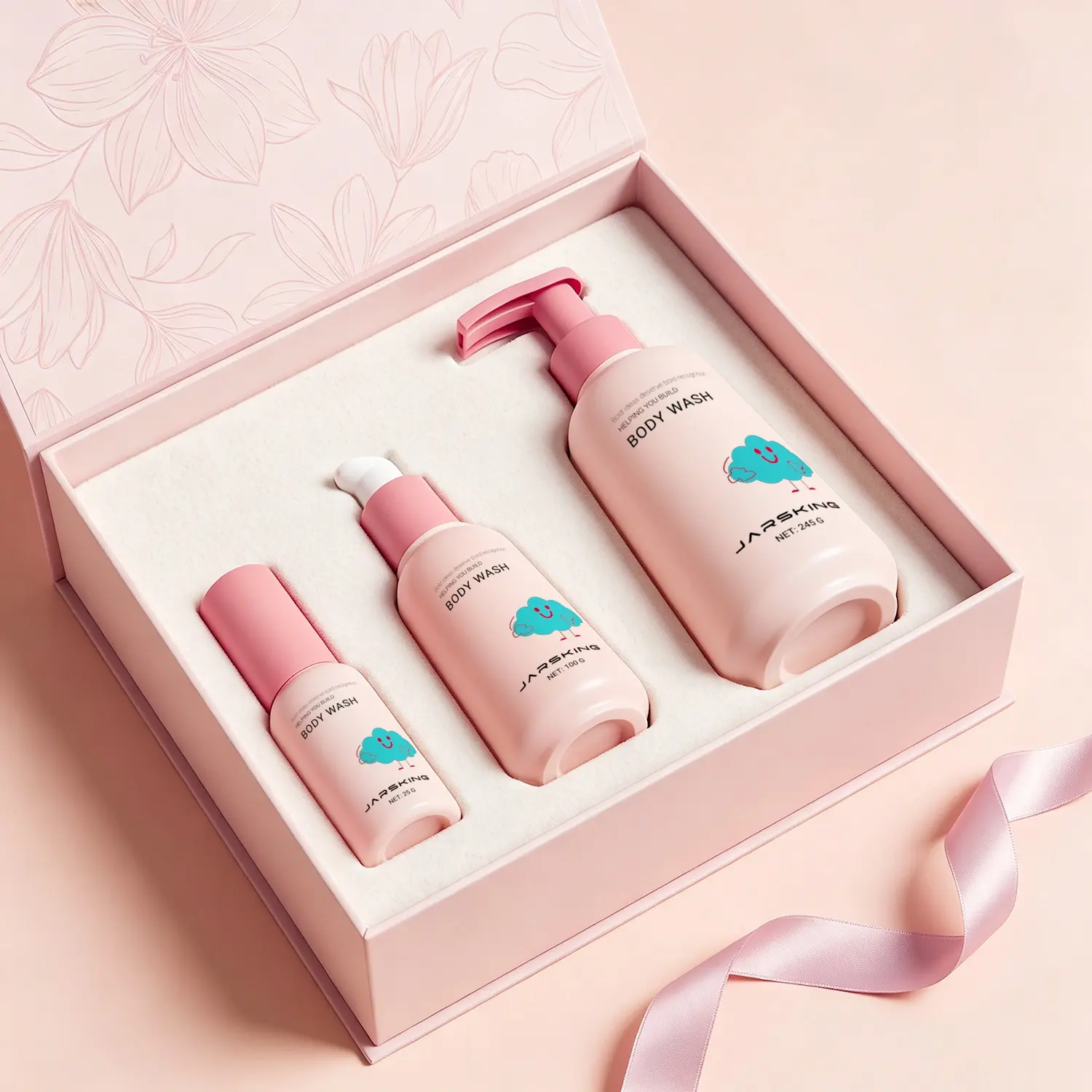
One bottle shape and size for body wash, one for body lotion, and one shared jar or tube format for hand cream
One neck finish across the entire range, so caps and pumps are fully interchangeable regardless of which fragrance is being filled that day
One flip-top cap platform for body wash, selected for a secure seal and an easy one-handed open in wet shower conditions
One lotion pump platform for body lotion and hand cream, chosen for consistent dose output and smooth actuation over repeated use
What stayed flexible:
Label color palette per fragrance, using a distinct but coordinated color story for each scent
Typography and graphic treatment, allowing each SKU to have its own visual personality within a shared brand grid
Scent-specific illustrations or icons, such as a citrus slice motif for the grapefruit variant or a botanical line drawing for the lavender variant
One selective premium touch, such as a soft-touch label laminate or a subtle spot-gloss accent, reserved for the hero SKU or a limited seasonal release rather than applied uniformly across every product
The coconut-vanilla lotion, the citrus body wash, the lavender cream, and the eucalyptus wash all now sit in the same bottle, sealed with the same cap or pump. What tells them apart on the shelf is color, type, and a clear fragrance name printed with enough contrast and hierarchy that a shopper can identify the right product in a few seconds, not four different pieces of hardware competing for attention.
4. Where the Savings Actually Came From
It is easy to say “standardize the packaging” as a general principle, but the actual savings showed up in several distinct places, each worth understanding on its own because they compound differently depending on order size and reorder frequency.
Consolidated bottle volume. Instead of four small orders split across four colors, the brand placed one larger order for a single neutral bottle, produced in either clear or a single frosted finish that worked across all four fragrances. That consolidation moved the order into a better pricing tier and reduced the risk of any single SKU falling short of a workable minimum order quantity. Just as importantly, it meant the brand could hold a single pool of unlabeled bottles as flexible inventory, allocating them to whichever fragrance was selling fastest that month rather than being locked into a fixed split decided months earlier during initial production planning.
Fewer components to manage. One cap platform and one pump platform, instead of four of each, meant fewer supplier relationships to maintain, fewer inspection standards to document and train staff on, and far less risk of the wrong component ending up on the wrong bottle during a busy filling run. When a filling line is switching between fragrances multiple times a day, every unique component is a potential point of confusion. A single, shared pump across all four lotion variants removes an entire category of possible line errors.
Simpler decoration. Pressure-sensitive labels replaced multi-pass screen printing, chrome plating, and debossing spread across four different colorways. Labels are faster to proof, meaningfully cheaper to adjust if a claim changes or a fragrance name needs updating, and much less prone to costly production errors than direct-on-bottle decoration run across four separate color and process combinations. If a regulatory requirement changes a claim on the label, that is a reprint. If the same change had been debossed or screen-printed directly onto four different bottle colors, it would have meant reworking tooling across the board.
Better freight and warehouse efficiency. A single bottle geometry meant cartons could be sized once and used across the entire range, rather than redesigned per SKU with different bottle heights, shoulder widths, or cap profiles. That is a small detail on paper, but it adds up across every shipment: fewer unique carton sizes to stock, more predictable pallet configurations, and less wasted space from mismatched bottle shapes sharing a case.
Faster, lower-risk line extensions. Perhaps the least visible but most valuable benefit showed up when the brand wanted to add a fifth fragrance for a seasonal holiday release. Because the bottle, cap, and pump were already standardized, launching the new scent required designing one new label, not developing an entirely new structural package. What might have taken ten to twelve weeks under the original four-SKU model took a fraction of that time, because the only new development was graphic, not structural.
5. What the Brand Refused to Cut
Simplifying structure is not the same as cutting corners, and it is worth being explicit about where this brand held the line, because the distinction between smart simplification and false economy matters enormously in body care and personal care packaging.
The formula was still tested against the actual bottle, pump, and liner before anything moved to mass production. Fragrance oils and active ingredients can behave very differently depending on the plastic resin, the liner material, and the pump’s internal components. A fragrance oil with a high citrus terpene content, for example, can be more aggressive toward certain plastics and gaskets than a milder floral blend. Skipping compatibility testing to save time or move faster to market is one of the more expensive mistakes a brand can make later, because a leaking pump or a degraded gasket discovered after a product has shipped to retail is vastly costlier than a few weeks of testing upfront.
The pump and cap still had to perform well in real, everyday conditions. A shower-safe cap needs to open one-handed with wet fingers and needs to seal securely enough that it does not leak in transit or while sitting on a shower shelf. A lotion pump needs to dispense a consistent amount every time, without sputtering, without requiring an unreasonable number of pumps to prime, and without leaking around the collar after repeated use. Standardizing to one pump platform across the range only works if that single platform is genuinely well-chosen, because now every SKU in the collection depends on it performing reliably.
The labels still had to carry clear, legible information, not just color and mood. A fragrance name in a beautiful script font is only useful if it remains readable at a normal shelf-browsing distance. Ingredient callouts, net weight, and any regulatory-required text still needed proper placement, appropriate contrast, and a print resolution that held up under standard retail lighting. Simplifying the packaging structure gave the brand more room in its budget to invest in higher-quality label stock and better print resolution, rather than less reason to care about label execution.
Quality consistency across fragrances also remained non-negotiable. With one shared bottle and closure system serving four SKUs, any defect in that shared component now affects the entire range rather than a single variant. This actually raised the bar for the quality-control process rather than lowering it, since a batch issue with the standardized cap could no longer be isolated to a single problematic SKU.
6. The Retail Perspective: Why Buyers Often Prefer This Approach
It is worth stepping back to the retail buyer’s point of view, because the standardization approach often reads as a stronger, more retail-ready proposition than the original four-unique-bottles concept, even though it might seem less impressive on a moodboard.
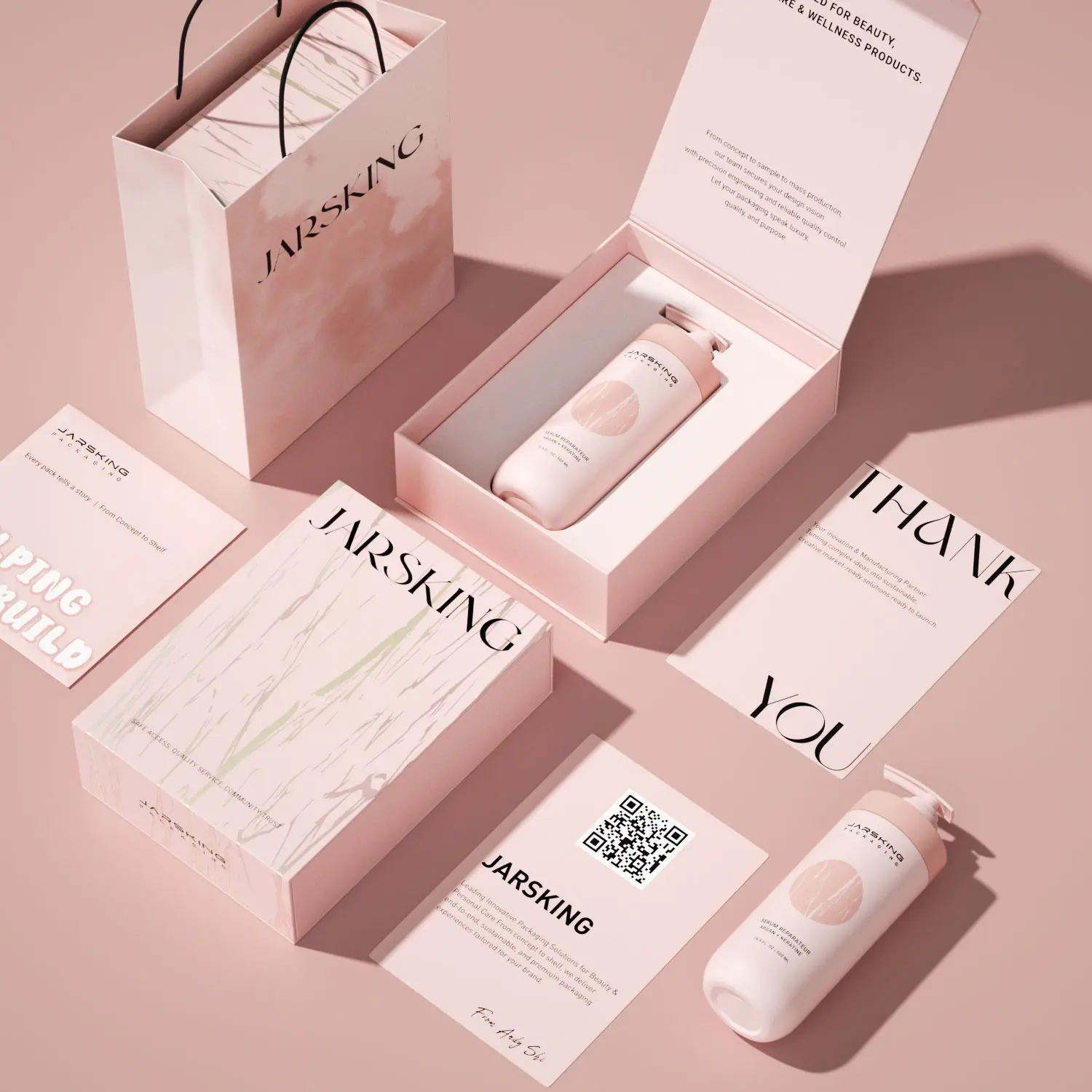
Retail buyers evaluating a private label range are thinking about shelf presentation, replenishment reliability, and supply-chain risk all at once. A collection built on a shared bottle platform with strong label differentiation photographs well as a cohesive family on shelf, communicates a clear brand system to shoppers browsing multiple scents side by side, and signals to the buyer that the brand has a manageable, scalable supply chain behind it.
By contrast, four structurally unique bottles can sometimes read as visually busier rather than more premium, and they raise a legitimate question in a buyer’s mind about how reliably the brand can replenish four separate custom components if one fragrance suddenly outsells the others. Retailers have seen brands struggle to keep pace with demand because a single component ran into an unexpected minimum-order delay. A standardized platform reduces that specific risk, and experienced buyers tend to notice.
7. A Broader Framework for Other Private Label Brands
If a body care or personal care collection is starting to feel expensive to produce, or if reordering has become slower and more complicated than it should be, the first place to look is usually not the label design or the formula itself. It is worth asking whether every SKU has quietly become its own separate packaging project, each with its own bottle, its own closure, and its own decoration process.
A useful exercise is to lay out every SKU in the range and list, column by column, which components are truly unique to that product for a functional or safety reason, and which are unique simply because no one asked whether they needed to be. In most ranges we have reviewed, the honest answer is that far fewer components need to be unique than the original creative brief assumed.
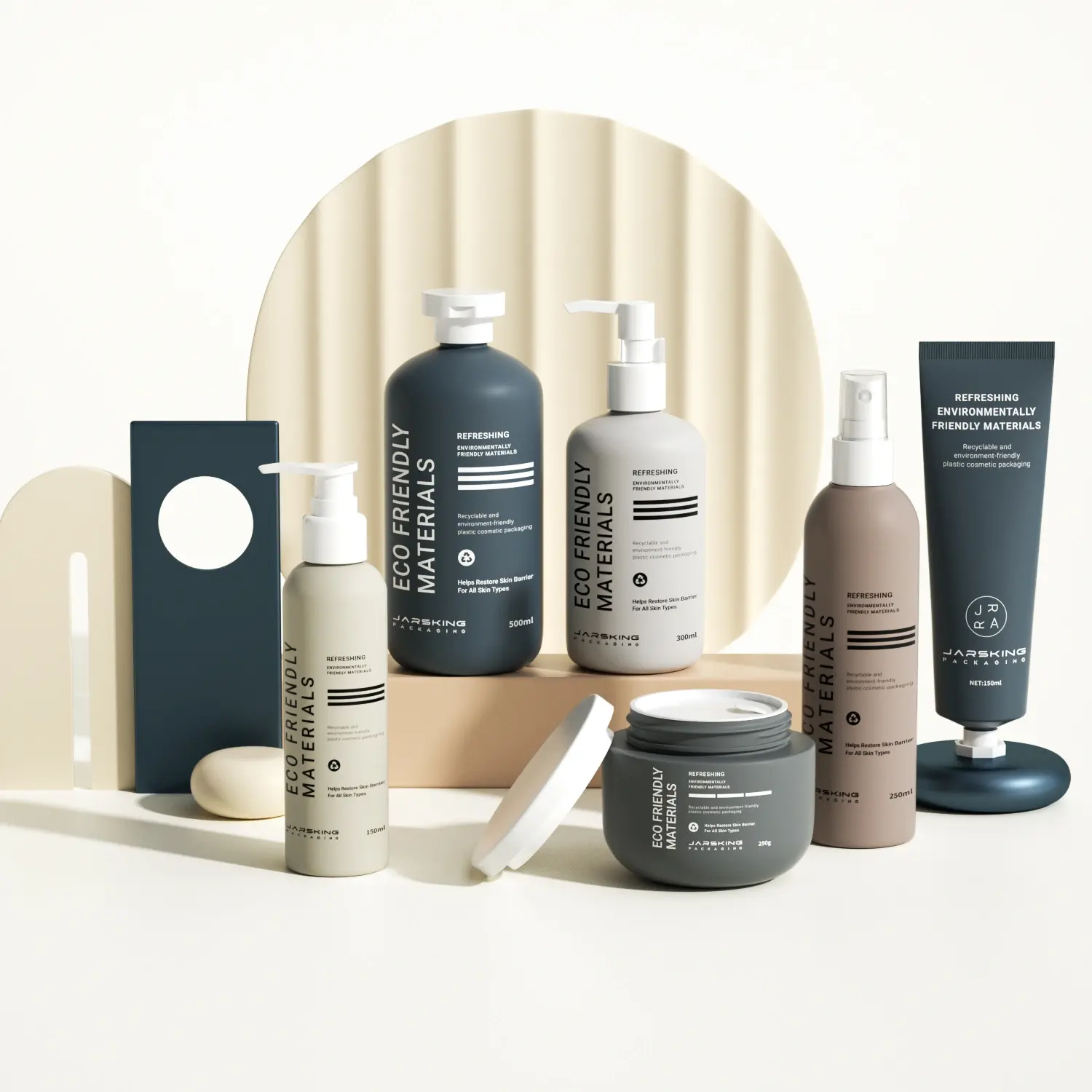
Standardizing the bottle, the neck finish, and the closure across a range, then using the label to do the work of differentiation, is one of the most reliable ways to protect both cost and shelf appeal at the same time. It also makes the range easier to extend later, since adding a new scent or a limited seasonal variant means designing a new label on an existing structural foundation, not developing a new bottle from scratch.
This principle scales beyond a four-SKU body care launch. It applies just as directly to a hand-care line with six scents, a men’s grooming range with three product types, or a skincare collection that wants a coordinated multi-step routine look without needing six different jar shapes to achieve it. The specific components will differ, but the underlying question is the same: which parts of this range genuinely need to be different, and which parts are different simply by default?
8. How to Apply This When You Are Just Starting Development
For a brand at the early stages of developing a multi-SKU personal care line, a few practical habits can help avoid the trap this case study describes.
Start the packaging conversation before the fragrance or color concepts are finalized, not after. It is much easier to design a flexible label system around a shared bottle from the beginning than to retrofit standardization onto a range where four unique bottle concepts have already been approved and presented internally as the creative direction.
Ask your packaging supplier directly what the minimum order quantity looks like for any custom color, custom cap, or custom decoration technique under consideration, and ask what that minimum looks like if the volume is split across multiple SKUs rather than concentrated in one. This single question, asked early, often reveals the cost gap between a differentiated-structure approach and a standardized-structure approach before any tooling commitments are made.
Treat the label as a primary design surface rather than an afterthought applied to a finished bottle concept. When the structural packaging is shared across a range, the label carries more of the brand’s storytelling weight, and it deserves a commensurate share of the design budget and development time.
Finally, build in room for a hero SKU or a seasonal release to carry one distinctive premium touch, whether that is a special label finish, a limited color variant, or a unique cap for a holiday edition. This preserves a outlet for genuine structural creativity without requiring every SKU in the core range to carry that same cost and complexity.
9. The Takeaway
Private label body care brands do not have to choose between a controlled packaging budget and a shelf presence that feels intentional and premium. The tension usually is not between cost and appeal at all. It is between treating each SKU as an isolated design project versus treating the whole range as one connected system with a shared structural foundation and a flexible graphic layer on top.
At Othilapak, this is the kind of packaging planning conversation we try to have with private label brands early, before tooling decisions get made and before order quantities get locked in across multiple unique components. If your body care or personal care line is growing past its first SKU and the packaging costs are growing faster than expected, it is worth having that conversation before the next production run, not after the invoices for four separate minimum orders have already arrived.
FAQs
What is packaging standardization in private label cosmetics?
Packaging standardization means using the same bottle, closure, and pump across multiple product variants or fragrances, while allowing labels, colors, and graphics to create differentiation. This reduces tooling, sourcing, and inventory complexity across a product range.
How does packaging standardization reduce private label costs?
Standardization consolidates order volume into fewer bottle and closure specifications, which improves pricing tiers, reduces minimum order quantity pressure per SKU, and simplifies sourcing, inspection, and reordering across the entire collection.
What packaging elements are safe to standardize across SKUs?
Bottles, neck finishes, caps, and pumps are commonly standardized across a product range. Labels, color palettes, graphics, and selective premium touches on hero SKUs typically remain flexible to preserve differentiation.
Can standardized packaging still support fragrance or product differentiation?
Yes. Labels can use different color stories, illustrations, and typography for each fragrance or variant, allowing a cohesive packaging system to still feel distinct and easy for shoppers to differentiate on shelf.
What should brands avoid cutting when standardizing packaging?
Brands should not compromise on formula-to-packaging compatibility testing, functional performance of caps and pumps, label legibility, or consistent quality control, even when structural components are standardized across the range.
How does packaging standardization affect future line extensions?
Standardized packaging allows brands to add new scents or seasonal variants by developing a new label design rather than creating an entirely new bottle or closure, significantly reducing development time and cost for future SKUs.