
Custom Cosmetic Jars
Foam Pump Bottle Manufacturer
for Personal Care
“Choose the pump with your formula before you finalize the bottle. A pump’s listed output can help you narrow down your options, but it won’t tell you how dense the foam will be, how many presses your customer will need, or how the product will dispense near the end of the bottle.
Othilapak supplies custom foam pump bottles for facial cleansers, foaming hand soaps, and body care. Start with a matched bottle-and-pump sample so you can test the dispensing experience before committing to a bulk order.”
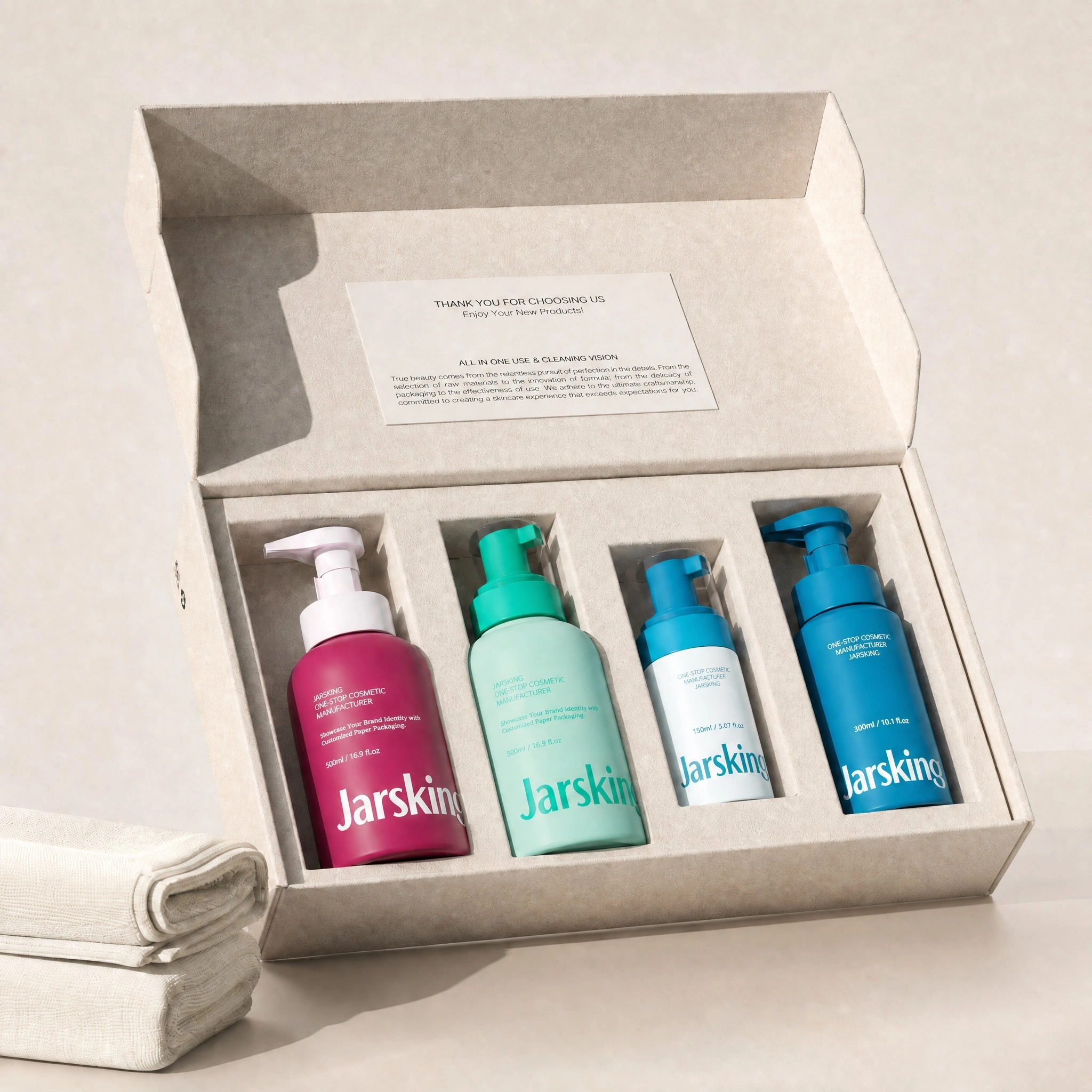
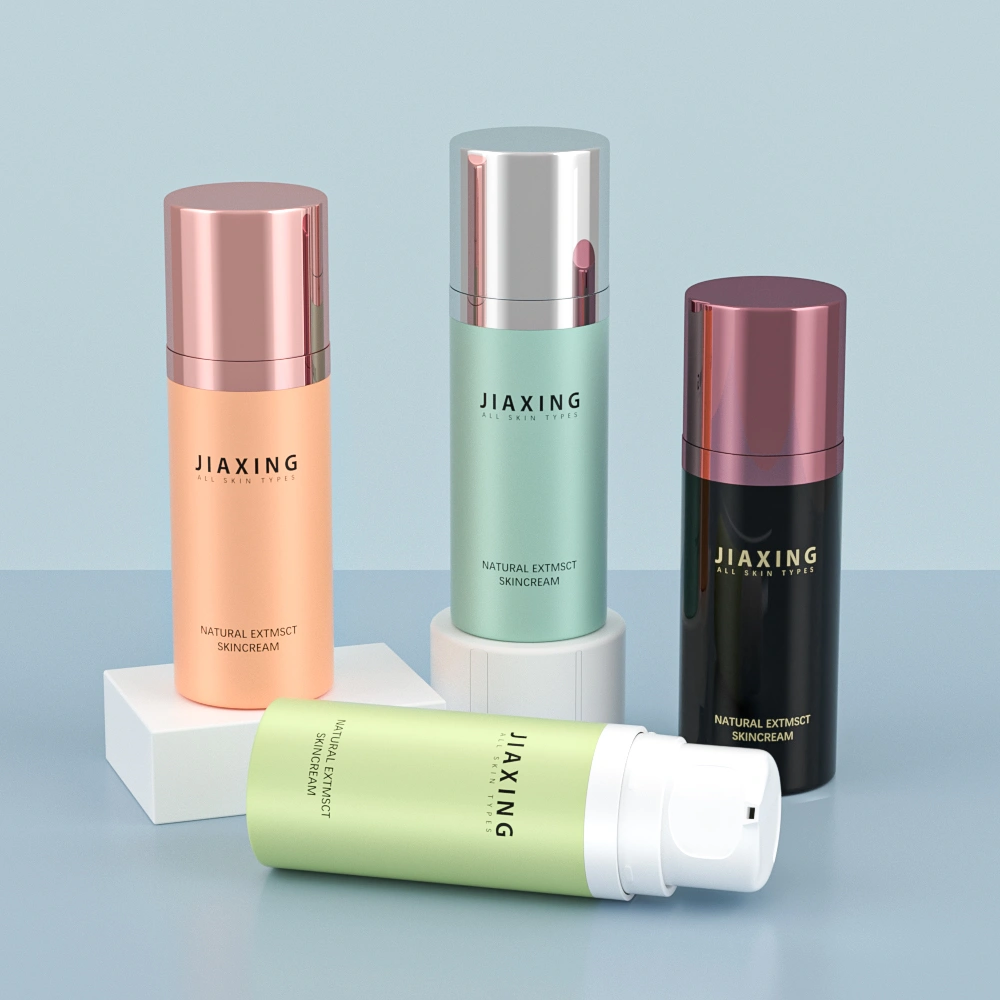
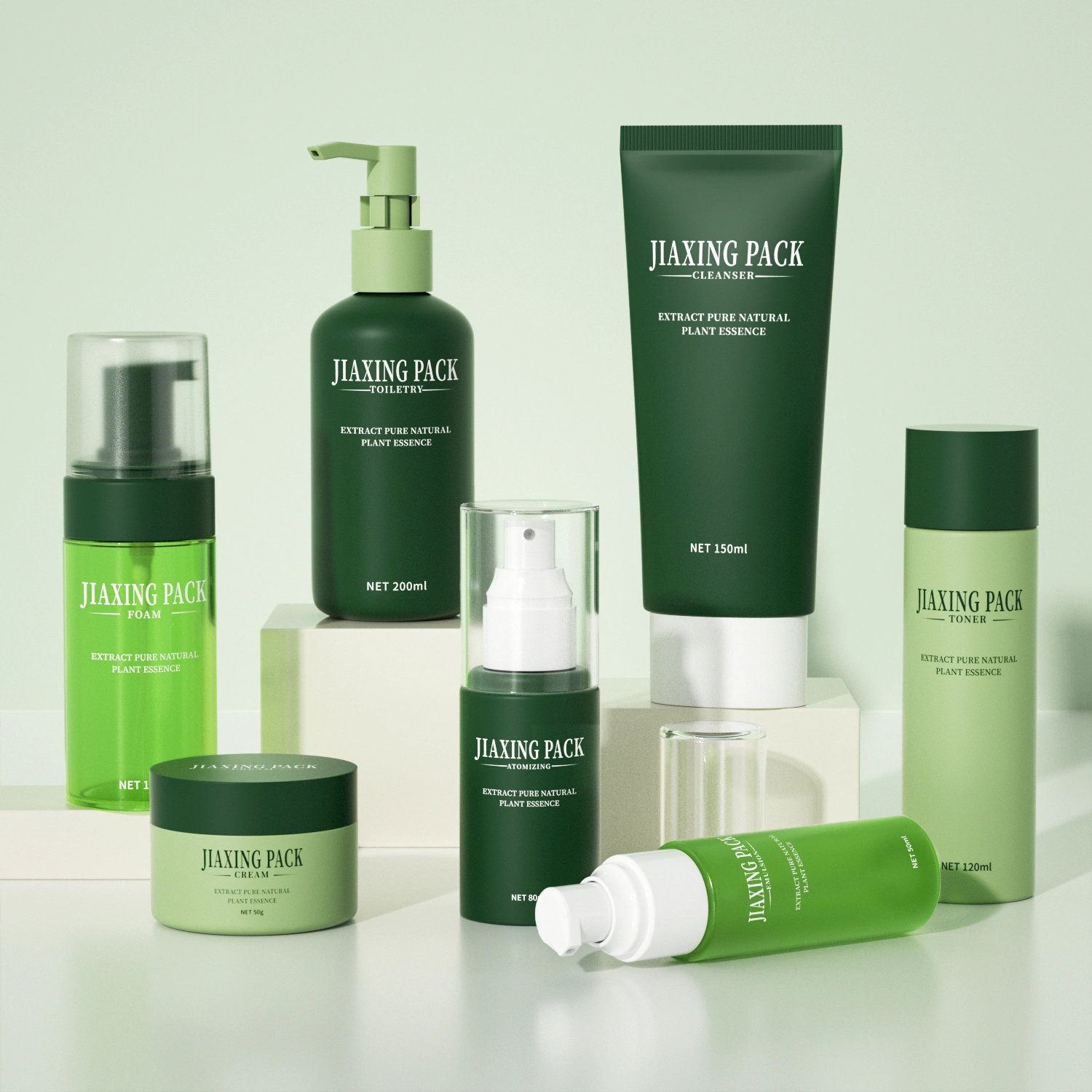

Foam Pump Bottle Materials: PET vs. HDPE vs. AS
“Choose PET when you want shoppers to see the formula, HDPE for everyday hand and body care, or AS when the bottle and cap are part of the skincare design. Each material offers a different benefit; foam quality still depends on how the pump works with your formula.”
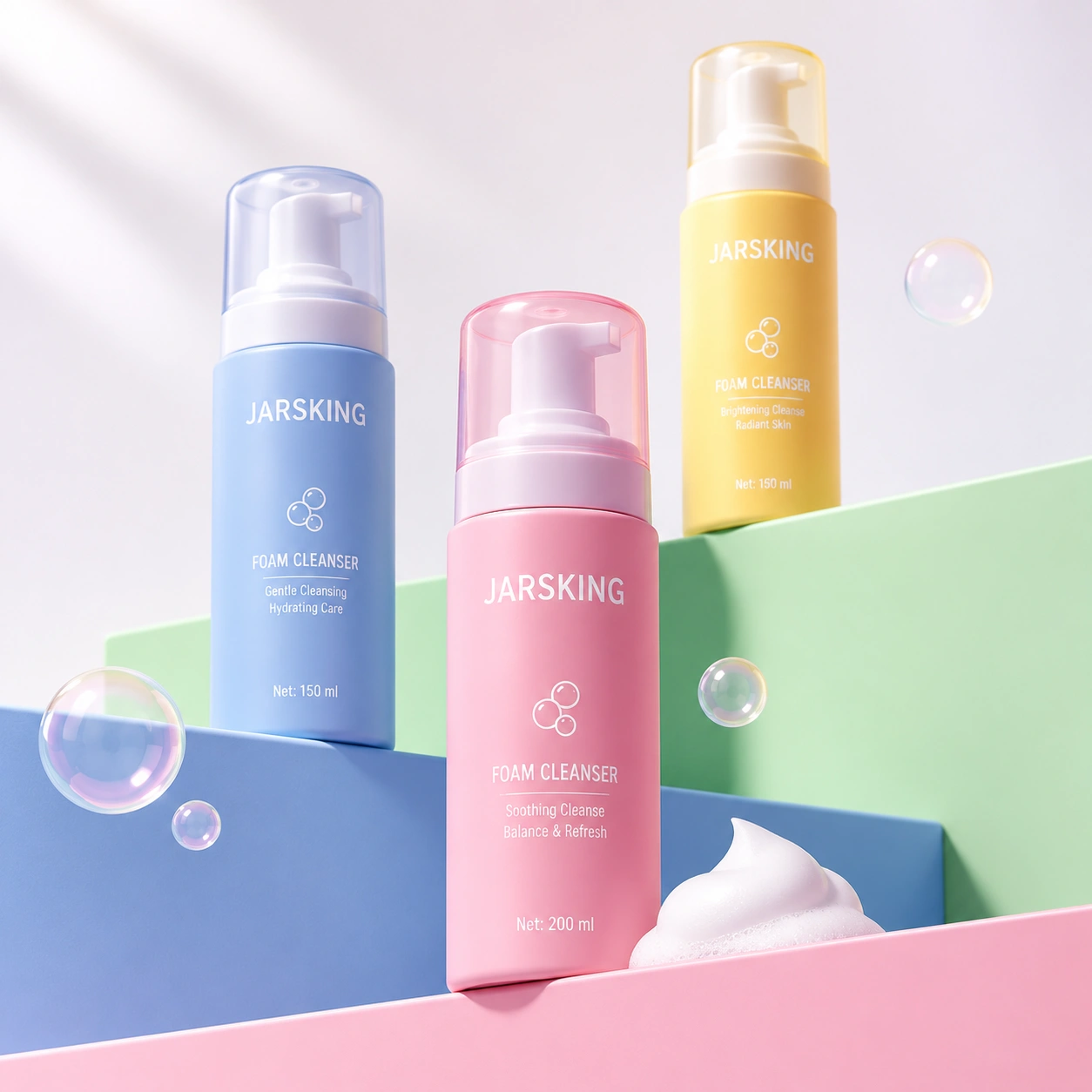
PET Foam Bottles
Clear PET allows shoppers to view the formula through the bottle, while custom colors or frosted finishes emphasize the packaging. These options suit facial cleanser collections that use either formula visibility or packaging color to attract attention, helping the bottle stand out on shelves and in product photography.
Best for:
Retail facial cleansers and colorful skincare collections
Available sizes:
100, 150, 160, and 180 mL
HDPE Foam Bottles
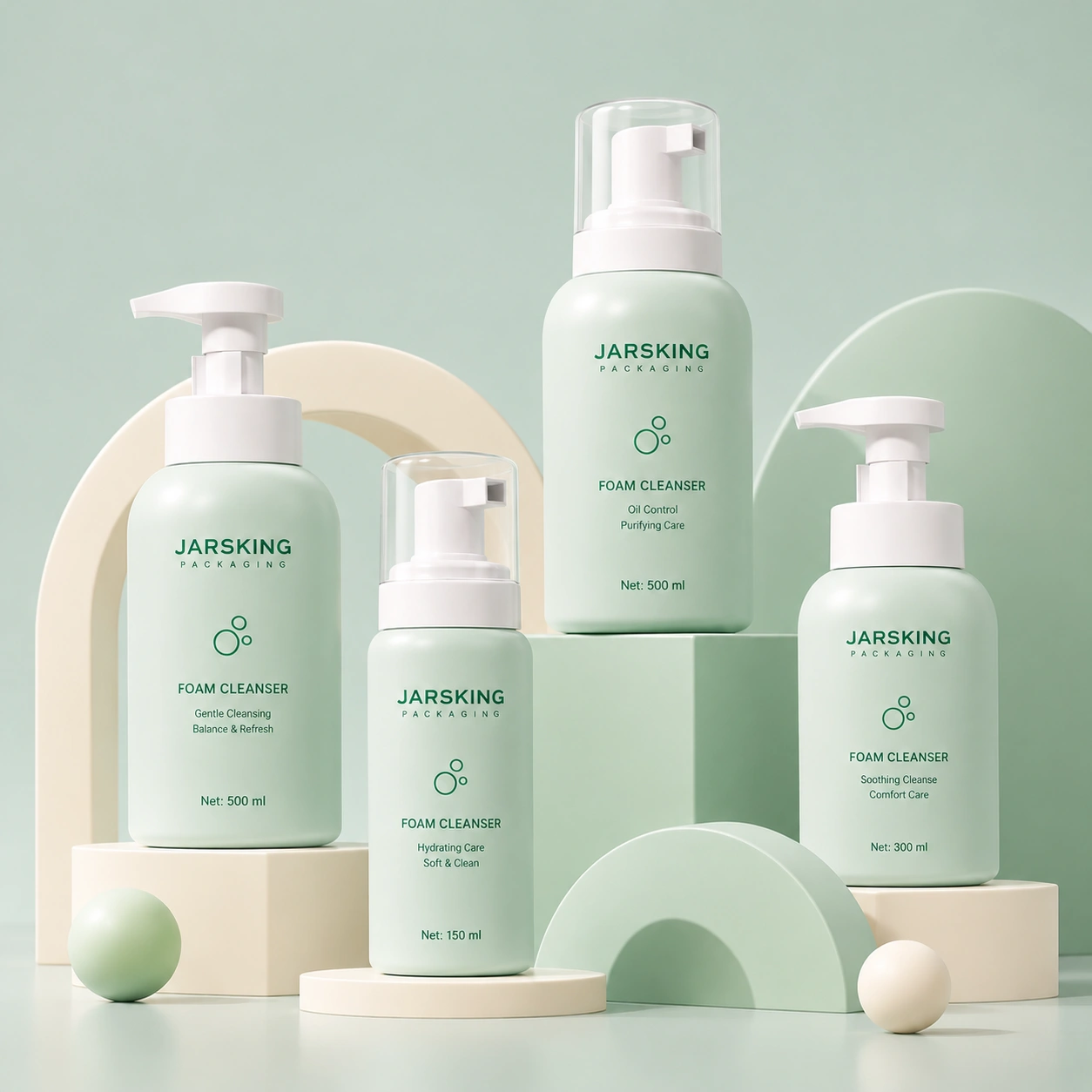
HDPE is more flexible and impact-resistant than PET, making it useful for hand soaps and body cleansers handled often. Othilapak’s round-shoulder series keeps one bottle profile across small cleansers and larger countertop dispensers. Choose covered pump heads or exposed spouts to match the bottle and pump setup.
Best for:
Foaming hand soap, body cleansers
Available sizes:
150, 300, and 500 mL
AS Airless Foam Bottles
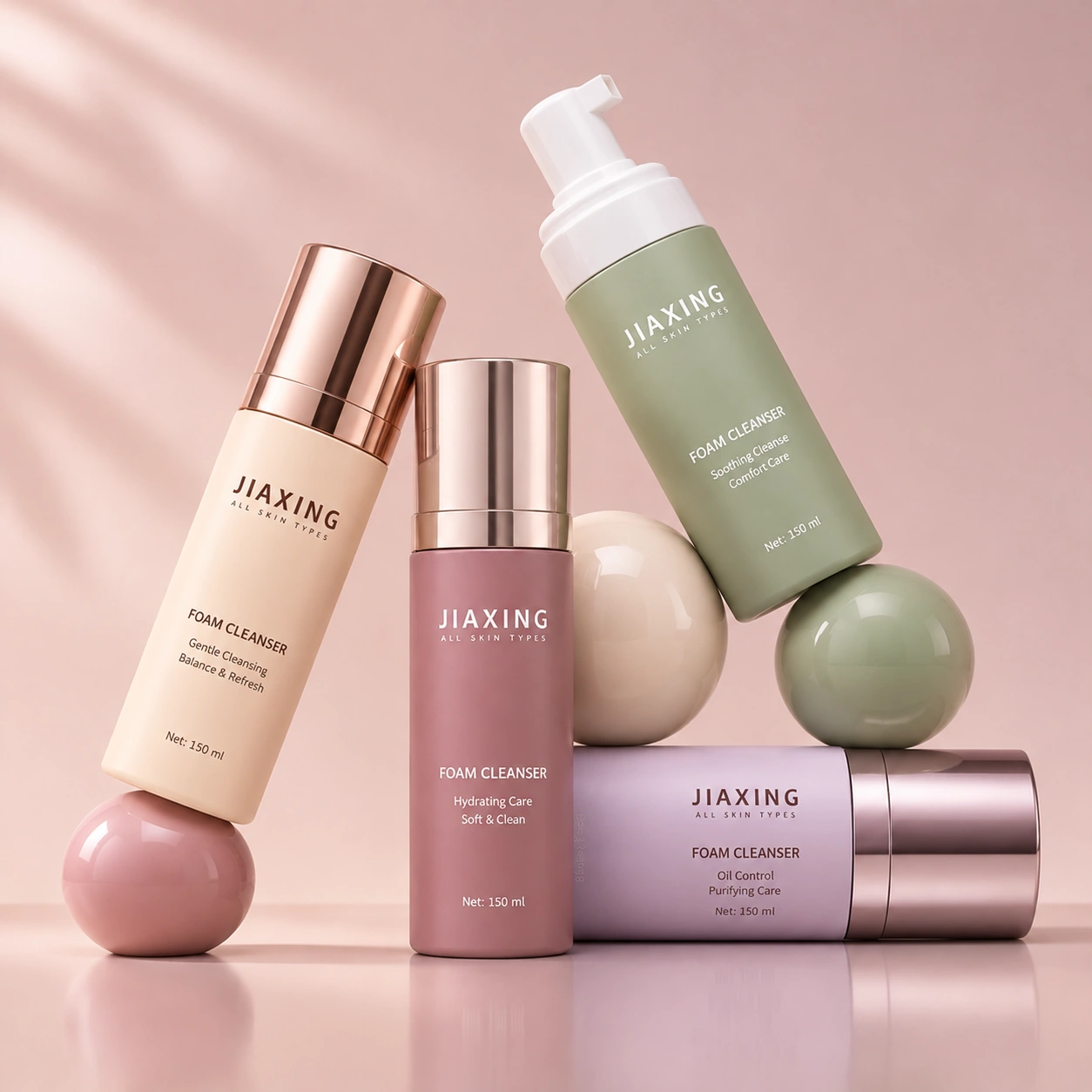
Othilapak’s AS foamer uses AS for both the bottle and cap, letting you coordinate the two surfaces through color and finish. Choose frosting, electroplating, or hot stamping to create contrast between the body and cap. The airless function comes from the pump assembly rather than the AS resin.
Best for:
Facial cleanser lines
Available sizes:
100 mL
How to Choose a Foam Pump Output
“Use pump output to shortlist samples, then use the foam from your filled sample to make the decision. Othilapak lists 0.4, 0.8, 1.2, and 1.5 cc output options. Confirm what the rating measures and under which test conditions before comparing pumps. Do not read the cc value as the volume of finished foam.”
| Listed pump output | Where to start testing | What to check with your formula |
| 0.4 cc | A facial cleanser intended for a small dose | Is one press enough, or will users routinely need a second? |
| 0.8 cc | A daily foaming facial cleanser | Does one press deliver the amount and texture you want? Does the next press feel the same? |
| 1.2 cc | Foaming hand soap or body cleanser | Is the dose right for one use? Does the pump still deliver consistently at low fill? |
| 1.5 cc | A hand or body cleanser designed around a larger dose | Does the larger output make the product easier to use, or does it dispense more than customers need? |
Match the Foaming Pump to Your Formula
“Choose the foaming pump around your finished formula. Flow behavior and ingredient composition affect dispensing and foam quality, so a product name such as “facial cleanser” or “hand wash” does not establish compatibility.”
Fluid, Uniform
Foaming Cleansers
Evaluate the finished formula with the selected pump. Check priming, foam appearance, dispensing consistency and actuator return before approving the combination.
Thick Gels and
Creamy Washes
Confirm whether the formula can flow through the selected foaming system. Some projects may need formulation work or a different dispensing format before moving forward.
Formulas With Oils or
Suspended Particles
Review how oils, particles or ingredients that separate affect foam formation, component compatibility and pump operation. Assess the complete formula rather than assuming suitability from individual ingredients.
Alcohol-Containing or
Other Demanding Formulas
Evaluate the complete dispensing assembly under the intended storage and use conditions. Confirm compatibility with the actual formula before selecting the bottle and pump.
Share viscosity, pH and relevant ingredient information when available. Any formulation change should be reviewed by your formulator and evaluated again with the selected packaging.
If your product is intended to dispense as a liquid or lotion, compare our lotion bottle options before choosing a foam format.
BOTTLE & PUMP FIT
Will This Foam Pump Fit Your Bottle?
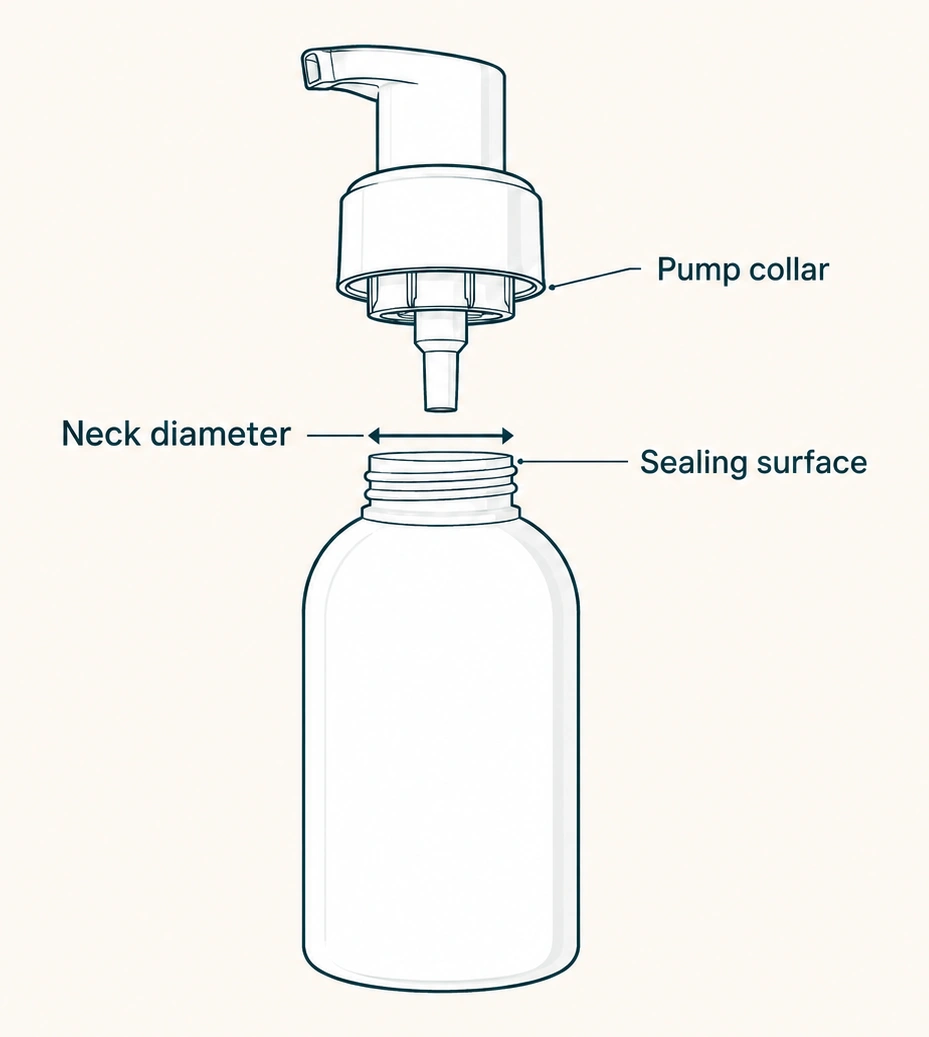
A 28 mm foam pump is not automatically a match for a 28 mm bottle. Neck size is the nominal diameter; the neck finish specifies how the pump attaches and where it seals. Check the bottle and pump drawings together, then confirm the fit on an assembled sample before placing a bulk order.
Nominal neck sizes: 24 • 28 • 30 • 40 • 43 mm
Already have a bottle or pump? Send us the component drawing.
Choose a Bottle Format for Your Product Line
“Start with where the bottle will be used. A facial cleanser on a bathroom shelf, a hand soap at a shared sink, and a paw cleanser in a grooming bag each call for a different format. Compare how the filled bottle feels in the hand, how steadily it sits, and how much space it takes up with the pump and cap fitted.”
Facial & Lash Cleansers
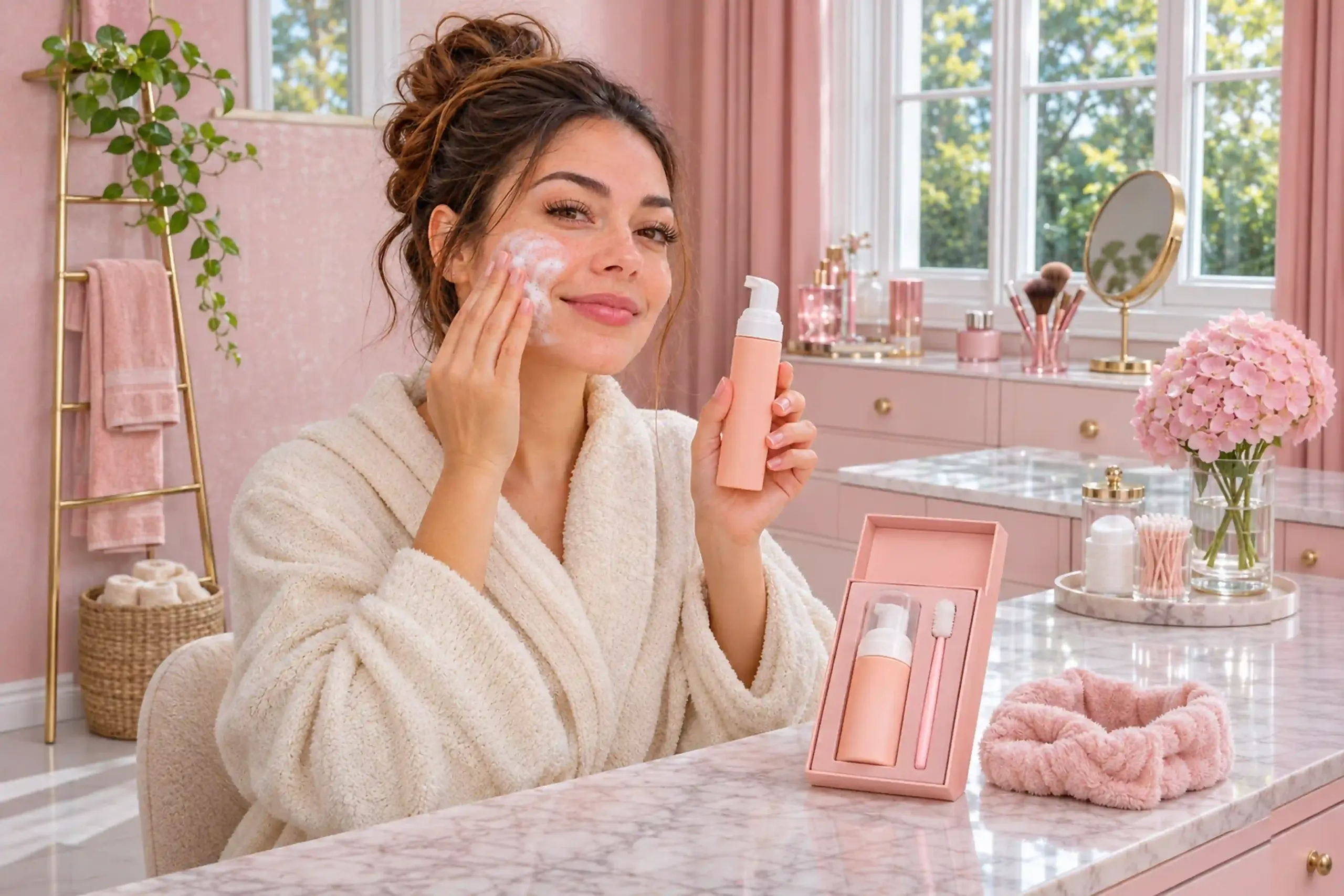
Choose a slim bottle that’s easy to hold. For lash kits,check that the capped bottle and brush fit inside the carton.
Comfortable grip · Carton fit

Foaming Hand Soaps & Body Washes
Choose a stable bottle and check that the pump is easy to press with one hand.
Stable base · Easy pump access

Styling Foams & Scalp Cleansers
Check how the bottle feels in the hand and fits on a salon trolley.
Secure grip · Pump clearance
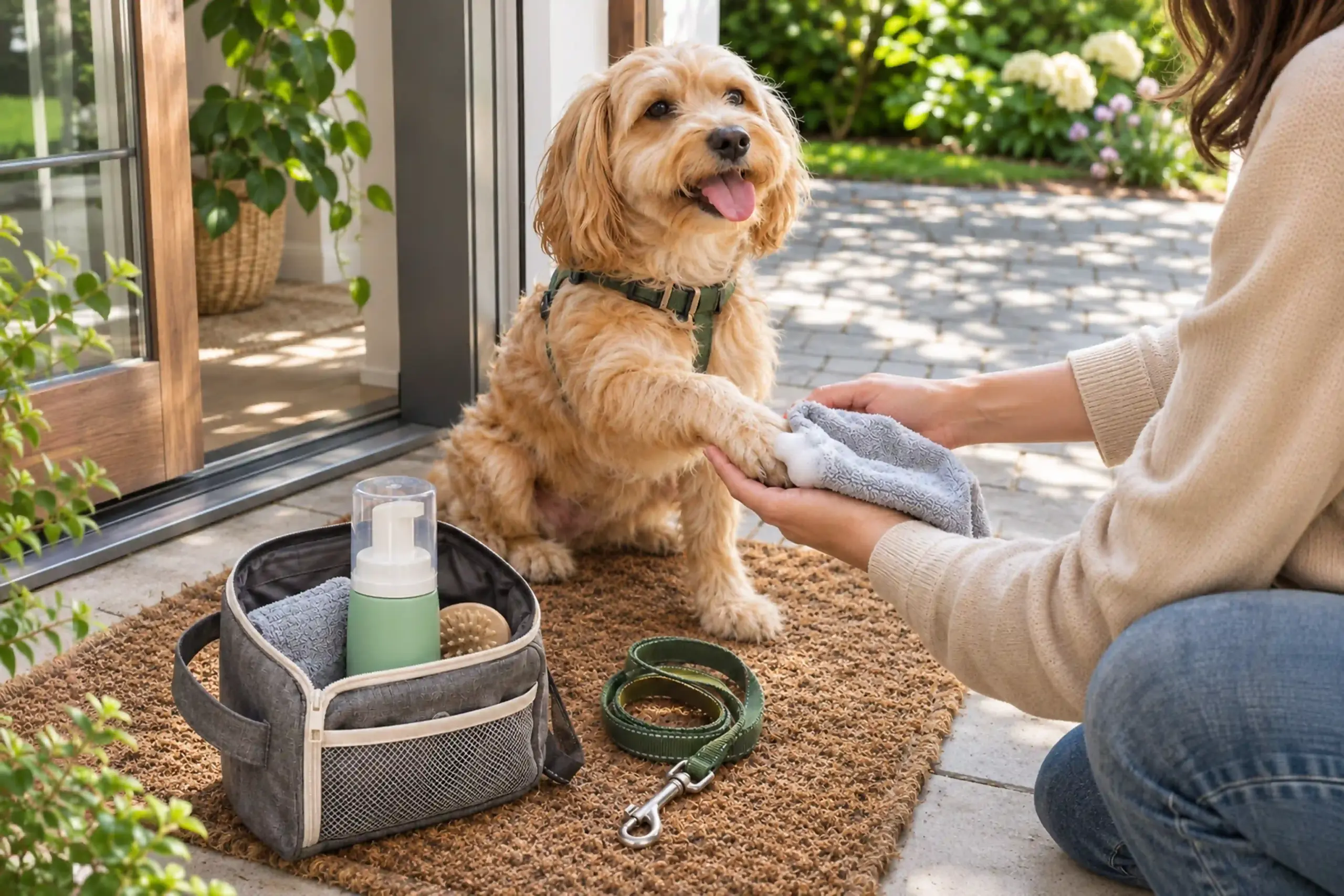
Baby Washes & Pet Paw Cleansers
Choose a stable bath-side bottle or a compact format with a protected pump for travel.
One-handed use · Pump protection
Foam Pump Bottle FAQs
Can I use my existing facial cleanser in a foam pump bottle?
Possibly, but test the finished cleanser before committing to packaging. Compare how it primes, the foam it delivers over repeated presses, and how it restarts after sitting. If a sample dispenses liquid or needs frequent re-priming, don’t approve that formula-and-pump combination on the strength of the pump specification alone.
What viscosity works with a foaming pump?
Use the recommended viscosity range for the exact pump you’re considering, not a single cutoff for the entire category. If you have a viscosity reading, share the value, units, and measurement conditions when you request samples. Use that information to shortlist pumps, then verify performance with the finished formula.
What is the MOQ and lead time for custom foam pump bottles?
The published standard MOQ is 10,000 units per model. Confirm whether the minimum changes with your pump, color, decoration, or artwork split. Request a lead time for your exact configuration and clarify whether it starts after sample approval, artwork approval, or another order milestone.
Can I test a bottle-and-pump sample with my formula before ordering?
Request a matched sample before placing a bulk order. Share the product type, target fill volume, and expected order quantity so the initial shortlist reflects what you plan to buy. When the sample arrives, record the bottle and pump references so the approved combination can be carried through to the production order.
Is liquid output the same as the volume of foam produced?
No, liquid output and expanded foam volume describe different measurements. A foaming system combines the formula with air, producing a different resulting volume. Confirm how the selected pump’s output is specified and assess the result with your formula.
Can these bottles be used for a refill program?
Refill suitability depends on the specific bottle, pump and intended reuse process. A removable pump alone does not establish suitability for repeated refilling. Define the expected use cycles and cleaning or replacement instructions, then assess the complete assembly against that plan.