CUSTOM SUNSCERRN BOTTLES
Sunscreen Bottle Manufacturer
Custom UV-Protective & Leak-Proof Packaging
“For sunscreens, the wrong bottle doesn’t just waste product—it quietly shortens shelf life and makes reapplication harder. Our sunscreen bottles are engineered to be UV-resistant, airtight, and leak-proof so your SPF formula stays effective from the filling line to the beach. “
• UV-protective structure to slow formula degradation
• High-seal, leak-proof design for travel and high-heat conditions
• Multiple dispensing formats to match different SPF formulas and use cases
• Proven PE/PP/HDPE materials balancing feel, durability, and sustainable options
Why sunscreen bottles can’t be treated like regular lotion bottles
Sunscreen packaging lives a harder life than most skincare: it sees direct sun, high temperature swings, frequent opening and closing, and rough handling in bags and backpacks. Many SPF formulas also contain light-sensitive filters and antioxidants that break down faster when exposed to UV, oxygen, and heat.
That’s why UV-resistant, airtight, and leak-proof design is not a “premium add-on” for sunscreen bottles—it’s the entry ticket. The closure choice you make today determines whether your customer’s experience is “easy to use, no mess, repurchase” or “hard to squeeze, leaks in bags, never again.”
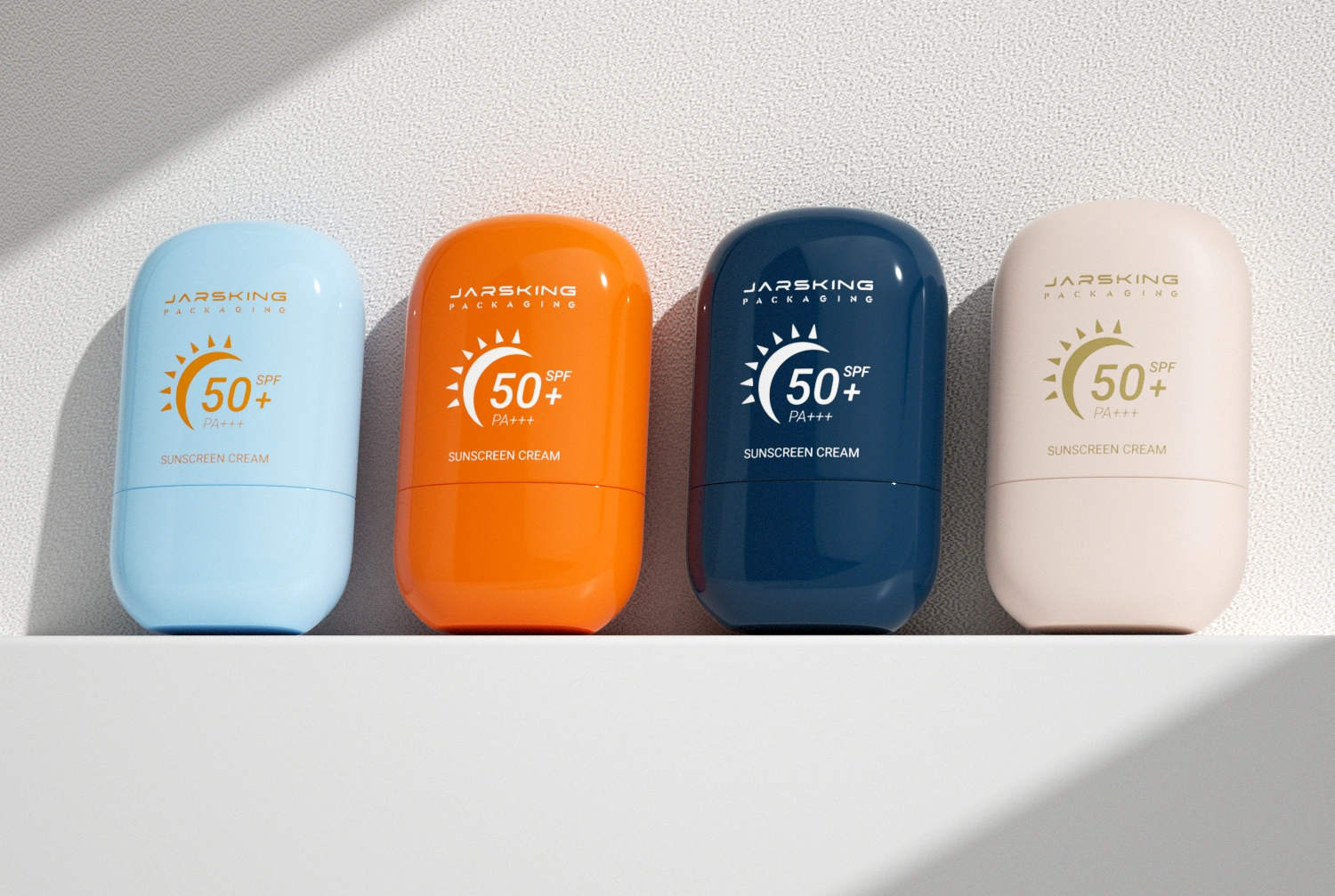
Sunscreen Bottle Formats We Offer
“Here we break down which sunscreen bottle formats work best for creams, sprays, sticks, and travel sizes—so you can match your packaging to how people actually use your SPF.”
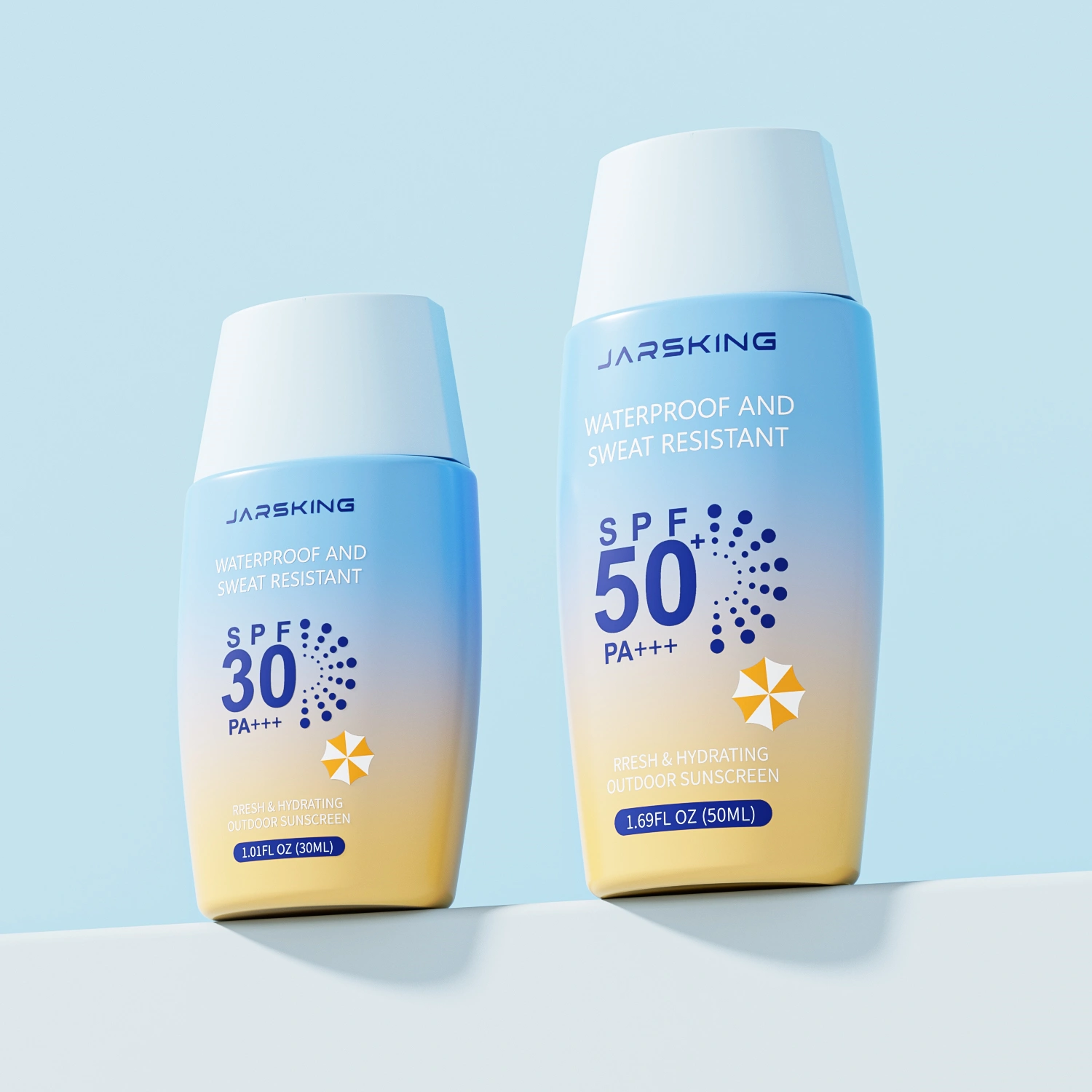
Squeeze & Tottle Bottles
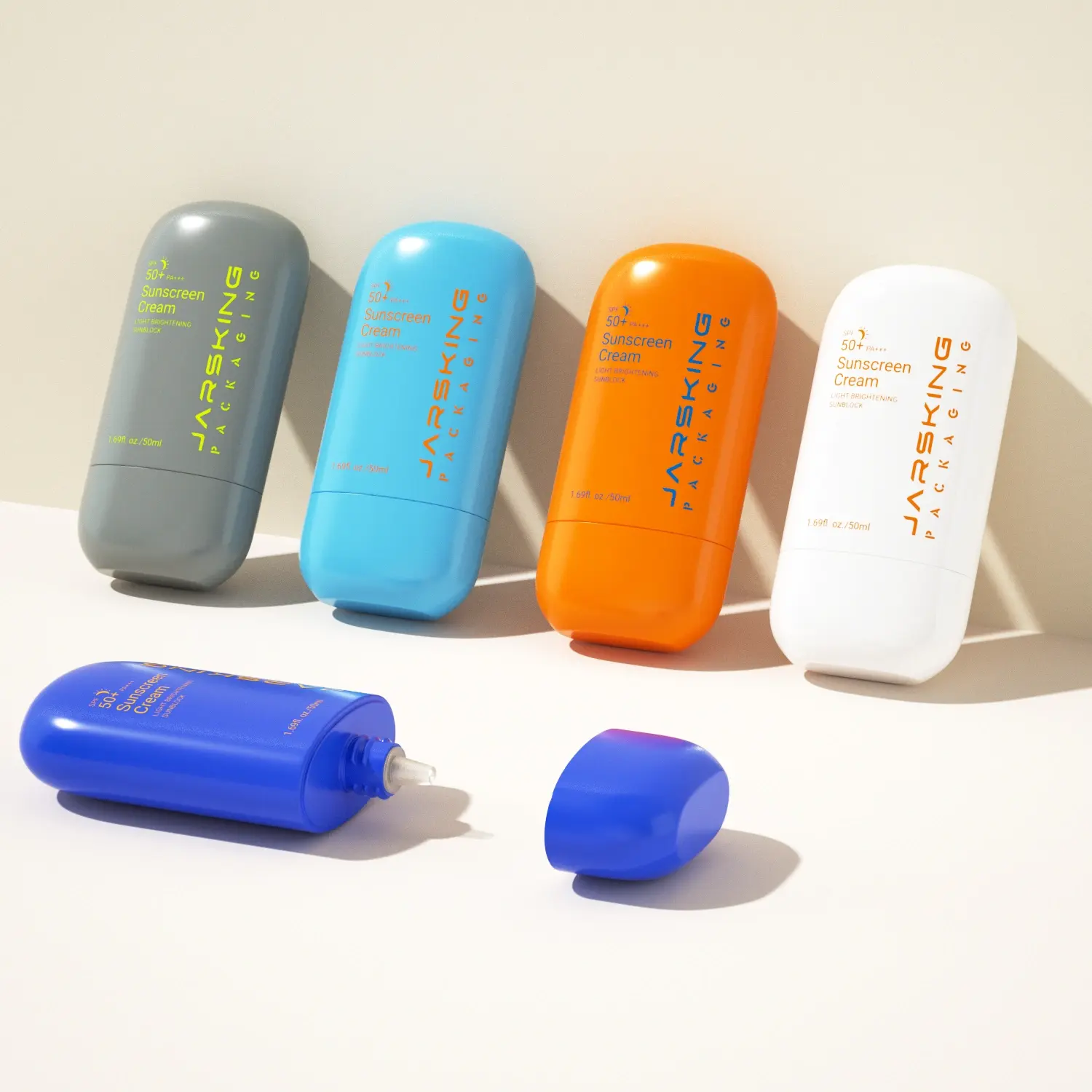
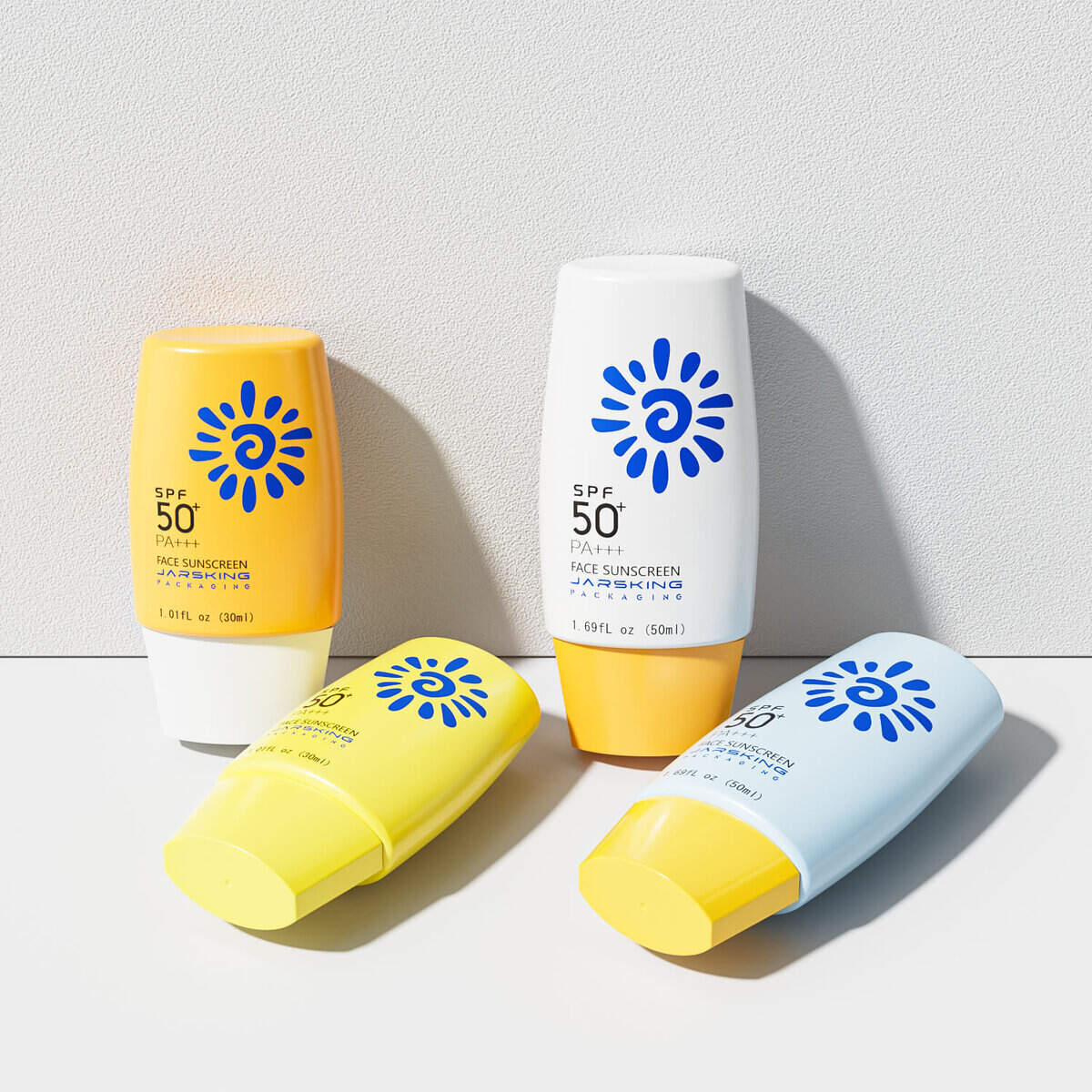
Squeeze and tottle bottles are the most reliable choice for cream and lotion sunscreens, especially body SPF. Flexible PE or PP walls make it easy to squeeze out a controlled amount with one hand, even when hands are wet or sandy. This format works best for everyday family use and main body SKUs.
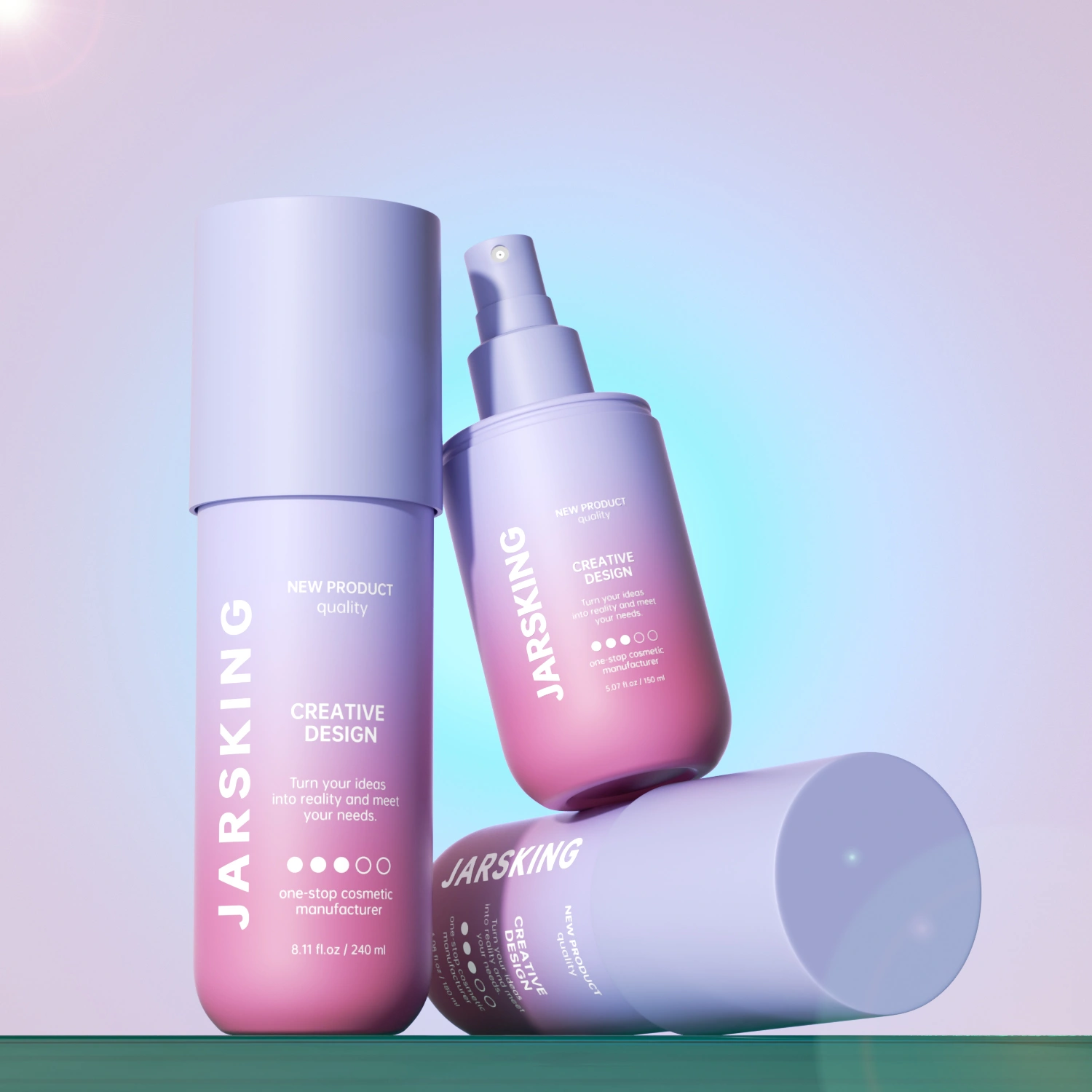
Spray Bottles
Pump Bottles
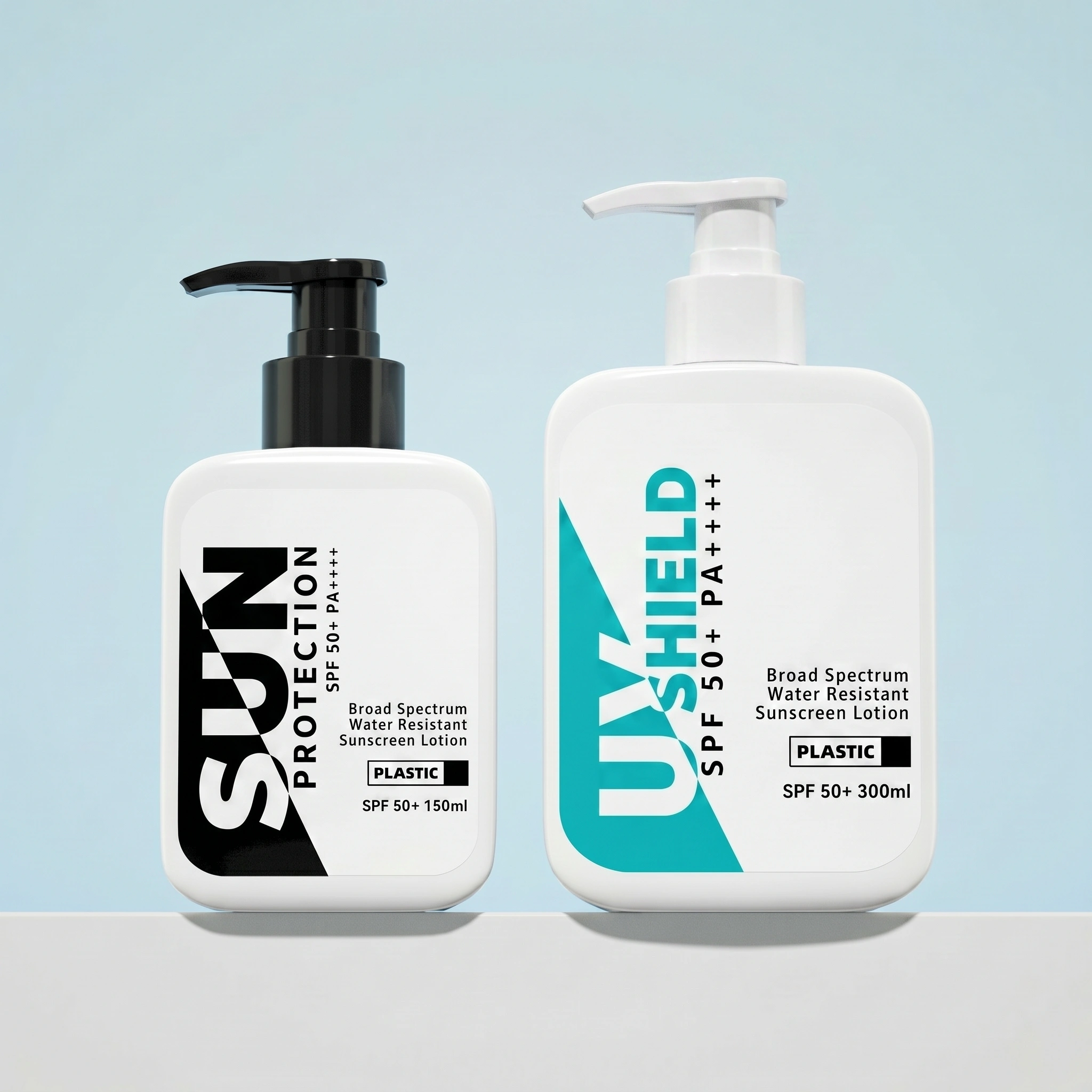
Tube Packaging
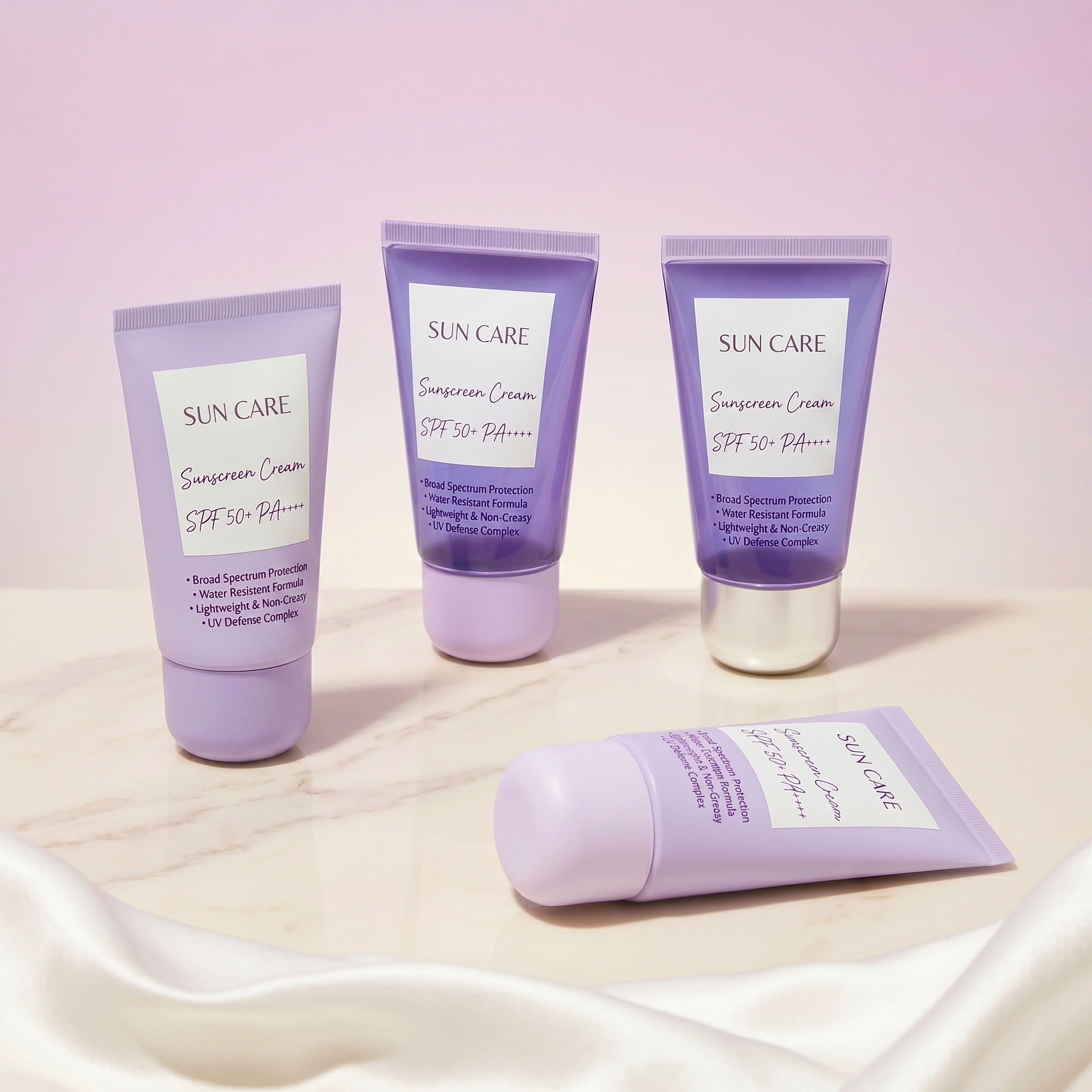
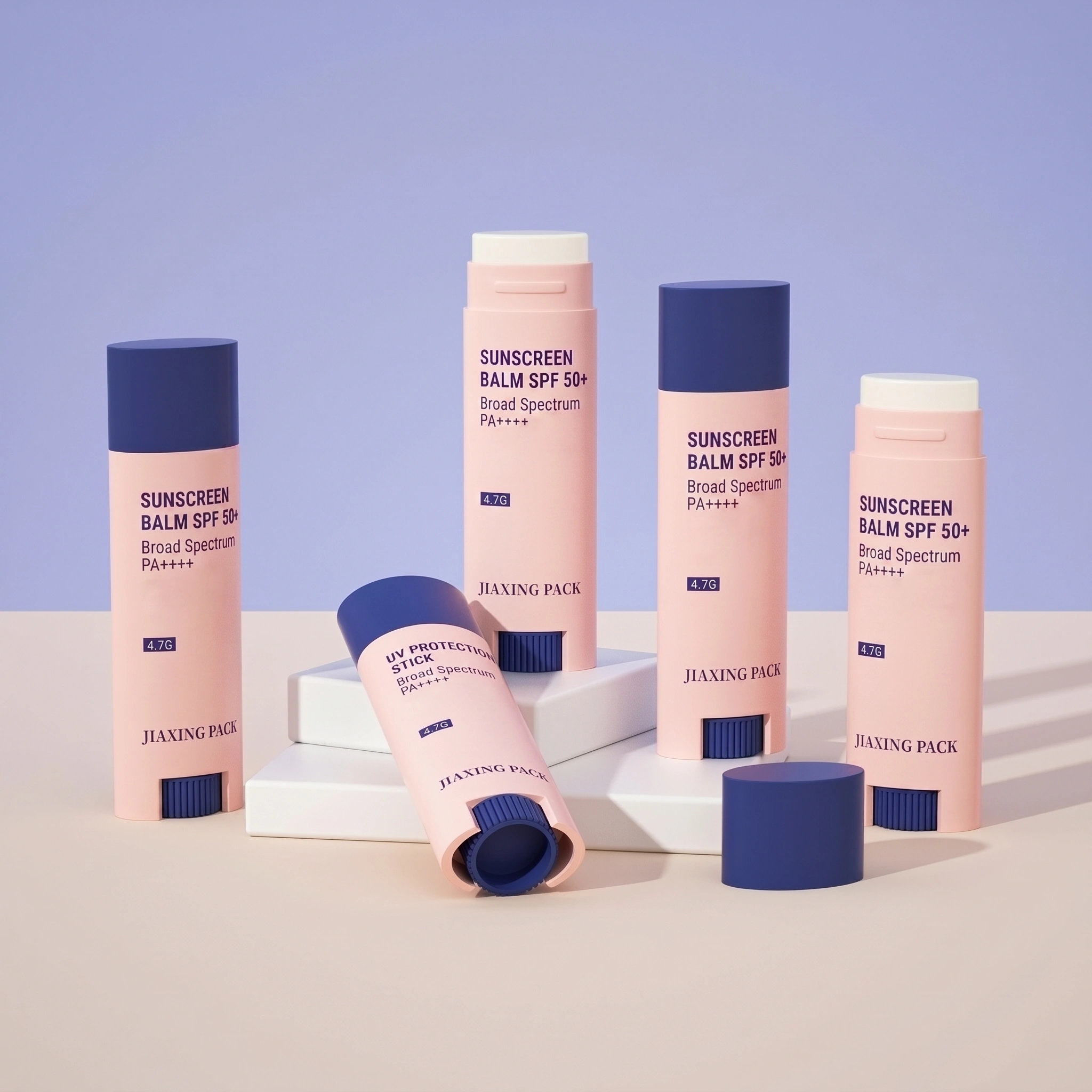
Travel-size Bottles
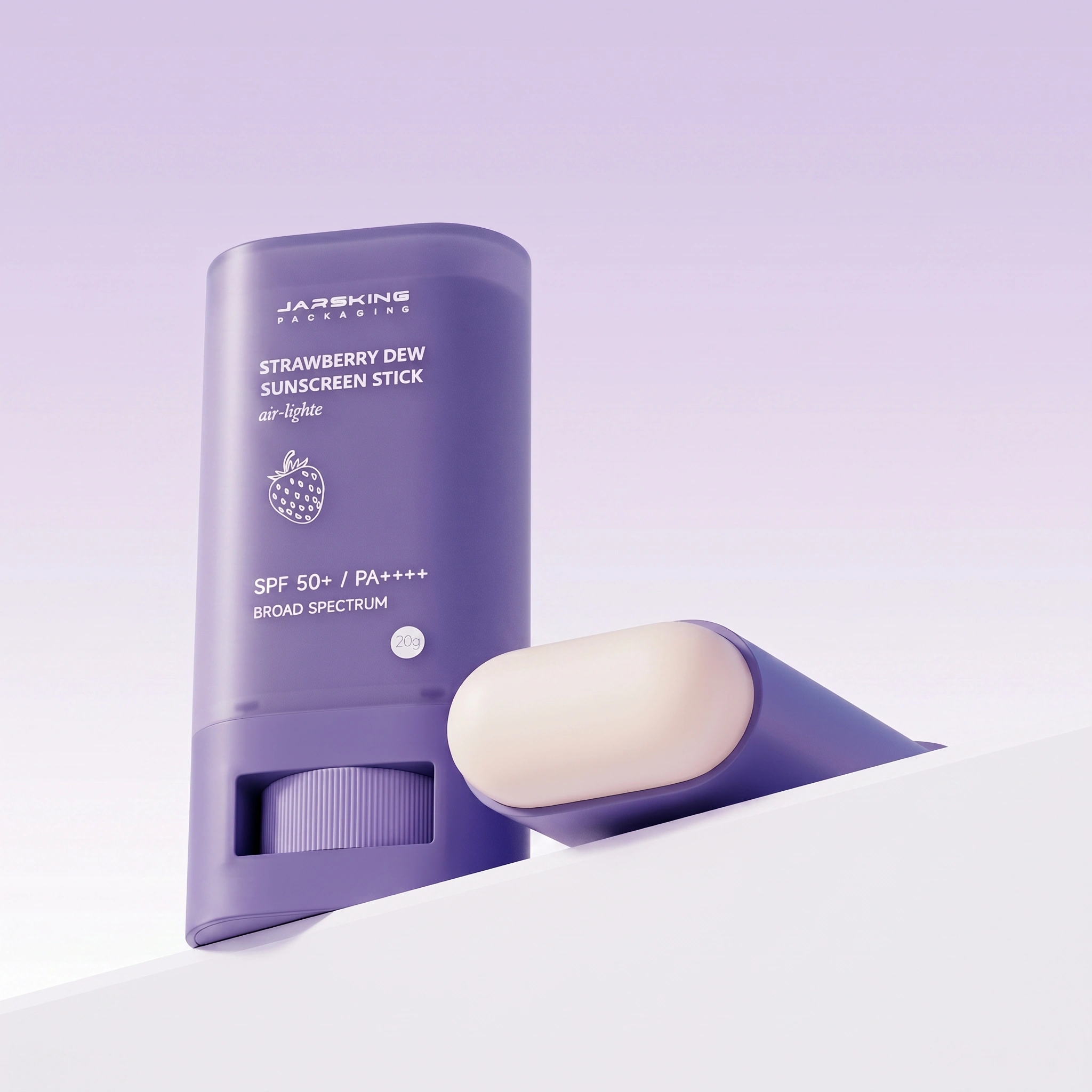
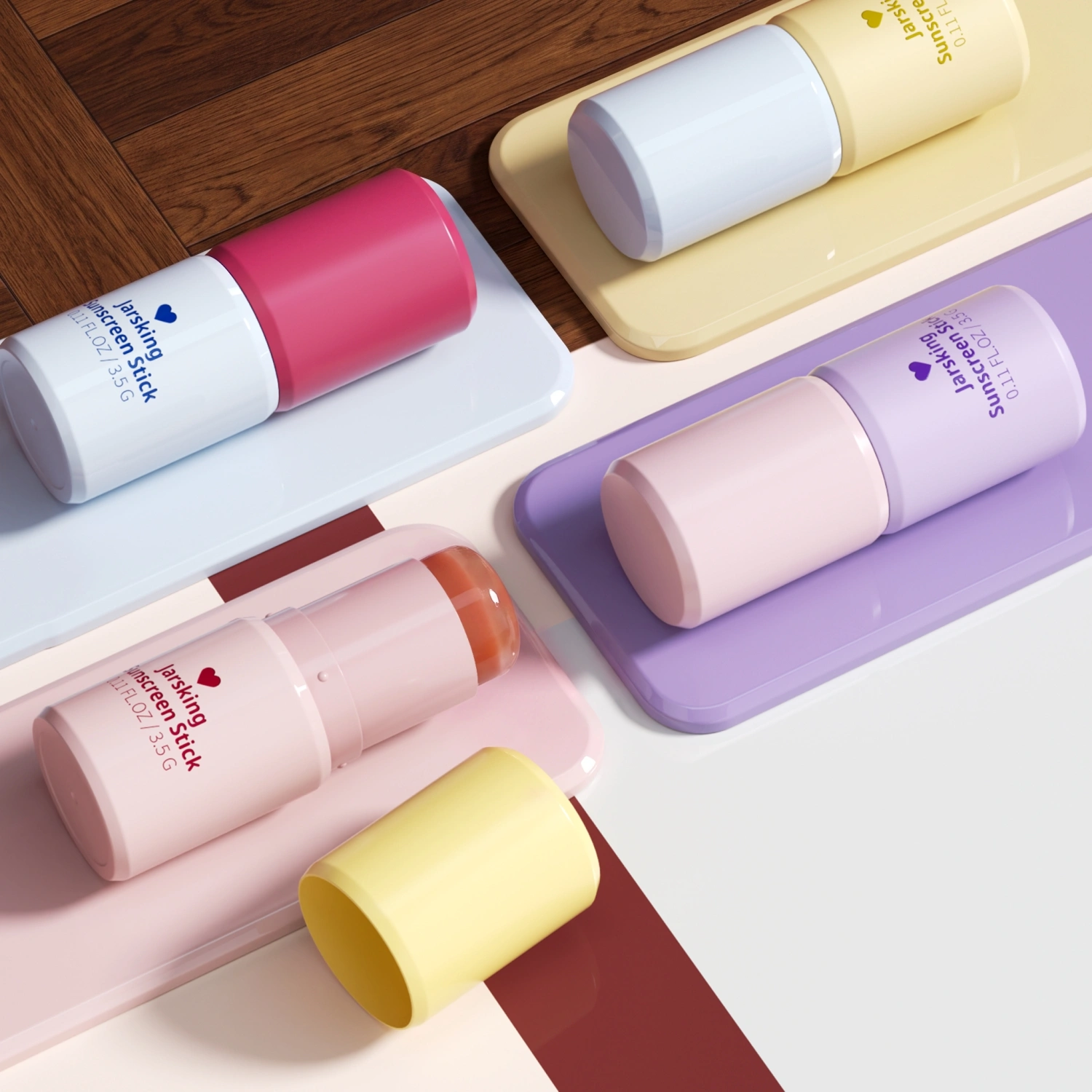
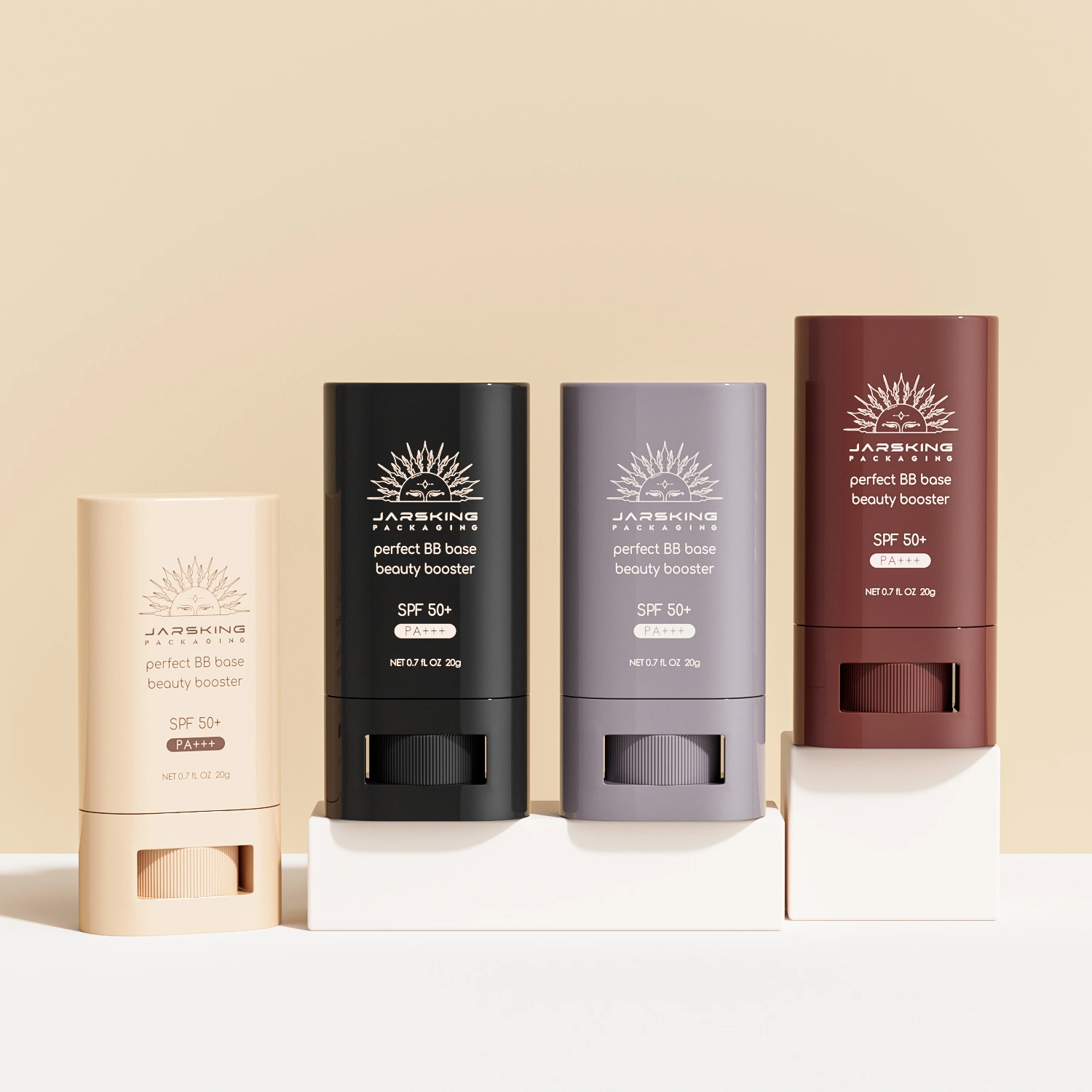
Stick Formats
Material choices that actually protect your SPF
“Here we break down which sunscreen bottle formats work best for creams, sprays, sticks, and travel sizes—so you can match your packaging to how people actually use your SPF.”
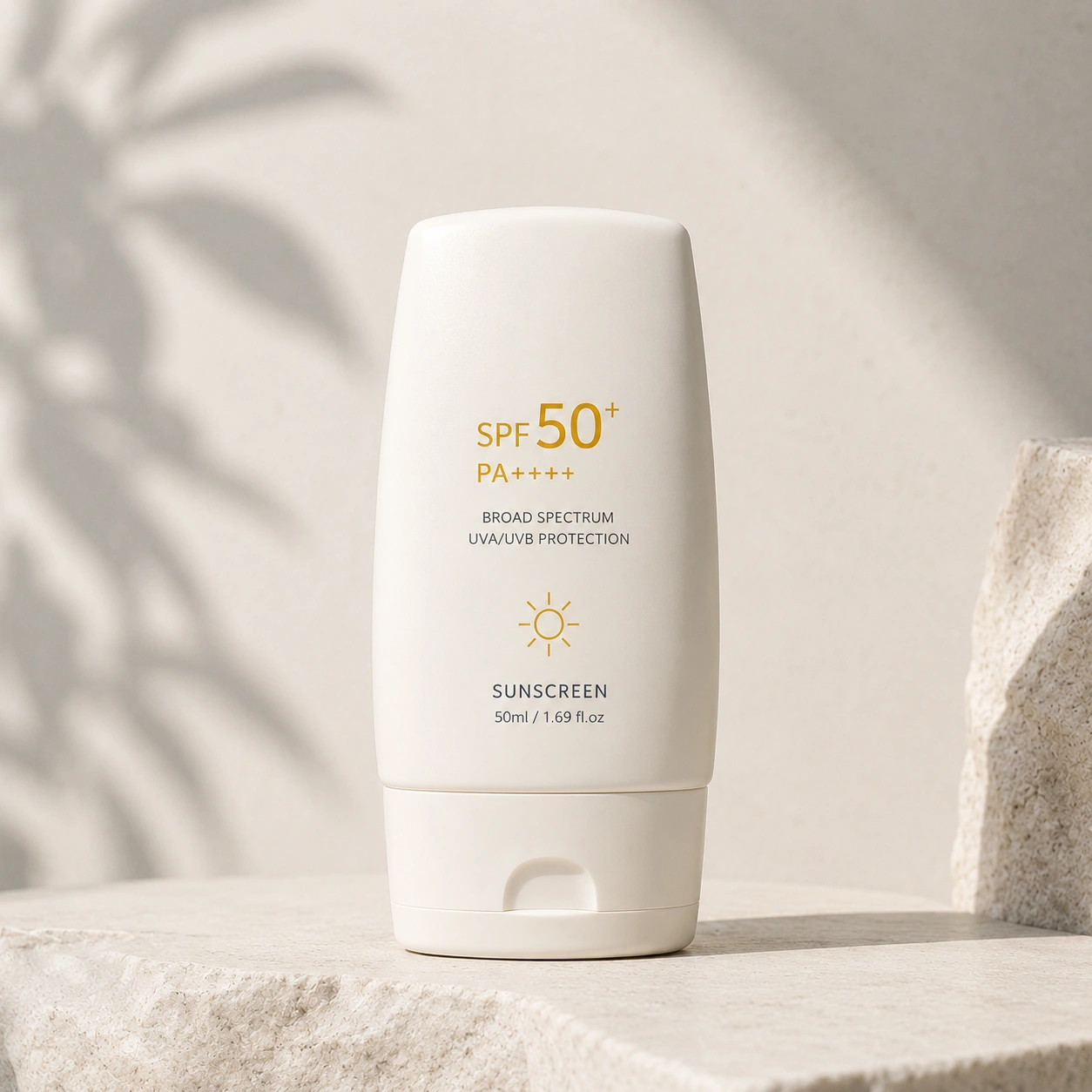
PP Sunscreen Bottle
PP is widely used in smaller bottles, accessories, and closures thanks to its heat resistance and structural stability. Our PP sunscreen travel bottles combine squeezable walls with lightweight, eco‑friendly construction and clean dispensing, making them ideal for travel kits, hotel amenities, and sample SKUs.
When portability and multi-unit kits are your priority, PP structures often deliver a better balance of weight, cost, and recyclability than heavy, premium‑looking alternatives.
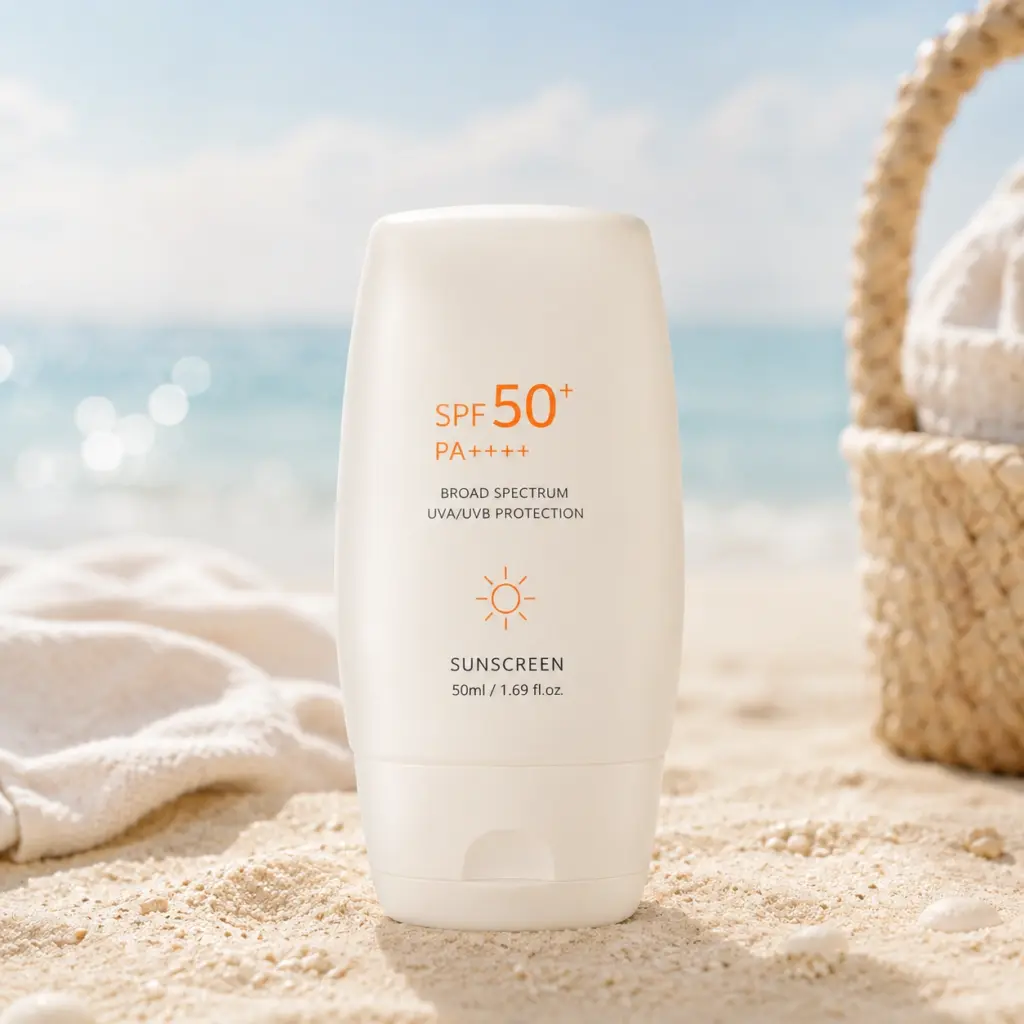
PE Sunscreen Packaging
PE is the workhorse for squeeze sunscreen bottles because it balances flexibility, impact resistance, and compatibility with common SPF ingredients. It’s especially suited to family-size and travel-size body sunscreens where controlled dosing and a comfortable squeeze matter more than full transparency.
Our leak‑proof PE sunscreen bottles are built for everyday beach and outdoor use, with wall thickness and neck finishes tuned for repeated squeezing without deformation or stress cracking.
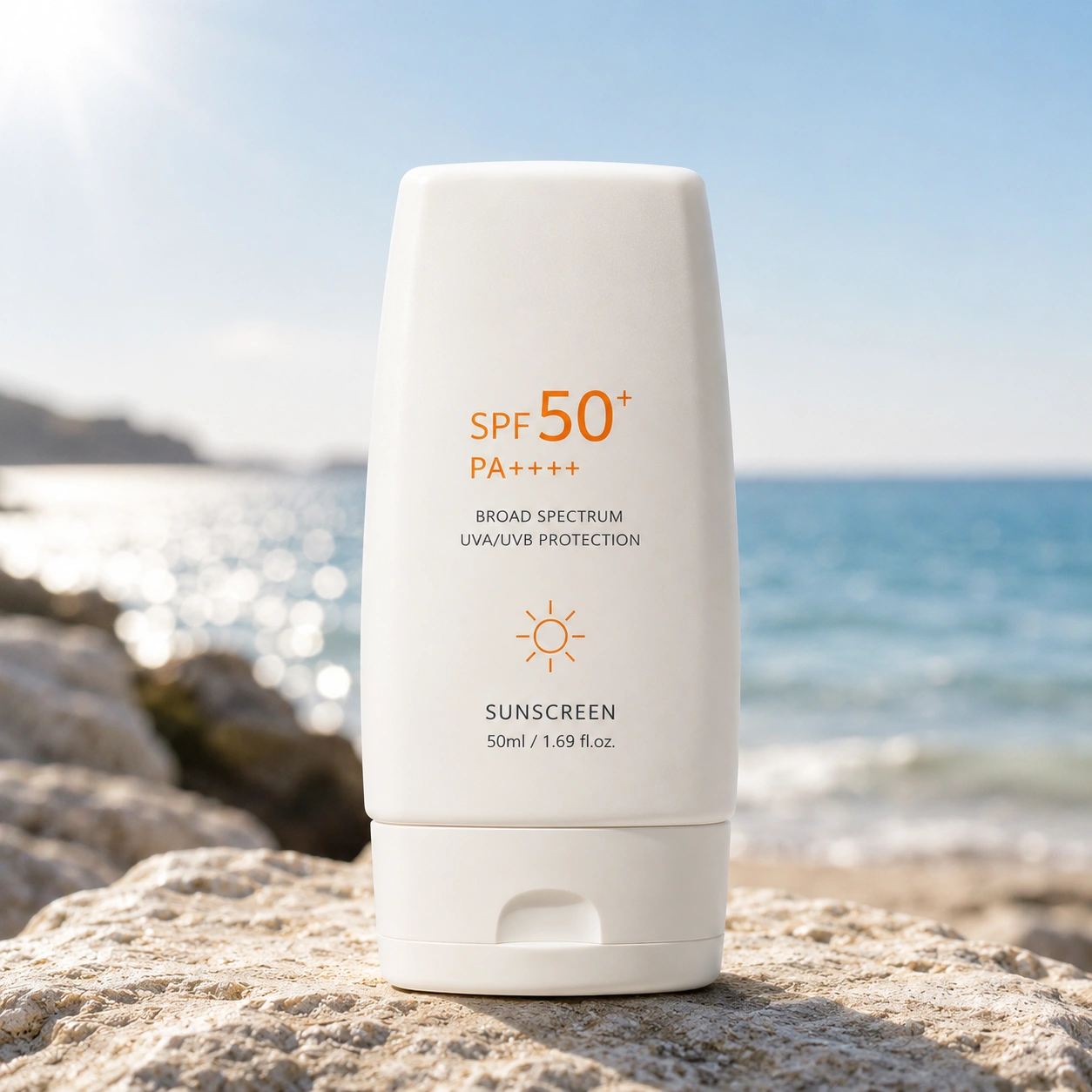
HDPE Sunblock Bottle
Opaque and UV‑protective packaging is critical for sunscreens that rely on light‑sensitive filters. HDPE and other opaque structures block or filter UV, helping maintain SPF potency and overall formula stability over time. For “high‑actives” or long‑wear claims, opaque bottles are often safer than transparent ones.
The trade‑off is straightforward: clear packaging can show off color and texture, but opaque options usually give you a much wider safety margin against UV‑triggered degradation.
Our Smart & Sustainable Sunscreen Packaging
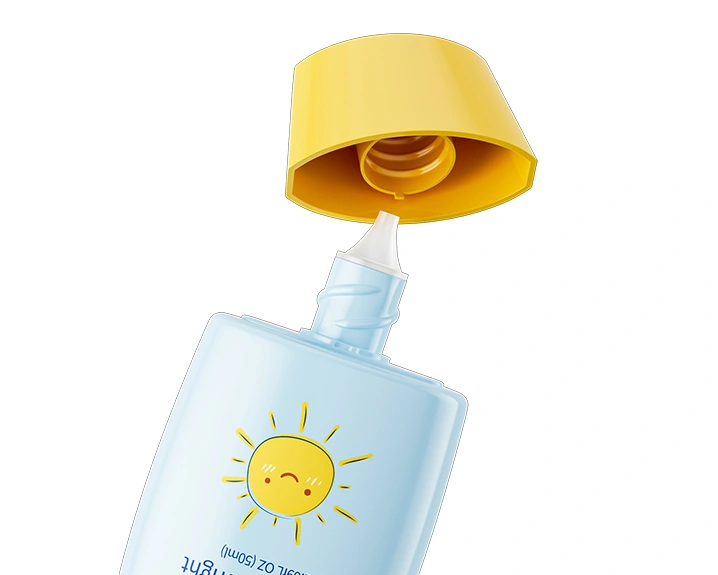
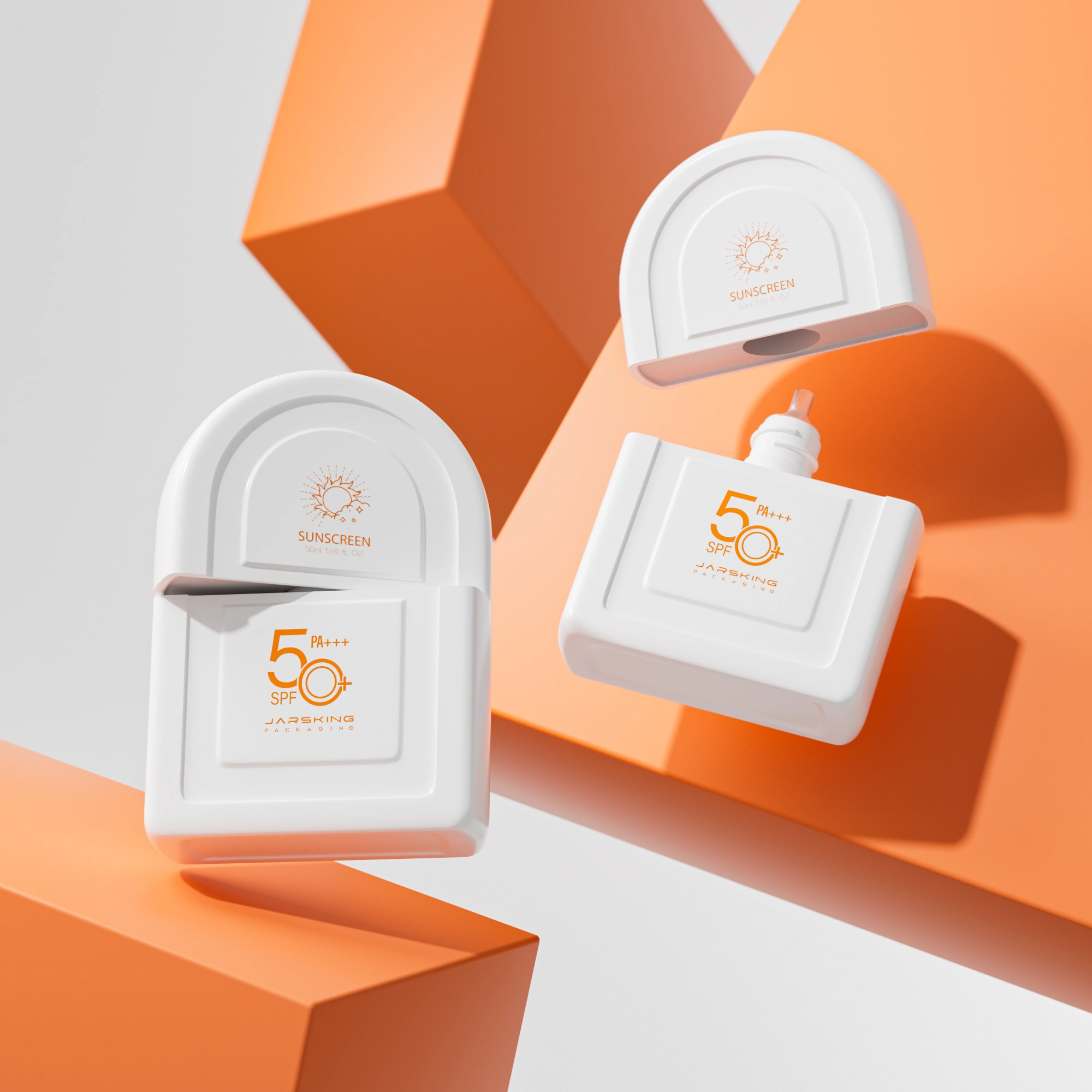
Precision PE Inner Plug – No Leaks, No Waste!
The Problem: Leakage & Inconsistent Flow
Standard inner plugs can lead to messy leaks, product buildup, and uneven dispensing, frustrating users and causing unnecessary waste.
Our Solution: Advanced PE Inner Plug
• Sharp, Precision Spout – Ensures uniform and controlled discharge.
• Leak-Proof Design – Prevents spills and excess product wastage.
• Enhanced Hygiene – Reduces contamination and keeps the product fresh.
• Smooth User Experience – No clogs, no mess—just effortless application.
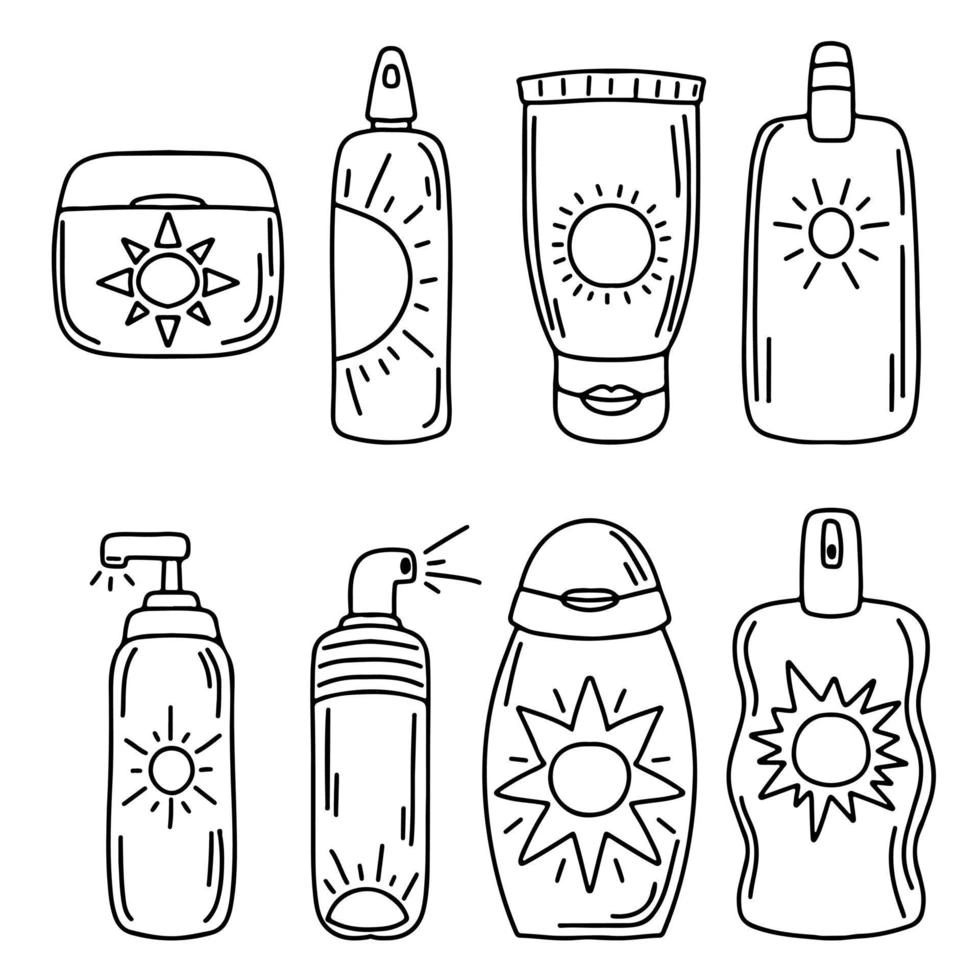
Versatile Bottle Shapes – Designed for Every Need
• Round Bottles – Classic & Comfortable
Perfect for everyday use, offering a familiar grip and easy handling.
• Oval Bottles – Ergonomic & Stylish
Designed for a sleek look and easy squeeze, great for beauty and skincare products.
• Flat Bottles – Travel-Friendly & Space-Saving
Slim and compact, ideal for those who need portability without bulk.
• Squeeze Tubes – Effortless & Precise
Best for users who prefer controlled dispensing with minimal waste.
• Unique & Custom Shapes – Personalized & Eye-Catching
For brands looking to stand out while catering to specific user needs.
💡 No matter the preference, we offer the perfect bottle shape to match every lifestyle!
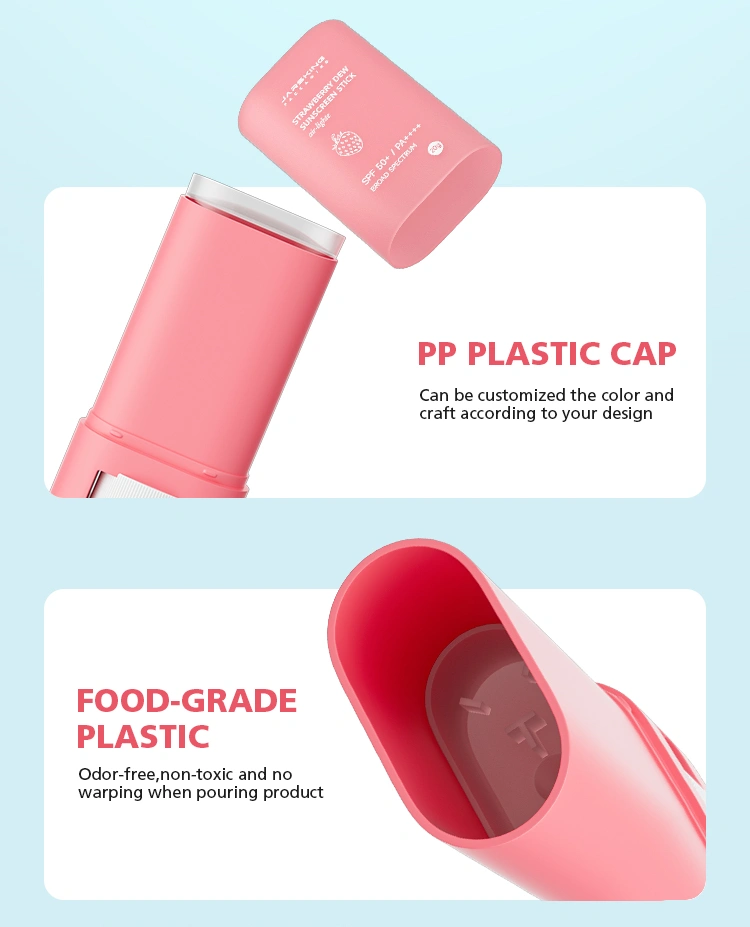
Food-Grade Plastic – Safe, Clean & Reliable
• Odor-Free – Keeps products fresh without unwanted plastic smells.
• Non-Toxic – Safe for all applications, meeting industry safety standards.
• No Warping – Maintains shape and stability even when pouring.
💡 Perfect for cosmetics, skincare products—ensuring purity and quality in every use!
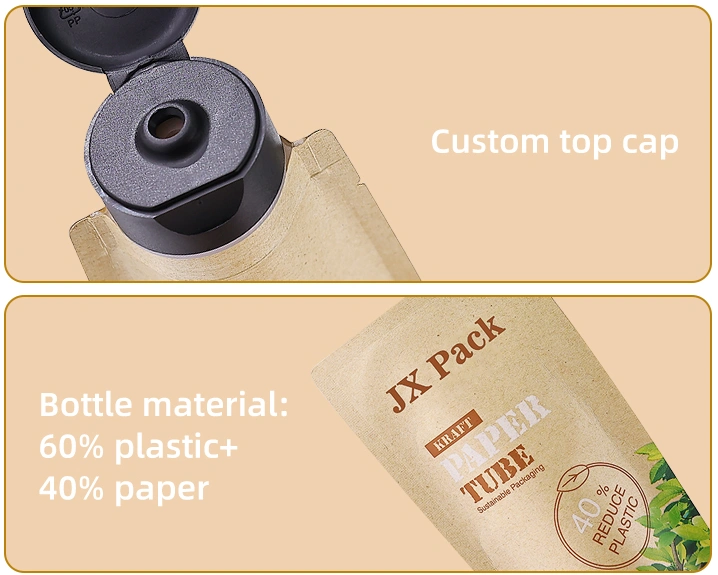
Eco-Friendly Tube – 40% Less Plastic, 100% Sustainability
• 40% Plastic Reduction – Minimizes environmental impact.
• Material Composition – 60% plastic + 40% paper for a greener choice.
• Durable & Functional – Maintains quality while being eco-conscious.
💡 A step towards sustainability without compromising performance!
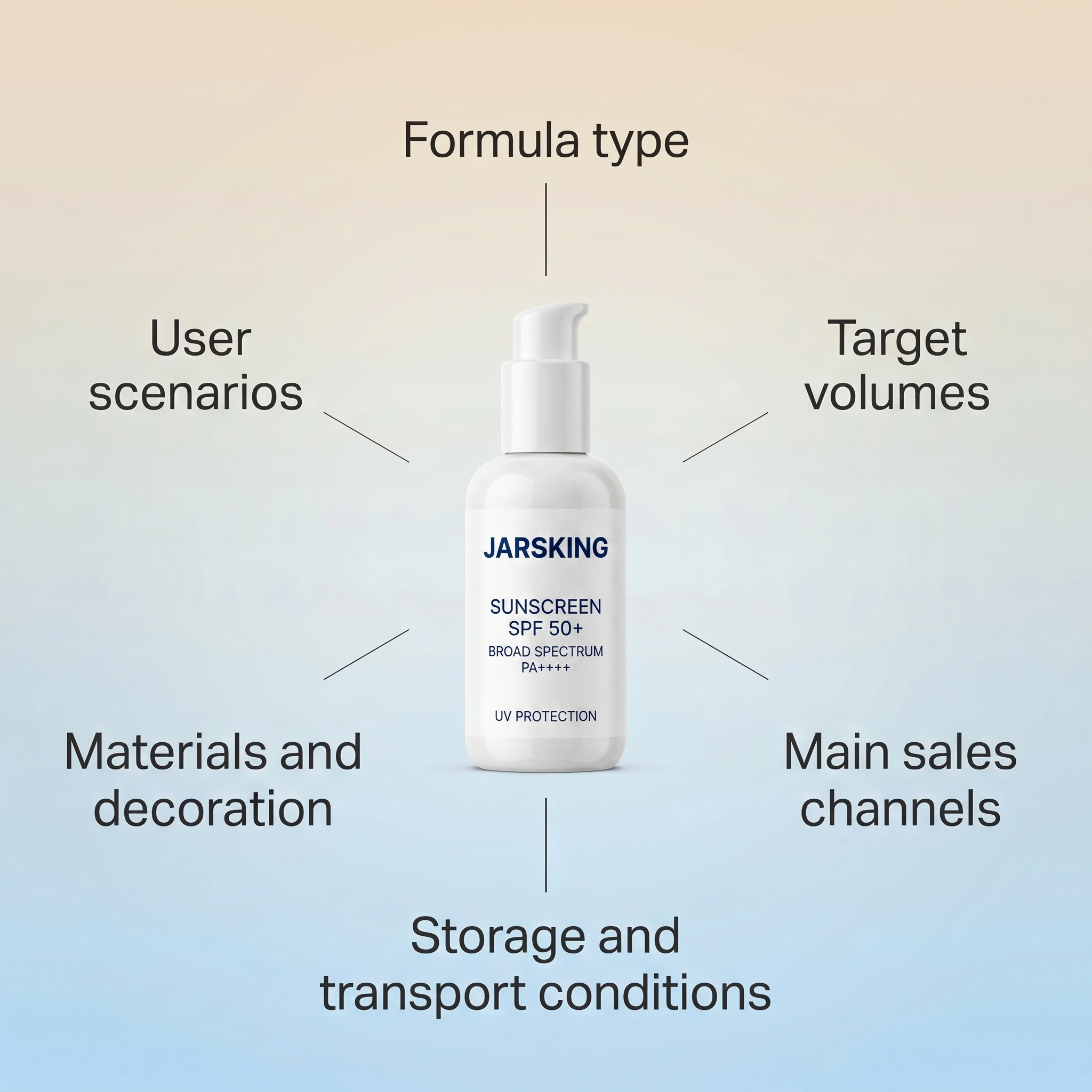
What brand owners need to know before briefing a sunscreen packaging supplier?
Frequently Asked Questions About Sunscreen Bottles
Which bottle format should I use for my sunscreen formula?
If you’re working with a cream or lotion, a squeeze or tube format is usually the safest starting point. Sprays suit lighter, more fluid formulas that need fast, even coverage, while sticks are best for solid or balm textures and targeted application. If you’re not sure, think first about how your customer will apply the product—full-body, face-only, or top-ups on the go—and work backwards from that.
Is airless packaging always the best option for sunscreen?
Airless systems are excellent for face-focused, high-claim SPF products where oxygen exposure and hygiene are major concerns, but they are not necessary for every sunscreen. For many body sunscreens, well-engineered squeeze bottles and caps provide a better cost-performance balance.
What should I prioritize for travel-size sunscreen bottles?
For travel SKUs, prioritize leak resistance, pressure stability, and compact dimensions. Our PP and PE travel bottles emphasize secure caps, controlled dispensing, and shapes that fit well into bags, kits, and amenity trays.
How should I think about sustainability when choosing sunscreen bottles?
Start by deciding what you actually want to improve: less plastic per unit, more recycled content, better recyclability, or a refill system that people will genuinely use. Then look at whether PE, PP, or hybrids (like plastic‑paper structures) can meet those goals without compromising UV protection and mechanical strength. “Eco” only works as a selling point when the numbers and testing still support product safety and stability.
Do I really need UV‑protective or opaque packaging for SPF?
If your formula contains light‑sensitive filters or antioxidants, you should treat UV protection as a must‑have, not a nice‑to‑have. Opaque or UV‑blocking structures help slow down light‑driven degradation, which keeps your labeled SPF closer to reality over the product’s life. Clear bottles are possible, but they usually require extra protection elsewhere, like coated materials or secondary cartons.
Why do some sunscreen bottles leak in bags or at high temperatures?
Most “leaks” come from closure and neck design, not the main bottle body. If the cap fit, inner plug, and orifice aren’t tuned for your formula and squeeze force, product can slowly migrate into the cap or out of the seal—especially in hot cars, airplanes, or tightly packed bags. That’s why we always match bottle, closure, and inner components as a system rather than picking each part in isolation.