

Custom Cosmetic Packaging Manufacturer for Your Brand
Source cosmetic bottles, jars, and dispensing systems in glass, plastic, and selected recycled-material options. Customize existing formats with your brand colors, finishes, and logo, or explore a new packaging design. Start with your product type, target capacity, and order quantity to narrow down suitable materials, closures, and customization options.
Key Highlights:
• Cosmetic bottles, jars, and matching sets for skincare and beauty products
• Custom colors, surface finishes, and logo decoration across selected formats
• Pump, dropper, and airless options matched to your product and dispensing needs
Find Cosmetic Packaging by Product Type
“Othilapak offers a diverse selection of serum bottles, airless pumps, cosmetic jars, and more, providing seamless customization to match your brand’s identity. Elevate your skincare line with premium, tailor-made packaging solutions at your fingertips.”


PROJECT BRIEF
Start with Your Formula and Dispensing Requirements
“The right packaging choice depends on what goes inside, how it is dispensed, and how the finished product is filled and distributed. A reference image helps define the appearance; these four details help define the specification.”
01
Formula & Product Contact
Tell us whether your product is a liquid, oil, emulsion, gel, cream, or balm. Include relevant formulation characteristics so the review can cover the bottle, seals, pump parts, and other product-contact components.
03
Filling & Assembly
Share your filling method and any equipment restrictions before the packaging is finalized. Bottle openings, component dimensions, and assembly requirements need to fit your filling operation.
02
Dispensing & Daily Use
Define how customers should apply the product and how much they need at a time. A dropper, treatment pump, lotion pump, spray, and open jar create different application experiences.
04
Distribution & Presentation
Identify your sales channel, destination market, and shipping method. Packaging for a retail shelf, an e-commerce parcel, or a professional treatment room may require different priorities.
Compare Cosmetic Packaging Materials
“Compare the complete packaging structure, not just the material named in the product title. An outer shell, inner container, closure, and dispenser can use different materials.”
| Material or Structure | What to Compare | What to Confirm Before Ordering |
| Glass | Bottle weight, clarity, color, shape, and decoration | Neck dimensions, matching closure, shipping protection, and formula compatibility |
| PET | Transparency, color, bottle structure, and weight | Resin specification, wall construction, closure fit, and formula test results |
| PP | Component design, color, rigidity, and assembly | Product-contact parts, sealing structure, and decoration suitability |
| Acrylic Formats | Outer-shell appearance, proportions, and inner-container design | Which material contacts the formula and how the components are assembled |
| PCR Plastic Options | Base resin, recycled content, color, and finish | PCR percentage, applicable component, and available material documentation |
| Decorative Outer Components | Surface texture, shape, weight, and construction | Inner-container material, attachment method, and component separation |
Customize an Existing Format or Develop a New Design
“Start with an existing format when its structure already fits your product. Explore a new design when a specific shape, component arrangement, or functional requirement cannot be achieved through decoration alone.”
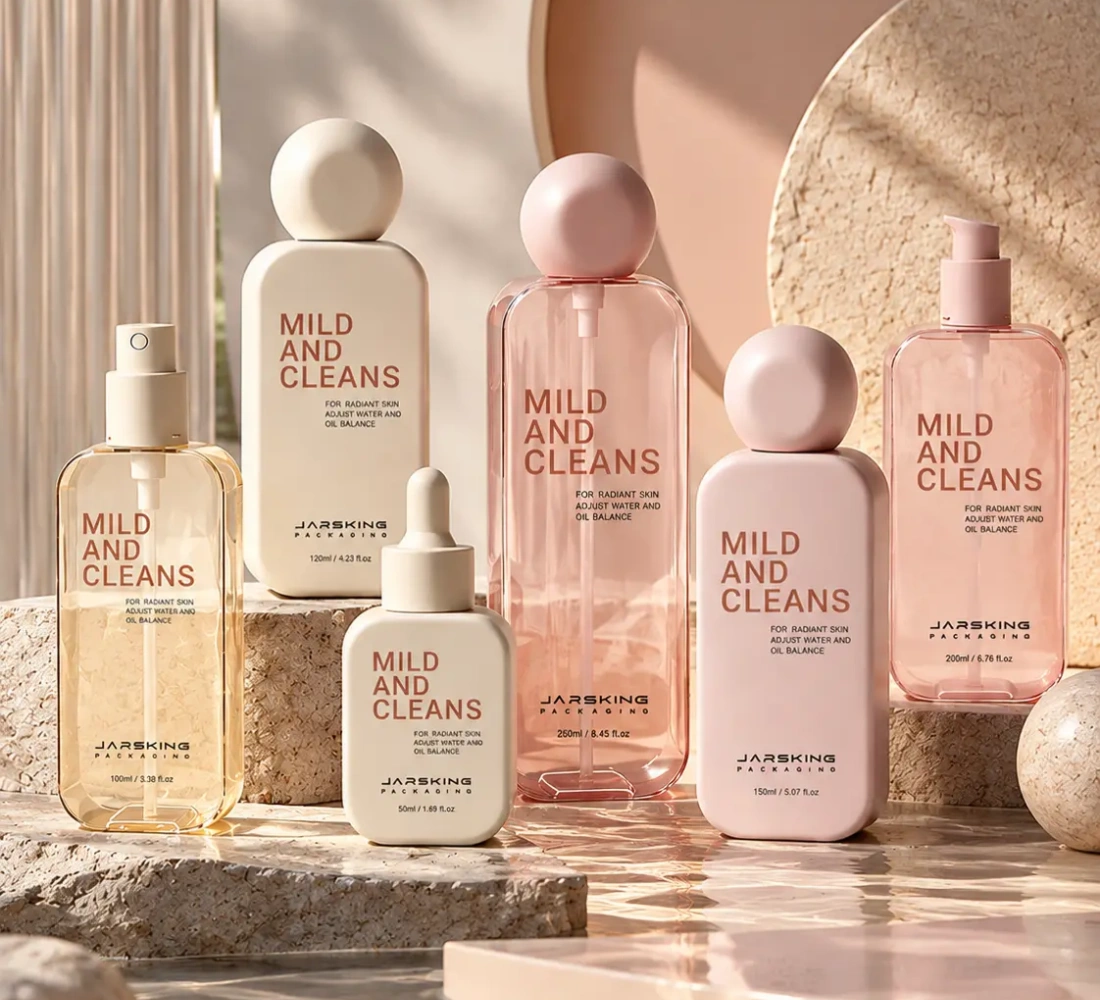
01 START WITH A FORMAT
Existing Formats + Custom Decoration
Use an established bottle or jar as the starting point, then develop the brand presentation through color, finish, printing, and selected components.
☛ Compare available shapes and capacities
☛ Select compatible pumps, droppers, caps, or lids
☛ Develop colors, artwork, and surface finishes
☛ Confirm decorated samples before production
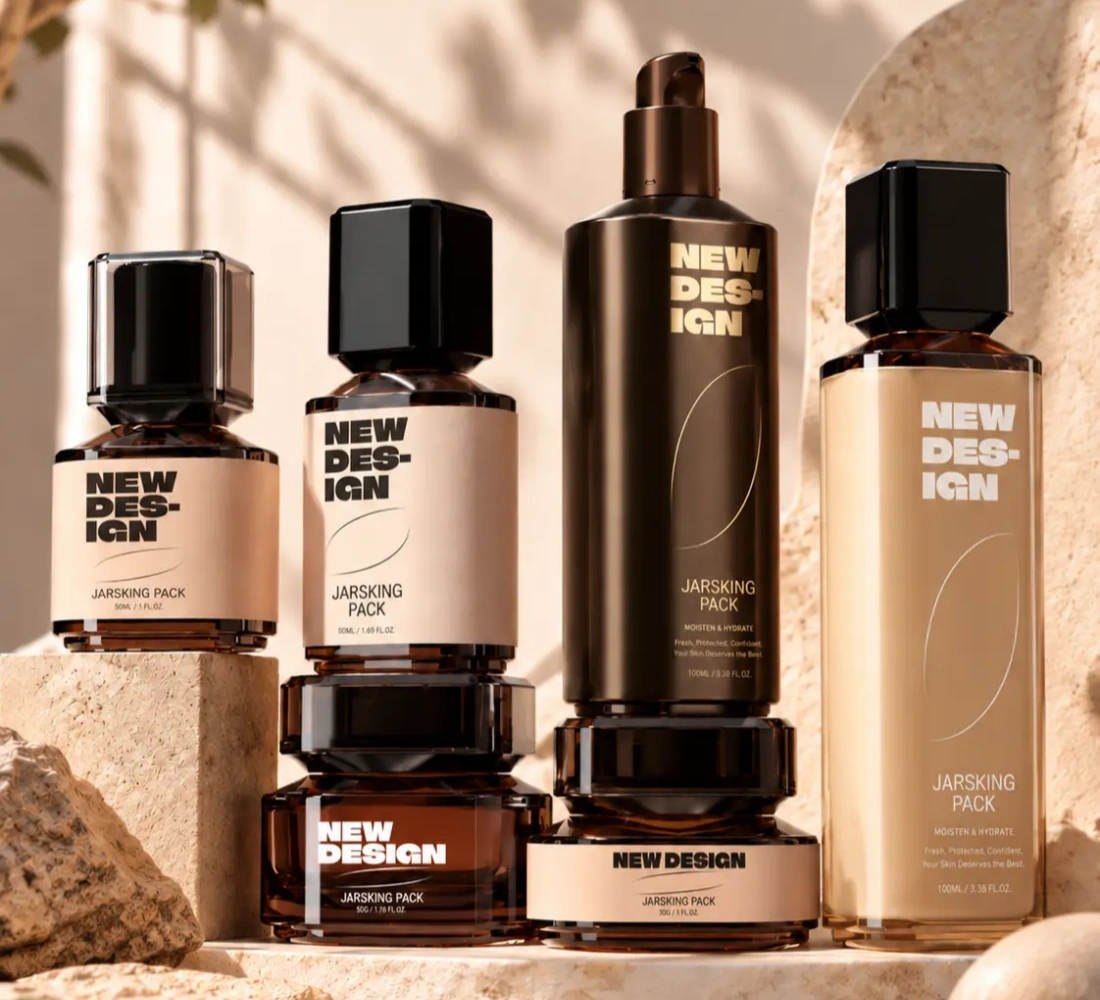
02 DEVELOP A STRUCTURE
Custom Structures + Tooling Development
Develop a new structure when the packaging needs a distinctive silhouette or a specific functional feature.
☛ Define dimensions and performance requirements
☛ Review technical drawings and component interfaces
☛ Evaluate prototypes and required tooling
☛ Approve the structure and appearance before production
One-stop Packaging Support
Cosmetic Packaging Lead Times: From Sampling to Shipment
“Plan your launch around separate sampling, production, and shipping stages. For a standard 10,000-unit order, the guide lists mass production at 30–40 days, with sampling and sea freight scheduled separately.”
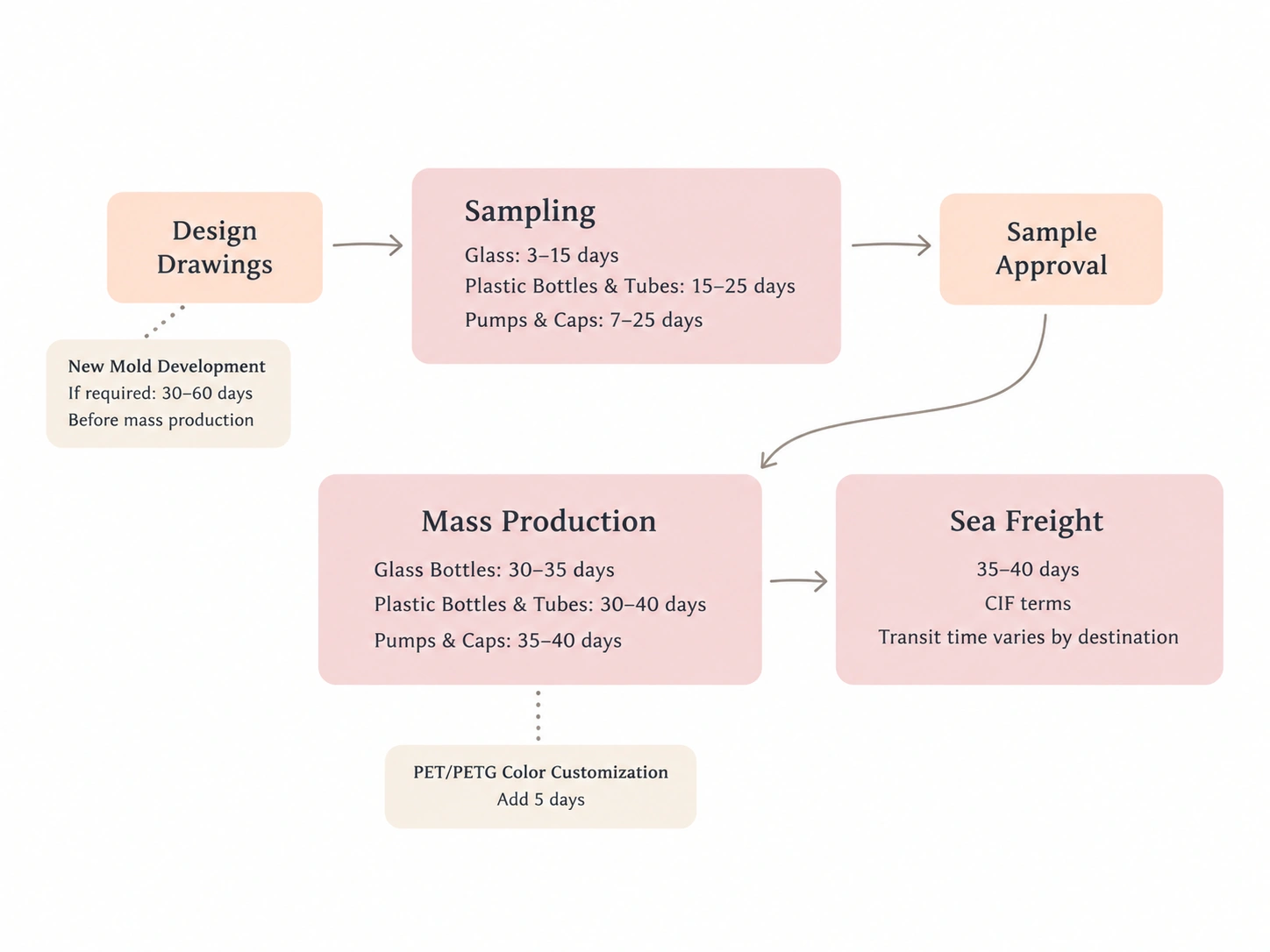
• Sampling: 3–25 Days, Depending on the Component
Glass samples take 3–15 days, plastic bottle and tube samples take 15–25 days, and pump or cap samples take 7–25 days. If your project requires a new mold, allow 30–60 days for mold development before mass production begins.
• Mass Production: 30–40 Days for 10,000 Units
Glass bottle production takes 30–35 days, while plastic bottles and tubes take 30–40 days. Pumps and caps require 35–40 days. For PET or PETG color customization, allow an additional 5 days in the production schedule.
• Sea Freight: Allow Another 35–40 Days
Sea freight adds approximately 35–40 days after production, with transit time varying by destination. Share your required arrival date when submitting your brief so sampling, production, and shipping can be reviewed as separate stages.
☑ Planning note: Timelines are based on a standard 10,000-unit order and are subject to the required technical files, sample approvals, and payment arrangements. Confirm the starting point and schedule for each stage before finalizing your launch date.
Our Commitment to Sustainability
At Othilapak, we prioritize eco-conscious packaging solutions designed to reduce environmental impact while maintaining premium quality and functionality.

Eco-Friendly PET & PCR – Lightweight, shatter-resistant, and fully recyclable.

Recyclable Glass – Durable, reusable, and 100% recyclable.

Refillable Jars & Bottles – Designed for longevity, reducing single-use plastic waste.
Cosmetic Packaging Sourcing FAQs
What is your minimum order quantity for custom cosmetic packaging?
Our standard MOQ is 10,000 pieces per item. The final requirement depends on the packaging format, components, decoration, and whether new tooling is needed. Share quantities by capacity, color, and artwork version so we can confirm the applicable MOQ for each item.
Can I customize an existing bottle without developing a new mold?
Yes, selected existing formats can be customized through colors, surface finishes, printing, and component choices. This allows you to change the brand presentation without developing a new bottle shape. Availability and minimum quantities depend on the selected format and decoration process.
Can you supply matching bottles and jars for a skincare line?
Yes, we offer bottle and jar options that can be coordinated into skincare sets. Matching can include colors, finishes, closure details, and artwork placement. Each product should still use a container and dispensing system evaluated for its own formula.
How do I choose between glass, PET, PP, and acrylic packaging?
Start with the formula, dispensing method, target appearance, and distribution requirements. Then compare the complete structure, including the inner container and product-contact components. Material selection should be confirmed through the relevant formula and packaging evaluation, not appearance alone.
What information do you need to recommend packaging?
Send your product type, target capacity, estimated quantity per SKU, and preferred packaging style. Formula characteristics, dispensing expectations, destination market, and filling requirements help narrow down the options. Reference images are useful, but they should accompany the technical and commercial requirements.
What affects sampling and bulk production lead times?
Lead time depends on the format, tooling requirements, component availability, decoration, and approval process. Artwork changes and sample revisions can also move the schedule. Request a project-specific timeline that separates sampling, production, inspection, and shipping.