

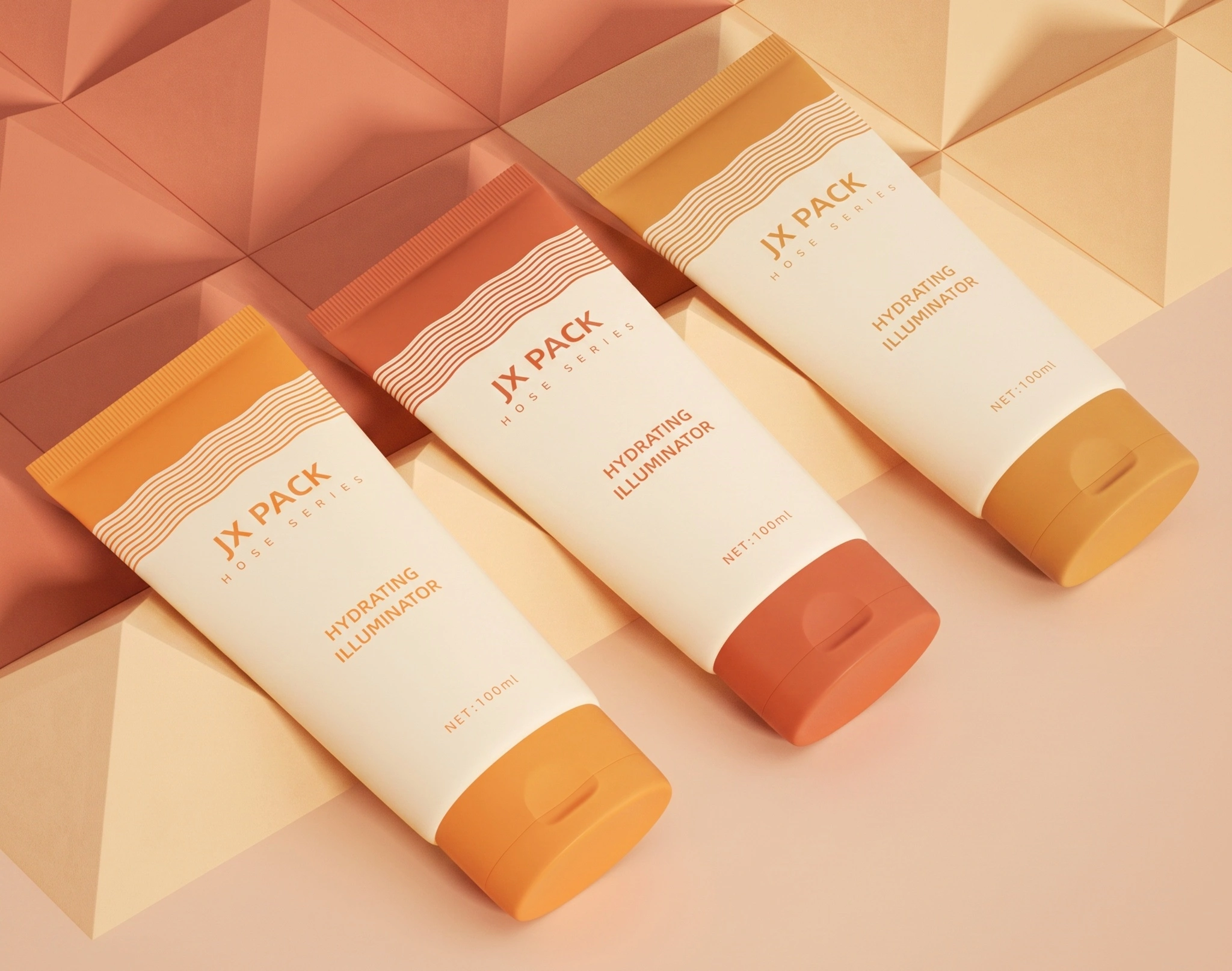

A cosmetic tube without the right cap is like a beautifully designed car with a bad door handle. The product may be excellent, the tube artwork may look premium, and the formula may be perfectly stable—but if the cap leaks, cracks, dispenses too much product, or feels awkward in the customer’s hand, that is what people remember.
For brand owners, professional buyers, trading companies, and contract filling factories, cosmetic tube caps are not an afterthought. They protect the formula, control dosage, influence the customer experience, and quietly shape whether the packaging feels budget, practical, or luxury.
The right closure should feel almost invisible. Your customer should open it without thinking, use the product without making a mess, close it confidently, and reach for it again tomorrow. That is when a cosmetic tube cap is doing its job well.
1. Understanding Cosmetic Tube Caps and Closures
A cosmetic tube cap is the closure attached to the tube neck or shoulder. It can be a simple screw cap, a flip-top cap, a disc-top closure, a nozzle, a rollerball applicator, an airless pump, or a more specialized dispensing system.
Caps may seem like a small part of the package, but they affect almost every stage of the product journey. They matter during filling, sealing, shipping, storage, retail display, and daily use.
A customer may forgive a simple tube design. They are much less forgiving when body lotion leaks in a handbag, when sunscreen pours out too quickly, or when an eye cream applicator feels cheap against the skin.
Importance of Caps in Cosmetic Tube Packaging
The cap is the final point of contact between the product and the customer. It is also the first moving part they touch.
For a skincare brand, the cap can shape product perception in seconds. A basic screw cap may feel clean, reliable, and travel-friendly. A flip-top cap can make a daily cleanser feel quick and convenient. A metal massage applicator can turn a standard eye cream into a more premium ritual.
From a procurement perspective, caps also affect unit cost, minimum order quantity, production speed, assembly requirements, and compatibility with the selected tube diameter. A tube and cap cannot be sourced separately without considering the neck finish, thread size, shoulder design, and filling equipment.
For a contract filling factory, the closure must work efficiently on the line. It must be easy to feed, align, apply, and torque correctly. An attractive cap that slows down production or creates inconsistent closure quality can become expensive very quickly.
A good cap needs to balance four things:
– Product protection.
– Leakage prevention.
– Easy and controlled dispensing.
– A look and feel that matches the brand.
If one of these is missing, the cap may become the weak point of the entire package.
Key Functions: Protection, Sealing, and Dispensing
The basic job of a cosmetic tube cap is to close the package. But a good closure does much more than that.
Protection means shielding the formula from contamination, moisture, dust, and unnecessary air exposure. This is especially important for active skincare, natural formulas, essential-oil blends, and products used in wet environments such as bathrooms.
Sealing means preventing leakage during shipping, storage, and customer use. A cap must fit the tube neck correctly and create enough pressure or thread engagement to remain secure. If the cap loosens during transport, even a small leak can damage outer cartons, labels, and nearby products.
Dispensing means allowing the user to get the right amount of product with minimal effort. This is where cap design becomes personal. A thick body butter needs a larger opening. A spot treatment needs precision. A face serum may need controlled drops or a measured pump dose.
The cap should match the formula’s behavior, not just the product’s visual style.
For example, a flip-top cap works well for products used quickly in the shower, such as cleanser, shampoo, conditioner, and body wash. A screw cap often provides a tighter, more travel-friendly closure, while a nozzle cap supports accurate application for smaller treatment areas.
2. Main Types of Cosmetic Tube Caps
There is no universal “best cosmetic tube cap.” Every cap type solves a different problem. The trick is to choose based on the formula, usage environment, target customer, and brand position.
Standard Screw Caps
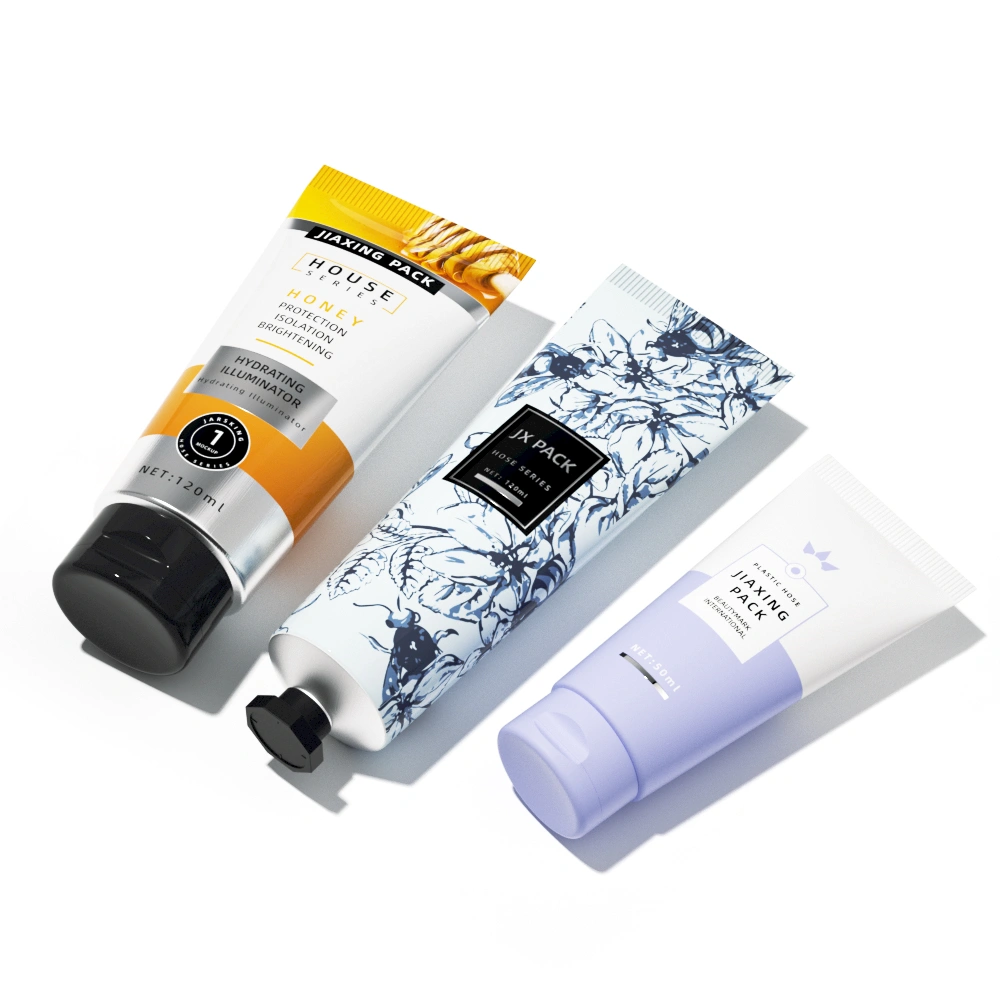
Screw caps are one of the most familiar and dependable cosmetic tube closures. They twist on and off using threads inside the cap and on the tube neck.
They are common for hand cream, facial cream, lip balm, eye cream, sunscreen, samples, ointments, and treatment products. A standard screw cap can be flat, round, tall, low-profile, ribbed, glossy, matte, colored, transparent, or metalized.
The biggest advantage is security. Because the cap fully twists onto the tube, it can create a strong seal when properly matched with the tube neck. This makes screw caps a practical choice for products that may travel in a handbag, suitcase, shipping carton, or e-commerce parcel.
Screw caps are particularly useful for:
– Travel-size skincare.
– Hand cream tubes.
– Medical or cosmeceutical creams.
– Precision nozzle tubes.
– Small sample tubes.
– Thick formulas that need controlled access.
– Products with inner plugs or tamper-evident seals.
The tradeoff is convenience. Customers usually need two hands—one to hold the tube and another to remove the cap. In the shower or when hands are wet, this can feel less smooth than a flip-top closure.
Still, screw caps should not be viewed as old-fashioned. With a well-designed shape, soft-touch finish, metallic coating, or embossed logo, they can look very premium. For a clean skincare brand or high-end treatment product, simplicity can feel more luxurious than an overly complex closure.
Flip-Top and Disc Top Caps
Flip-top caps are among the most popular cosmetic tube cap types because they are simple, fast, and familiar. They have a hinged lid that flips open to reveal the dispensing orifice. After use, the customer presses the lid down until it snaps shut.
These caps are widely used for facial cleansers, body wash, shampoo, conditioner, sunscreen, body lotion, exfoliating products, and everyday creams.
The real benefit is one-handed use. A customer can open the cap with their thumb, squeeze the product, and close the tube without putting it down. That matters when someone is standing in the shower, holding a baby, rushing to work, or trying not to drop a wet tube.
Flip-top caps are often a strong fit for medium and large cosmetic tubes, especially 30 mm, 35 mm, 40 mm, and 50 mm diameters. They can also work on smaller tubes, but the cap should not look oversized compared with the tube body.
Disc-top caps are a variation of the flip-top concept. Instead of lifting a full lid, the customer presses down on one side of a disc. The opposite side pops up, revealing a dispensing opening. Disc-top caps are often used for lotions, sunscreens, shampoos, body wash, face cream, and other personal care products because they can be opened easily with wet or oily hands.
The difference is subtle but important:
| Cap Type | How It Opens | Best For | Main Advantage |
| Flip-top cap | Lift hinged lid | Cleansers, shampoo, body wash, cream | Fast one-handed use |
| Disc-top cap | Press one side of disc | Lotion, sunscreen, gel, body care | Sleek look and controlled flow |
| Screw cap | Twist fully off | Samples, hand cream, treatments | Strong seal and travel security |
| Nozzle cap | Remove or twist cap to expose tip | Spot treatment, serum, lip care | Precise dispensing |
A flip-top cap should have a reliable snap closure. If it opens too easily, it can leak. If it is too stiff, customers may break a nail trying to open it. That is why cap testing matters. A closure can look fine in a sample box and still perform poorly after repeated use.
Airless Pump and Spray Dispensers
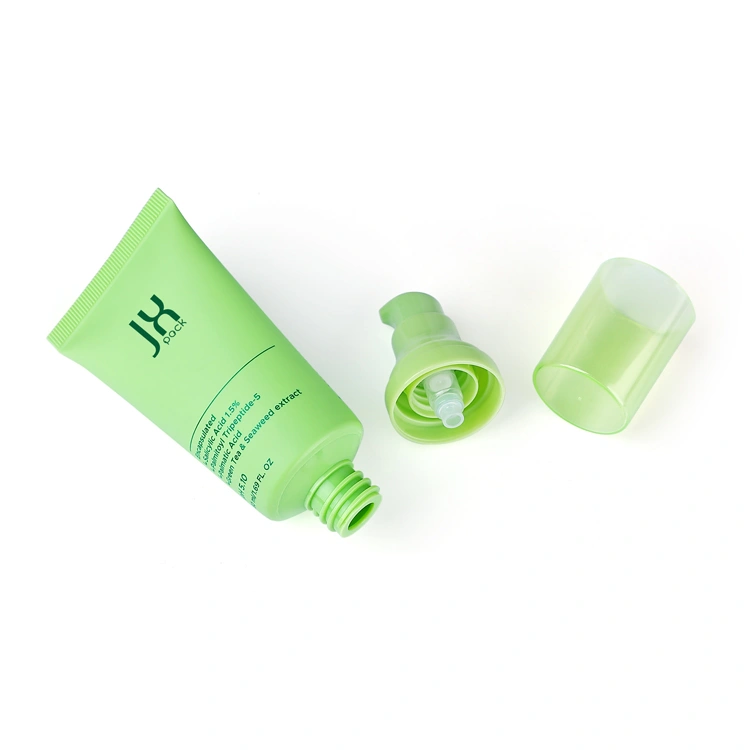
Airless pump caps are designed for products that benefit from more controlled dispensing and reduced air exposure. Instead of squeezing the tube directly, the customer presses a pump head. The system pushes the product out in a measured dose.
This type of packaging is often used for facial serum, moisturizer, foundation, treatment lotion, premium skincare, and sensitive formulas. Airless systems are especially appealing when a brand wants to communicate hygiene, precision, and advanced product protection.
Airless packaging can help limit air contact with the formula and deliver a controlled amount of product with each pump. But it is not a magic solution. The formula still needs to be tested for viscosity, compatibility, priming performance, and dispensing consistency.
Airless pump tube systems are usually more expensive than standard squeeze tubes. They can also require more careful assembly and have higher minimum order quantities. For a premium serum or active skincare product, the investment may be worthwhile. For a basic body lotion, it may be unnecessary.
Spray dispensers are less common on traditional cosmetic tubes, but they can work for lightweight mists, scalp treatments, liquid sunscreen, or specialty personal-care products. If you are considering a spray system, test whether the formula can atomize properly. A mist cap will not solve a formula that is too thick.
Airless pumps and spray dispensers should be selected early in the development process. They are not simple accessories that can be added after the tube is already finalized.
Applicator, Rollerball, and Specialty Caps
Specialty caps turn cosmetic packaging into an application tool. This can add real functional value when it genuinely improves the customer’s routine.
A nozzle cap has a narrow pointed tip that allows precise dispensing. It is commonly used for spot treatment, acne gel, lash serum, nail treatment, concealer, and targeted skincare. Nozzle caps are useful when the customer needs to apply a small amount exactly where it is needed.
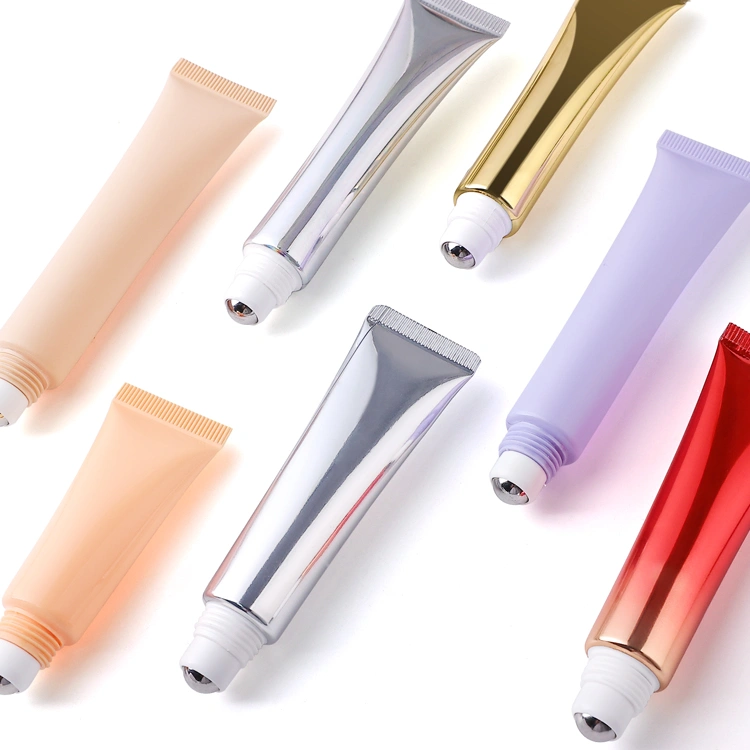
A rollerball applicator uses a metal or plastic ball to apply the formula directly to the skin. It is popular for eye serum, under-eye treatments, cooling gels, de-puffing products, and some scalp-care products. The rolling motion can create a massage-like feeling, which gives the product a more premium, ritual-based experience.
A massage applicator may include a metal tip, ceramic tip, multiple rolling balls, or shaped applicator head. These are often used for eye cream, facial treatment, neck cream, and lip care.
A slanted applicator is common for lip balm, lip mask, lip oil, and gloss-like treatments. It allows users to apply the product directly to the lips without fingers or a separate brush.
Specialty closures can be powerful, but they create more testing requirements:
– Can the formula flow through the applicator?
– Does the product dry or clog inside the opening?
– Does the applicator leak after shipping?
– Is the material compatible with essential oils or active ingredients?
– Does the cap feel comfortable on the skin?
– Can customers clean it easily?
– Does the applicator increase the product’s perceived value enough to justify the cost?
A rollerball cap may look beautiful in a presentation, but if it becomes stuck after two weeks of use, the customer will not care how elegant the product looked on launch day.
3. Cosmetic Tube Cap Materials and Specifications
Cap material affects cost, appearance, durability, chemical compatibility, recyclability, and the overall customer impression.
The most common cap materials are polypropylene, polyethylene, acrylic, and metal-clad plastic. Each one has a different role.
Plastic Options: Polypropylene, Polyethylene, and Acrylic
Polypropylene (PP) is one of the most widely used materials for cosmetic tube caps. It is lightweight, durable, cost-effective, and suitable for many common closure designs, including flip-top caps, screw caps, disc-top caps, and some pump components.
PP is popular because it can be molded into many shapes and colors. It can also be finished with matte, glossy, frosted, metallic, or soft-touch effects.
Polyethylene (PE) is also used in cosmetic packaging, especially for softer components and certain closure designs. It may be selected when flexibility is important.
For brands exploring recyclable packaging, matching a PE tube with a compatible PE or PP closure may support a more practical material strategy. However, recyclability depends on the whole package design and local recycling systems. It is better to be specific and honest than to make broad “100% eco-friendly” claims without evidence.
Acrylic capsare usually chosen for appearance. They can look clear, glass-like, thick, and luxurious. Acrylic is common in premium skincare, makeup, and high-end cosmetic packaging where the brand wants visual weight and a more upscale feel.
The challenge is that acrylic caps are typically heavier and can add cost. They may also complicate recycling compared with a simpler mono-material cap. If your brand is focused on luxury appearance, acrylic may be worth considering. If your brand is focused on lightweight travel packaging or low-impact material choices, a well-designed PP cap may be a better fit.
Metal Clad and Aluminum Caps
Metal-clad caps are usually plastic caps with an aluminum shell or metallic outer layer. They give the package a premium look without requiring the cap to be made entirely from metal.
These caps are popular for luxury hand creams, anti-aging skincare, eye treatments, fragrance-adjacent beauty products, and premium cosmetic lines. They can be finished in silver, gold, rose gold, brushed metal, matte black, or customized colors.
Metal caps or metal-clad closures add visual value, but they should be used with intention. A luxury cap can elevate a brand, yet it can also make a basic product feel overpackaged if the rest of the experience does not match.
For example, a premium 30 ml eye cream with a metal massage applicator and metal-clad cap may feel appropriate. A simple 200 ml body wash in the same format may become unnecessarily expensive and difficult to recycle.
A manufacturer guide notes that plastic caps are often selected for cost-effective everyday products, while metal caps can create a more premium look, especially with aluminum cosmetic tubes.
Tube Diameters and Thread Sizes
The cap must match the tube diameter and neck finish. This is not optional.
A tube may have a 16 mm, 19 mm, 22 mm, 25 mm, 30 mm, 35 mm, 40 mm, or 50 mm body diameter, but the cap is selected based on the tube neck and thread specification—not only the body width.
Different suppliers may use different neck dimensions, thread profiles, shoulder styles, and cap molds. A cap that fits one supplier’s 30 mm tube may not fit another supplier’s tube, even if both are described as “30 mm cosmetic tubes.”
Before confirming production, request:
– Tube technical drawing.
– Cap technical drawing.
– Neck finish and thread specification.
– Cap height and outer diameter.
– Orifice size.
– Material details.
– Torque requirement, if applicable.
– Filled compatibility samples.
– Leakage test results.
– Artwork or decoration guideline for the cap.
This may sound detailed, but it is the kind of detail that prevents cartons full of unusable packaging.

4. How to Choose the Right Cap for Your Cosmetic Product
Choosing a cosmetic tube cap is not only a design decision. It is a usability test, a formula test, and a logistics test wrapped into one small component.
Formula Compatibility and Leakage Prevention
Start with the formula. Is it a thin liquid, gel, lotion, thick cream, scrub, balm, oil, or active serum?
Thin formulas need controlled dispensing. A large opening can cause waste and mess. Thick formulas need a larger orifice, softer tube wall, or stronger dispensing mechanism. A narrow nozzle may not work for a clay mask, no matter how good it looks.
Then consider ingredient compatibility. Essential oils, alcohol, acids, active ingredients, and fragrance components can affect certain plastics, liners, seals, and metal finishes. Always conduct a proper compatibility test with the actual bulk formula.
For leakage prevention, test the complete package under realistic conditions:
– Store upright and upside down.
– Test at warm and cool temperatures.
– Simulate transportation vibration.
– Check caps after repeated opening and closing.
– Inspect the tube neck and cap threads.
– Test pressure resistance for air shipment or altitude changes.
– Confirm sealing performance after filling.
If your formula will be sold in e-commerce, this is even more important. A customer who receives a leaked package does not care whether the issue came from the tube, cap, filler, or courier. They see one brand: yours.
User Convenience and Ergonomics
A cap should make the product easier to use, not more complicated.
For cleansers and body wash, flip-top caps are usually comfortable because customers can use them with one hand. For hand cream in a handbag, a screw cap may be safer. For eye cream, a rollerball or massage tip may create a more enjoyable ritual. For a thick hair mask, a wide flip-top or twist-top opening may be more practical than a narrow nozzle.
Think about where the product will be used:
| Use Situation | Recommended Cap Direction |
| Shower or wet bathroom | Flip-top cap or disc-top cap |
| Handbag or travel bag | Secure screw cap |
| Precision facial treatment | Nozzle cap or fine-tip applicator |
| Eye-care ritual | Metal tip, rollerball, or massage applicator |
| Premium serum or lotion | Airless pump cap |
| Thick cream or hair mask | Large flip-top, twist-top, or wide orifice |
| Child-safety requirement | Certified child-resistant closure where legally required |
Child-resistant caps should only be used when needed for safety, regulatory compliance, or product risk management. They are not automatically suitable for every cosmetic product. If your formula contains ingredients that require a child-resistant closure in a target market, confirm requirements with local regulatory professionals before production.
Customization and Aesthetic Appeal
Cap customization can make a standard tube feel unique. You do not always need expensive custom molds to create a strong visual identity.
Common customization choices include:
– Custom cap colors.
– Matte or glossy finish.
– Frosted translucent caps.
– Soft-touch coating.
– Metallic spray coating.
– Aluminum shell or metalized finish.
– Embossed logo.
– Debossed logo.
– Hot stamping.
– Silk-screen printing.
– Two-color cap design.
– Color-matched tube and cap.
– Contrasting cap for stronger shelf visibility.
A cap should support the tube design, not compete with it. If the tube artwork is bold and colorful, a clean simple cap may create balance. If the tube body is minimal and white, a textured black cap or metallic closure may provide the personality.
The most successful packaging often has one clear visual idea. Too many finishes, colors, and decorative details can make a product feel confused instead of premium.
5. Market Trends in Cosmetic Tube Closures
Cosmetic tube cap trends are moving in two directions at once. One direction is simplicity: fewer materials, lighter components, recyclable-focused design, and clean functional shapes. The other is experience: applicators, airless systems, premium finishes, and closures that make the product feel special.
The challenge for brands is choosing which direction actually supports their product.
Sustainable and Eco-Friendly Cap Solutions
Sustainable cosmetic packaging is no longer just a trend word. Buyers increasingly ask what the tube and cap are made from, whether PCR content is available, whether the package can be recycled, and whether the design uses unnecessary material.
Common sustainability-focused cap options include:
– PCR polypropylene caps.
– Lightweight PP closures.
– Mono-material tube and cap systems.
– Reduced-height caps.
– Recyclable-friendly flip-top designs.
– Bio-based plastic options.
– Caps designed with less decoration or fewer mixed materials.
A practical approach is often better than a perfect-sounding claim. A simple PP cap paired with a recyclable-focused PE tube may be more realistic than a highly decorated multi-material closure that looks sustainable only in marketing photos.
Sustainability should also include product protection. A cap that reduces material but causes leakage or product waste is not a good solution. The most responsible package is one that protects the formula until the customer can use it fully.
Innovations in Functional Packaging Design
Functional cap design is becoming more sophisticated. Brands are looking beyond “open and close” and asking how a closure can make application easier, cleaner, more controlled, and more memorable.
Examples include:
– Airless pump caps for dosage control.
– No-drip valve tips.
– Cooling metal eye applicators.
– Rotating twist-top closures.
– Precision needle nozzles.
– Dual-chamber cosmetic tube systems.
– Rollerball caps for direct application.
– Tamper-evident closures.
– Refillable or reusable outer packaging systems.
– Smart packaging elements, such as QR codes on caps or closures.
The key is to avoid innovation for its own sake. A special cap should solve a real user problem. If a massage applicator makes eye cream easier to apply, great. If a custom cap only makes production slower and raises the retail price, it may not be worth it.
A simple flip-top cap can be more successful than a complicated premium closure if it makes the customer’s life easier.
The best cosmetic tube cap is not always the most expensive one, the newest one, or the most decorative one. It is the closure that protects your formula, fits your filling process, supports your brand image, and feels natural in the customer’s hand.
When the cap works well, nobody talks about it. They just enjoy using the product. And honestly, that is exactly what great packaging should do.
FAQs
What is the best cosmetic tube cap for preventing leaks?
Screw caps are often the best choice for strong sealing and travel security because they use threaded engagement with the tube neck. However, every closure must be tested with the actual formula, tube, filling process, shipping conditions, and storage temperatures before mass production.
How do I choose a cap based on cosmetic formula viscosity?
Thin liquids, serums, and gels usually need small orifices, pumps, nozzles, or controlled dispensing systems. Thick creams, clay masks, scrubs, and hair treatments generally require wider openings, large flip-top caps, or wide-orifice twist-top closures for easy dispensing.
Are flip-top caps suitable for cosmetic tubes?
Yes. Flip-top caps are ideal for frequently used products such as facial cleansers, shampoos, conditioners, body washes, sunscreens, and body lotions. They offer convenient one-handed use, but the snap closure must be tested to ensure it remains secure during shipping and repeated use.
What is the difference between a flip-top cap and a disc-top cap?
A flip-top cap has a hinged lid that lifts upward to reveal the dispensing opening. A disc-top cap opens when users press one side of a flat disc, causing the opposite side to rise. Both work well for personal-care products, while disc-top caps often provide a sleeker appearance and controlled flow.
Which cap is best for eye cream or targeted skincare treatments?
Rollerball applicators, cooling metal tips, massage heads, and narrow nozzle caps are popular for eye creams and precision treatments. The best option depends on whether the formula needs direct application, controlled dosage, massage benefits, or a premium skincare ritual.
How can brands choose more sustainable cosmetic tube caps?
Consider lightweight PP caps, PCR polypropylene closures, reduced-height designs, mono-material packaging systems, and closures with limited mixed materials or decorative layers. Sustainability claims should reflect the complete package design and the recycling infrastructure available in the target market.