

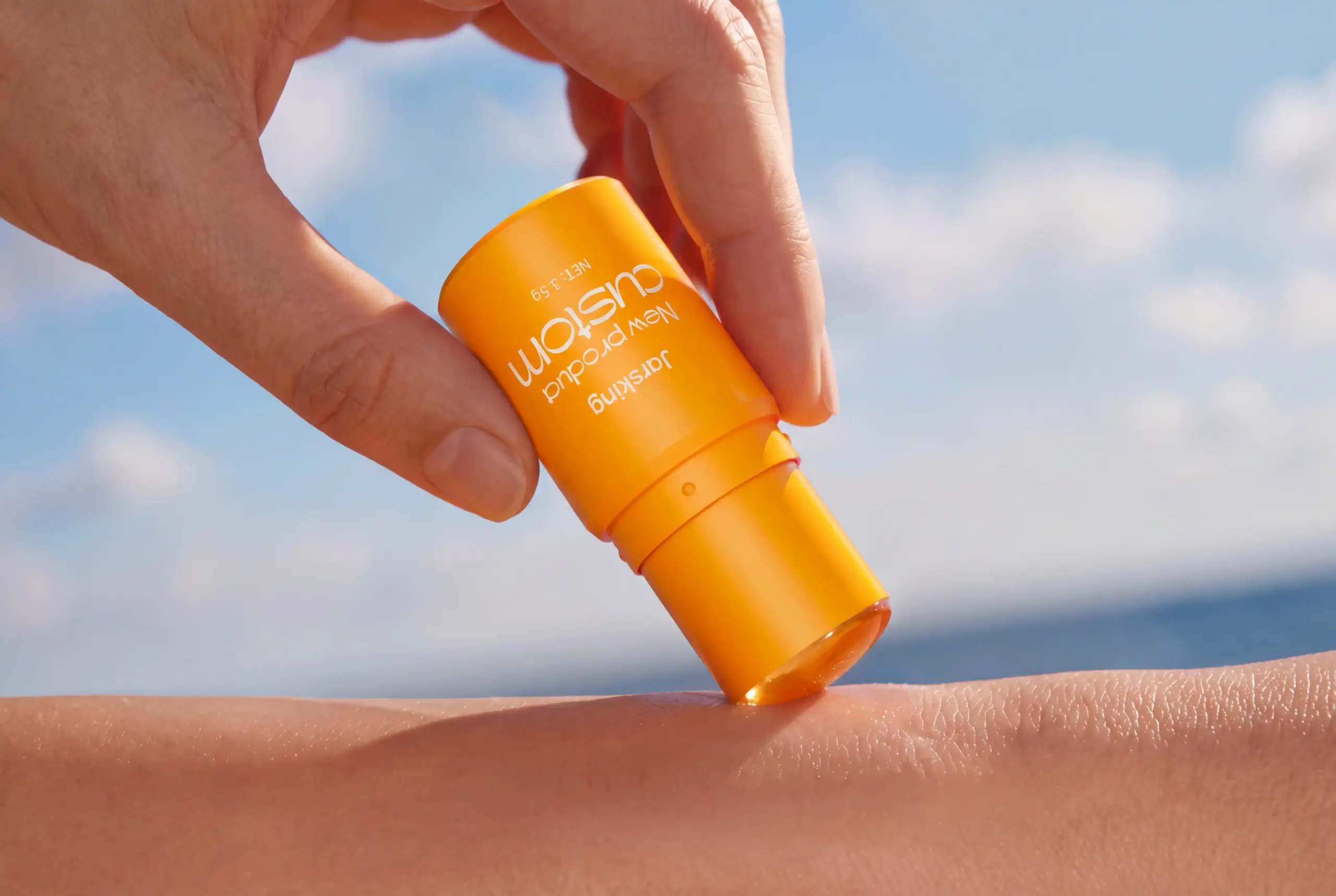
A small sunscreen package can make a brand feel thoughtful—or strangely careless. I have seen beautifully formulated SPF products lose their appeal because the sample held too little product, the bottle leaked in a guest’s beach bag, or the cap became impossible to open with sunscreen-covered hands.
That is why travel size sunscreen packaging should never be treated as a scaled-down version of a full-size bottle. It is a separate product experience. The ideal pack must protect a UV-sensitive formula, fit the sales channel, communicate trust in seconds, and make reapplication feel easy rather than inconvenient.
For brands sourcing travel size sunscreen bottles, mini sunscreen packaging, sunscreen tubes, or sunscreen sample packaging, the real question is simple: What will the customer do with this product after they pick it up?
1. Travel Size Sunscreen Packaging Starts With Use
The phrase “travel size” sounds clear until you begin speaking with real buyers. A 5 ml facial SPF sample, a 30 ml hotel amenity, and a 100 ml carry-on sunscreen may all sit in the travel-size category, but their purpose, cost structure, and packaging requirements are completely different.
A customer receiving a mini sunscreen in a beauty subscription box wants to test texture, scent, finish, and compatibility with makeup. A hotel guest wants immediate, fuss-free protection after realizing they forgot sunscreen at home. A retail customer wants a compact product that earns permanent space in a handbag, gym bag, or carry-on.
If the packaging does not reflect that moment, it creates friction.
Travel-size sunscreen is commonly sold in compact 1 oz, 1.8 oz, and 3 oz formats, while single-use packets remain popular for outdoor events, bulk distribution, and promotional programs. This range shows why selecting capacity purely by “smallest possible package” is a poor strategy.
The three questions to ask before sourcing
Before requesting a quotation, I recommend that brand teams pause and answer these questions:
– Is this package meant for a one-time trial, several facial applications, or repeated full-body use?
– Will customers use it indoors, beside a pool, on a beach, during sports, or while traveling?
– Is the commercial goal product discovery, hotel guest satisfaction, retail sell-through, or long-term replenishment?
The answers influence almost every specification: capacity, material, cap style, print area, shipping case pack, and even whether a carton is necessary.
Product format by sales channel
| Use case | Recommended fill size | Suitable packaging | What matters most |
|---|---|---|---|
| Single-use sunscreen sample | 3–5 ml | Sachet, small stick pack, mini tube | Low cost, hygiene, easy insertion into campaigns |
| Facial SPF trial | 5–15 ml | Small tube, airless mini, compact bottle | Enough product to test texture and daily use |
| Beauty kit or gift-with-purchase | 10–30 ml | Mini tube, bottle, airless pump | Premium look and repeated brand exposure |
| Hotel or resort amenity | 20–50 ml | Flip-top tube, HDPE bottle, refillable system | Leak resistance, convenience, housekeeping efficiency |
| Retail travel SKU | 30–100 ml | Travel sunscreen tube, bottle, spray, stick | Shelf appeal, portability, enough product for real travel |
| Outdoor event or resort retail | 50–100 ml | Tube, tottle, spray bottle | Practical use, visibility, durable handling |
For hotel programs, 0.5 oz and 1 oz HDPE “tottle” containers are specifically marketed as durable, impact-resistant mini sunscreen bottles for beach resorts and coastal hotels. That is a useful signal for buyers: a sturdy, lightweight plastic package often matters more than a luxurious-looking but fragile material.
Why samples need more thought
Sunscreen sample packaging is often underestimated. Brands sometimes choose a 2–3 ml sachet because it looks economical on a per-unit basis. Yet sunscreen is a product people need to apply generously. If there is only enough product for a tiny patch test, the consumer cannot meaningfully judge spreadability, white cast, pilling, fragrance, or comfort after several hours of wear.
For a facial sunscreen, a 5–10 ml mini tube usually creates a better experience than a flat sachet. The customer can reseal it, use it for several mornings, and develop a genuine impression of the formula. In other words, the packaging converts a sample into a relationship.
A sachet still makes sense when distribution volume is the priority: magazine inserts, festival bags, hotel check-in gifts, direct-mail promotions, or large sampling campaigns. But when the product’s texture is the main reason to buy, give the user enough product to discover it properly.
2. Choose Between Tubes, Bottles, Sachets, and Pumps
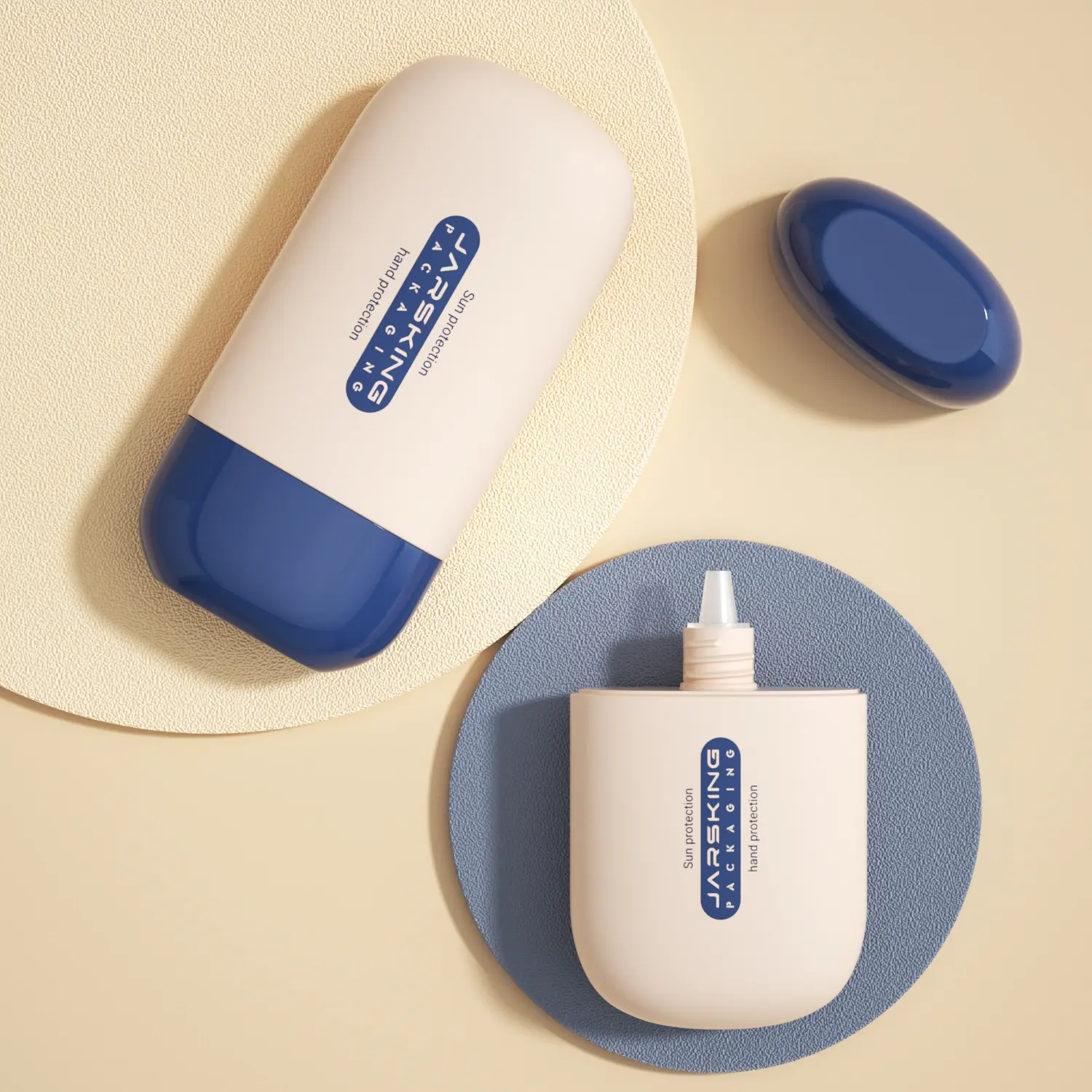
There is no universally “best” mini sunscreen packaging. The right choice depends on formula viscosity, application style, target price, and desired brand perception.
Still, one format consistently performs well across samples, hotels, and retail: the tube.
Travel sunscreen tubes: the practical all-rounder
A travel sunscreen tube is usually the safest starting point for lotion, cream, and mineral SPF products. Tubes are lightweight, less likely to break, easy to fill, and naturally suited to controlled dispensing.
That last point matters more than many buyers realize. A sunscreen formula may be thick, creamy, or pigment-rich. A wide-neck bottle can deliver too much product at once. A tube allows consumers to control the dose with a gentle squeeze, which keeps the cap cleaner and reduces waste.
For many brands, a 15 ml, 30 ml, or 50 ml tube provides the best balance of portability and real-world usefulness.
Choose a tube when you need:
– Controlled dispensing for medium- to high-viscosity sunscreen
– A packaging format that fits hotel kits, beauty boxes, and travel retail
– A broad printable surface for SPF level, claims, instructions, and branding
– Lower breakage risk during e-commerce shipping and travel
– A standing shape for retail displays or bathroom countertops
A flip-top cap is particularly suitable for body sunscreen and hotel amenities. It can be opened with one hand, works well around water, and reduces the chance that guests misplace the cap. A screw cap can look cleaner and more premium for facial SPF, but it is slightly less convenient for quick beach use.
Travel size sunscreen bottles for fluid formulas
Travel size sunscreen bottles work best when the formula is fluid, sprayable, or deliberately positioned as a premium skincare-suncare hybrid. Lightweight facial SPF serums, milky sunscreens, and low-viscosity lotions can perform beautifully in a small bottle with a treatment pump, disc-top cap, or controlled-orifice closure.
The bottle itself should not be chosen for visual appeal alone. A high-flow formula in a bottle with an oversized opening can create a messy experience in seconds. Product runs down the neck, the lid becomes slippery, sand sticks to it, and customers blame the brand—not the closure design.
For fluid sunscreen bottles, evaluate:
– Dispensing volume per pump or squeeze
– Whether the formula drips after application
– Closure and liner compatibility with oils, UV filters, and fragrance
– Leak performance during air transport and temperature changes
– Whether the bottle is easy to squeeze when only a small amount remains
– The space required for legally required label information
HDPE and PET are common choices for plastic bottles, but the formula and intended shelf life should determine the final material. A packaging supplier may confidently recommend a resin that works well for ordinary lotion; that does not automatically mean it is suitable for every sunscreen formula. Compatibility testing with the finished product is essential.
Sachets and stick packs: distribution at scale
Sachets are the most economical sunscreen sample packaging option when a brand needs to distribute thousands—or millions—of units. They are compact, easy to transport, and inexpensive to insert into campaign materials.
They also solve a hygiene problem. A sealed, single-use sachet provides a fresh portion and can be convenient for events, poolside activations, and sports partnerships. Bulk sunscreen listings show active demand for individual packets as well as 1 oz travel tubes and 1.8 oz mini sprays.
But sachets carry a brand-positioning risk. They can feel disposable. They cannot be resealed. They create more flexible-packaging waste per use. And they may not hold enough sunscreen for consumers to understand whether the product actually fits their routine.
A good rule is this: use sachets to increase reach; use mini tubes to increase conversion.
Airless pumps and mini sprays
Airless pumps can elevate a facial SPF product, particularly for premium skincare brands. They offer controlled dosing, help reduce product backflow, and present a clinical, sophisticated appearance. They are especially worth considering for antioxidant SPF formulas, tinted sunscreen, or daily face products at a higher price point.
The trade-off is complexity. Airless systems contain multiple components, need priming tests, and usually cost more than tubes. They should be used because they deliver a real product or branding advantage—not because they look expensive.
Mini sprays can work for low-viscosity sunscreen formulas and body products. They are appealing for resort shops and outdoor retail, but they demand thorough testing. Spray patterns, actuator performance, clogging, and overspray can affect the entire customer experience. A spray that looks good in a showroom but fails after heat exposure is an expensive mistake.
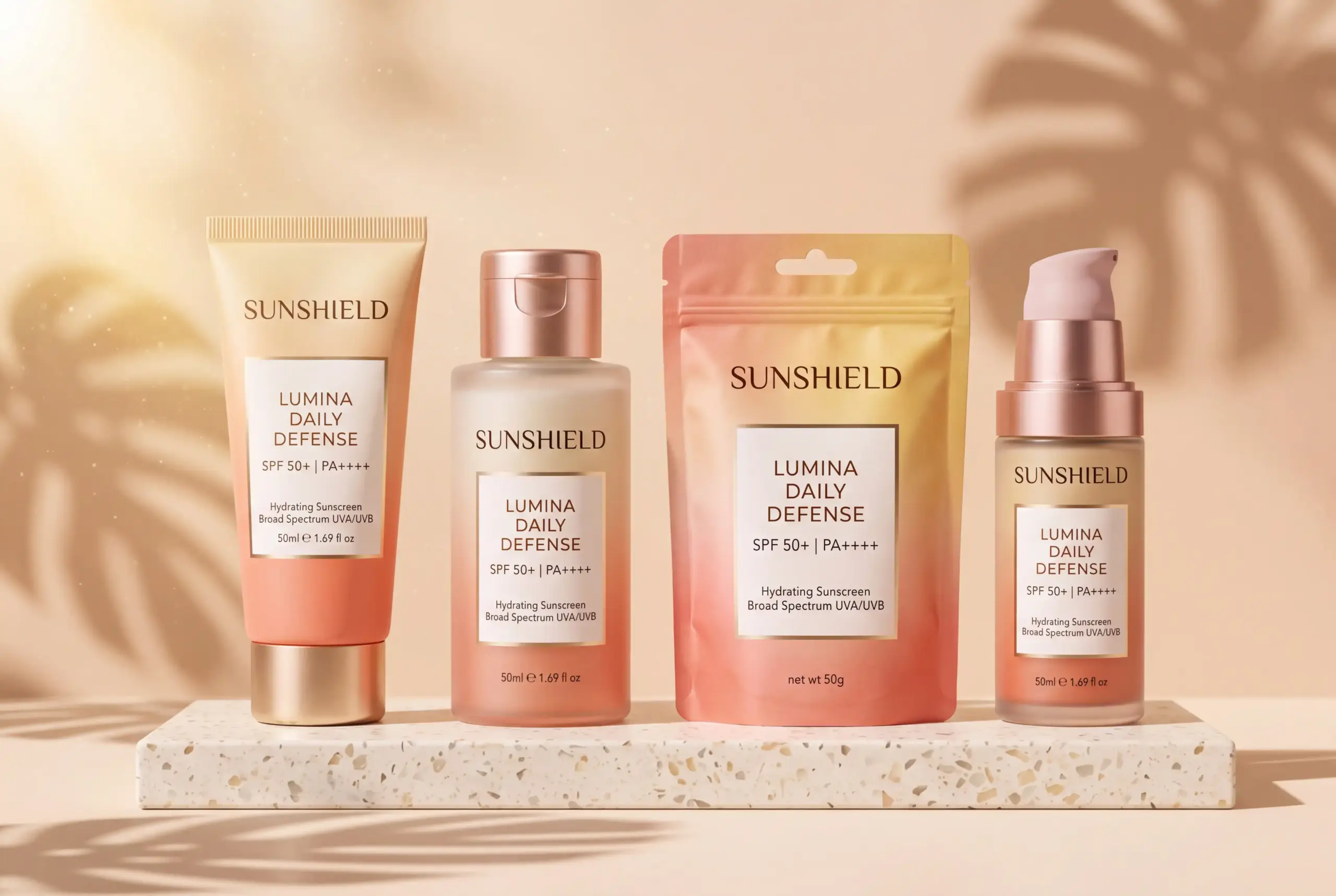
3. Materials, Closures, and Formula Protection
Sunscreen is not ordinary body lotion. UV filters, oils, pigments, fragrances, and active ingredients can challenge packaging over time. A package must do more than contain the product; it must help preserve performance from filling line to customer use.
Material selection is a compatibility decision
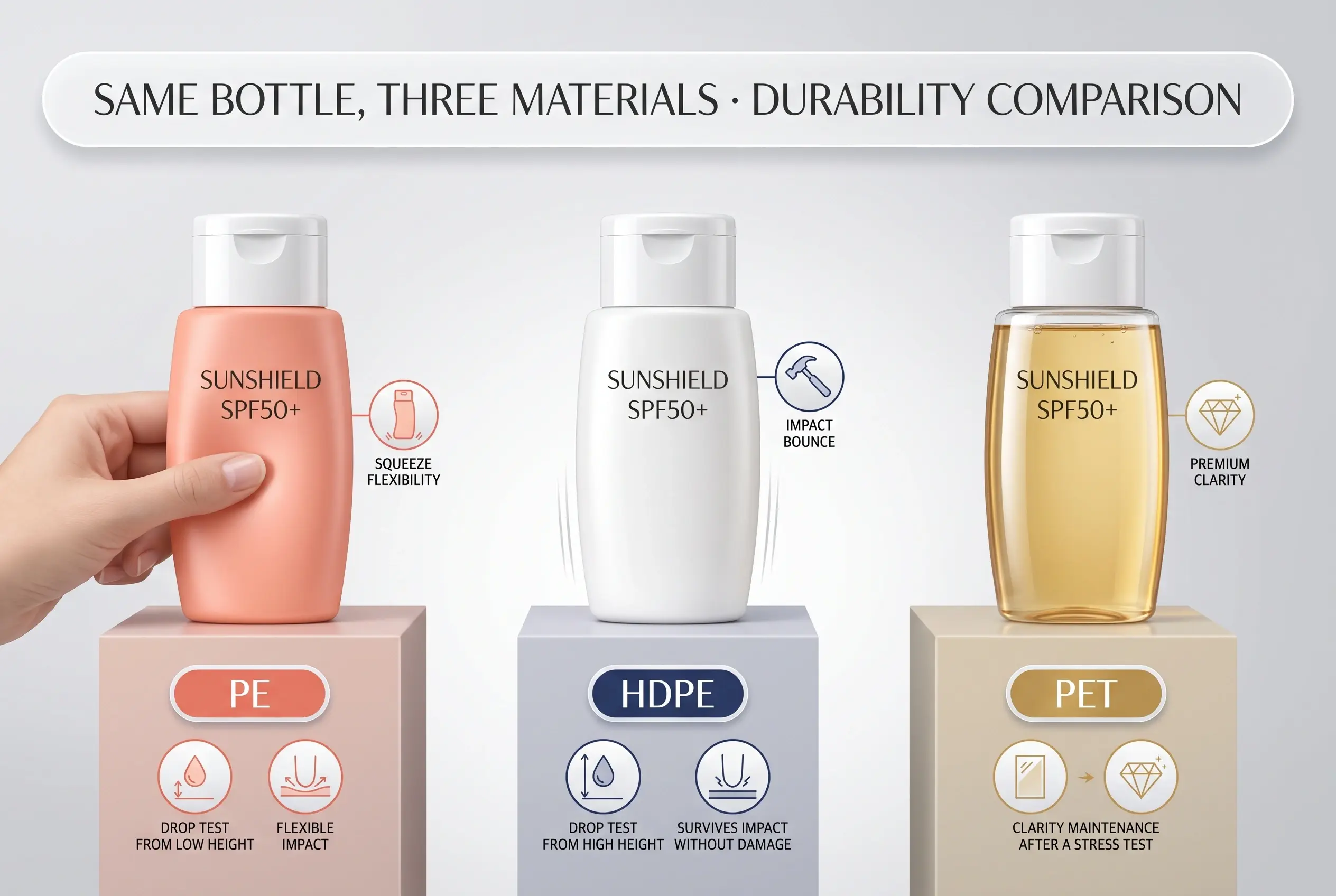
PE tubes are widely used for sunscreen because they are flexible, lightweight, and familiar to consumers. HDPE bottles are valued for durability and impact resistance, especially in hospitality environments. PET can provide clarity and a premium appearance for appropriate formulas. Laminate tubes may be useful when stronger barrier properties are needed.
Yet there is no shortcut here. A material may look perfect on paper and still interact poorly with a particular formula. Sunscreen packaging decisions should be validated through actual testing under conditions that reflect the product journey.
Ask your supplier and filling partner to perform:
– Formula compatibility testing with the finished sunscreen
– High- and low-temperature stability tests
– Leakage and pressure testing
– Cap-opening and closure-torque testing
– Product dispensing tests at the start, middle, and end of use
– Decoration abrasion testing
– Transport testing for e-commerce and bulk shipment
– Assessment of odor, color, separation, or package deformation over time
I often advise buyers to test more than the package. Test the moment. Put the filled mini tube into a toiletry bag. Leave it in a warm car simulation. Open it with damp hands. Ask someone who has never seen the product to use it without explanation. Those small observations often identify a weak cap, awkward dispensing angle, or unclear label before mass production begins.
Do not overlook closure design
Closures rarely get the attention they deserve, even though they determine whether a consumer trusts the product after the first use.
For most travel sunscreen packaging, the closure should be:
– Easy to open with wet or slippery hands
– Secure enough to survive travel and shipping
– Compatible with the formula
– Proportioned to the package so it does not look oversized
– Simple enough for the target user to understand immediately
Flip-top caps remain highly practical for hotel and body SPF tubes. Disc-top closures can suit fluid lotions. Fine-mist sprayers need extensive functional testing. Small screw caps work well for premium facial sunscreen but should be attached, sized, and threaded carefully to avoid loss or leakage.
The most attractive mini sunscreen packaging is not always the most usable. A cap with metallic decoration may look beautiful, but if it slips in a wet hand, the design has failed its real job.
Sustainability needs precision
Sustainable packaging is becoming an expected part of B2B sunscreen discussions, especially for hotels, travel retailers, and outdoor brands. But sustainability claims need to be specific.
A recycled-content PE tube may be a meaningful option. A mono-material plastic bottle can sometimes be easier to manage within recycling systems than a complex multi-material format. Refill programs may reduce single-use waste in hospitality settings. None of these choices should be described with vague language that overpromises recyclability or environmental benefit.
Be precise with sourcing and labeling:
– State the material clearly
– Specify post-consumer recycled content only when verified
– Explain whether closures need to be separated
– Avoid broad claims that suggest universal recyclability
– Consider how local recycling systems handle the chosen format
– Balance sustainable ambitions with formula protection and safety
A pack that is theoretically more sustainable but causes leakage, product spoilage, or wasted sunscreen is not a meaningful improvement.
4. Create a Better Experience for Each Channel
A small sunscreen package has only a few seconds to explain itself. The customer should understand what it is, how to use it, and why it belongs in their bag.
Hotel sunscreen amenities
Hotel guests do not want to decode packaging in a hurry. They want to find sunscreen, open it easily, and use it before the pool, beach, hike, or city walk.
For most hotels and resorts, a 30–50 ml flip-top tube is a dependable choice. It feels more substantial than a sachet, protects against breakage, and provides enough product for more than one application. A 15–30 ml format may work for city hotels or welcome kits, while beach resorts may prefer a larger mini size or an optional full-size retail item at reception.
The visual approach should be calm and clear:
– Make “Sunscreen” and the SPF level easy to identify
– Use high-contrast typography
– Avoid excessive decorative language that obscures functional information
– Choose a cap color or accent color that helps guests recognize sun-care products quickly
– Design for housekeeper handling and bulk storage, not just photography
A hotel amenity is an extension of hospitality. If it leaks, feels cheap, or runs out after one use, it quietly tells the guest that the hotel did not think through their day.
Retail and travel retail
Retail mini sunscreen packaging needs a stronger reason to exist. “Small size” is not enough. It needs to communicate a use case: airplane carry-on, handbag SPF, festival essential, gym bag, kids’ travel kit, weekend getaway, or beach-day backup.
Travel-sized sunscreen products are explicitly marketed as carry-on friendly and convenient for beach bags and trips, making portability a visible retail benefit rather than merely a packaging specification.
For retail, focus on:
– A distinctive front-facing SPF callout
– Strong color blocking so the mini is recognizable from a distance
– A stable standing format, if feasible
– Retail-ready secondary packaging or display trays
– Clear differentiation between face SPF, body SPF, spray SPF, and mineral SPF
– Size architecture that leads consumers naturally toward full-size repurchase
A 30 ml mini tube can become a highly effective entry product. The price feels accessible. The customer can test the formula. And if the product delivers, the full-size SKU becomes a much easier next purchase.
5. A Supplier Brief That Gets Better Quotes
The quality of supplier quotations often depends on the quality of the initial brief. Asking for “mini sunscreen packaging price” usually generates vague options and long email chains. A complete request helps packaging manufacturers recommend the right tooling, material, closure, decoration, and production route from the beginning.
Include the following details in your inquiry:
– Product type: facial sunscreen, body sunscreen, mineral SPF, tinted SPF, stick, lotion, fluid, or spray
– Formula viscosity and any ingredients relevant to compatibility
– Target fill volume in ml
– Intended market: samples, hotels, retail, travel retail, gift sets, or events
– Preferred format: travel sunscreen tube, bottle, sachet, airless pump, or spray
– Preferred packaging material and recycled-content goal
– Cap, pump, or sprayer preference
– Decoration needs: label, silk screen, hot stamping, matte finish, soft-touch, or custom color
– Required languages and target countries
– Estimated first order quantity and annual forecast
– Required testing and documentation
– Delivery destination and desired launch date
The more complete this information is, the more likely you are to receive packaging samples that work in practice—not just attractive catalog options.
FAQs
What is the standard capacity for travel size sunscreen packaging?
Travel sizes typically range from 5ml to 100ml. Samples usually use 5–15ml formats, hotel amenities often require 30–50ml sizes, and retail carry-on items generally sit between 50ml and 100ml to comply with airline regulations.
Are travel sunscreen tubes better than bottles for hotel amenities?
Often, yes. Tubes with flip-top caps are highly practical for hotels because they are lightweight, durable, easy to open with wet hands, and dispense lotions cleanly, creating a seamless experience for resort guests.
What are the TSA liquid limits for retail travel sunscreens?
Aviation authorities like the TSA limit carry-on liquids to 100ml (3.4 ounces) per container. Retail travel sunscreen packaging must remain at or below this capacity to be truly travel-friendly.
How do you prevent travel size sunscreen bottles from leaking?
Preventing leaks requires matching the closure to the formula’s viscosity. Using orifice reducers, rigorous torque testing on caps, and simulating pressure changes during air travel are essential steps before final mass production.
How does formulation viscosity affect the choice of mini packaging?
Thick creams require squeezable tubes or soft tottle bottles, while lightweight SPF fluids or milks perform better in rigid bottles with tight orifice reducers, disc-top caps, or fine-mist sprayers to prevent accidental over-dispensing.
What testing is required before launching sample size sunscreen packaging?
Brands must conduct formula compatibility, thermal stability (hot and cold), leak resistance under pressure, drop testing, and decoration abrasion testing to ensure the mini packaging safely protects the UV filters and aesthetics.