


Let’s be completely transparent: if you have ever stood on a cosmetic factory floor during a high-speed production run, you know that sunscreen is the single most unforgiving formulation in personal care packaging.
Picture this all-too-common scenario: your R&D chemists spend 14 months perfecting a weightless, broad-spectrum facial fluid combining next-generation chemical UV filters and encapsulated antioxidants. It passes internal lab checks with flying colors. You decide to package it in a standard squeeze tube to keep unit costs low, or an entry-level dip-tube pump bottle for vanity aesthetics.
Three months after launch, the nightmare unfolds.
Sunlight and ambient air drawn back through the tube orifice oxidize the Avobenzone, turning your pristine white emulsion into a curdled yellow mess with half its original SPF value. Meanwhile, the volatile solvents in the dip-tube bottle evaporate through the container neck, causing the mineral filters to agglomerate, clogging the pump nozzle, and cracking the container walls. Your customer support team is flooded with refund requests, and your contract filler is troubleshooting line jams because the bulk separated under mechanical shear.
Whether you are an indie beauty founder expanding into sun care, a procurement director managing multi-market packaging supply chains, or a contract filling plant manager evaluating line tolerances, navigating the choice between a sunscreen bottle, squeeze tube, and airless pump system is not just a design preference. It is a critical formulation stability, regulatory compliance, filling efficiency, and brand equity decision.
In this comprehensive guide, we will break down the physical mechanics, barrier engineering, viscosity matching, and total cost of ownership across all three primary sun care packaging formats.
1. Overview of Sunscreen Bottles, Tubes, and Airless Systems
Sunscreen is not a standard cosmetic moisturizer. In major markets, it is strictly regulated as an Over-the-Counter (OTC) drug (in the US) or a functional/therapeutic cosmetic (across the EU, Australia, and Asia). This classification means the container must preserve active drug efficacy from the first stroke to the final drop.
Understanding Sunscreen Bottle Packaging
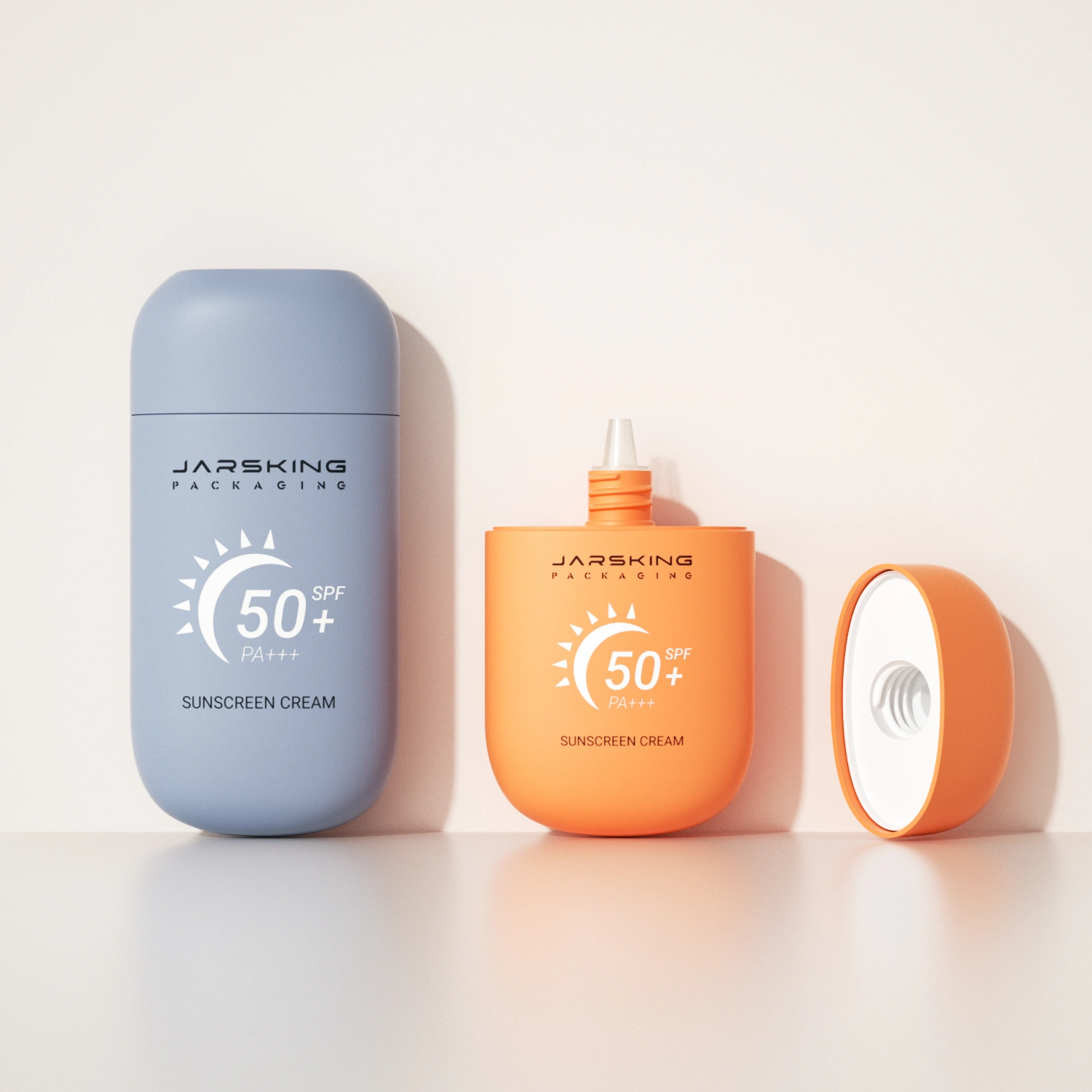
Traditional sunscreen bottles are rigid or semi-rigid containers manufactured from HDPE, PET, or PP, paired with functional closures such as flip-top caps, disc-tops, or mechanical dip-tube lotion pumps. They also include tottles—ergonomic, inverted bottles engineered with needle-nose or dropper plugs designed specifically for low-viscosity, shake-well chemical sun milks.
Bottles excel in vertical retail shelf presence and structural permanence. They offer ample surface area for high-impact brand decoration (silk-screening, hot stamping, gradient soft-touch coatings) and stand firmly on bathroom vanities.
Understanding Sunscreen Tube Packaging
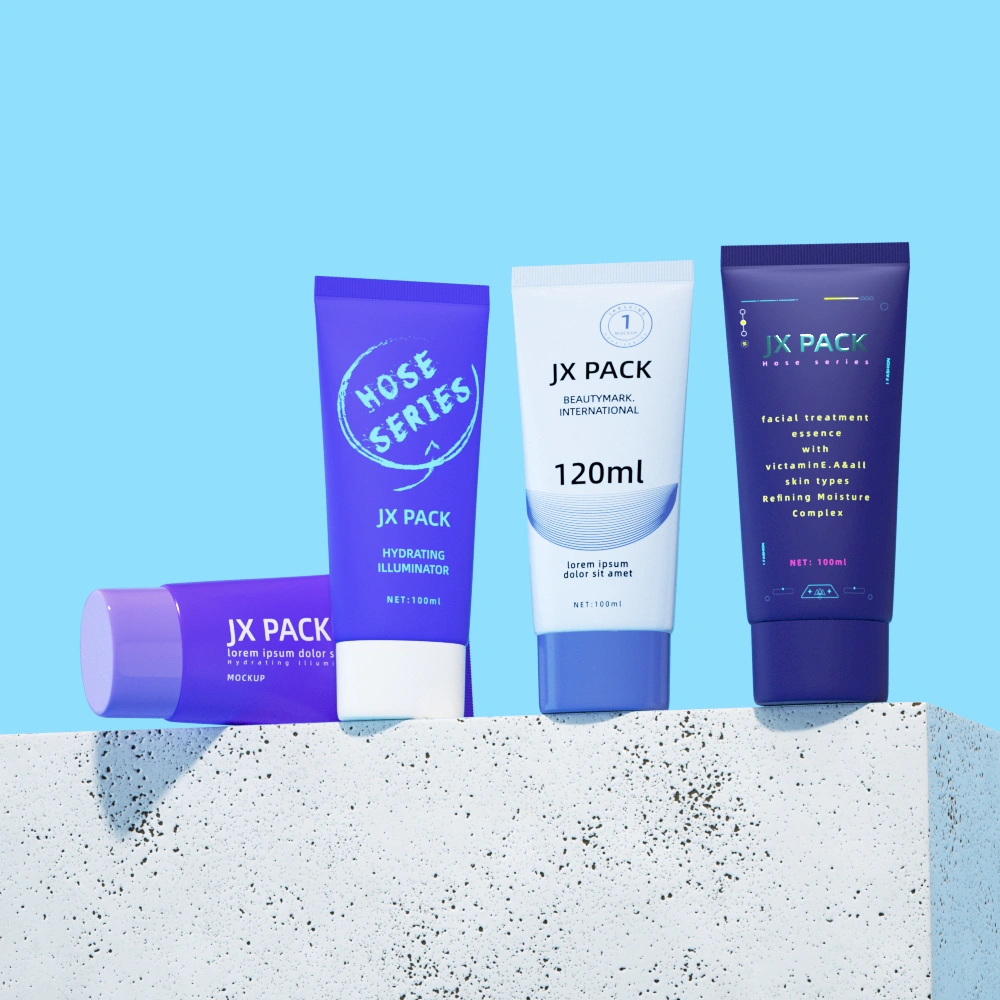
Squeeze tubes are the flexible workhorses of the global sun care market. Constructed from extruded plastic sleeves or multi-layer barrier laminates (such as Aluminum Barrier Laminate – ABL, or Plastic Barrier Laminate – PBL), tubes dispense product through direct manual compression.
Tubes dominate outdoor, sports, and beach categories because they are shatterproof, lightweight, and compress easily into pockets and travel bags. When fitted with induction foil safety seals and snap-tight flip caps, they deliver outstanding durability under rough physical handling.
Understanding Airless Pump Systems (Bottles & Airless Tubes)
Airless packaging represents the gold standard in modern skincare engineering. Unlike traditional dip-tube systems that rely on atmospheric air intake to displace dispensed liquid, an airless container operates on a hermetically sealed mechanical vacuum.
There are two primary configurations for airless sunscreen:
- Airless Piston Bottles: A rigid outer cylinder contains an internal precision-engineered piston at the base. Each time the consumer presses the non-vented pump actuator, a low-pressure vacuum is created, pulling the piston upward and extruding a calibrated dose without introducing ambient air.
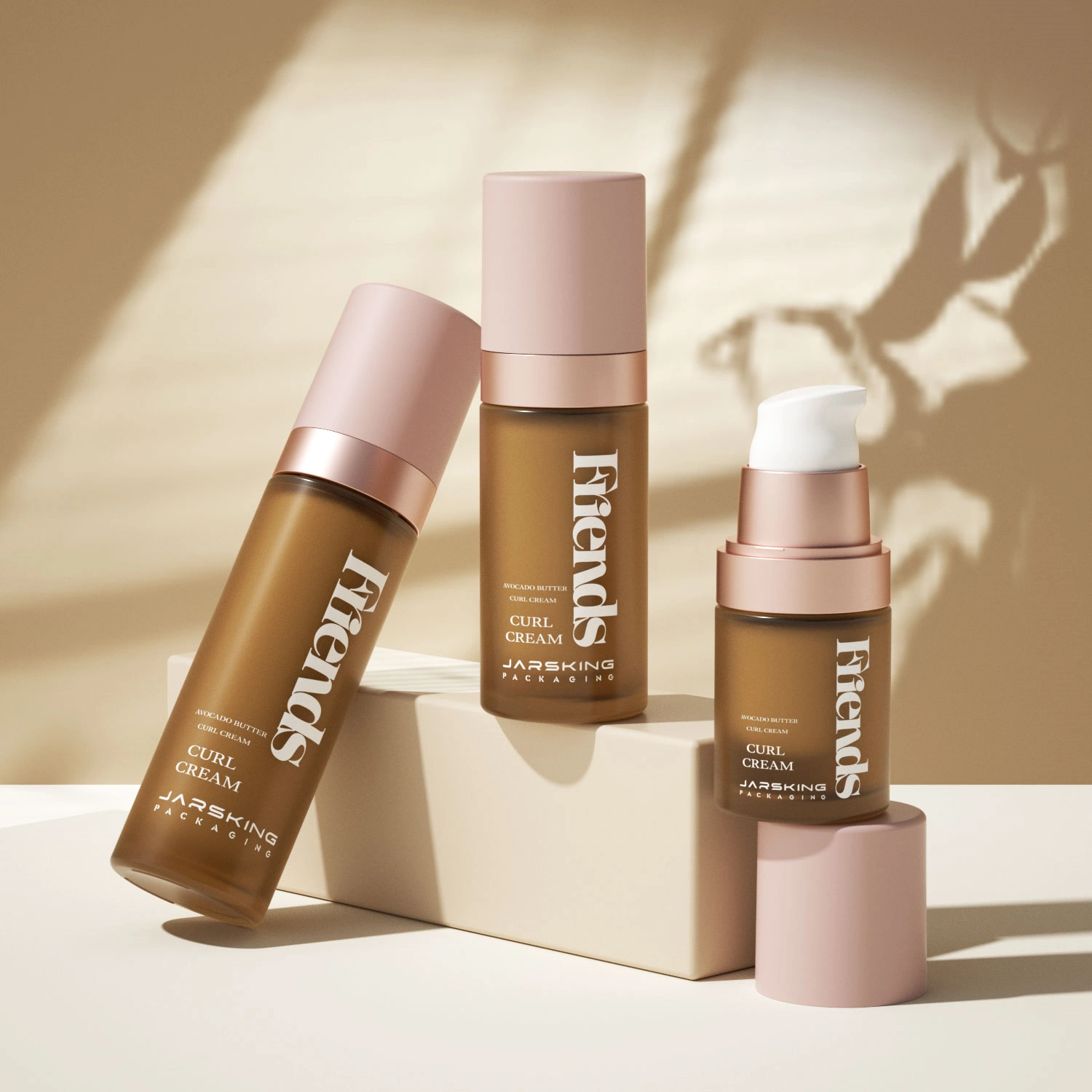
- Airless Pump Tubes: A hybrid innovation that combines a flexible multi-layer barrier tube sleeve with a sealed airless pump head. As the formula is dispensed via the pump, the flexible sleeve collapses flat under internal vacuum pressure, preventing air intake while eliminating the need for a mechanical bottom piston.
Why Packaging Choice Dictates Sunscreen Efficacy
Active UV filters—whether organic chemical absorbers (like Avobenzone, Octocrylene, Homosalate, Bemotrizinol) or inorganic physical blockers (micronized Zinc Oxide and Titanium Dioxide)—are chemically sensitive:
Photo-Degradation and Oxidation: Avobenzone degrades rapidly in the presence of atmospheric oxygen and light, compromising broad-spectrum UVA protection.
Volatile Solvent Evaporation: High-SPF, water-resistant formulas rely on volatile silicone carriers (e.g., cyclopentasiloxane) or ethanol to achieve a fast-absorbing, non-sticky finish. If your container allows micro-permeation or neck-seal leakage, these carriers evaporate, causing active filters to crystallize and the emulsion to break.
Polymer Swelling and Environmental Stress Cracking (ESC): Chemical UV actives are aggressive organic solvents. In low-spec monolayer polyolefin containers, they can leach into the packaging walls, leading to sidewall panelling, label delamination, and container failure.
Your packaging choice directly impacts whether your SPF 50 product stays SPF 50 throughout its two-year shelf life.
2. Sunscreen Bottles: Features, Pros, and Cons
Rigid bottles have long held a staple position in the sun care aisle. Let’s evaluate where they excel and where their limitations lie.
TRADITIONAL BOTTLES: AT A GLANCE
PROS:
[+] High-end structural presence, rigidity, and premium retail shelf impact
[+] Compatible with high-output lotion pumps (1.5ml – 4.0ml) for fast body coverage
[+] Tottle variants provide precision drop-by-drop dosing for ultra-thin milks
CONS:
[-] High formula waste (8% – 15% product trapped on rigid interior walls)
[-] Dip-tube pumps pull ambient air back into the bottle on every stroke
[-] Rigid geometry occupies full cubic volume during shipping, increasing freight costs
Key Advantages of Bottle Packaging
Superior Shelf Impact and Premium Weight: Rigid bottles provide unmatched retail weight and tactile quality. Thick-wall PET or soft-touch HDPE containers convey clinical authority and prestige, making them popular for high-end daily sunscreens and after-sun body care.
Fast Dispensing for Large Surface Areas: For family-sized and body sunscreens ($150 \text{ ml to } 400 \text{ ml}$), pairing a rigid bottle with a wide-orifice flip-cap or a high-output mechanical lotion pump ($2.0 \text{ ml to } 4.0 \text{ ml}$ per stroke) allows users to cover arms, legs, and torsos quickly.
Precision Flow in Tottle Formats: Tottles (flattened, inverted bottles with needle-nose plugs) allow consumers to dispense low-viscosity, shake-well formulas drop-by-drop without spilling.
Potential Drawbacks of Sunscreen Bottles
Dead Volume (Formula Waste): Because rigid walls cannot be compressed, thick sun creams cling to the interior sidewalls and base corners. Consumers frequently waste 8% to 15% of the product unless they cut the bottle open.
Air Ingress and Dip-Tube Cavitation: Standard lotion pumps require an air-venting hole to equalize internal pressure. Every pump stroke draws oxygen, ambient moisture, and airborne contaminants into the bottle. Furthermore, high-viscosity sun creams can cavitate—forming an air pocket around the bottom of the dip tube—causing the pump to lose its prime.
Freight Inefficiency: Rigid bottles cannot collapse when empty. Transporting empty containers from the packaging manufacturer to your contract filling plant means paying to ship empty space, which inflates freight expenses and carbon footprints.
Ideal Viscosities and Application Scenarios
Bottles are optimal for low-viscosity and high-volume body applications ($500 \text{ to } 12,000 \text{ cps}$):
Ultra-fluid chemical sun milks and bi-phase sun waters (in tottle bottles with mixing balls).
Family-sized body sunscreens and after-sun aloe gels (in $200 \text{ ml to } 400 \text{ ml}$ HDPE/PET pump bottles).
3. Sunscreen Tubes: Features, Pros, and Cons
Flexible squeeze tubes remain the benchmark format for active lifestyle, sport, and travel-oriented sun care products.
SQUEEZE TUBES: AT A GLANCE
PROS:
[+] High formula restitution (95%+ evacuation rate via manual rolling)
[+] Lightweight, shatterproof, and impact-resistant for travel and sports
[+] Lower unit packaging cost and rapid filling/sealing line speeds (60-200 bpm)
CONS:
[-] Elastic memory creates “suck-back” effect, pulling air into the sleeve
[-] Prone to accidental over-dispensing when used with low-viscosity fluids
[-] ABL laminate tubes can retain creases and wrinkles after squeezing
Key Advantages of Squeeze Tube Packaging
Maximum Product Evacuation: Flexible tubes allow consumers to roll the sleeve flat from the tail seal down to the shoulder. This achieves formula evacuation rates exceeding 95% to 98%, virtually eliminating consumer complaints about trapped product.
Impact Durability and Travel Safety: Tubes do not crack or break when dropped onto pool decks or packed tightly inside luggage. Sealed with ultrasonic or hot-air crimps and topped with induction foil seals, they withstand mechanical shocks and vibration.
Manufacturing Efficiency and Lower COGS: Squeeze tubes represent one of the most cost-effective packaging formats in personal care. Bulk open-ended tubes pack densely in nested shipping cartons, and automated filling lines can fill and seal between 60 and 200 units per minute.
Potential Drawbacks of Sunscreen Tubes
The “Suck-Back” Phenomenon: When a standard plastic or co-extruded tube is squeezed and released, its elastic polymer memory pulls the sleeve back into shape. This creates negative internal pressure that sucks outside air back into the container, exposing the remaining sunscreen to oxidation and environmental moisture.
Uncontrolled Extrusion: With low-to-medium viscosity fluids, squeezing a standard flip-top tube can result in messy over-dispensing or formula drooling around the orifice.
Aesthetic Creasing: Aluminum Barrier Laminate (ABL) tubes, while offering superior barrier protection, retain permanent dents and wrinkles once squeezed, which can degrade the product’s visual appeal over time.
Ideal Formulations and Usage Scenarios
Tubes are best suited for medium-to-high viscosity formulations ($15,000 \text{ to } 80,000+ \text{ cps}$):
High-zinc mineral sunscreens and physical broad-spectrum pastes.
Heavy-duty water-resistant sport sunscreens and wax-based surf formulas.
Pocket-sized facial sunscreens and hand creams ($30 \text{ ml to } 75 \text{ ml}$).
4. Airless Pump Systems: The High-Performance Hybrid
Airless pump packaging has transformed modern dermatological skincare by solving the core weaknesses of both traditional bottles and tubes.
AIRLESS SYSTEMS: AT A GLANCE
PROS:
[+] Near-zero air exposure (<0.5cc over lifetime) protects sensitive UV actives
[+] Precise metered dosing (0.15ml – 0.5ml per stroke) ensures correct SPF coverage
[+] Operates smoothly at any angle (360-degree dispensing) with 98%+ evacuation rate
CONS:
[-] Higher unit packaging cost ($0.50 – $1.80+ depending on mechanism)
[-] Strict filling tolerances (requires zero-headspace bottom-up filling)
[-] Multi-part assemblies demand careful polymer recycling validation
Key Advantages of Airless Packaging
- Total Formula Shielding and Zero Oxidation: Because airless systems use an airtight rising piston or collapsing sleeve mechanism, atmospheric air never contacts the bulk formulation. This enables brands to minimize synthetic preservative loads, stabilize sensitive antioxidants (such as Vitamin C, Niacinamide, and Resveratrol), and prevent the photo-oxidation of unstable organic UV filters.
- Precise, Standardized Application: Sunscreen efficacy depends directly on applying the clinical dosage of 2 mg per square centimeter of skin. An airless pump delivers a calibrated volume (e.g., exactly 0.25 ml per stroke), allowing brands to instruct consumers with precision (e.g., “apply three full pumps for complete facial protection”).
- True $360^\circ$ Multi-Angle Dispensing: Because airless pumps do not rely on a gravity-fed dip tube, consumers can dispense sunscreen at any angle—even upside down. This is particularly valuable for fast, targeted reapplication on the neck, shoulders, and scalp.
- Minimal Restitution Loss: The mechanical wiper on an airless piston physically scrapes the interior sidewalls clean as it rises, delivering up to 98% to 99% formula evacuation.
Engineering and Manufacturing Considerations
Filling Line Precision and Vacuum Priming: Airless systems require precise filling protocols. Piston bottles must be filled using diving bottom-up nozzles to prevent air bubbles from becoming trapped beneath the bulk. If an air pocket is sealed between the piston and the formula, the pump will experience priming lag on the retail shelf.
High-Viscosity Priming Limits: While airless pumps handle a broad viscosity range ($1,000 \text{ to } 45,000 \text{ cps}$), ultra-thick, non-thixotropic pastes ($>60,000 \text{ cps}$) can create excessive vacuum drag, causing piston cavitation or slow actuator return.
Component Unit Economics: An airless pump bottle is an engineered mechanical assembly consisting of 5 to 8 precision-molded parts. Procurement teams should expect higher piece-part costs compared to standard tubes or simple flip-cap bottles.
5. Direct Comparison: Bottle vs Tube vs Airless Pump
To help your team evaluate these formats side-by-side, here is how they perform across commercial, technical, and consumer metrics:
| Key Evaluation Parameter | Traditional Bottle (Lotion / Flip-Top) | Squeeze Tube (Co-ex / ABL / PBL) | Airless Pump System (Piston Bottle / Pump Tube) | Winner & Engineering Notes |
|---|---|---|---|---|
| Formula Evacuation (Yield) | Low to Moderate (80%–88%) | Very High (95%–98%) | Maximum (98%–99%) | Airless and Tubes minimize product waste. |
| Air Ingress & Oxidation Control | Poor (Pulls air via vent hole) | Moderate (Suffers suck-back effect) | Superior (Zero air intake) | Airless is the undisputed champion for active filter preservation. |
| Dispensing Calibration | Variable (Rough pump or pour) | Manual (User squeeze pressure) | Calibrated (Metered $\pm 0.02\text{ml}$) | Airless guarantees clinical 2 mg/cm² dosage accuracy. |
| In-Cabin Pressure Resistance | Moderate (Prone to leaking under altitude) | High (Induction seal + crimp) | High to Superior (Sealed check-valve) | Airless & Tubes survive flight altitude shifts safely. |
| Filling Speed & Complexity | Fast to Moderate (60–120 bpm) | Fastest (80–200 bpm) | Moderate (40–90 bpm; requires bottom-up fill) | Tubes offer maximum output for contract fillers. |
| Unit Packaging Cost (B2B) | Low to Mid ($0.25 – $0.80) | Lowest ($0.15 – $0.55) | Mid to High ($0.55 – $1.85+) | Tubes for mass volume; Airless for high-margin prestige. |
| $360^\circ$ Inverted Dispensing | No (Dip tube starves of product) | Yes (If formula is at the nozzle) | Yes (Full vacuum displacement) | Airless dispenses reliably in any orientation. |
| Sensory & Prestige Perception | Classic / Mass-Market | Sport / Clinical / Accessible | Prestige / Dermatological / Clean | Airless commands higher retail price thresholds. |
6. Strategic Selection Framework for Brands and Fillers
To select the ideal packaging architecture for your sun care project, follow this technical decision framework:
Step 1: What is the bulk formulation viscosity?
- Fluid / Water-like (<5,000 cps)
Choose: Tottle Bottle (with reducer tip) OR Low-Viscosity Airless Piston
- Emulsion / Daily Cream (5,000 – 30,000 cps)
Choose: Airless Piston Bottle OR Airless Pump Tube
- Heavy Paste / Mineral Cream (>30,000 cps)
Choose: 5-Layer EVOH Squeeze Tube OR PBL Squeeze Tube (Flip-Cap)
Step 2: What is the primary usage environment & brand positioning?
- Daily Commuter / Facial Vanity / Prestige Beauty ($30+ MSRP)
Recommendation: All-PP Mono-Material Airless Pump Bottle
- Outdoor / Sports / Travel / Family Beach ($10 – $25 MSRP)
Recommendation: 5-Layer EVOH Squeeze Tube with Induction Seal
- Large Volume Body Application (150ml – 400ml)
Recommendation: HDPE/PCR Bottle with High-Output Twist-Lock Lotion Pump
7. Final Recommendation: Balancing Formula, Cost, and Consumer Loyalty
In the modern sun care market, there is no universal “best” package—only the right engineering match for your formula chemistry and consumer use case:
Choose traditional bottles when launching large-volume body sunscreens or ultra-fluid sun milks where low-cost bulk dispensing or precision drop-by-drop tottle application is key.
Choose flexible barrier tubes (EVOH / ABL / PBL) when targeting outdoor, sport, or mass-market channels where durability, high evacuation yield, and low unit costs drive purchasing decisions.
Choose airless pump systems (piston bottles or pump tubes) when formulating high-margin facial daily SPFs, clean/preservative-reduced emulsions, or hybrid skincare sunscreens where oxidation defense, precise dosing, and luxury consumer experience are paramount.
When you align your bulk rheology with the right container mechanics and barrier science, you protect your active UV filters, streamline factory filling, and build a high-performance sun care brand that earns lasting customer loyalty.
FAQs
Why is airless pump packaging preferred for sensitive chemical UV filters?
Organic chemical filters like Avobenzone degrade rapidly when exposed to atmospheric oxygen and light. Airless pump bottles use a vacuum rising-piston mechanism instead of a dip tube, eliminating air intake and preserving active UV filter concentration and antioxidant stability over a two-year shelf life.
What is the minimum barrier requirement for sunscreen squeeze tubes?
Sunscreen squeeze tubes should use at least a 5-layer co-extruded structure containing an EVOH (Ethylene Vinyl Alcohol) core, or barrier laminates such as ABL (Aluminum Barrier Laminate) or PBL (Plastic Barrier Laminate). Standard monolayer PE tubes allow volatile solvents and fragrance oils to permeate, causing container wall panelling and formula degradation.
What type of packaging is best for low-viscosity, shake-well sun milks?
Low-viscosity sun fluids and bi-phase milks ($<5,000\text{ cps}$) perform best in rigid or semi-rigid tottle bottles equipped with controlled dropper or needle-nose reducer plugs ($1.0\text{ to }1.5\text{ mm}$ orifice) and internal mixing balls to prevent messy drooling and over-dispensing.
How do airless pump tubes differ from rigid airless piston bottles?
Rigid airless bottles rely on a moving internal mechanical piston to push formula upward. Airless pump tubes use a flexible multi-layer barrier sleeve that collapses inward under vacuum pressure as the pump dispenses, combining the lightweight, shatterproof benefits of a tube with the hermetic oxidation protection of an airless pump.
How can brands make sunscreen packaging recyclable under PPWR mandates?
Brands should transition to mono-material packaging architectures, such as all-PP or all-PE tubes (including sleeve, shoulder, and cap) and 100% polyolefin airless pumps featuring plastic elastomeric springs instead of metal coils. Outer layers can incorporate $30\%\text{ to }50\%$ PCR resin while maintaining virgin food-grade resin on the inner formula contact layer.
What are the key differences between ABL and PBL laminates for sunscreen tubes?
Aluminum Barrier Laminate (ABL) contains a micro-thin aluminum foil layer ($9\text{–}12\text{ µm}$) that provides a $100\%$ impermeable gas and light barrier, but retains permanent creases when squeezed. Plastic Barrier Laminate (PBL) replaces the foil with an EVOH or silica barrier, providing strong protection while retaining full elastic recovery (bounce-back).