
I get asked the same question on almost every discovery call with a new skincare brand: “Can we just use a nice glass bottle for the vitamin C line?” And every time, I have to be the person who says — technically yes, but give it four months and check back with me.
Vitamin C doesn’t forgive sloppy packaging the way most actives do. A subpar container won’t just dull its performance a little; it’ll actively cook the ingredient inside, turning a $40 serum into an orange-tinted placebo before the bottle’s even half empty. Most brands don’t find this out until it’s already showing up in reviews. So let’s break down what’s actually happening in that bottle, and why the packaging decision matters just as much as the formula itself.
1. Why Vitamin C Is Such a Pain to Package
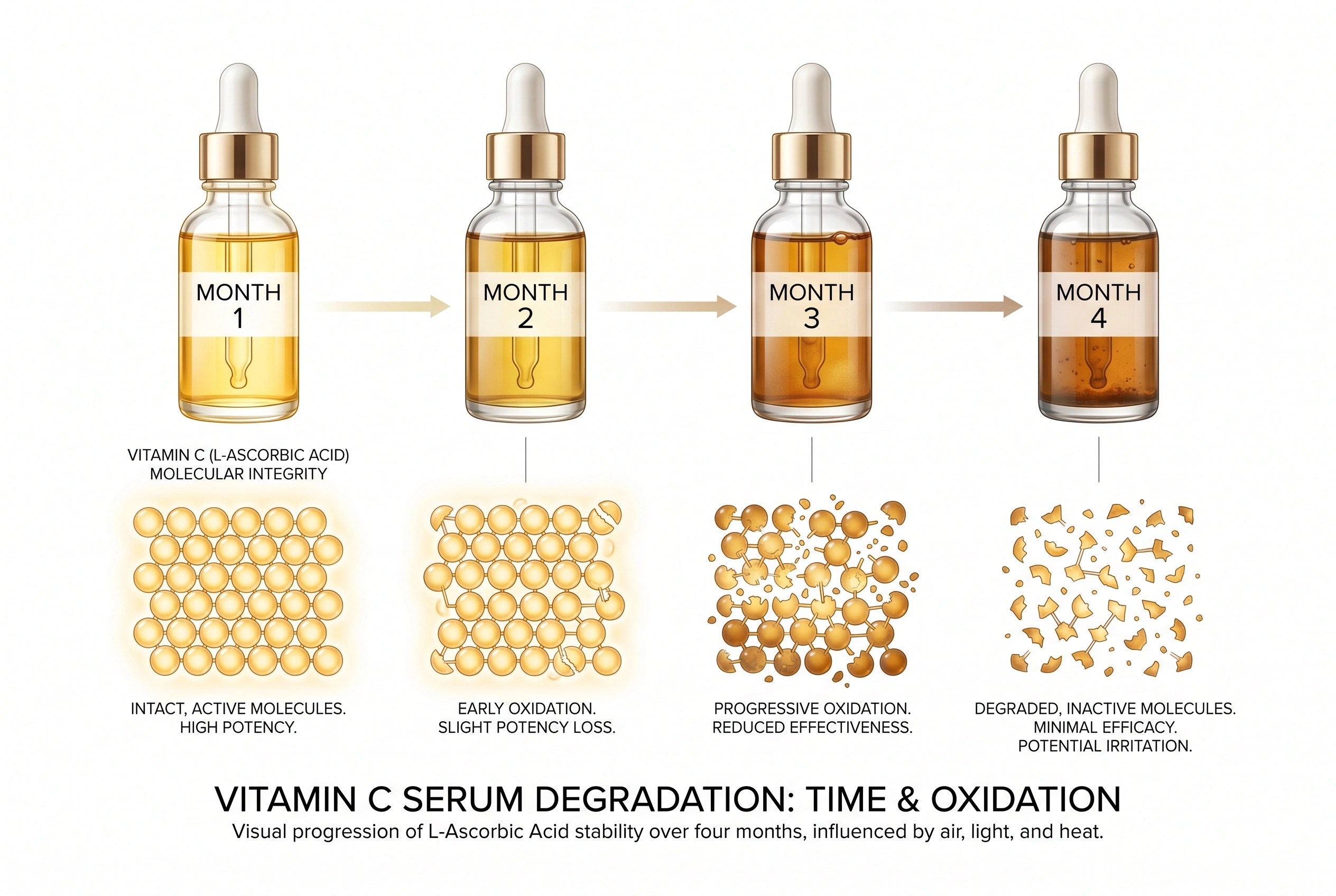
Here’s what’s happening inside that bottle, whether you want to think about it or not. L-ascorbic acid — the strongest, most clinically proven form of vitamin C — starts breaking down the second it meets oxygen, light, heat, or even a little humidity. It turns into dehydroascorbic acid, then keeps degrading into diketogulonic acid, which does absolutely nothing for your skin. The orange tint everyone associates with “old vitamin C serum” isn’t just an aesthetic quirk. It’s the color of failure, chemically speaking.
What makes this trickier is that vitamin C degradation doesn’t happen at a single steady rate — it accelerates. A serum that looks fine at month two can visibly collapse by month four, because oxidation is a chain reaction, not a slow drip. Once a critical mass of molecules degrade, the byproducts can actually speed up the breakdown of what’s left. This is part of why “it seemed fine when we tested it” isn’t good enough — brands need to think in terms of the entire shelf life curve, not a snapshot.
Not all vitamin C is this dramatic, though, and this is where a lot of brands trip up by treating every derivative the same:
L-ascorbic acid — the most potent, and honestly, the most demanding. Needs serious oxygen and light protection.
Sodium ascorbyl phosphate — a bit more forgiving in water-based formulas, still wants airless protection.
Ascorbyl glucoside — comparatively low-maintenance, tolerates more exposure without dramatic color change.
THD ascorbate — oil-soluble, more shelf-stable, but don’t get cocky, it’s still light-sensitive.
If your formulator handed you a 15-20% L-ascorbic acid serum, you cannot package it the way you’d package a gentle THD ascorbate version. I’ve seen brands try to save money by using the same stock bottle across their whole line, and it shows up in customer reviews within a year. Worse, some brands don’t even know which derivative they’re using when they approach a packaging supplier — and that single missing piece of information can lead to a packaging spec that’s completely mismatched to the formula’s actual stability profile.
2. What’s Actually Attacking Your Serum
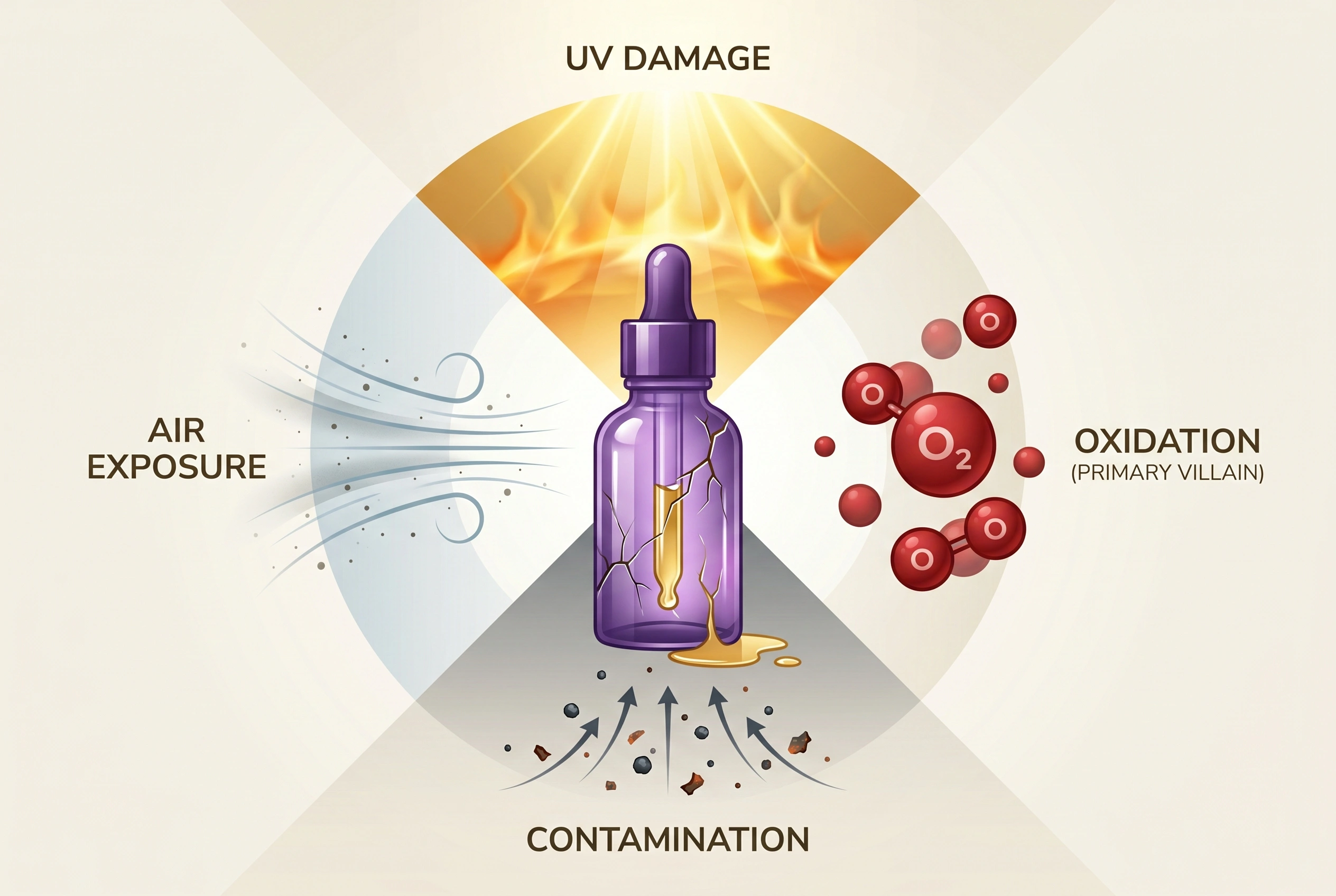
Oxygen — the main villain
Every bit of air that touches your formula speeds up the breakdown. That color shift toward orange? It’s basically a visible scoreboard of how much oxidation has already happened. Lab research backs this up bluntly — one study found that even a supposedly protective three-layer opaque bottle still allowed complete oxidation over time. Packaging isn’t a footnote in stability science. It’s often the deciding factor.
What’s counterintuitive here is that opacity alone doesn’t solve the oxygen problem. A brand can pick a beautifully opaque bottle, assume they’ve handled the light issue, and still watch the formula fail — because opacity blocks light, not air. These are two entirely separate battles, and winning one doesn’t mean you’ve won the other.
UV light — the silent accelerant
Sunlight, and even harsh store lighting, hands oxidation the energy it needs to move faster. This is why amber glass isn’t just a “vintage apothecary” aesthetic choice — it blocks up to 99% of UV light and a good chunk of the blue-violet visible spectrum that also drives degradation, which is exactly why pharmaceutical companies have leaned on amber for decades.
Retail environments make this worse than most brands anticipate. Store shelving, especially near windows or under LED spotlighting, can deliver more cumulative light exposure over a product’s shelf life than the same bottle would get sitting in a customer’s bathroom. If your serum spends weeks or months on display before it’s even purchased, that display lighting is quietly working against your formula the whole time.
Air exposure — the sneaky one nobody thinks about
Here’s what catches people off guard: your bottle can look perfectly sealed and still be feeding oxidation with every single use. Standard droppers and basic pumps pull air back into the bottle to replace whatever liquid just came out. Every squeeze, every dropper dip, is a tiny oxidation event.
Think about the math here. A customer using a dropper twice daily for three months is introducing air into that bottle roughly 180 separate times. Each of those moments is small on its own, but they compound. This is the exact mechanism that makes airless technology so valuable — it’s not solving a one-time sealing problem, it’s solving a repeated, cumulative exposure problem that happens every single day the product is in use.
Metal contamination — the quiet catalyst
Trace metal ions from cheap springs or closures can actually speed up oxidation reactions. It’s not the first thing anyone thinks about, but it’s part of why serious manufacturers move toward metal-free or coated internal parts for anything with active ingredients. Iron and copper ions in particular are known catalysts for this kind of oxidative breakdown, and they can leach from unlined metal springs inside cheaper pump mechanisms without anyone noticing until stability testing flags it.
3. Picking the Right Bottle Material
| Material | What’s good about it | Where it falls short | Who it’s really for |
|---|---|---|---|
| Glass | Inert, won’t react with your actives, feels premium | Heavy, breakable, pricier shipping | Concentrated L-ascorbic acid, luxury positioning |
| PET | Light, tough, budget-friendly | Slightly gas-permeable, less “special” feeling | Mass-market or travel sizes |
| PP | Chemically resistant, works great in airless systems | Not glamorous on its own | Function-first, airless-driven brands |
| Acrylic | Glass-like glam without the weight | Can be finicky with certain actives | Outer shells over a protective inner core |
Glass wins on chemistry, plain and simple. It doesn’t leach anything into an acidic formula, and that inertness matters more than most brand teams realize until something goes wrong. That said, glass isn’t automatically the right call for every brand — a company shipping internationally at scale might reasonably choose PP with an airless mechanism over glass, simply because breakage during transit can wipe out margin faster than any marginal stability gain from switching materials. There’s rarely a single “best” answer here; there’s a best answer for your specific formula, volume, and shipping profile.
4. Amber, Frosted, or Clear? Pick Carefully
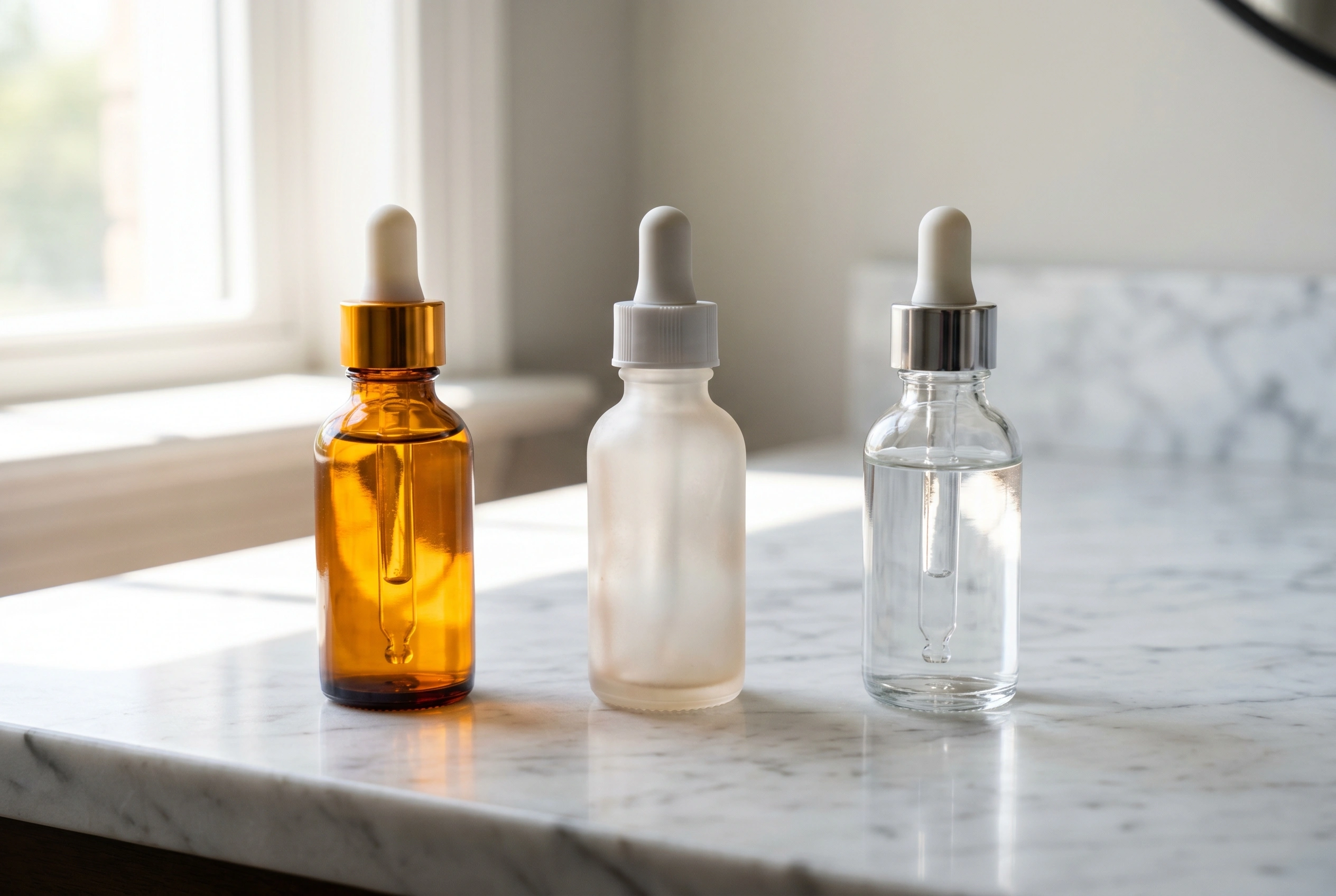
This decision gets treated like a branding call, but it’s really a physics call wearing a branding costume. Amber glass is the gold standard — near-total UV blocking, plus protection against the visible light that also accelerates breakdown. Frosted glass looks soft and premium but only partially protects; it usually needs backup, like an opaque airless core. Clear glass is stunning on a shelf and does almost nothing to protect an L-ascorbic acid formula — if a brand insists on it for visual reasons, the workaround is usually clear glass on the outside, protected airless mechanism doing the actual work on the inside.
There’s a middle path a lot of brands don’t consider: tinted glass in colors other than amber, like cobalt blue or deep green. These can offer decent light protection while giving a brand a more distinctive shelf presence than the somewhat generic amber apothecary look. The tradeoff is that testing needs to confirm the actual UV-blocking performance of that specific tint, since not all colored glass blocks light equally well — amber has decades of pharmaceutical validation behind it, while boutique tints often don’t.
5. Airless Pump vs. Dropper: The Decision That Matters Most
This is the one choice I’d tell any founder to slow down on.
| Airless Pump | Dropper Bottle | |
|---|---|---|
| Oxygen exposure | Low — a rising disc pushes product up, no air pulled in | High — every use draws air back in |
| Hygiene | No finger or pipette contact with product | Repeated skin contact with the dropper itself |
| Dosage | Consistent per pump | Depends on the user’s hand |
| Product usage | Up to 95%+ of the formula actually gets used | Often leaves residue behind |
| Feel | Practical, less “ritual” unless dressed up with decoration | Feels like a lab-grade treatment |
| Best for | Water-based, oxygen-touchy actives — vitamin C, retinol, peptides | More stable, oil-based formulas |
The science doesn’t leave a lot of wiggle room here. For anything built on unstable L-ascorbic acid, airless wins on protection, full stop. Droppers aren’t going away — they photograph well and signal “serious treatment product” — but that emotional payoff comes with a real stability tradeoff that brands should go into with eyes open.
If a brand is emotionally attached to the dropper aesthetic, there’s a reasonable compromise: pairing a dropper with a lower-concentration, more stable derivative like ascorbyl glucoside instead of pure L-ascorbic acid. That way the ritual and the visual language stay intact, while the formulation itself is more forgiving of the extra air exposure droppers introduce.
6. Bottle Size Isn’t Just a Pricing Decision
Smaller bottles quietly do something useful: they force faster turnover, which means less total time your formula spends sitting around exposed to whatever headspace air is left after opening. A 15ml or 20ml bottle for a potent L-ascorbic acid serum makes more sense than a 100ml jug that’ll sit half-used on a shelf for months, slowly losing potency while nobody notices.
There’s also a headspace-to-volume ratio worth understanding. A larger bottle that’s mostly empty after a few weeks of use has a bigger internal air pocket relative to the remaining liquid than a smaller bottle at the same usage stage. That larger air pocket means more oxygen in direct contact with your formula. This is a genuinely underappreciated variable — two bottles with identical closures and identical glass can perform very differently on stability just because of size and how quickly the customer works through the product.
7. Closures Worth Trusting
Pump — decent for less finicky derivatives, moderate air exposure
Dropper — classic serum feel, but needs a genuinely tight inner stopper or it’ll leak and oxidize faster than expected
Treatment pump — a nice middle ground for high-value actives, dose control without full dropper exposure
Disc top — simple, but not really built for oxygen-sensitive formulas
Twist lock — cheap insurance against leaks during shipping, worth it more often than people think
Leakage isn’t just a stability issue, either — it’s a customer experience issue and a logistics cost. A bottle that arrives with even a small amount of leaked product looks damaged and unprofessional, regardless of whether the formula inside is still chemically fine. Brands sometimes underestimate how much a bad closure can undo an otherwise well-executed unboxing experience.
8. Making It Look as Good as It Performs
Decoration is where founders get excited, and fair enough — this is the part customers see and touch first. Just don’t let it override function.
Silk screen — affordable, clean branding, holds up reasonably well
Hot stamping — that metallic foil look, great for a premium accent
UV coating — adds shine and scratch resistance
Frosting — soft, matte, pairs beautifully with amber or opaque glass
Electroplating — makes caps and pumps look genuinely luxe
Soft-touch coating — that tactile, “expensive in the hand” feel indie brands love
The real test isn’t how it looks on launch day — it’s how it looks after three months in someone’s humid bathroom. Decoration that flakes, peels, or discolors after repeated contact with wet hands or bathroom humidity does more brand damage than a slightly less elaborate finish that actually holds up. It’s worth asking any supplier for samples that have been through humidity and abrasion testing before committing to a full production run.
9. Sustainability Isn’t Optional Anymore
This part matters more than it used to, and not just because it’s trendy. The EU’s PPWR regulation is now in force and starts full enforcement on August 12, 2026 — meaning recyclability standards, recycled content minimums, and substance restrictions are becoming legal requirements, not nice-to-haves. Any brand shipping into the EU needs a proper Declaration of Conformity and packaging built with recyclability baked in from day one.
Ways to do this without wrecking your protection standards:
PCR plastics for non-contact outer components
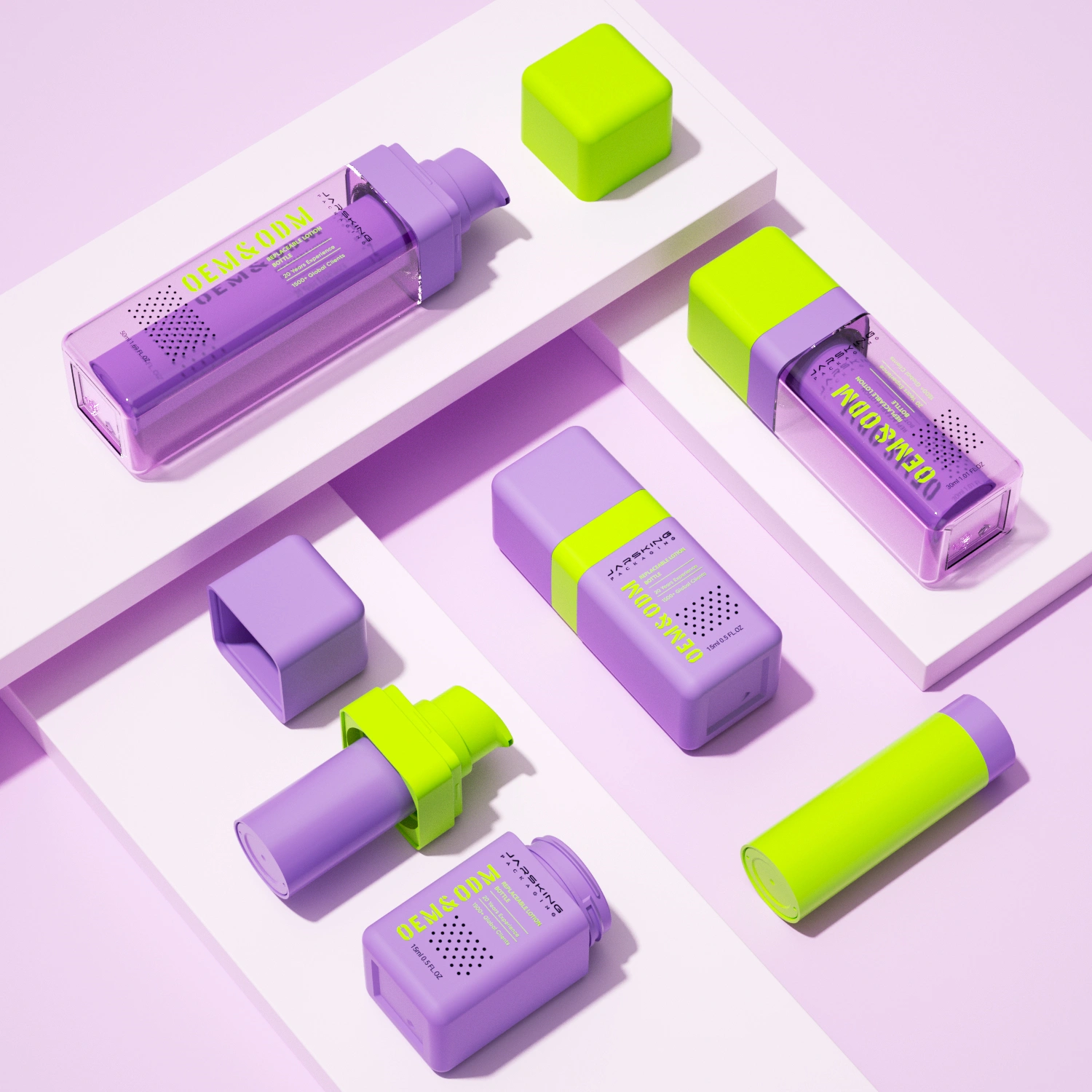
Refillable systems that pair a durable shell with a swappable inner core
Mono-material pumps that simplify recycling
Lightweight glass that cuts shipping weight without sacrificing chemical inertness
Refill systems in particular are picking up steam because they let a brand keep its premium shell forever while just replacing the inner cartridge — less waste, same airless protection. This matters beyond regulation, too. Consumers, especially in prestige and clean-beauty segments, are increasingly asking brands directly about recyclability before purchasing, which means sustainability has quietly become part of the buying decision rather than a background compliance detail.
10. Please, Test the Packaging Before You Scale
I get why brands rush this step — it costs time and money nobody wants to spend right before launch. But skipping it is exactly how recalls happen. Before committing to mass production, run:
Leak testing (does it actually hold up when tipped or pressured?)
Drop testing (because warehouses are not gentle)
UV testing (does the glass or coating really block what it claims to?)
Stability testing (in the actual bottle, not just a lab beaker)
Compatibility testing (does the formula react with the container material?)
Transportation testing (temperature swings, vibration, the works)
A formula that passes stability testing in a lab beaker isn’t automatically stable in its actual retail packaging — this is one of the most common gaps between R&D and production. The container itself is part of the chemical environment, and skipping that final packaging-specific stability run is one of the more expensive mistakes a brand can make right before a launch date.
11. The Bottom Line, Honestly
Packaging for vitamin C isn’t a box to check after your formula’s done — it’s part of the formula’s survival plan. Every decision, from the glass tint to the pump mechanism to whether you bothered testing before scaling, either protects that active ingredient or quietly lets it die in the bottle before your customer ever opens it.
If you’re building a vitamin C serum and want packaging that’s actually engineered around this chemistry — not just designed to look nice in a product shot — it’s worth working with a manufacturer who’s solved this exact problem before, with custom bottle design, airless engineering, decoration that holds up, and sustainable materials that meet where regulation is headed. That’s the difference between a serum that performs on day one and one that still performs on day ninety.
FAQs
What is the best packaging for vitamin C serum?
The strongest combination is an airless pump system housed in amber glass, opaque glass, or PP plastic. This pairing tackles both major threats at once — the airless mechanism eliminates the oxygen exposure that happens with every use, while the amber or opaque material blocks UV and visible light that would otherwise accelerate degradation. Brands using pure L-ascorbic acid at higher concentrations should treat this combination as close to non-negotiable, since the formula has almost no margin for packaging compromise. For more stable derivatives like ascorbyl glucoside, a slightly less aggressive setup can still work, but airless plus opaque remains the safest default across the board.
Is glass or plastic better for vitamin C serum packaging?
Glass has the edge on pure chemistry — it’s completely inert, meaning it won’t react with or leach into an acidic vitamin C formula over time, which is exactly why it’s the preferred choice for premium and clinical-grade serums. PP plastic, on the other hand, offers excellent chemical resistance too and is especially well-suited to airless pump mechanisms, making it a smart choice for brands prioritizing function, lower shipping costs, and reduced breakage risk. The right answer really depends on your priorities: glass for maximum inertness and premium positioning, PP for cost efficiency, durability during shipping, and seamless integration with airless systems at scale.
Should vitamin C serum be packaged in a dropper or a pump bottle?
For high-concentration, oxygen-sensitive formulas like L-ascorbic acid, airless pumps are the clear winner because droppers physically draw air back into the bottle every single time they’re used, and that repeated air exposure compounds into significant oxidation over weeks and months. Airless systems use a rising internal disc to push product upward without ever letting outside air back in, which keeps the formula essentially isolated from oxygen throughout its entire usage life. Droppers still have real value for brand storytelling and the “treatment ritual” feel customers associate with serums, so some brands compromise by pairing droppers with more stable derivatives that can tolerate the extra air exposure without dramatic quality loss.
Does the color of the glass bottle matter for vitamin C serum?
It matters enormously, because glass color directly determines how much damaging light reaches the formula. Amber glass blocks up to 99% of UV light and also absorbs a significant portion of the blue-violet visible light spectrum that independently accelerates oxidation — this is precisely why it’s remained the pharmaceutical industry standard for decades. Frosted glass looks elegant and premium but only offers partial protection, so it’s often paired with an opaque airless core for backup. Clear glass provides essentially no meaningful protection and should generally be avoided for any serum built around L-ascorbic acid, unless it’s used purely as an outer aesthetic shell around a protected inner airless mechanism.
What packaging tests should brands run before mass production?
A thorough pre-production testing regimen should include leak testing to confirm closures hold under pressure and inversion, drop testing to simulate warehouse and shipping impacts, and UV testing to verify that the glass or coating actually blocks the light it claims to. It should also include stability testing conducted in the real packaging rather than a lab beaker, since the container itself becomes part of the chemical environment the formula lives in. Compatibility testing checks for any reaction between the formula and the container material, and transportation testing simulates real-world shipping conditions like temperature swings and vibration — skipping any of these steps significantly raises the risk of a costly post-launch recall or quality failure.
How do I choose a manufacturer for vitamin C serum packaging?
Start by confirming the manufacturer has real, demonstrable experience with oxygen-sensitive actives specifically — general cosmetic packaging experience doesn’t automatically translate to understanding vitamin C’s unique stability demands. Look closely at their customization and mold development capabilities, since custom bottle shapes and closure engineering are often necessary to hit the right protection profile. Evaluate their decoration capabilities to ensure aesthetic finishes won’t compromise the functional barrier, and check their MOQ flexibility, lead time reliability, and quality control processes, since these directly affect your launch timeline and product consistency. Finally, confirm they hold relevant global certifications, including PPWR compliance if you’re planning to sell into the EU market, since that regulatory requirement is now fully in force.