
CUSTOM FOUNDATION BOTTLES
Foundation Bottle Manufacturer
Matched to Your Formula’s Viscosity
“Most foundation packaging fails at the pump, not the bottle. A closure chosen before anyone tested it against your formula’s actual viscosity clogs, under-doses, or leaks weeks after launch — long after the mold is paid for. We start with your formula’s viscosity and target dose, then match the bottle, pump, and material around it: glass, PET, PP, or acrylic, in standard pump, airless, and dropper formats.
Every combination is tested against real shipping conditions, not just a lab drop test — because most damage claims trace back to a pump gasket that failed in transit, not a bottle that shattered on a shelf. Tell us your formula’s viscosity and fill volume, and we’ll tell you directly which mechanism will actually hold up.”
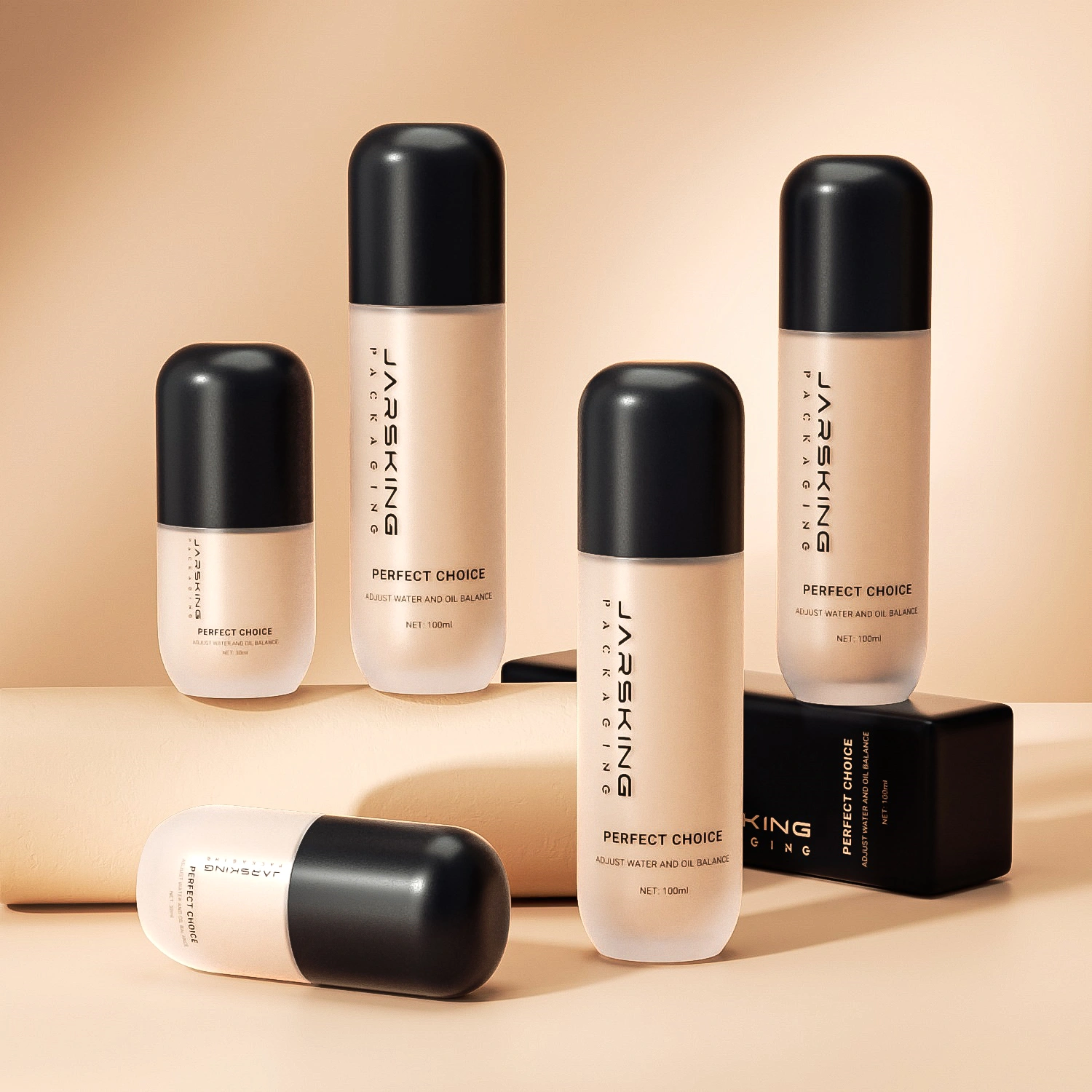
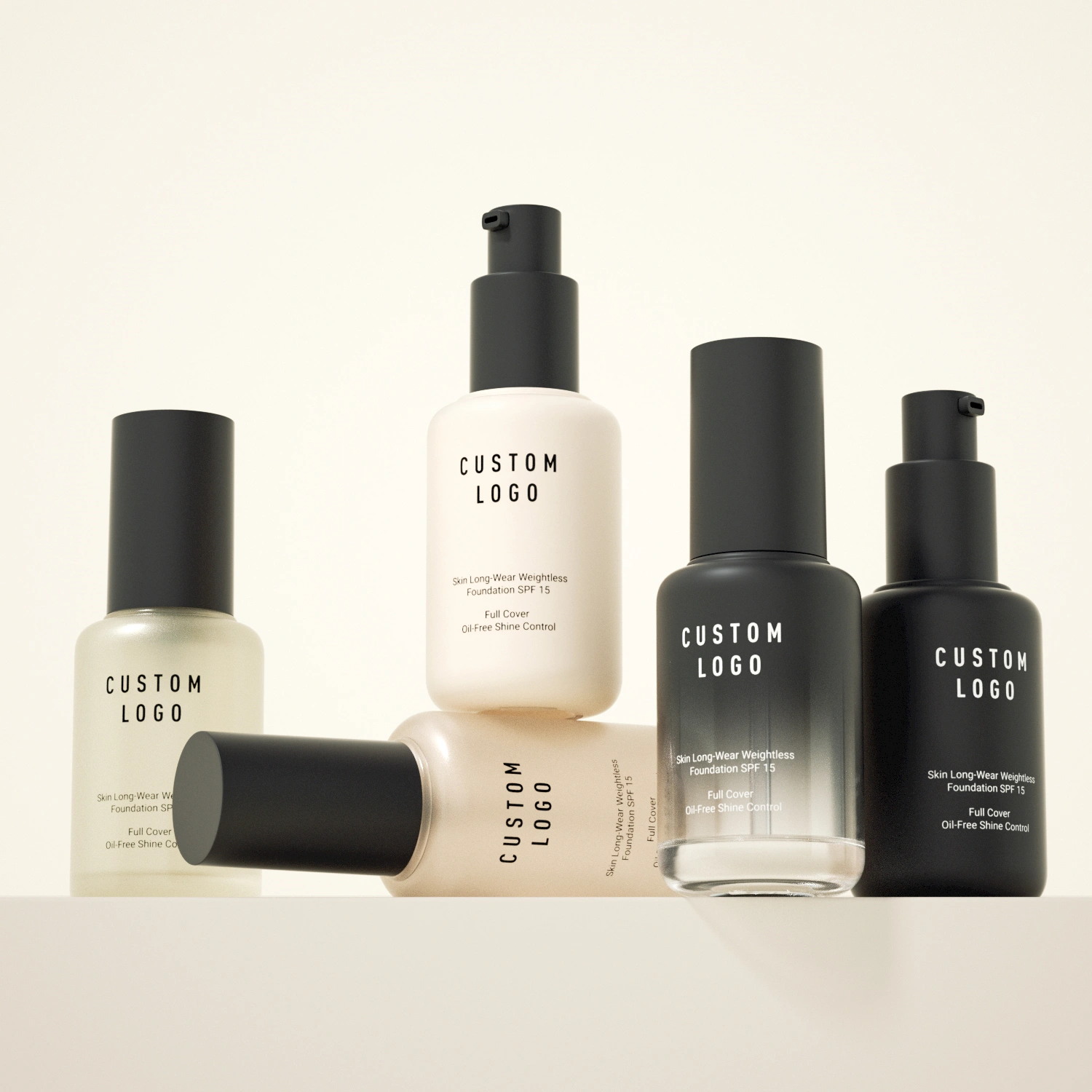
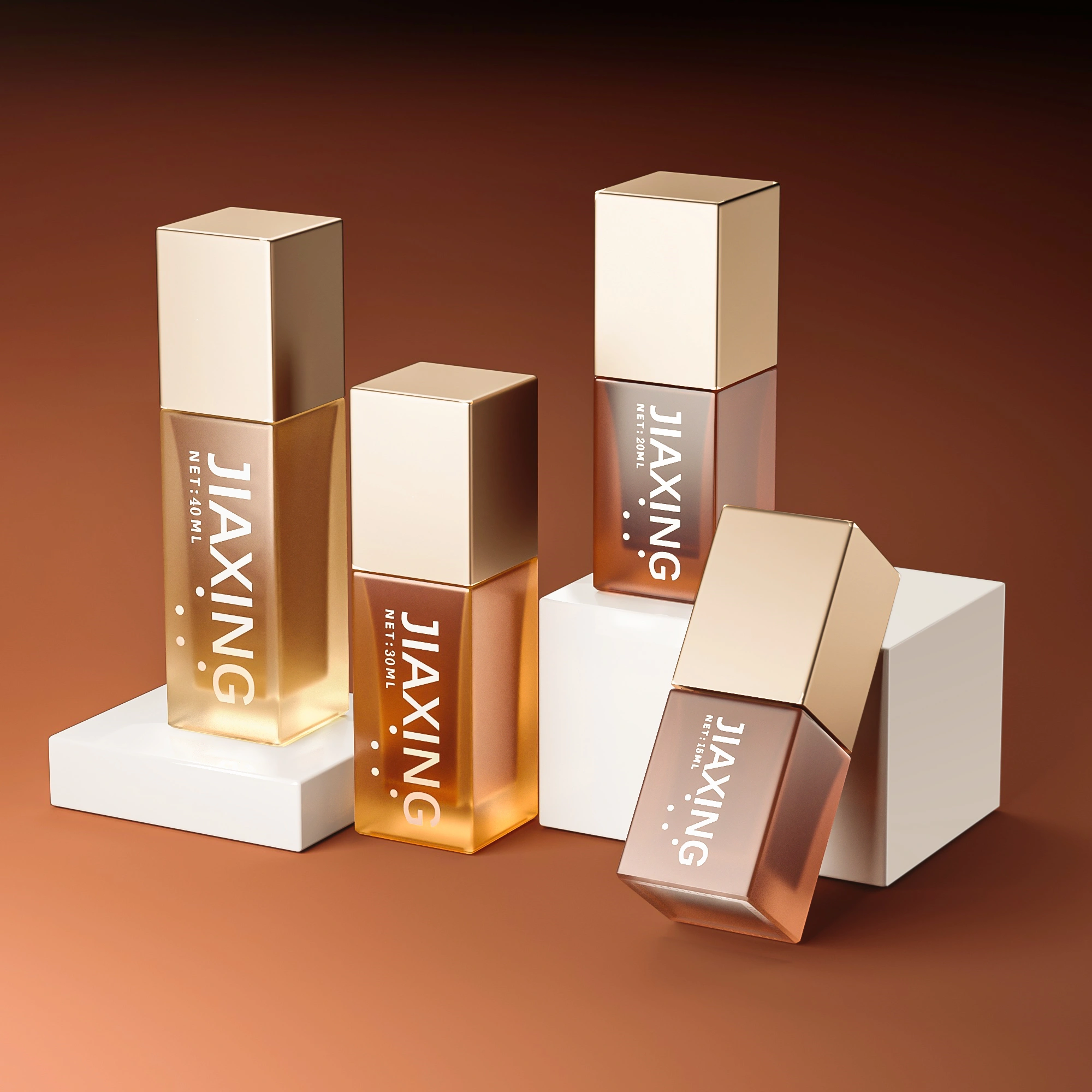
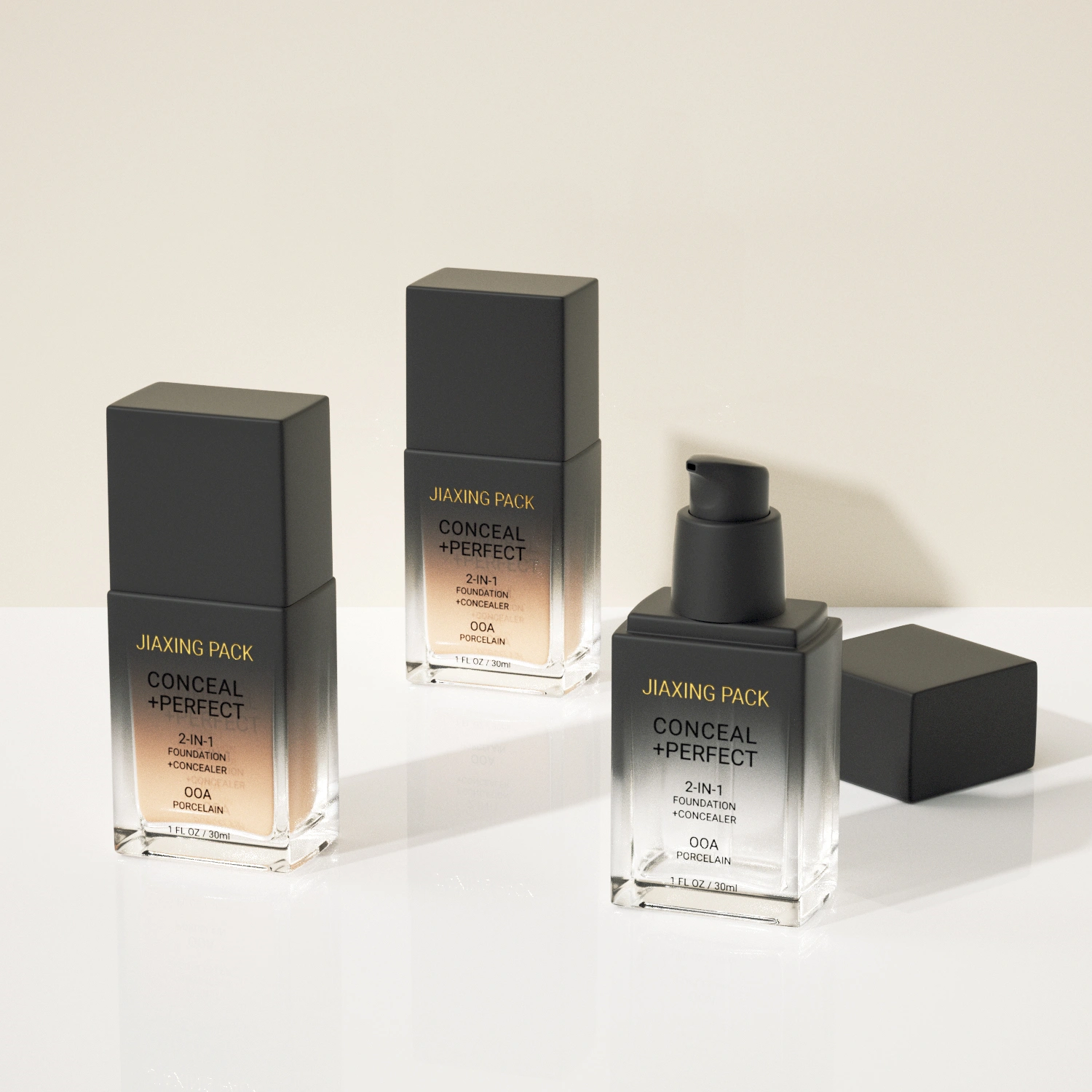
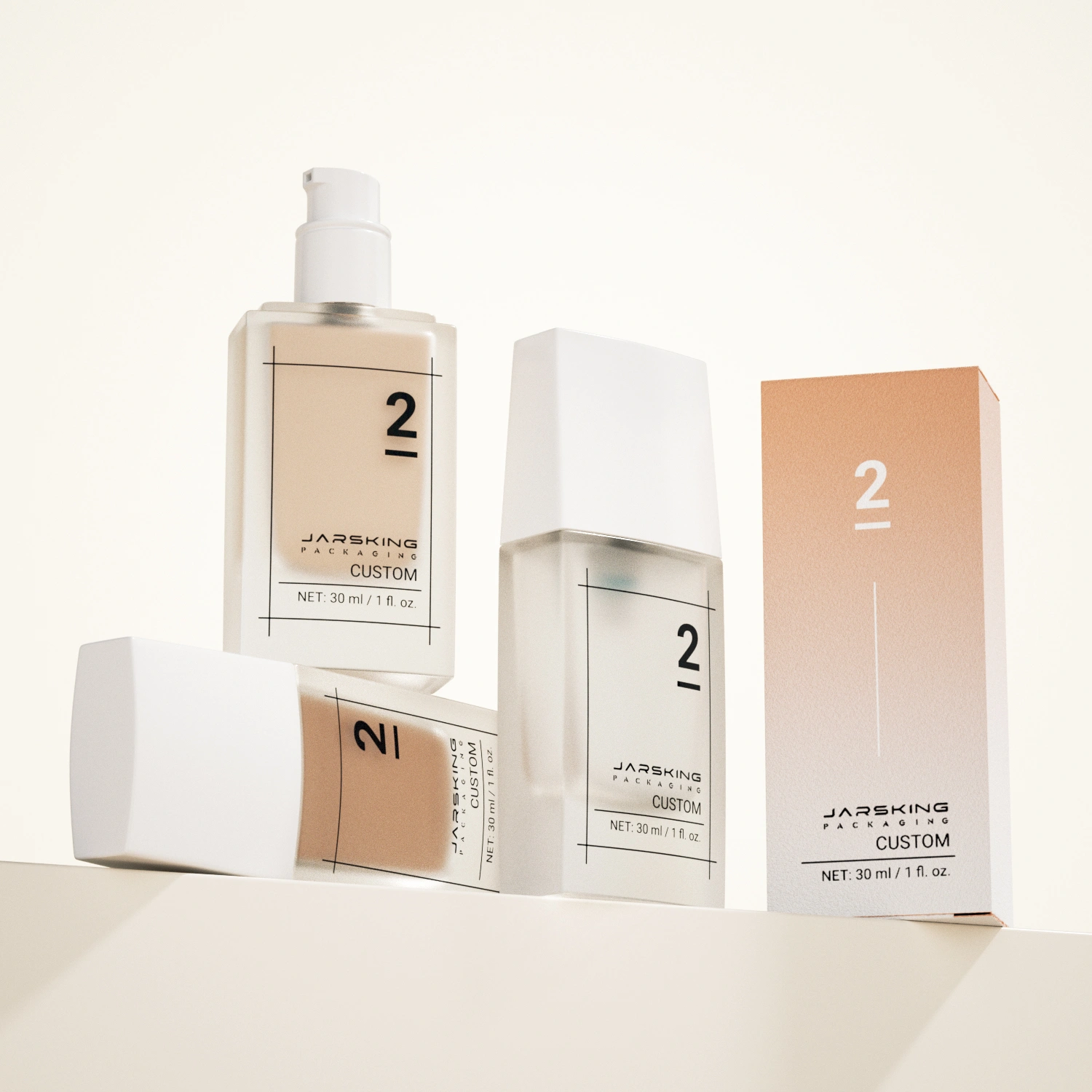
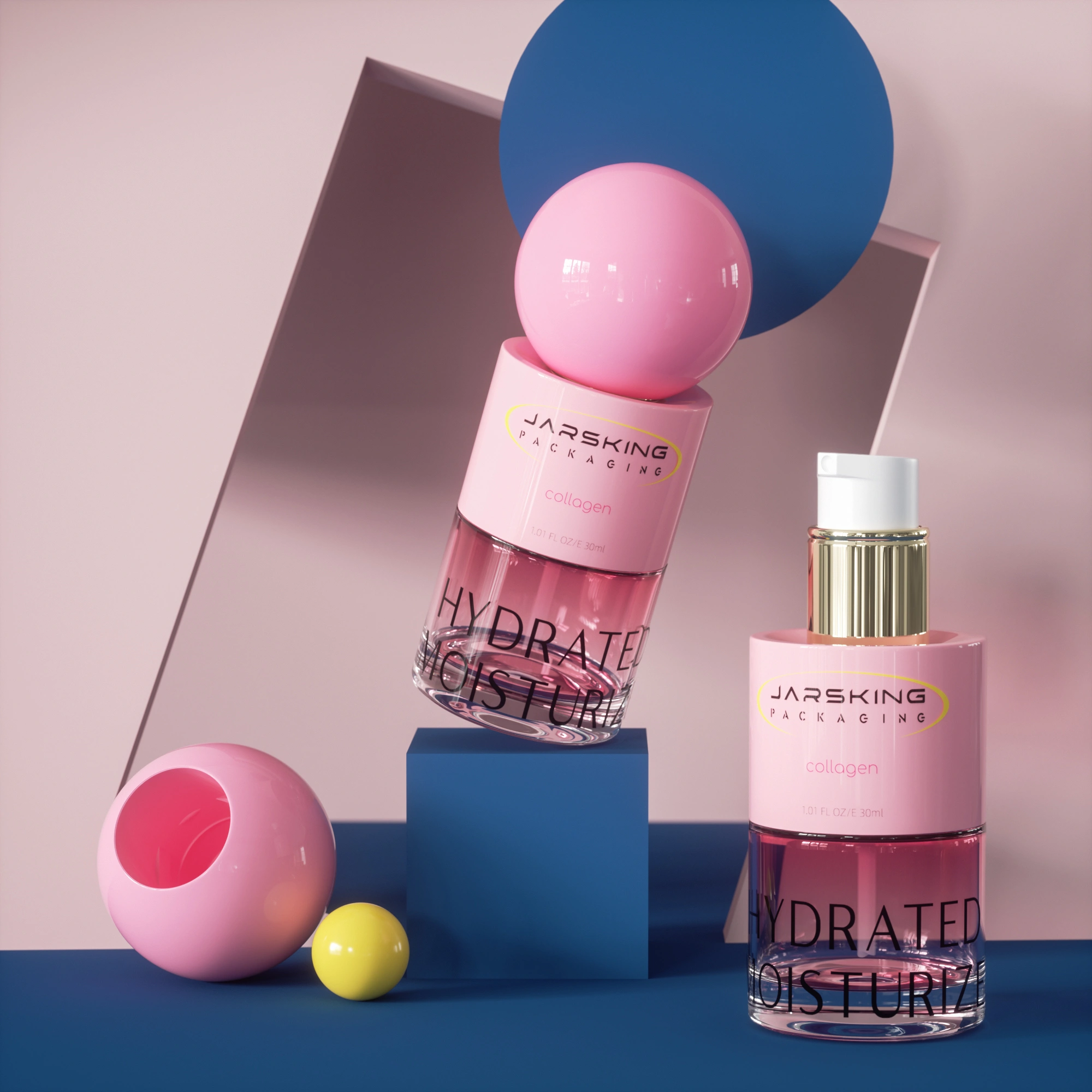
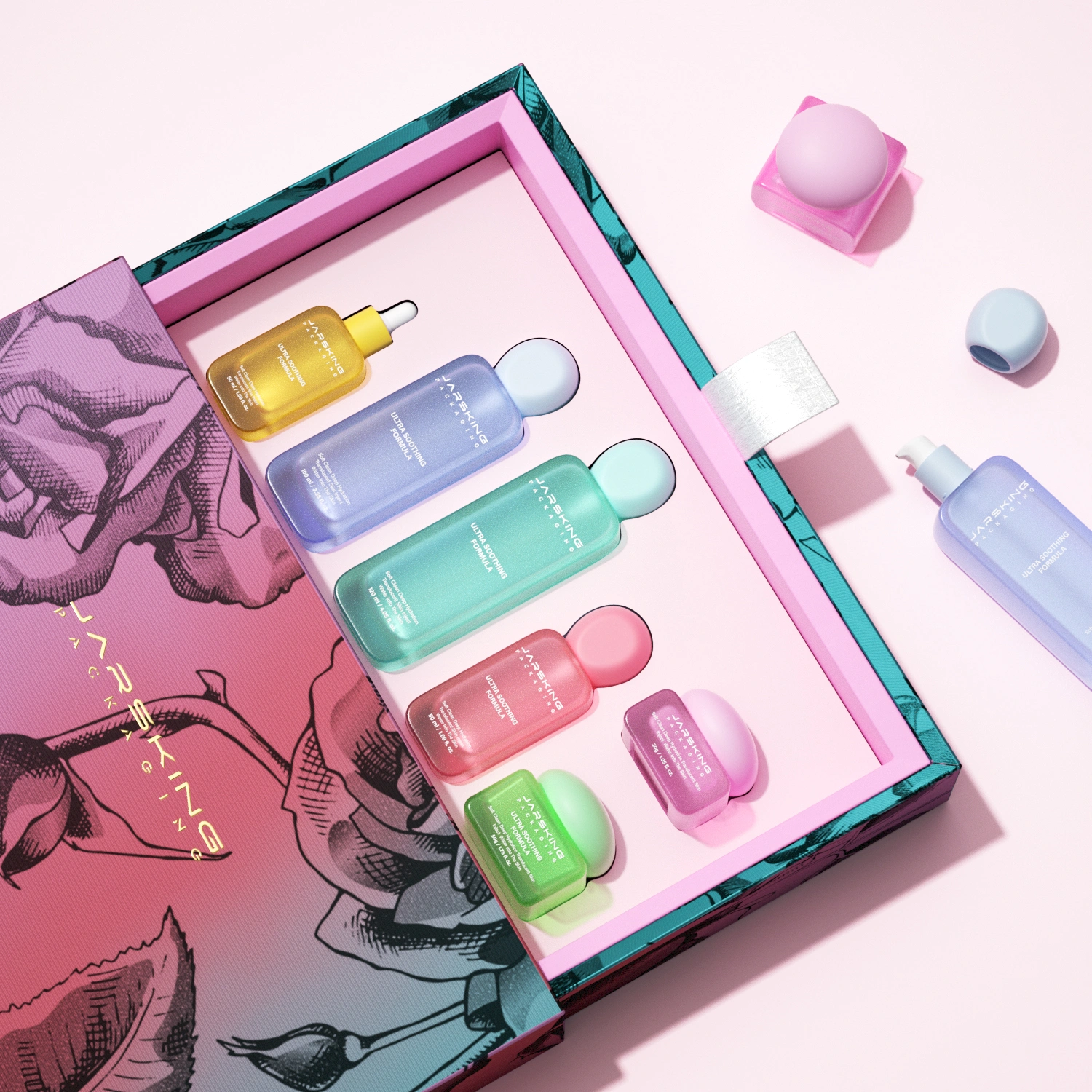
Engineered for Every Formulation
“Protect formula integrity, eliminate nozzle clogging, and prevent oxidation with precision dispensing systems tailored to your fluid viscosity, active stability, and application ritual.”
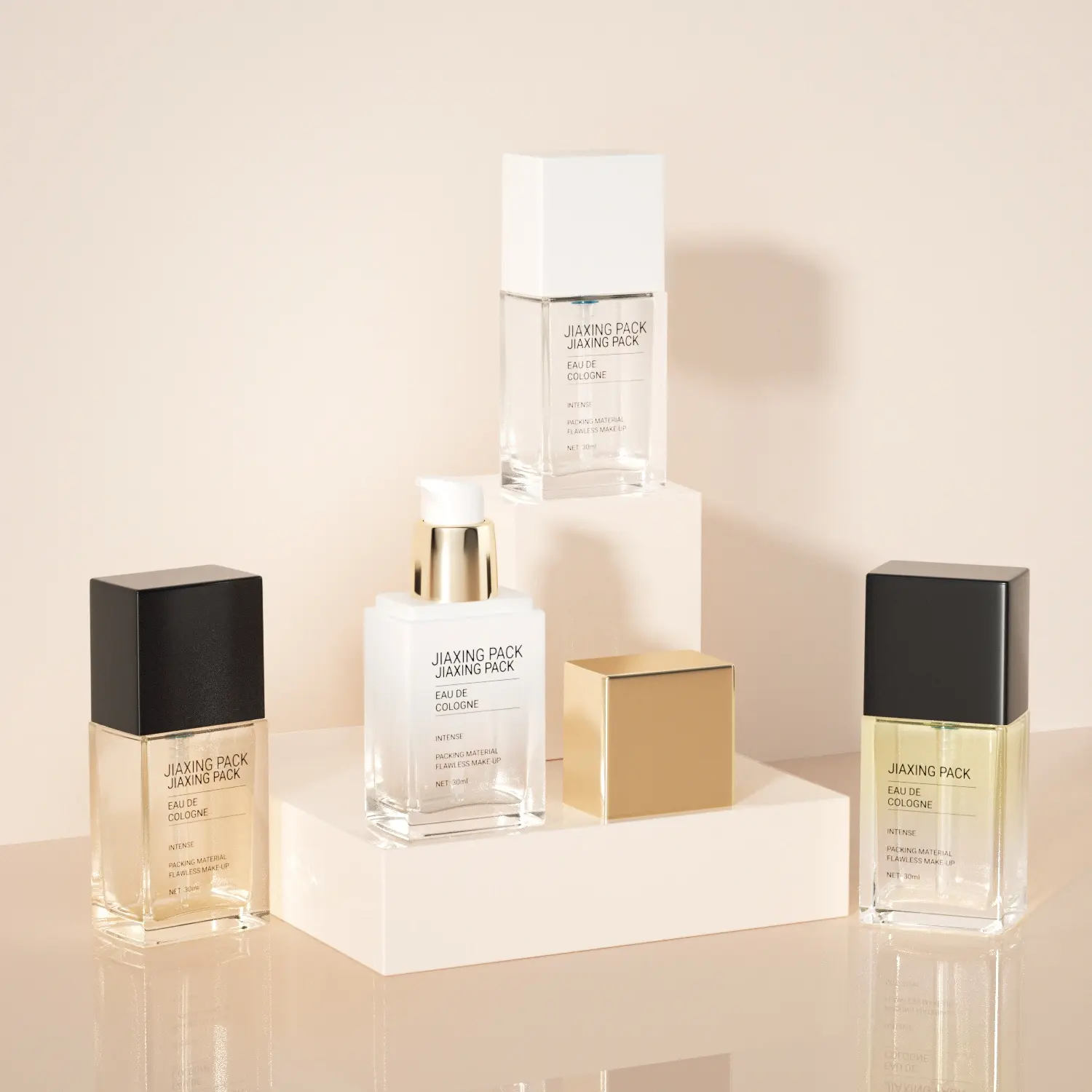
Standard Lotion Pump Foundation Bottles
Delivers controlled, clean dosage per stroke while locking out moisture loss. Includes leak-proof actuation locks and dust-free overcaps.
☑ Medium Viscosity(0.15–0.22 ml Output)
☑ Best for classic liquid foundations & tinted moisturizers
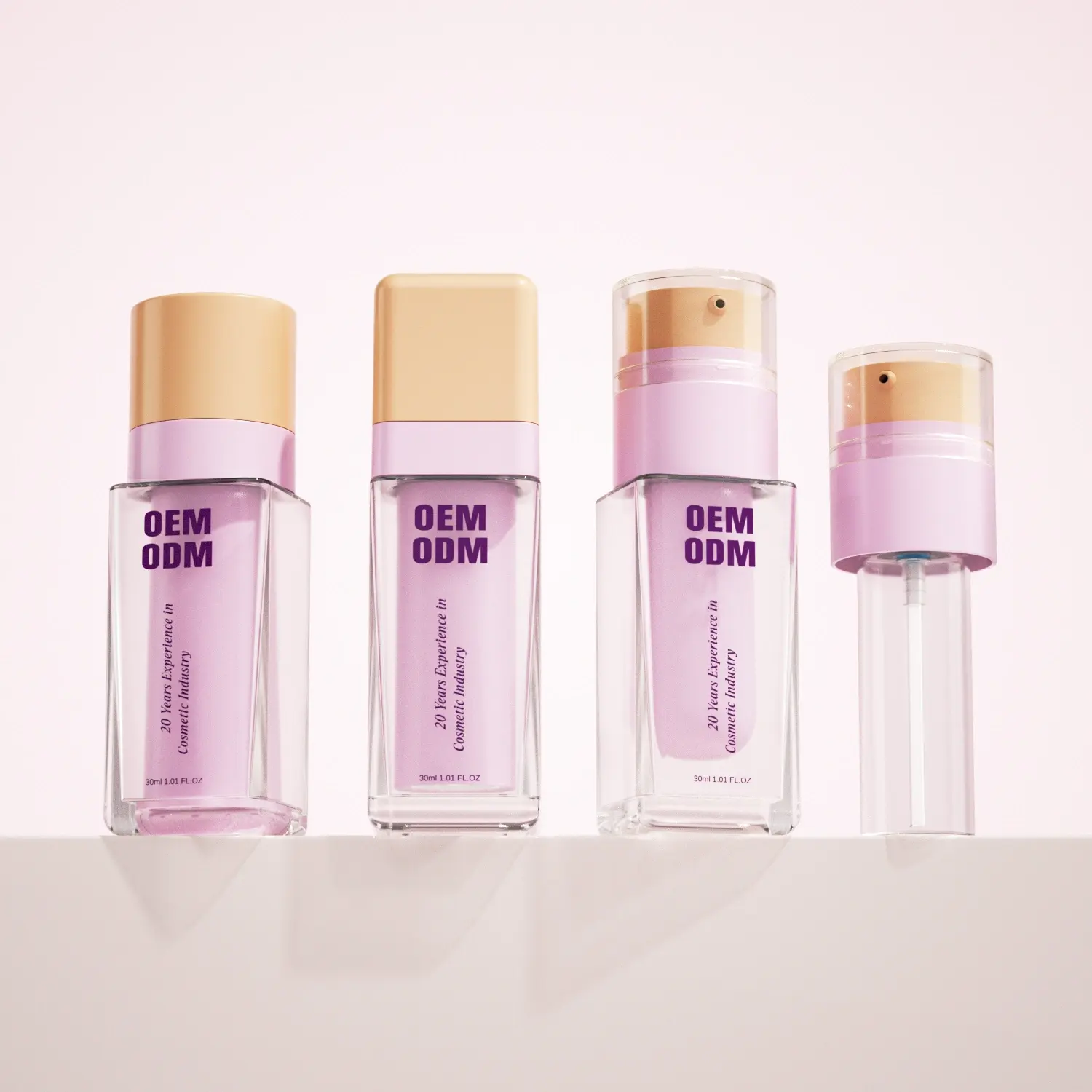
Airless Foundation Bottles
Hermetically shields formulas from ambient air to eliminate shade shift and ingredient degradation, ensuring minimal leftover waste.
☑ Active & Sensitive(90%+ Evacuation Rate)
☑ Best for clean formulas, SPF makeup & serum hybrids
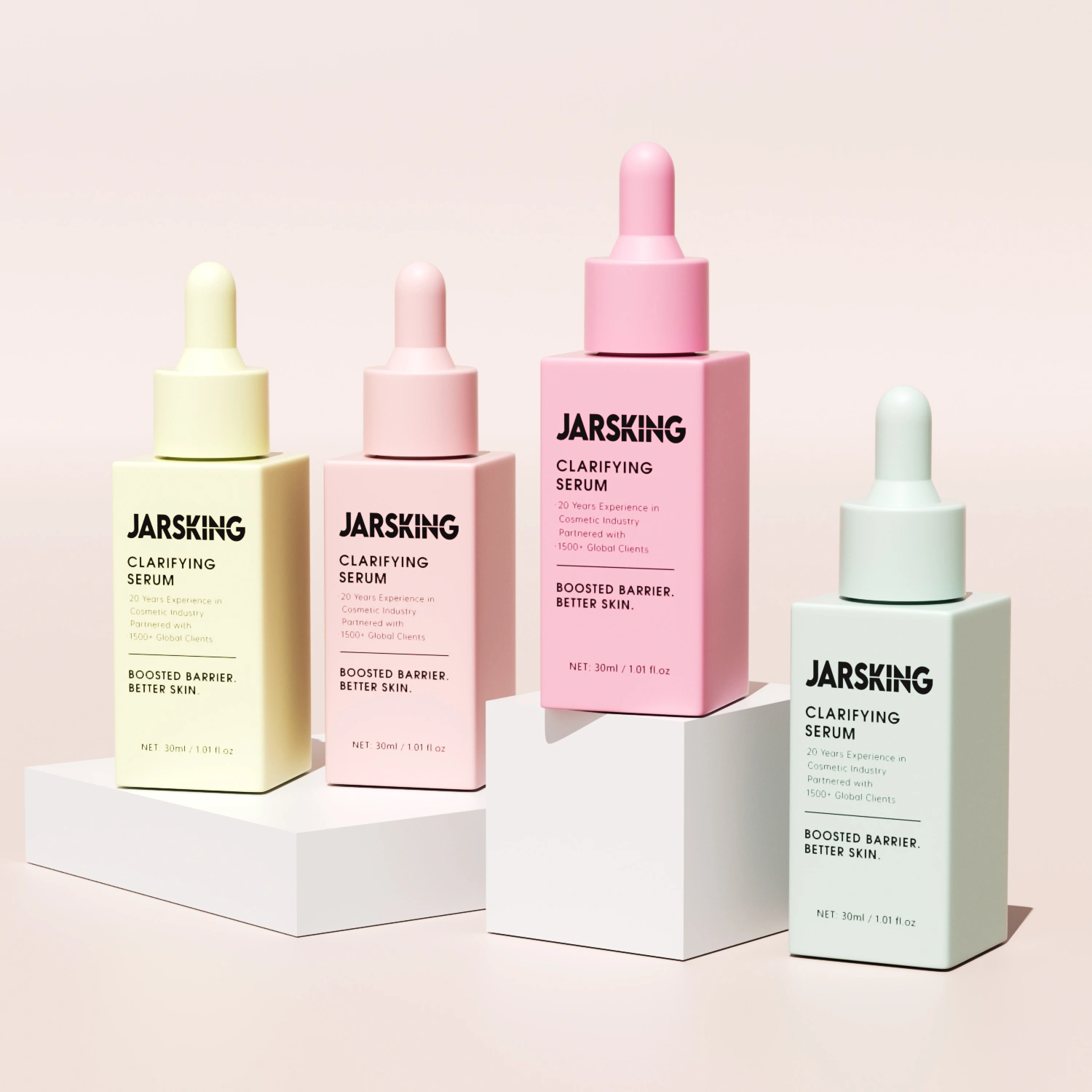
Precision Dropper Foundation Bottles
The meticulously designed dropper and dispensing mechanism enable precise, micro-dose control, delivering a weightless, imperceptible, and buildable liquid finish.
☑ Low Viscosity(Drop-by-Drop Control)
☑ Best for ultra-fluid skin tints & concentrated drops
Foundation Bottle Materials: Pros and Cons by Type
Pros:
• Strongest oxygen and UV barrier of any material — the default choice for formulas built on vitamin C, retinol, or botanical actives
• Chemically inert, so it won’t react with or absorb oils and silicones in the formula
• Premium visual weight and clarity, customizable through frosting, printing, or hot stamping
• Heavy base reduces accidental tipping and spills
Cons:
• Highest breakage risk of any format in cross-border shipping, especially through rough sorting networks
• A cracked bottle can look sealed in its outer carton while still shedding fragments into the formula
• Added weight increases freight cost, especially on multi-leg international routes
• Higher unit cost than plastic alternatives at scale
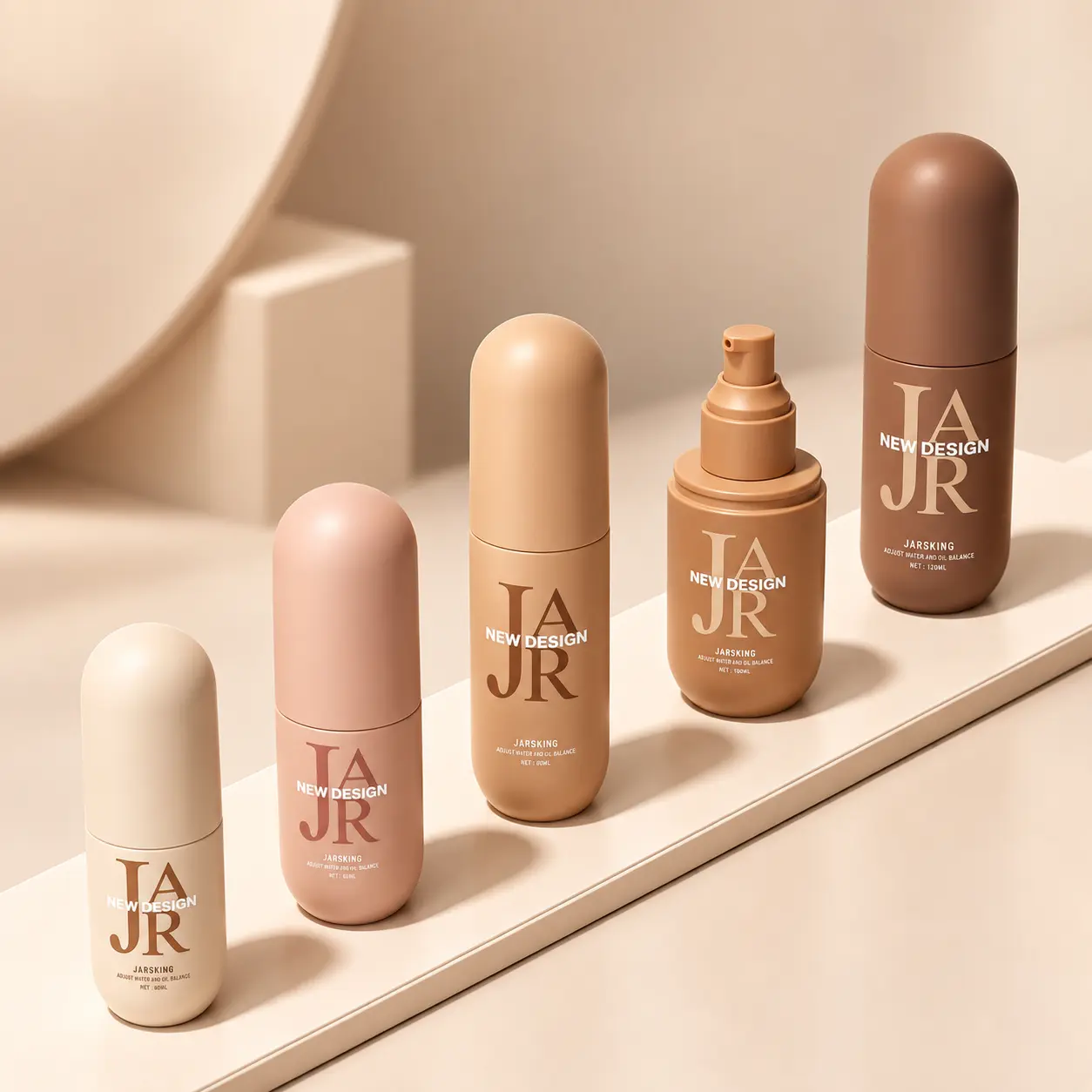
Pros:
• Meets EU PPWR targets — 30% post-consumer recycled content for PET by 2030 (50% by 2040), 10% for other plastics (25% by 2040)
• A verifiable compliance claim, not a general sustainability statement • backed by documentation your buyers and regulators can check
• Comparable physical performance to virgin plastic when recycled content is properly formulated
Cons:
• Only post-consumer recyclate counts toward compliance — supplier manufacturing scrap doesn’t qualify, even when marketed as “recycled”
• Higher recycled content can limit color consistency and optical clarity
• Requires documented sourcing and a Declaration of Conformity, adding a step most standard plastic orders skip
• Supply chain consistency for recycled feedstock is less mature than virgin plastic
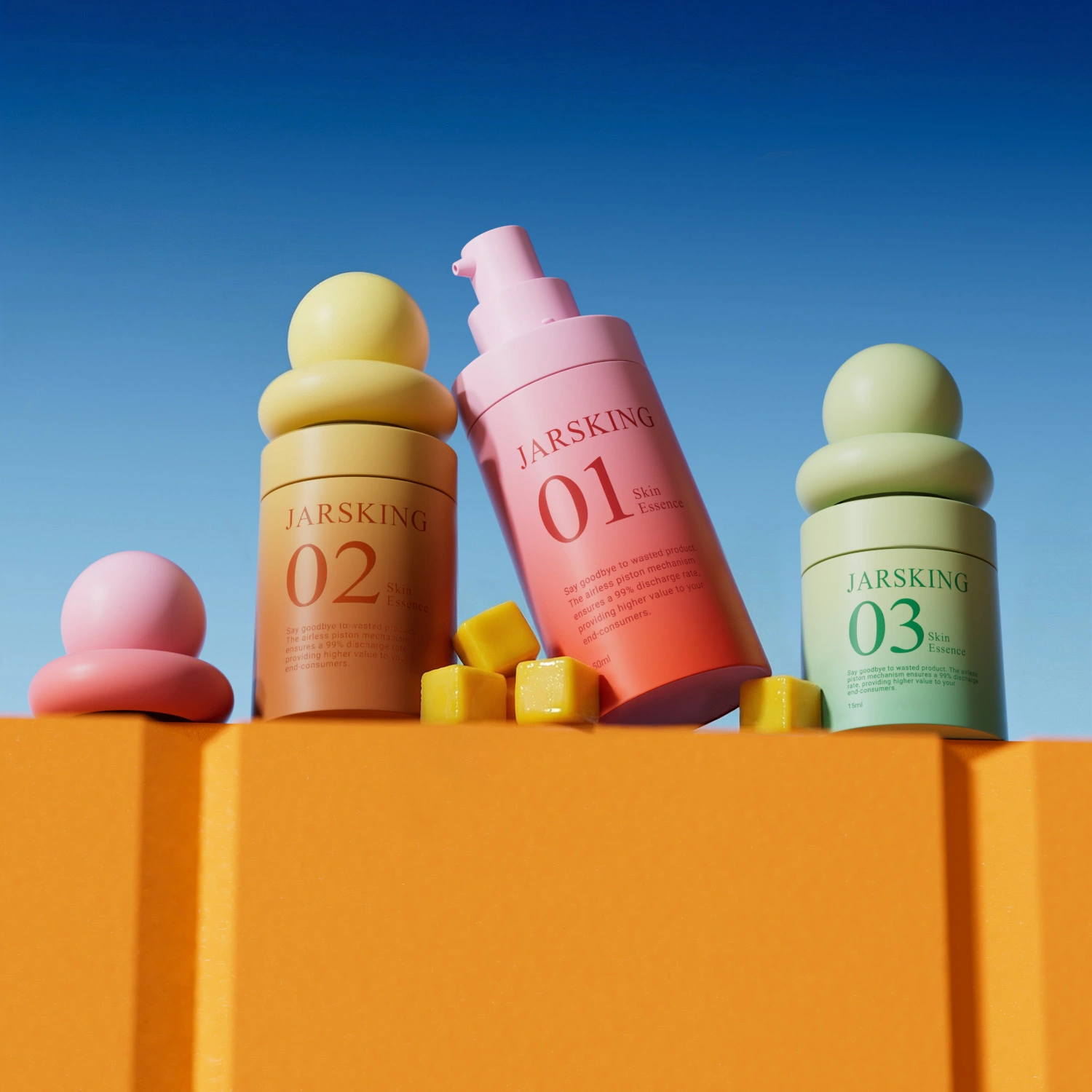
Pros:
• Lightest rigid material on this list, reducing freight cost and damage risk in transit
• Cost-efficient and clear, the standard choice for retail-facing pump bottles
• More impact-resistant than glass, lowering breakage risk across the supply chain
Cons:
• Moderate oxygen barrier — insufficient alone for formulas built on oxidation-sensitive actives
• Needs pairing with an airless or near-airless pump to protect sensitive formulas adequately
• Clear material is more prone to light-driven color shift over time without added UV treatment
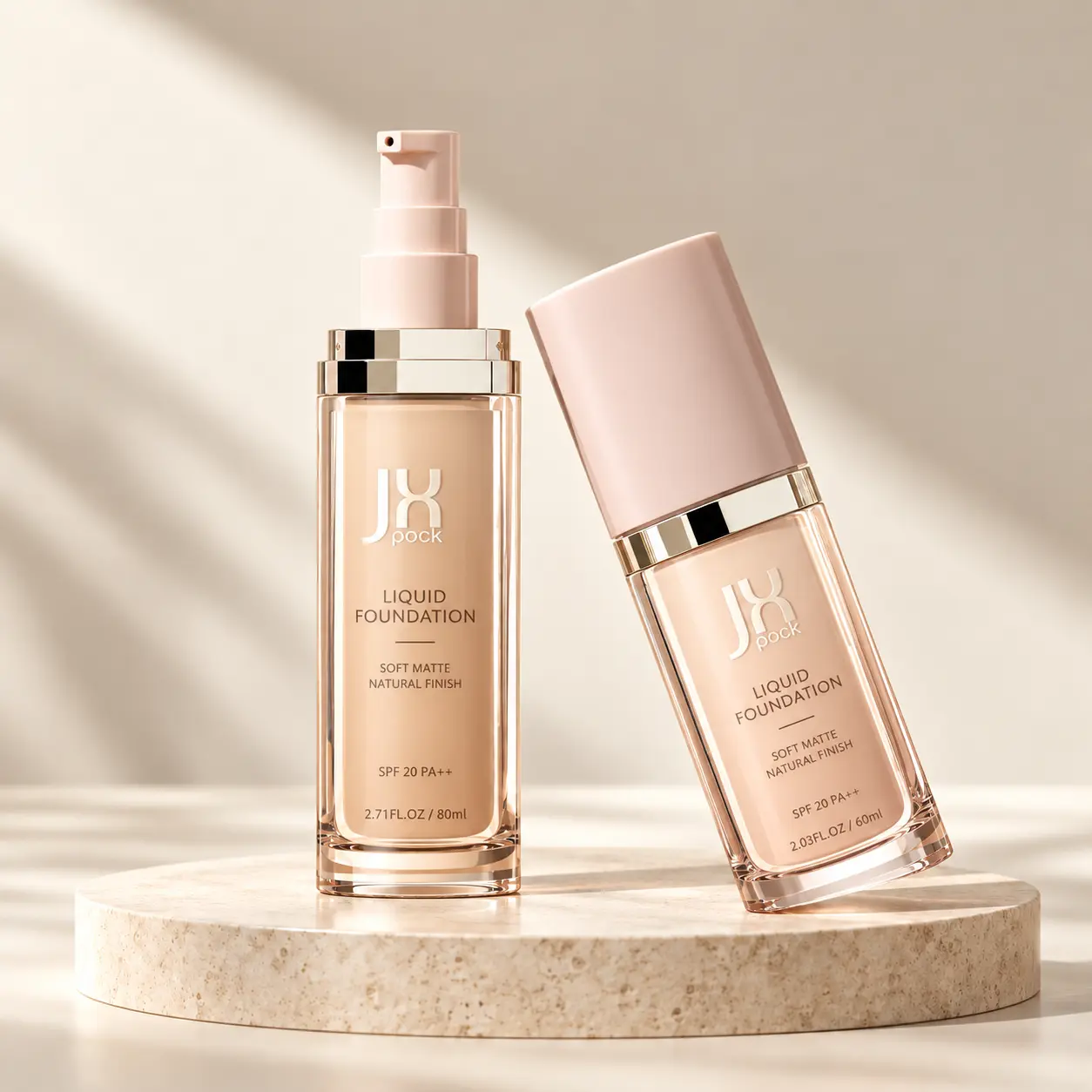
Pros:
• Glass-like shelf appearance at a fraction of the weight and breakage risk
• Pairs with an inner PP or glass liner to combine visual appeal with functional protection
• Compatible with tinted coatings for added light protection
Cons:
• Provides minimal barrier protection on its own — always requires an inner liner for oxidation control
• A perception material, not a functional one — don’t specify it expecting glass-level protection
• Two-component construction (outer sleeve plus inner liner) adds cost and production complexity versus a single-material bottle
Why Packaging Matters for Foundation Stability
• A foundation bottle’s material, closure, and pump design determine how fast your formula oxidizes — and oxidation is often the difference between a 12-month and a 24-month shelf life claim on the same formula.
• Color shift, texture separation, and ingredient breakdown show up fastest in formulas built on vitamin C, retinol, natural oils, or botanical extracts — these actives are the reason “any bottle will do” is the most expensive assumption a brand can make.
• Airless pumps and tinted or opaque materials block the two triggers that matter most — air and light — while a mismatched pump adds a third failure mode before oxidation ever becomes the issue: inconsistent dosing from day one.
• The right material and closure combination doesn’t just slow oxidation; it protects the specific claim on your label, since a reformulation triggered by packaging failure costs more than getting the spec right the first time.
Match Your Pump to Your Formula's Viscosity
“Choosing a pump by appearance instead of viscosity is the single most common cause of foundation packaging failure. “
| Formula Viscosity | Recommended Mechanism | Typical Dose | Common Failure if Mismatched |
|---|---|---|---|
| Thin, serum-like | Dropper or low-displacement pump | 0.1–0.15ml | Leaking through gasket during shipping vibration |
| Medium, emulsion or BB-cream style | Standard pump, wider nozzle bore | 0.2ml+ | Partial clogging from pigment residue buildup |
| Thick, high-pigment, full coverage | Airless pump or piston system | 0.2–0.5ml | Clogging, separation, or oxidation in head space |
Professional Advice by Formula Type
• Oil-Based Foundations: Antioxidant Protection
Why? Oil-based formulas oxidize easily, altering texture and color. Glass provides an excellent oxygen barrier; airless PP bottles prevent air exposure and contamination.
Our recommendation: Glass bottles or PP airless pumps
• Water-Based Foundations: Lightweight and Stable Solutions
Why? Water-based foundations need lightweight, impact-resistant, moisture-proof packaging. PET offers durability; acrylic adds a premium look.
Our recommendation: PET or acrylic bottles with precision pump dispensers.
• SPF-Infused Foundations: UV Protection for Active Ingredients
Why? SPF ingredients degrade under UV exposure, reducing effectiveness. UV-coated PET and tinted or frosted glass shield the formula from light.
Our recommendation: UV-coated PET or frosted glass, paired with airless or vacuum-sealed dispensing.
• Natural & Clean Beauty Foundations: No Harsh Preservatives Required
Why? Lower preservative loads make these formulas more vulnerable to oxidation and microbial growth. Airless PET limits air contact; opaque PP protects against light.
Our recommendation: Airless PET bottles or opaque PP containers—airless technology is a must here.
What to ask your supplier
What pump dose is right for a thick, full-coverage foundation?
Thick, high-pigment foundations need an airless or piston pump starting around 0.2ml per actuation with a wider nozzle bore. Standard pumps built for thinner formulas tend to clog within weeks under heavy pigment load.
Why does my foundation pump clog after a few weeks?
Clogging almost always comes from a mismatch between nozzle bore size and formula viscosity or pigment concentration, not a defective pump. Match nozzle bore and pump displacement to your formula’s actual viscosity at fill and use temperature.
Is glass or airless plastic better for oxidation-prone formulas?
Glass has a stronger natural oxygen barrier, but an airless pump closes that gap by blocking air re-entry as product is dispensed. Choose glass primarily for shelf presence and airless primarily for formula stability—they answer different questions.
Why does my bottle leak even though it isn't cracked?
Leaking without visible damage almost always traces back to the pump gasket or neck-thread fit, especially with thin, low-viscosity formulas that migrate through a poorly sealed gasket during shipping vibration. Confirm gasket material and torque tolerance with your supplier.
Does my foundation bottle need to comply with PPWR if I sell in the EU?
Yes. Contact-sensitive PET needs 30% post-consumer recycled content by 2030, and other contact-sensitive plastics need 10% by the same date—only post-consumer material counts. Confirm your supplier can provide a Declaration of Conformity before committing to a mold for EU-bound product.
Can I get samples before committing to a mold or MOQ?
Yes. Send your formula’s viscosity reading, target dose, and fill volume, and we’ll recommend a matched bottle-and-pump combination and provide samples for testing before any mold commitment.