CUSTOM LOTION BOTTLES
Custom Lotion Bottle Manufacturer
Pumps That Match Your Formula
“Most lotion bottle suppliers will hand you a pump that was tested with water and let you find out the hard way that it dispenses a third as much once your actual formula is inside. Othilapak builds lotion bottles around what’s actually being pumped — viscosity, dip tube length, and evacuation rate — not just the volume and color a buyer picks off a catalog page. If your customers are pumping three or four times per use, or your last batch left a visible pool of unused product at the bottom, the pump or dip tube was mismatched to the formula before the first unit shipped.”
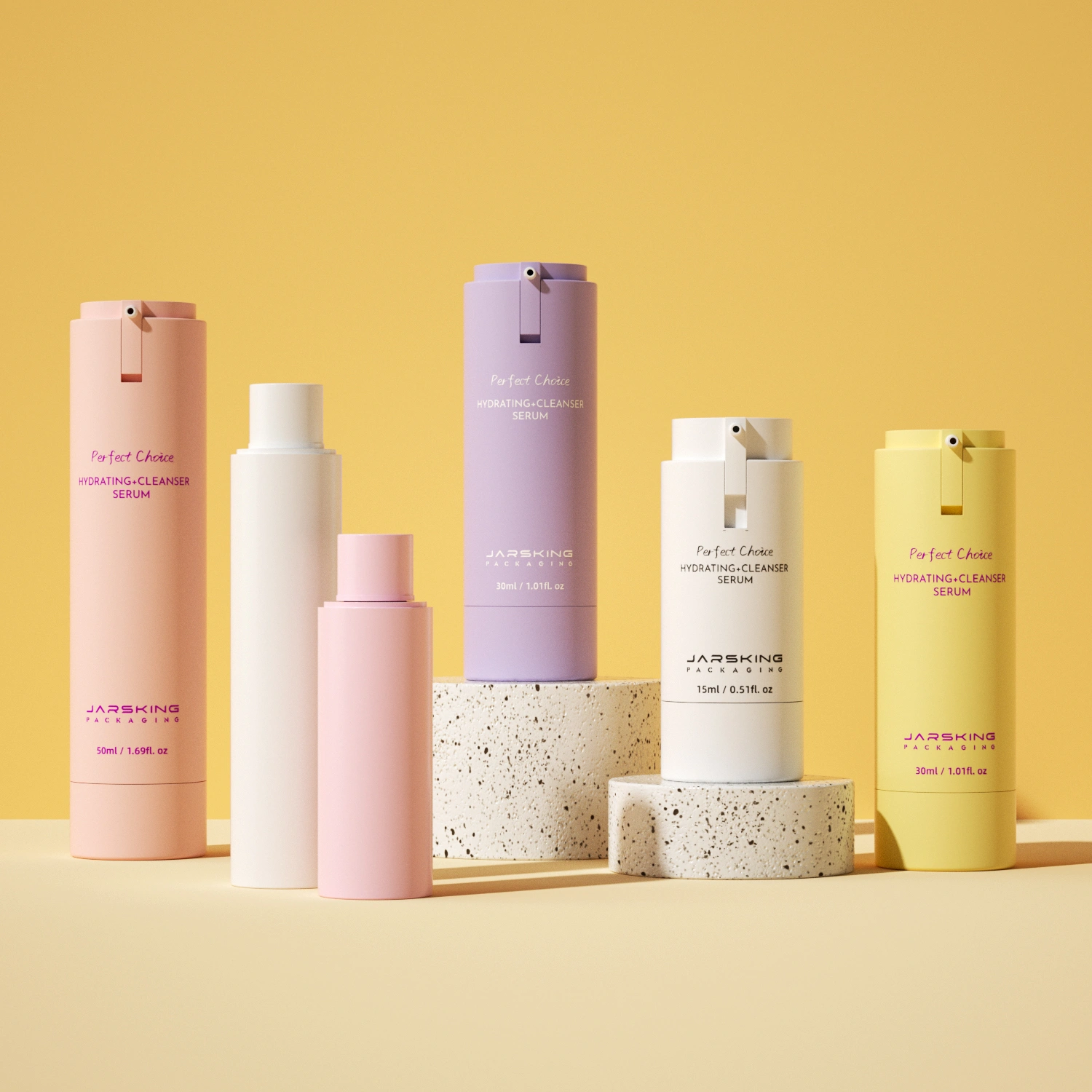
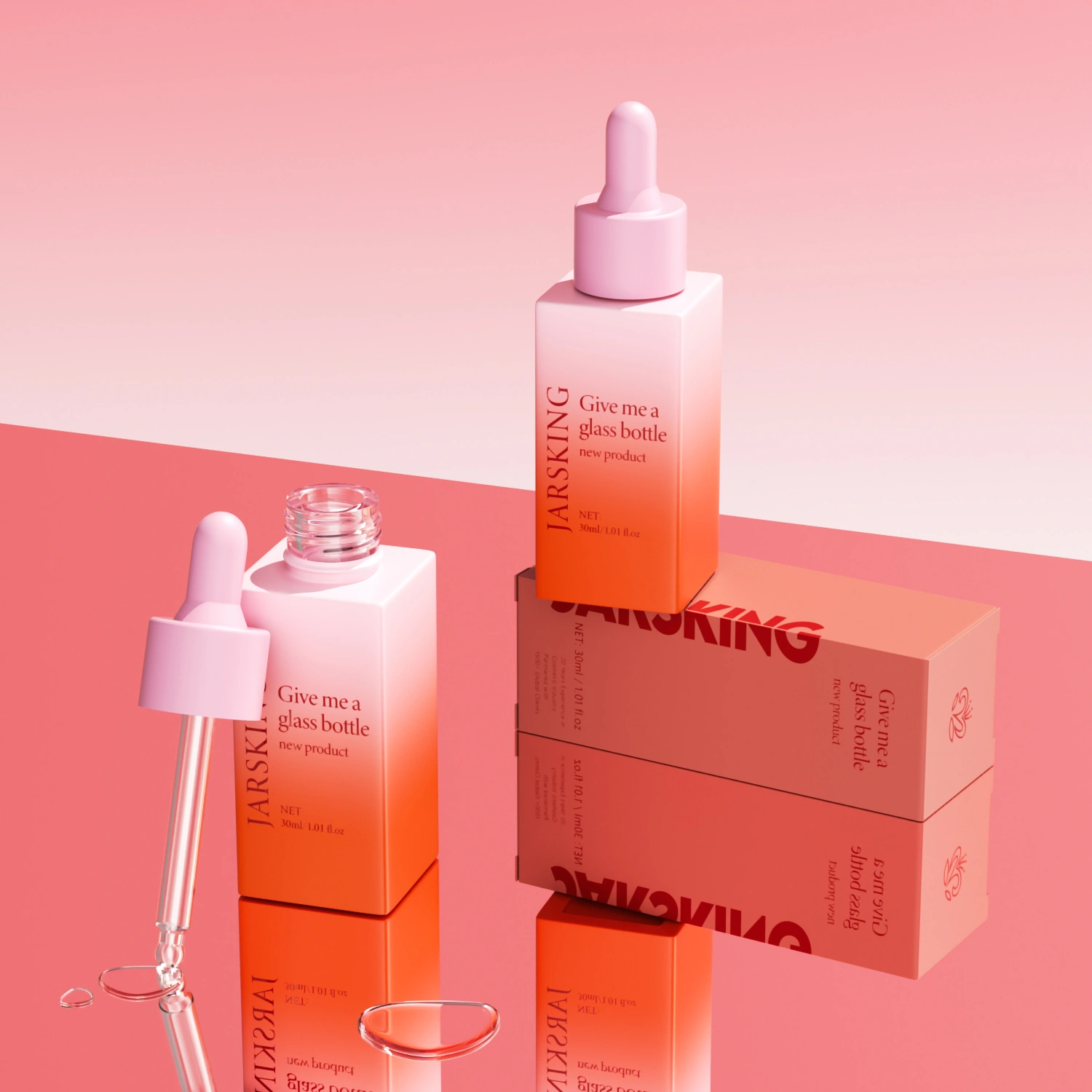
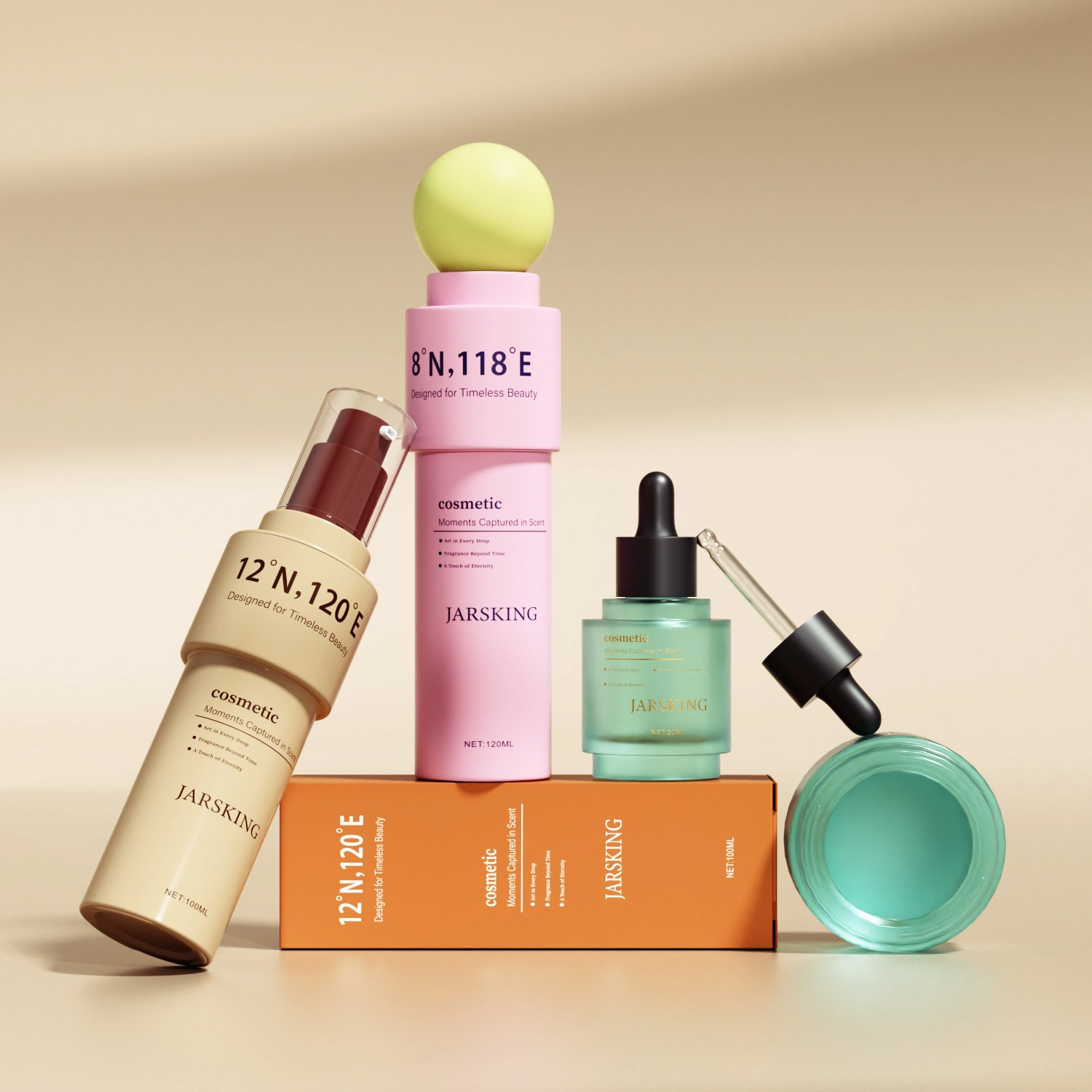
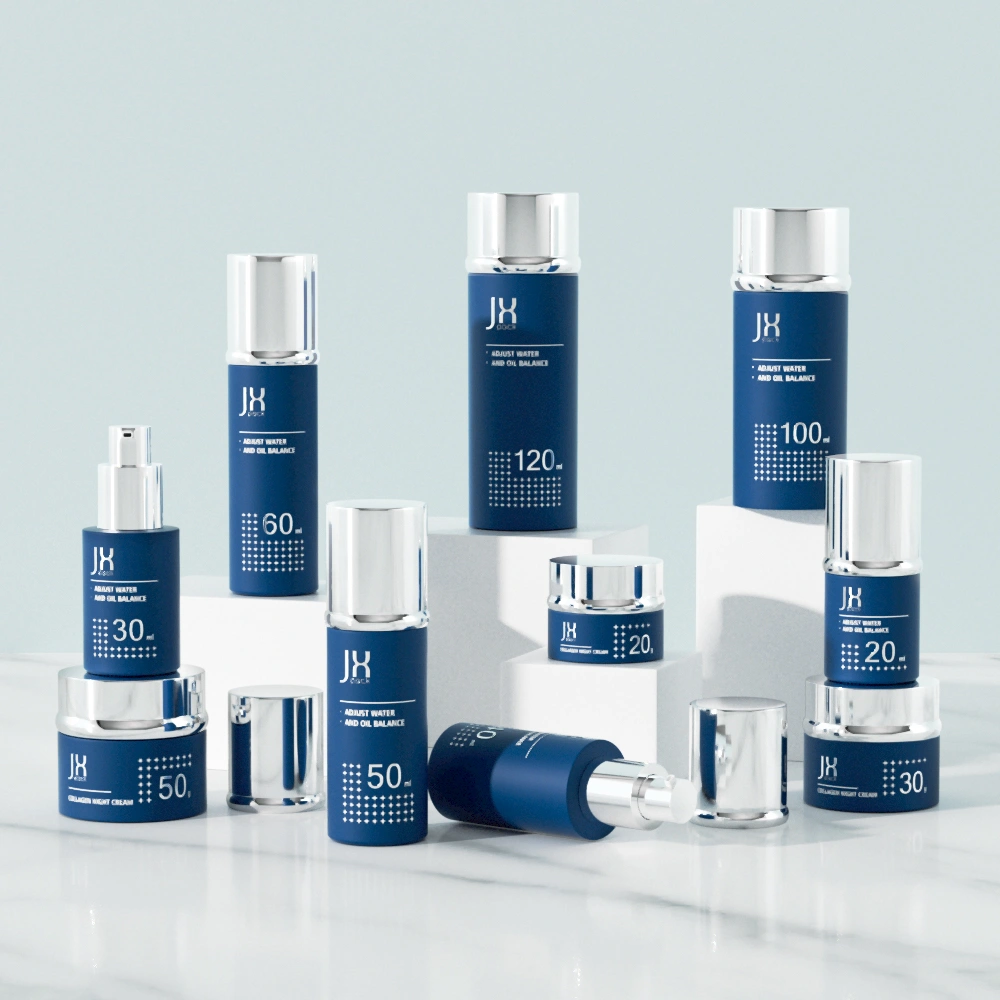
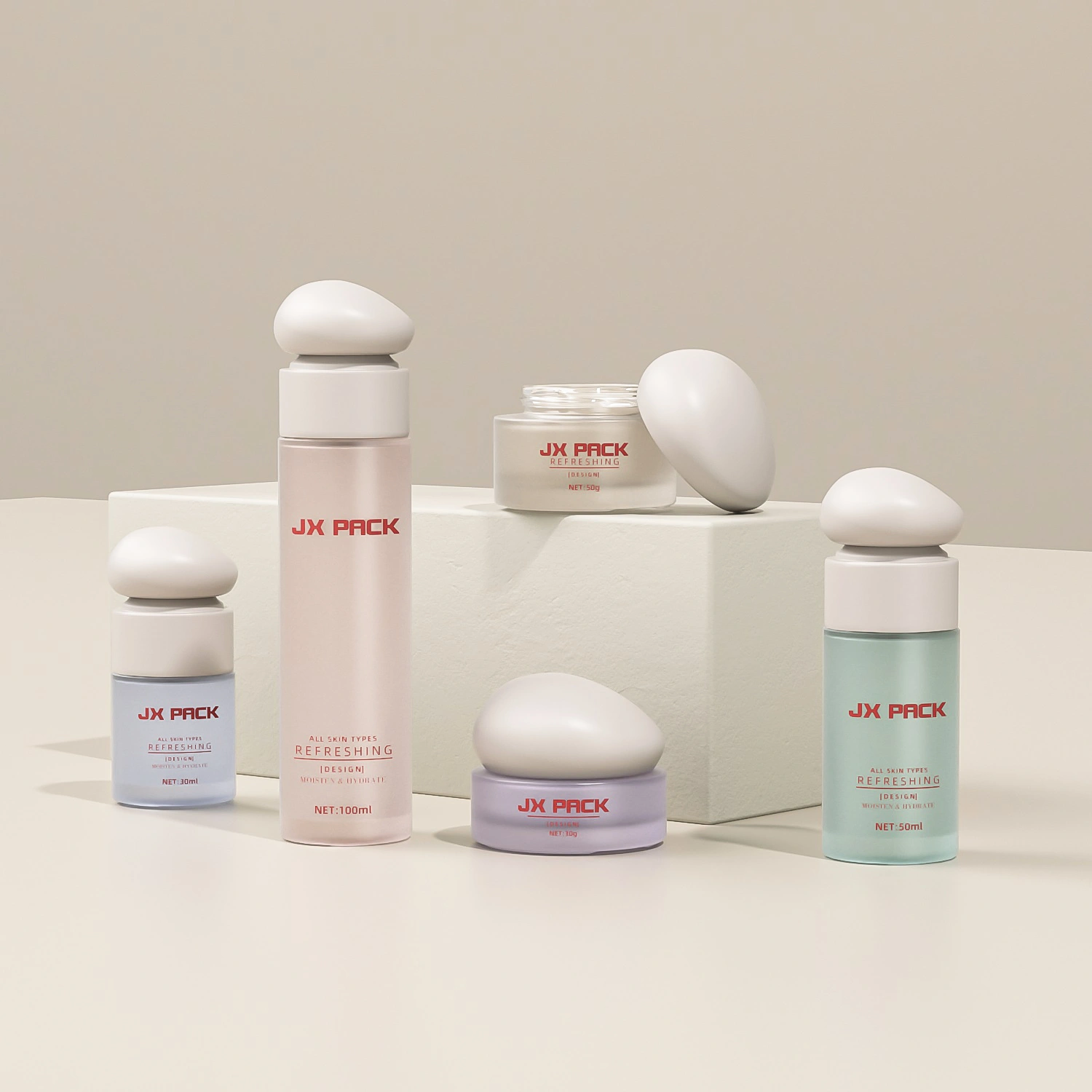
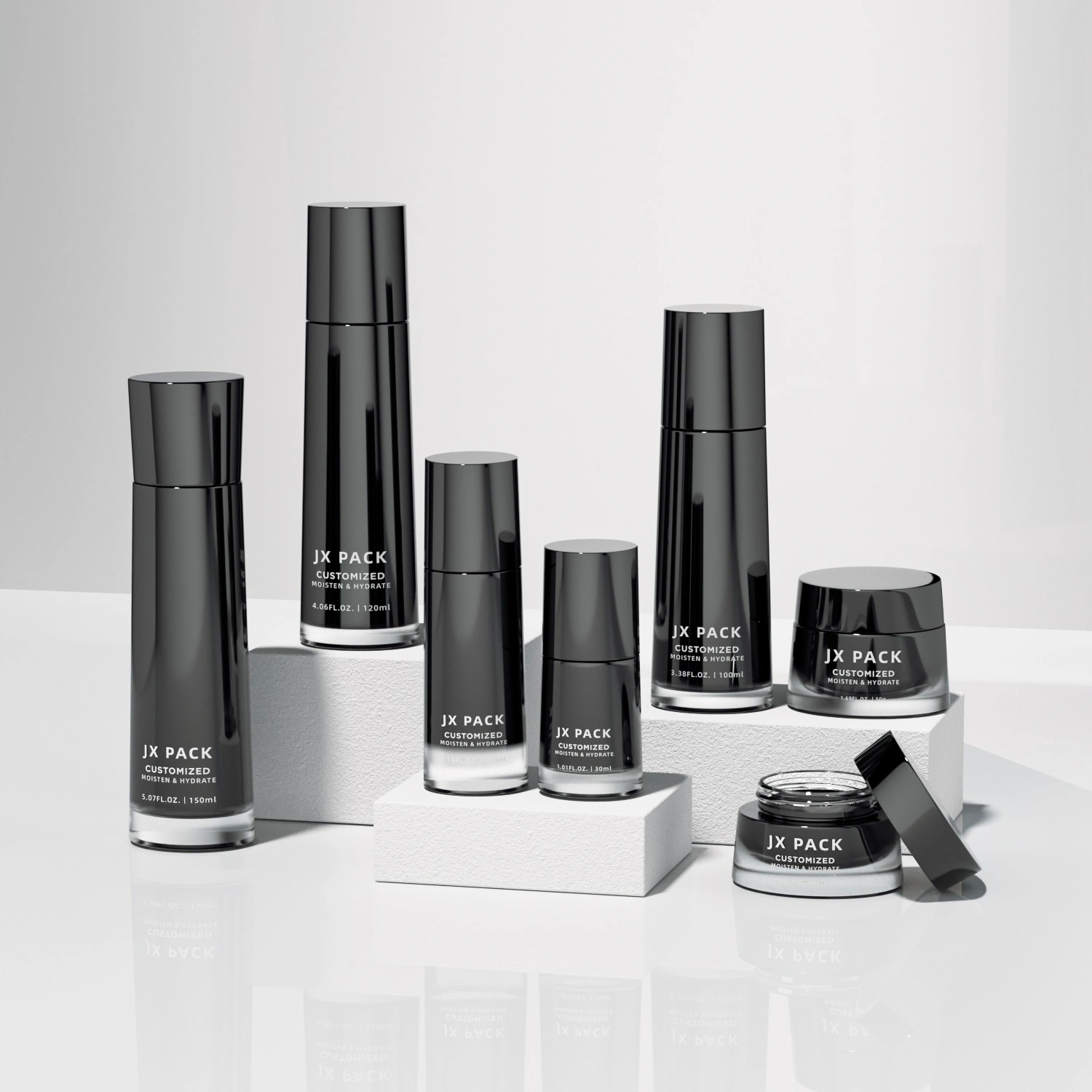
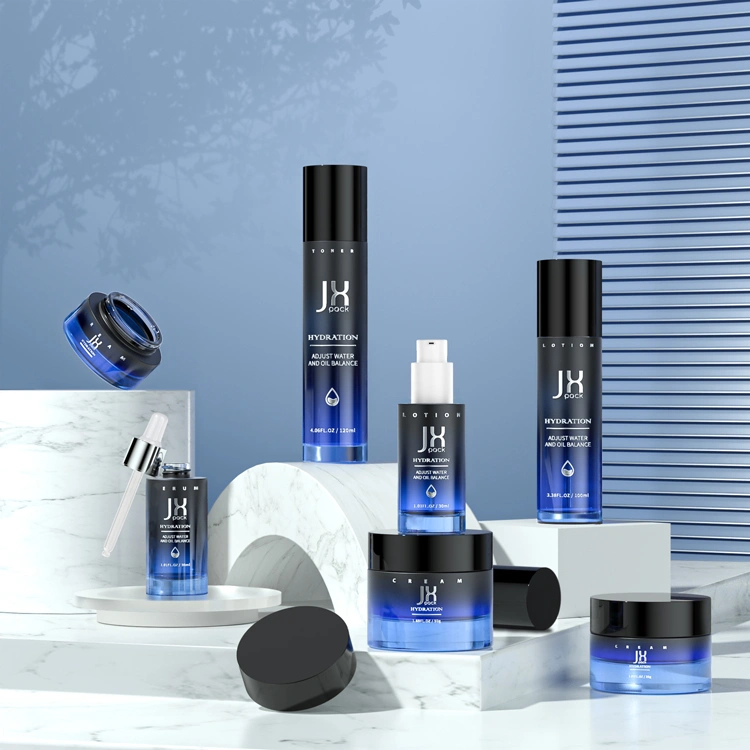
Residual Product Waste in Lotion Bottles
“Not every drop of lotion you pay to fill a bottle with actually reaches the customer. Dip tube length, bottle base shape, and pump type all affect how much product gets left behind — and most of it comes down to a handful of fixable packaging choices.”
01 VALIDATION
PROBLEM
Residual waste is invisible during production — a correctly cut dip tube and an over-length one look identical sitting on a shelf.
SOLUTION
Don’t approve a bottle-pump pairing on fit confirmation alone. Request the tested residual volume for your specific bottle size and formula viscosity before sign-off — fit and evacuation rate are two separate specifications, and only a real test catches the difference.
02 BASE GEOMETRY
PROBLEM
A flat bottle base traps residual lotion evenly across the entire bottom, out of the dip tube’s reach.
SOLUTION
Specify a tapered or slightly concave base during mold design. A tapered base channels pooling product toward the dip tube opening instead of spreading it flat, reducing unreachable volume even with the same pump and dip tube length.
03 DIP TUBE LENGTH
PROBLEM
An incorrectly cut dip tube leaves 10-15% of a lotion bottle’s fill volume unreachable by the pump.
SOLUTION
Request a dip tube cut to the exact internal height of your confirmed bottle mold, not a stock length borrowed from a similar-looking SKU. This single fix eliminates the most common cause of excess residual, since generic dip tube lengths are built for an average bottle shape.
04 PUMP SYSTEM
PROBLEM
Standard pumps waste 20-30ml of formula per 200ml unit — 200-300 liters lost across a 10,000-piece run.
SOLUTION
Switch to an airless pump for higher-cost or higher-viscosity formulas. It evacuates nearly all product instead of leaving residue in a static pool, and the added per-unit cost is usually smaller than the formula it recovers.
What Actually Fits a Daily-Use Lotion Bottle
“Material choice for lotion isn’t primarily about optical clarity or shelf photography — it’s about how the bottle survives daily handling in wet environments (bathroom counters, shower caddies, gym bags) and how it interacts with your formula over the shelf life of the product.”
| Material | Best For | Where It’s the Wrong Choice |
|---|---|---|
| PET | Retail shelf visibility, lightweight shipping, cost-effective standard SKUs | Shower or bath environments with repeated moisture exposure and drop risk — HDPE holds up better there |
| HDPE | Everyday body lotion, drop resistance, wet-environment durability | Brands positioning on “see the product” clarity — HDPE is opaque by nature |
| PP | Formulas with reactive actives requiring strong chemical resistance | Brands wanting glass-like optical clarity or a premium tactile weight |
| Glass | Premium shelf positioning, airtight seal, non-porous chemical inertness | Shower/bath-adjacent daily-use SKUs and price-sensitive volume products — breakage risk and freight weight erode the economics fast |
| PCR PET / HDPE | Brands with genuine sustainability positioning and willingness to test tolerances | Brands needing exact, unwavering brand-color match — PCR resin can carry slight batch-to-batch color and opacity variance that needs testing before you commit, not after |
| Aluminum / metal | After-sun and cooling-effect lotions, premium tactile positioning, light/air barrier | High-volume everyday SKUs where cost-per-unit is the driving constraint |
SELECTION
CHECKPOINTS
01
CONSUMPTION
How much product is used per application and per week?
02
CLOSURE FIT
Match the neck finish and pump to the final bottle drawing.
03
CHANNEL
Check the retail, hospitality or professional use case first.
☑ Confirm the technical drawing before production approval.
Compare Lotion Bottle Formats by Use
FORMAT
VOLUME
CLOSURE
CHANNEL
• Travel & Sample Lotion Bottles
5-30ml
18-410 or 20-410 fine-mist sprayer or disc-top cap
gift-with-purchase, hotel amenity kits, trial-size retail displays
• Individual Retail Lotion Bottles
50-100ml
20-410 or 24-410 lotion pump
first-SKU DTC launches, niche skincare lines, travel-retail and duty-free
• Standard Retail Lotion Bottles
150-250ml
24-410 lotion pump, standard or airless
mainstream retail shelf, e-commerce, drugstore and specialty beauty
• Family & Professional Lotion Bottles
300-1000ml
28-410 or 33-400 pump, or disc-top cap for bulk refill formats
salon back-bar, spa professional use, hospitality bulk dispensers, value-size retail
Pump & Closure Options for Lotion Bottles
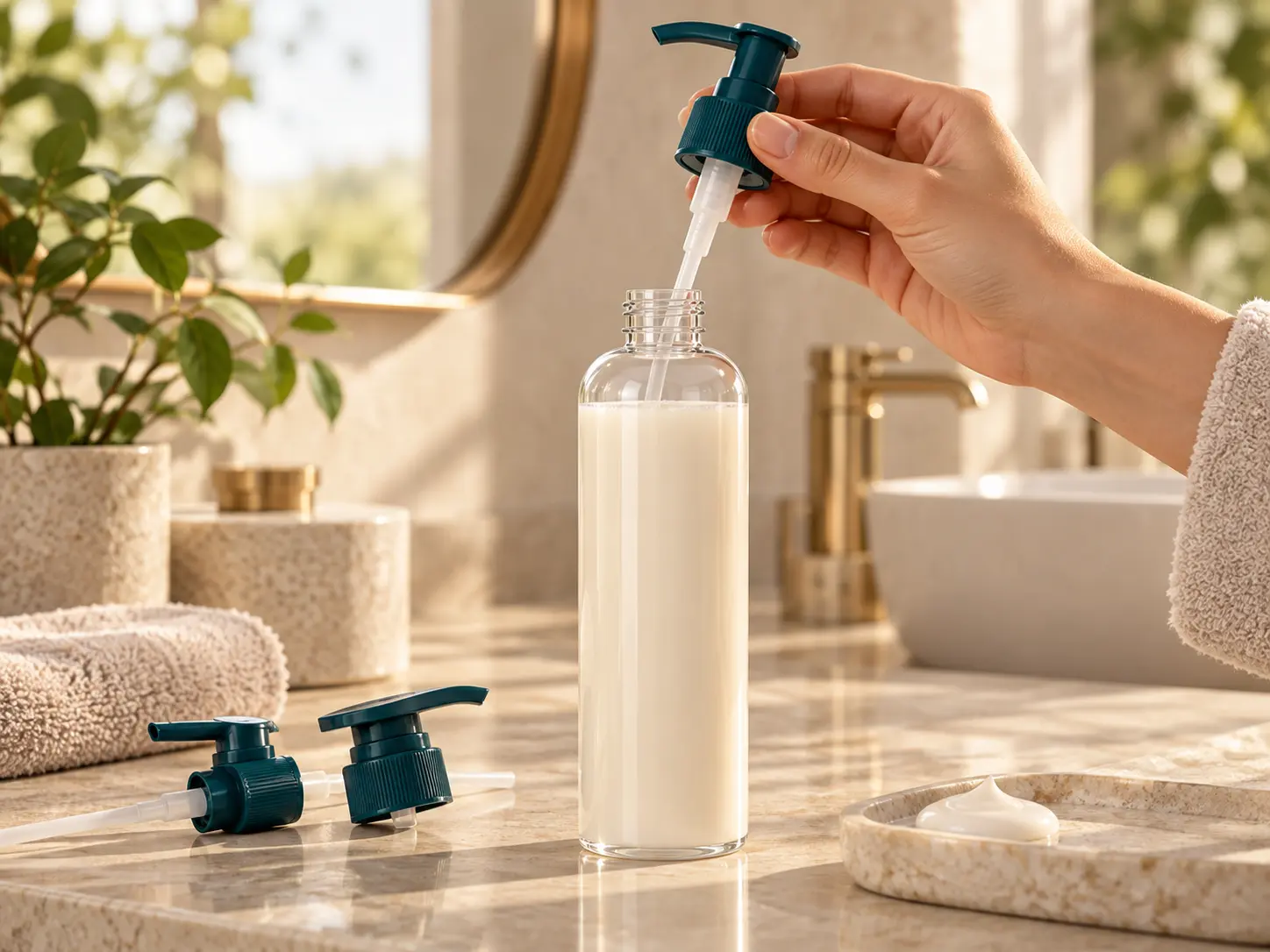
• Thread Fit vs. Pump Performance
Standard lotion pumps come in a range of neck sizes — commonly 20-410, 24-410, and 28-410 — and will thread onto most bottles matching that neck finish correctly. That only confirms the pump attaches, not that output matches your formula’s viscosity. Ask for ml-per-stroke output tested with your actual lotion, not water, and re-test whenever you reformulate.
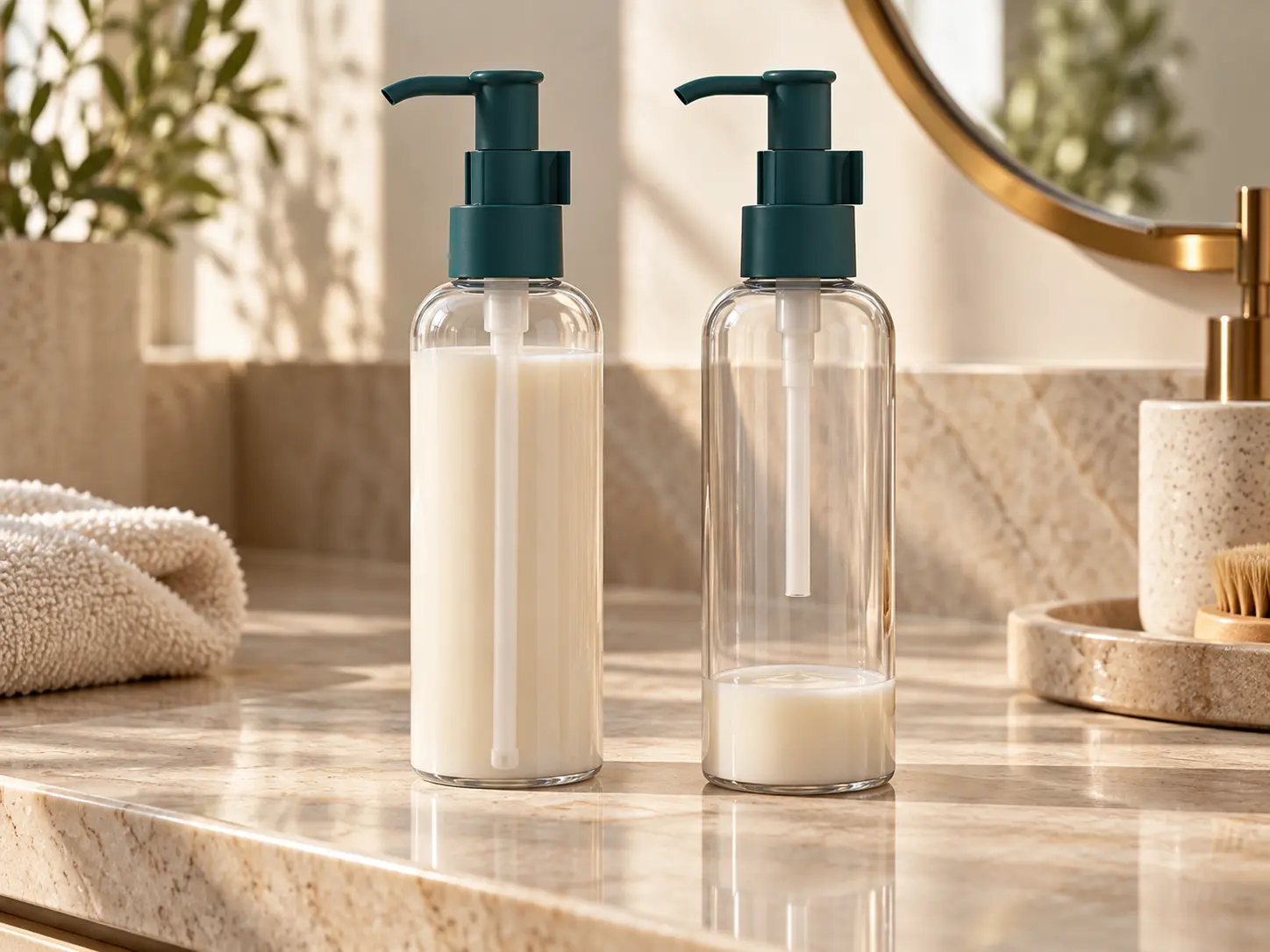
• Dip Tube Length Matching
A pump paired with a dip tube built for a different bottle height leaves product pooling at the base, unreachable regardless of neck size. Confirm the dip tube is cut to your bottle’s exact internal height before approving a sample — this is a separate spec from neck finish and gets missed just as often.
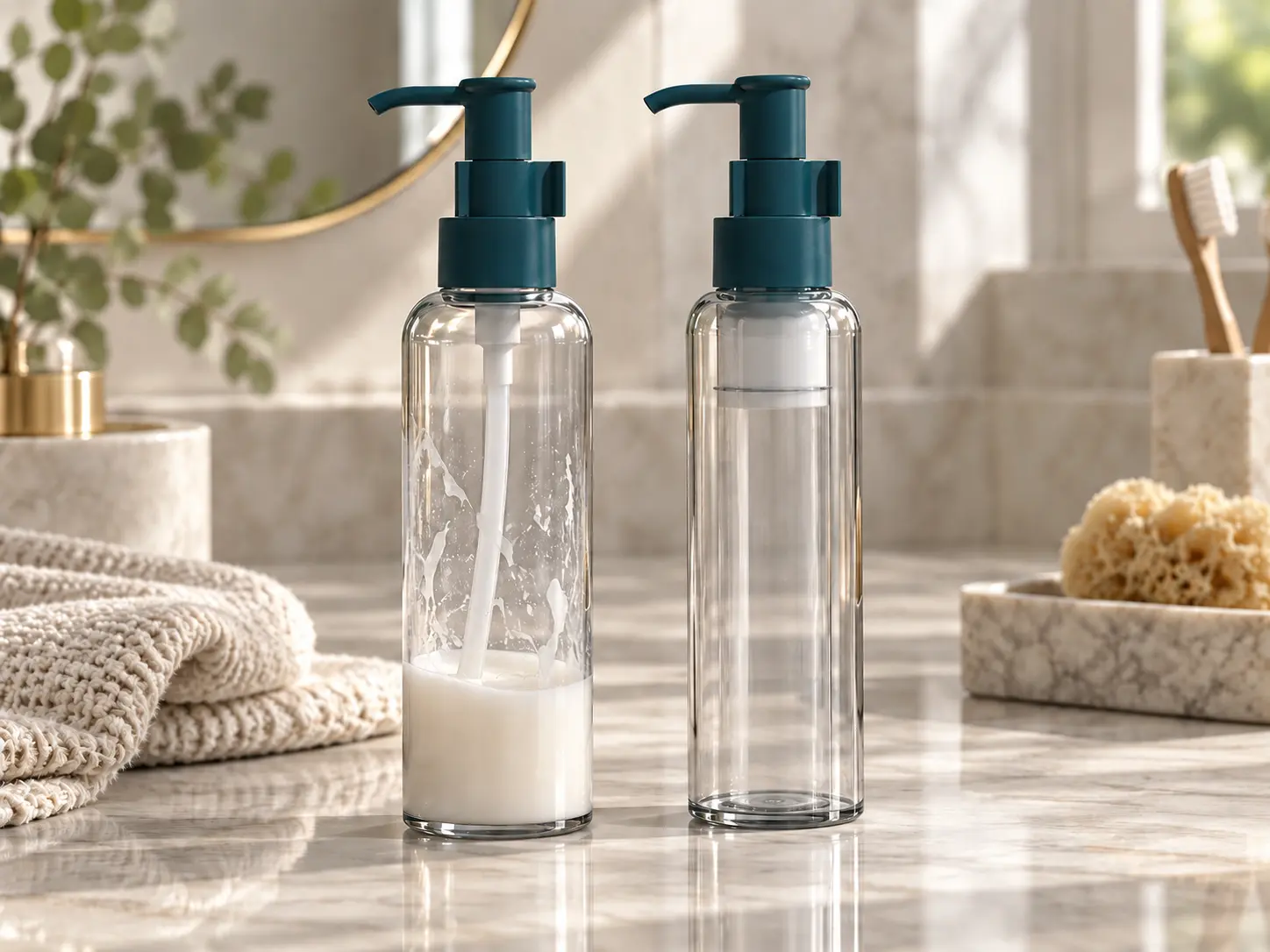
• Airless vs. Standard Pumps
A standard pump works fine for most everyday lotions, but higher-cost formulas benefit from switching to an airless system that maximizes evacuation instead of leaving residue in a static pool. Ask for the evacuation percentage difference on your specific bottle before deciding — the added cost is often smaller than the formula it recovers.
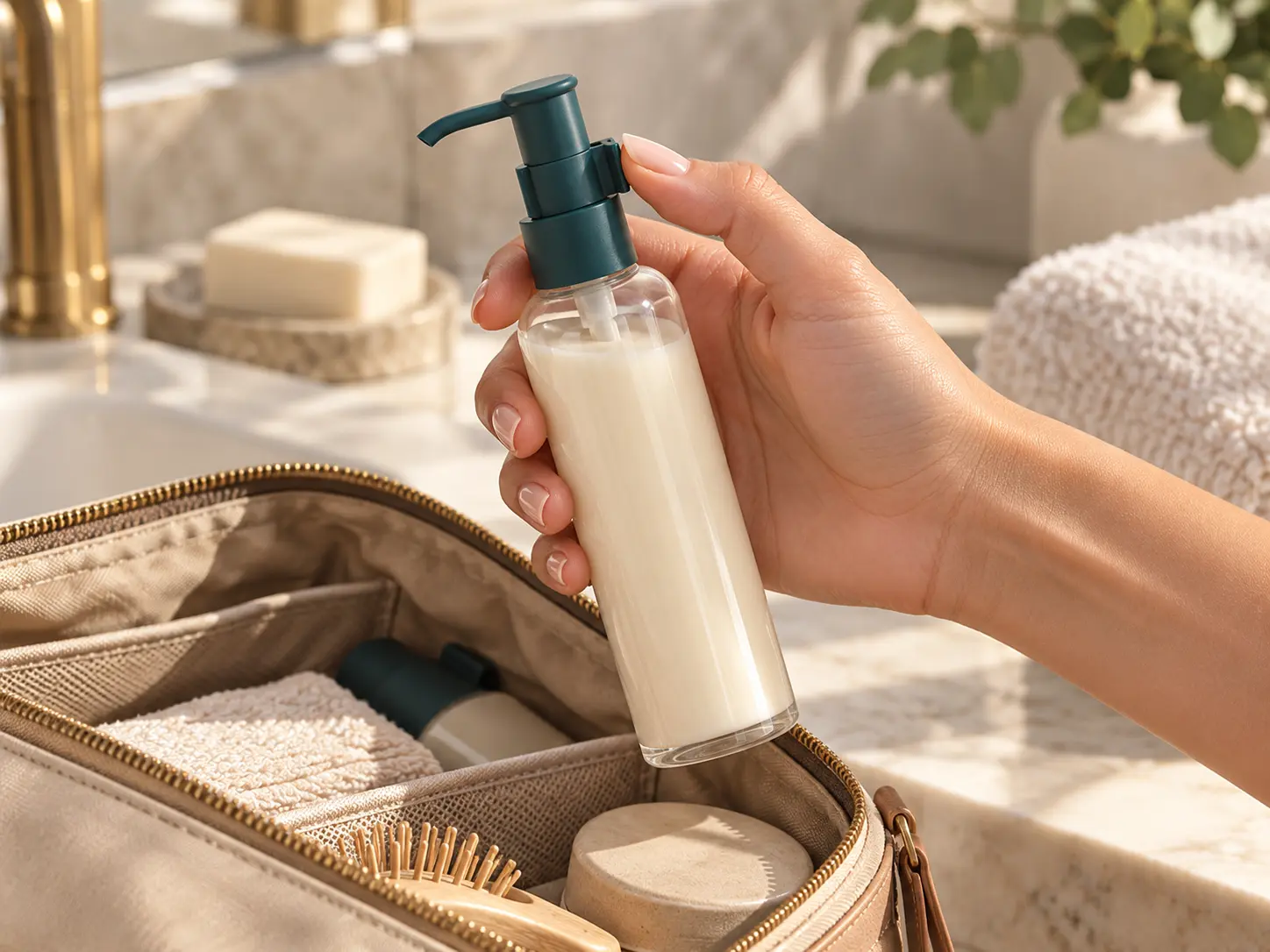
• One-Handed Actuation Reliability
Lotion gets dispensed one-handed constantly, often with the other hand occupied. A flip-lock pump head that prevents accidental actuation in transit or storage is a functional spec worth requesting on any lotion pump, not a cosmetic add-on.
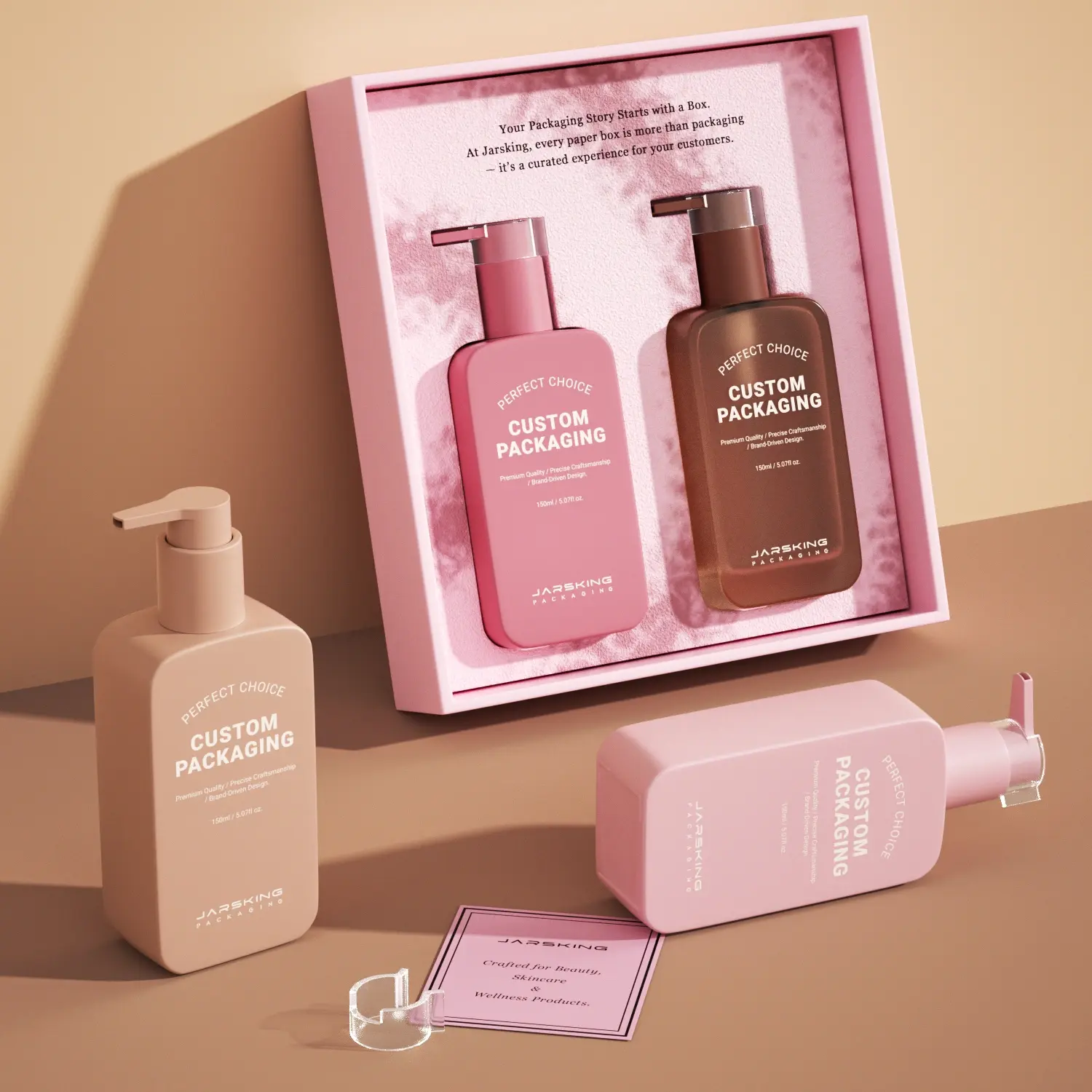
Lotion Bottle Pump Viscosity Compatibility
Every lotion bottle pump is engineered for a specific viscosity window — not a universal one. The right range depends on the pump mechanism, spring tension, and piston design, and it should cover everything from thin lotions and toners at the light end to heavy creams and hand washes at the dense end.
Too thick, and the pump under-dispenses. Customers pump multiple times to get the coverage they expect, and read it as a formula problem — not a packaging one.
Too thin, and the pump over-dispenses. Product comes out faster than expected, wasting formula with every use.
Before locking in a pump: ask your supplier for the pump’s rated viscosity range in cPs, test your formula’s actual viscosity against it, and re-test any time you reformulate — a viscosity shift is invisible until the pump runs with the new formula.
Frequently Asked Questions
What size lotion bottle do I need for a body lotion product?
Most standard retail body lotion SKUs land between 150ml and 250ml, since that range matches typical daily-use consumption rates without requiring excessive shelf space or unit cost. Travel and sample formats run 5-30ml, while family or professional bulk formats go from 300ml up to 1000ml. The right size ultimately depends on your target retail price point and how frequently your customer is expected to repurchase.
Will my lotion pump work if I reformulate to a thicker viscosity?
Not necessarily — pump actuation output is calibrated to a specific viscosity range, and a formula change can shift output volume even if the pump mechanism itself is unchanged. Any time your formula’s viscosity changes meaningfully, re-test the pump-bottle pairing with the updated formula before assuming performance holds. This is a five-minute check that prevents a customer-facing output complaint later.
Can I use the same bottle mold for different pump types?
Only if the neck finish matches. Bottles and pumps are matched by neck finish specification (for example, 24-410), so any pump with a compatible neck finish will thread onto the same bottle. However, matching thread doesn’t guarantee matching performance — output volume and dip tube fit still need separate verification for each pump option you’re considering.
What surface finishes work best for lotion bottles used in wet environments?
Frosted coating and soft-touch lacquer both hold up well under repeated moisture exposure and provide better wet-hand grip than a high-gloss finish, which becomes noticeably more slippery when hands are lotion-covered. Silk screen printing, hot stamping, and UV coating are all viable for lotion bottles as well, but grip and slip resistance should be an explicit selection criterion for any bathroom or shower-adjacent product, not an afterthought.
What information does a supplier need to give me an accurate lotion bottle quote?
An accurate quote needs your target volume (ml), rough viscosity of your formula, target MOQ, preferred material, pump or closure type, and any decoration requirements. The viscosity detail is the one buyers most often skip, and it’s the detail that most affects whether your pump choice will actually perform as expected once your real formula is inside the bottle rather than a test liquid.
What MOQ do I need for a custom lotion bottle bottle?
Most lotion bottle programs start at an MOQ of around 10,000 pieces per SKU, and that threshold applies whether you’re using an existing mold shape or commissioning a fully custom one. The number isn’t really about the mold — it’s the volume where per-unit production costs, material batching, and decoration setup all become cost-effective without over-ordering. If you choose a shape from an existing mold library instead of custom tooling, you skip the tooling fee entirely, but the 10,000-piece production MOQ still generally applies. Brands wanting fully custom, one-of-a-kind bottle shapes should expect tooling costs on top of that production MOQ, since a new mold is a separate investment from the piece-count minimum.