

In the hyper-competitive world of beauty and personal care, packaging is rarely the first thing a brand thinks about when plotting its rise to prominence. Yet for a homegrown Filipino skincare and fast-moving consumer goods (FMCG) brand built on the power of social media influence, packaging became one of the most critical — and surprisingly strategic — dimensions of its growth journey.
This case study examines a cross-border manufacturing partnership that began modestly in 2018, stalled, and was ultimately reignited in 2025 into a full-scale collaborative relationship. At its heart, the story is not primarily about packaging specifications or production logistics. It is about trust — how trust is built between two companies separated by geography, culture, and supply chain complexity, and how that trust, when codified into concrete operational practices, becomes a genuine competitive advantage for both parties.
The client is a Filipino beauty brand that rose to prominence through influencer marketing, cultivating a loyal fanbase among teenage girls and young women. Positioned firmly in the affordable, mass-market segment, the brand competes in one of Southeast Asia’s most dynamic and fast-growing consumer markets. Its product portfolio spans a full range of skincare essentials — cleansers, toners, moisturizers, serums, and sun care — alongside broader FMCG items. It operates its own in-house research and development team and proprietary manufacturing facilities, giving it a high degree of product-level autonomy. What it needed from an external partner was not product expertise, but precision execution in packaging production — along with the reliability and responsiveness that its domestic suppliers had, thus far, struggled to consistently deliver.
We met that challenge through three deliberately designed pillars of support: proactive lead time management, market-aligned pricing concessions, and a robust after-sales resolution framework. Together, these pillars transformed a transactional vendor relationship into an embedded strategic partnership.
1. The Philippine Beauty Market: Context and Opportunity
To understand the significance of this partnership, one must first appreciate the landscape in which our client operates.
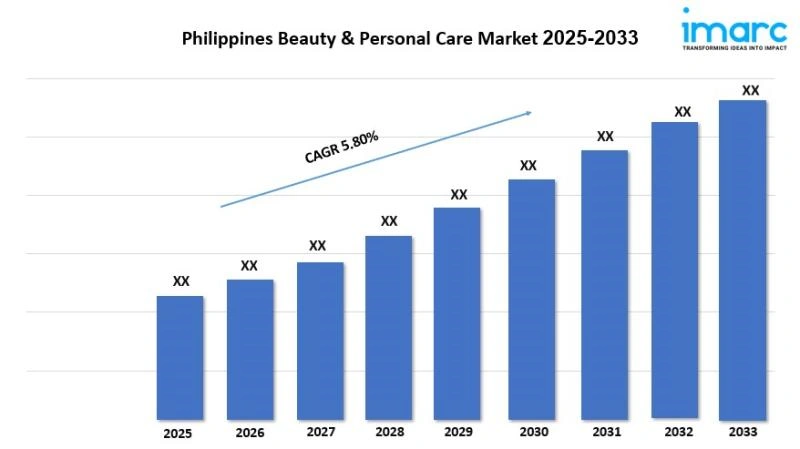
The Philippines is one of Southeast Asia’s most promising beauty and personal care markets. With a population exceeding 115 million people, a median age of approximately 25 years, and one of the highest social media penetration rates in the world, the country has become fertile ground for influencer-driven commerce. Filipino consumers — particularly young women — are deeply engaged with digital content, spending several hours daily on platforms such as TikTok, Instagram, Facebook, and YouTube. Beauty content, in particular, commands enormous attention, with local influencers regularly achieving engagement rates that far outpace their counterparts in more saturated Western markets.
This cultural affinity for beauty content has given rise to a new generation of homegrown brands that bypass traditional retail entirely, building their customer relationships through authentic storytelling, peer-to-peer recommendations, and community-driven loyalty. Unlike legacy cosmetic houses that rely on expensive television advertising and department store shelf space, influencer-driven brands grow organically — and rapidly — by leveraging the trust that content creators have built with their audiences.
Our client is emblematic of this new wave. Founded with a clear vision of making quality skincare accessible to everyday Filipino consumers, the brand priced its products aggressively, targeting the sweet spot between drugstore affordability and perceived premium quality. Its core demographic — teenage girls and young women aged approximately 14 to 25 — represents not only a high-volume purchasing segment but also an extraordinarily vocal and loyal one. When these consumers love a product, they share it. When they encounter a problem, they share that too. Reputation management, therefore, is not a peripheral concern for this brand; it is existential.
This context explains why packaging decisions carry weight far beyond the purely functional. A bottle that deforms in transit is not just an operational inconvenience — it is a potential viral moment. A counterfeit product that reaches a consumer is not merely a lost sale — it is a brand integrity crisis. The packaging supply chain, in this environment, sits directly in the path of brand perception.
2. The Origins of the Partnership: 2018 and the Early Years
Our relationship with this client began in 2018, during what might charitably be described as the brand’s formative growth phase. At this stage, the brand had established its identity and was beginning to scale its product line, but its order volumes reflected the cautious procurement behavior of a company still finding its footing in cross-border sourcing.
Cross-border e-commerce was, at this point, already a well-established channel in Southeast Asia, but the infrastructure supporting it — payment systems, logistics networks, customs processes, and platform capabilities — was still maturing. Brands operating in this space faced meaningful friction in every dimension of their supply chains, and sourcing packaging from overseas manufacturers added layers of complexity that many early-stage companies were not yet equipped to manage with full confidence.
For us, the client represented a small but promising account — one of many early-stage brands in our Southeast Asian portfolio that might, with the right support, develop into a significant long-term customer. The initial years of the relationship were characterized by relatively modest order volumes, standard commercial terms, and the routine back-and-forth of a new cross-border partnership. The collaboration was functional but not yet deep.
This early phase is instructive precisely because of what it reveals about the nature of cross-border B2B relationships in the consumer goods industry. Many such partnerships begin with optimism and end in attrition — victims of communication breakdowns, quality inconsistencies, lead time failures, or simply the inertia that sets in when neither party feels sufficiently invested to push the relationship forward. By the early 2020s, our engagement with the Filipino brand had entered a period of relative dormancy. Order volumes remained modest, interaction was periodic rather than continuous, and there was no particular strategic momentum driving the partnership forward.
This dormancy was not the result of any specific breakdown or conflict. It was, rather, the natural drift that occurs when two parties have not yet found the mechanism to elevate their relationship from transactional to collaborative. The ingredients for a stronger partnership were present, but they had not yet been assembled.
3. The Re-Engagement: A Strategic Investment in the Relationship
The pivotal turning point came in 2025, when we made a deliberate, proactive decision to re-engage the client. This was not a passive response to an inbound inquiry; it was an initiative — a calculated investment of time, resources, and hospitality designed to demonstrate our evolved capabilities and signal our genuine commitment to the brand’s long-term success.
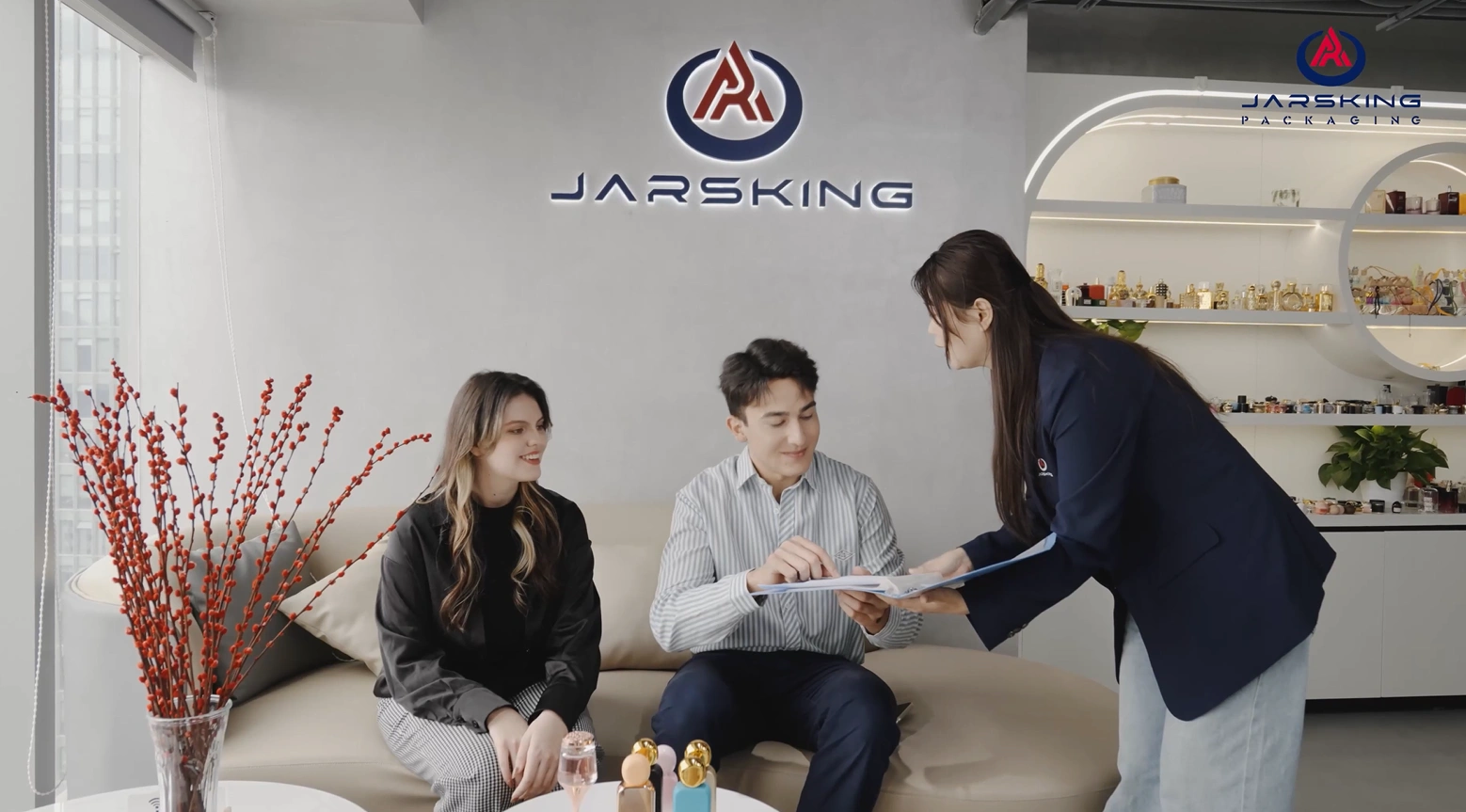
The centerpiece of this re-engagement was an invitation for the client’s team to visit our new headquarters and state-of-the-art manufacturing facility. This kind of in-person facility visit is, in the world of B2B manufacturing, one of the most powerful relationship-building tools available. It transforms abstract claims about capability and capacity into tangible, visible reality. It allows a client to see not just what we produce, but how we produce — the quality of our equipment, the discipline of our processes, the professionalism of our team, and the ambition embedded in our physical infrastructure.
For the Filipino brand’s decision-makers, the visit communicated several important messages simultaneously. First, it signaled that we were serious — serious enough to have invested significantly in our own operations since the relationship began. Second, it demonstrated transparency; we willingly opened our doors to client scrutiny because we were confident in what that scrutiny would reveal. Third, and perhaps most importantly, it expressed respect — the recognition that this client was worth the effort of a genuine hospitality gesture, not just a sales call.
The timing of this re-engagement was also strategically astute. By 2025, the Filipino brand had grown substantially from its 2018 incarnation. Its influencer marketing strategy had matured, its product portfolio had expanded, and its cross-border e-commerce volumes had scaled significantly. The brand was no longer a cautious early-stage company hedging its sourcing decisions; it was a growth-stage enterprise with serious procurement needs and an increasingly sophisticated understanding of what it required from its supply chain partners.
Our re-engagement, timed to coincide with this growth phase, positioned us perfectly to capture a much larger share of the brand’s packaging business than we had held during the dormant years. The facility visit was the opening move in what would prove to be a highly successful renewal of our collaboration.
4. Understanding the Client’s Operational Model
Before examining the specific support mechanisms that drove the partnership’s success, it is worth pausing to understand the operational model of our client in some detail, as this context is essential to appreciating why our approach was so precisely calibrated.
The brand operates with a distinctive hybrid model. On the product development side, it maintains full vertical integration — its own R&D team and proprietary manufacturing facilities give it complete control over formulation, quality, and production. This level of in-house capability is unusual for a brand of its size and age, and it reflects a conscious strategic choice to protect intellectual property and maintain the speed and flexibility that influencer-driven market dynamics demand.
On the packaging side, however, the brand opts for external sourcing. This is a logical division of labor: packaging design and procurement is a specialized capability that requires different expertise, equipment, and supply chain relationships than product formulation and filling. By maintaining its own design team but outsourcing actual packaging production, the brand retains creative control while leveraging the manufacturing expertise and economies of scale that specialized producers like us can offer.
This operational model has direct implications for what the brand needs from us. Because the brand has its own design team, it does not require design services or conceptual input from our side. What it needs, instead, is flawless execution — the ability to translate its design specifications into physical packaging with precision, consistency, and speed. It also needs a partner that can operate reliably within the constraints of cross-border logistics, the Philippine regulatory environment, and the cost structures of a mass-market, price-sensitive consumer segment.
The brand’s procurement cadence is quarterly, reflecting the rhythm of its product launch calendar and the operational realities of cross-border sourcing lead times. Quarterly procurement cycles create their own particular pressures: each order represents a significant consolidated volume, and any failure in a given quarter — whether in lead time, quality, or pricing — has compounding effects on the brand’s ability to meet its market commitments.
Finally, the brand’s core demographic imposes its own set of demands on packaging. Teenage girls and young women are among the most aesthetically attuned consumers in any market. Packaging appearance matters enormously to this segment — not just as a vehicle for brand identity, but as a signal of quality and desirability. Packaging that looks cheap, feels flimsy, or arrives damaged does not just fail functionally; it actively undermines the brand’s social currency with its most important customers.
5. The Three Pillars of Support: A Framework for Partnership Excellence
The renewed partnership’s success can be attributed to three deliberately designed and systematically implemented pillars of support. Each pillar addresses a specific dimension of the client’s operational needs and risk profile. Together, they constitute a comprehensive value proposition that no local supplier had managed to replicate.
Pillar One: Lead Time Support Through Proactive Mold Investment
In packaging manufacturing, mold fabrication is one of the most significant bottlenecks in the production timeline. Custom molds — required to produce bottles, caps, and other plastic packaging components to precise brand specifications — are expensive, time-consuming to produce, and typically represent a cost passed directly to the client. The standard industry practice is for the client to pay for mold fabrication upfront before production can begin, adding both financial burden and time to the procurement cycle.
We chose a different approach. Rather than billing the client for mold fabrication costs, we absorbed these costs ourselves — a proactive investment in the partnership that had immediate and tangible effects on lead time.
The logic behind this decision is elegant in its simplicity. By removing the mold cost negotiation and payment step from the process, we eliminated one of the most common sources of delay in the early stages of a new packaging project. When a client does not have to budget for, approve, and remit mold costs before production begins, the timeline compresses meaningfully. Samples can be produced faster, revisions can be implemented more quickly, and final production can commence sooner. For a brand operating on quarterly procurement cycles, where every week of lead time matters, this acceleration has real commercial value.
But the significance of this gesture extends beyond the purely logistical. By covering mold costs, we made a tangible financial commitment to the partnership before the client had placed a single production order. This is a powerful signal of confidence — confidence in the client’s growth trajectory, confidence in the durability of the relationship, and confidence in our own ability to recover this investment through the volume of business that a successful partnership would generate over time.
From the client’s perspective, a partner willing to make this kind of upfront investment is a partner with genuine skin in the game. We were not merely a vendor responding to purchase orders; we were an ally with aligned incentives. This shift in perceived relationship dynamics — from transactional to aligned — is foundational to the trust that the partnership ultimately achieved.
The practical effects of this approach were also significant in terms of quality. When mold costs are the client’s responsibility, there is often pressure to minimize revision cycles in order to control costs, which can result in packaging that meets minimum specifications but falls short of the brand’s aesthetic ideals. When mold costs are our responsibility, this pressure is removed. We have every incentive to get the mold right, because any quality issues downstream will ultimately cost us more in after-sales resolution than an additional revision cycle would have. The alignment of incentives produces better outcomes for both parties.
Pillar Two: Pricing Support Aligned with Market Positioning
The second pillar addresses what is, for many cross-border sourcing relationships, the most fundamental point of tension: price.
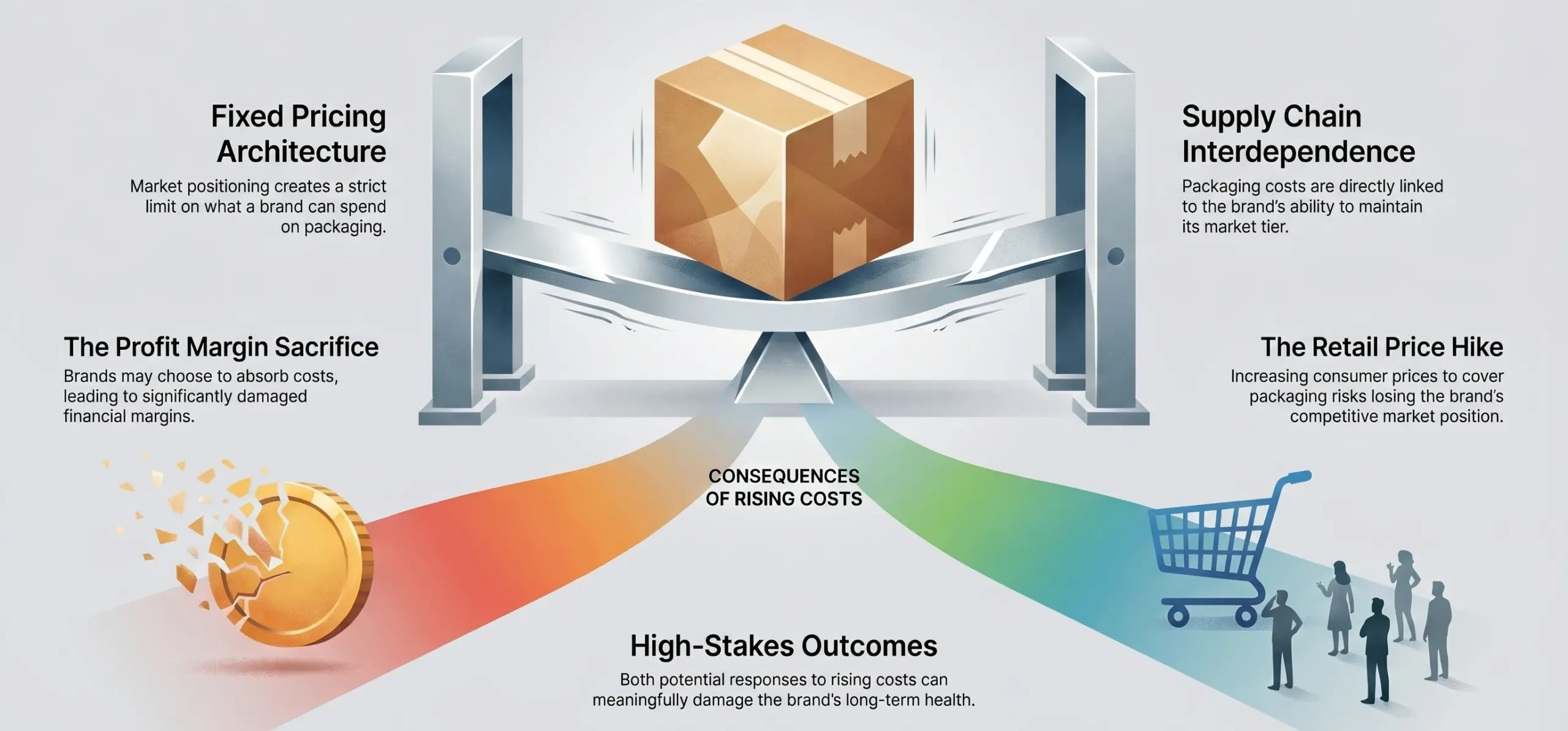
Our client occupies a specific and deliberately chosen market position — affordable, accessible, and aspirational within the constraints of a mass-market price point. This positioning is not incidental; it is the core of the brand’s value proposition to its teenage and young adult consumer base. For a demographic that is often spending its own money for the first time, or asking parents to fund beauty purchases, price accessibility is a non-negotiable dimension of brand relevance.
This positioning creates a direct and non-negotiable cost constraint for every element of the brand’s supply chain, including packaging. The brand cannot afford to pay premium packaging prices and maintain its market positioning simultaneously. If packaging costs rise beyond what the brand’s pricing architecture can absorb, either margins are sacrificed or retail prices must increase — both outcomes that could meaningfully damage the brand’s competitive position.
We understood this constraint and responded with substantial pricing concessions that brought our rates into precise alignment with the brand’s requirements. This was not a matter of simply offering a standard discount; it required genuine understanding of the brand’s cost structure, its competitive landscape, and the specific price thresholds at which its packaging economics worked.
Making pricing concessions of this magnitude required us to think beyond the immediate transaction and consider the total value of the customer relationship over time. A single order priced at a thin margin may not look attractive in isolation, but a long-term partnership with a fast-growing brand that reorders quarterly and continuously expands its product portfolio represents a very different economic proposition. Our willingness to accept tighter margins on initial orders reflected this longer-term orientation — an investment in relationship depth that would yield returns as order volumes scaled.
It is also worth noting what this pricing approach communicated to the client beyond the numbers themselves. By taking the time to understand their market positioning and aligning our pricing accordingly, we signaled that we saw them as a partner rather than just a transaction. This kind of commercial empathy — the ability to inhabit the client’s strategic reality and respond to it constructively — is, in practice, quite rare in cross-border manufacturing relationships, where the default dynamic is often adversarial negotiation rather than collaborative problem-solving.
Our pricing concessions also addressed a specific competitive dynamic that makes this aspect of the partnership particularly noteworthy. The brand had access to local packaging suppliers within the Philippines who could, in principle, offer similar products at comparable prices. The fact that they chose to continue importing from us — despite the added complexity and logistics costs of cross-border sourcing — speaks volumes about the value of our overall partnership package. When pricing alone is not the differentiator, the other dimensions of value — reliability, quality, service — must be exceptional. And in this case, we made sure they were.
Pillar Three: After-Sales Resolution — The Service Commitment That Seals Trust
The third pillar is, in many ways, the most telling. It addresses the uncomfortable reality that in manufacturing — particularly in plastic packaging production and cross-border logistics — things will occasionally go wrong. The question is not whether defects will occur, but how they will be handled when they do.
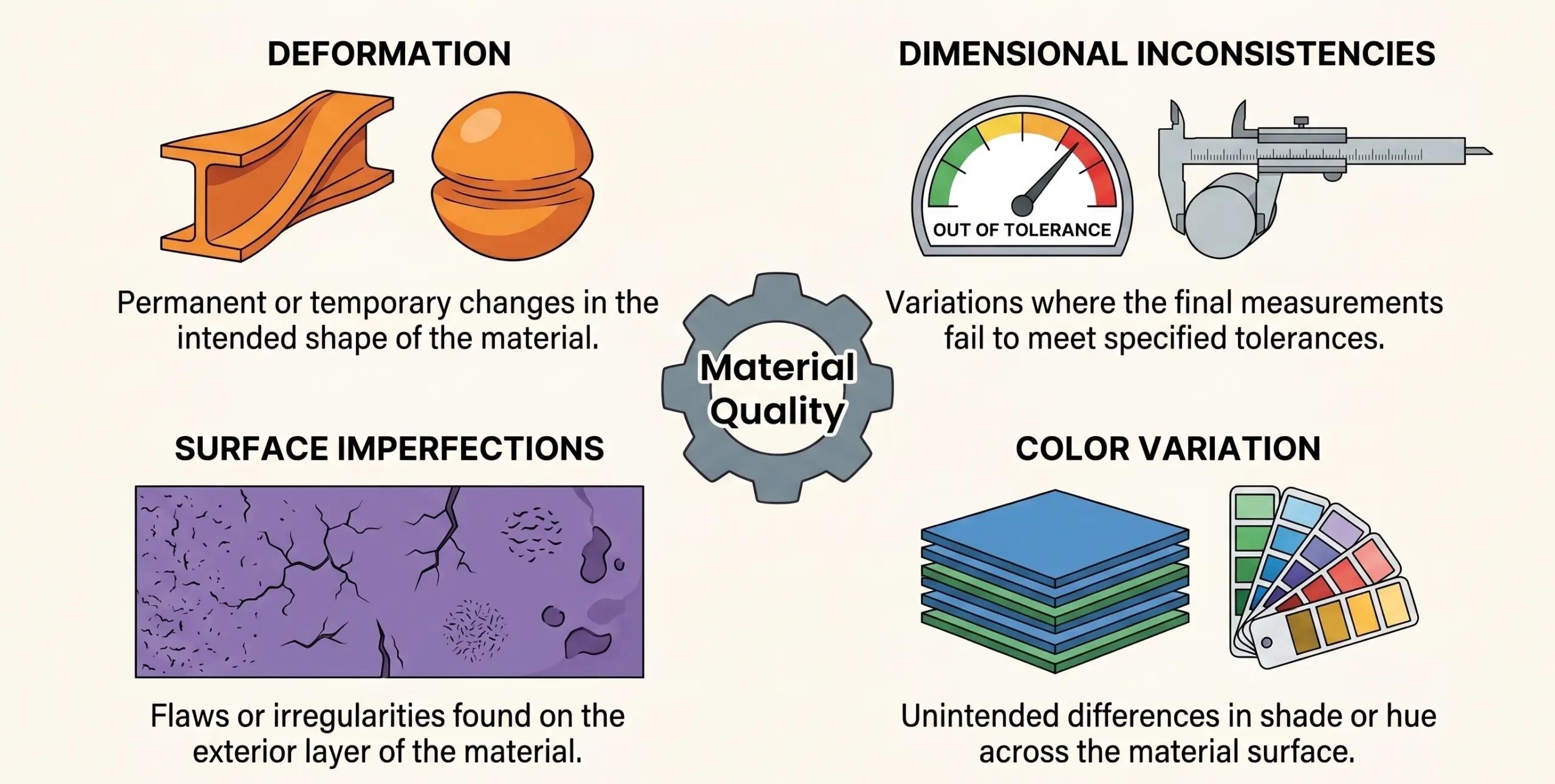
Plastic packaging is subject to a range of quality challenges inherent to the material and the manufacturing process. Deformation, surface imperfections, dimensional inconsistencies, and color variation are among the most common issues, and while rigorous quality control processes can minimize their frequency, they cannot eliminate them entirely. For a client shipping products across international borders, where packaging is subject to temperature extremes, physical stress during transit, and extended storage periods, the risk of quality issues reaching the end consumer is an ever-present concern.
We established a comprehensive replacement service to address this reality head-on. Under this framework, any products identified as having quality issues — deformation, defects, or any other non-conformance — are promptly replaced with new units and shipped to the client at no additional cost. This policy is clear, unconditional, and operationally robust.
The power of this commitment lies in what it eliminates: uncertainty. In the absence of a clear after-sales policy, every quality incident becomes a negotiation — a source of friction, delay, and relationship strain. Who is responsible for the defect? Who bears the cost of replacement? How quickly will the resolution be implemented? These questions, if unresolved in advance, create exactly the kind of adversarial dynamic that erodes partnership trust over time.
By establishing a proactive, no-questions-asked replacement policy, we removed this uncertainty entirely. Our client knows, before placing any order, that if quality issues arise, they will be resolved quickly and at no cost. This certainty has enormous practical value for a brand operating in a fast-moving, social-media-amplified market where quality incidents can quickly escalate into public relations challenges.
Our after-sales framework also reflects a sophisticated understanding of risk management in cross-border supply chains. When a product defect reaches the end consumer — particularly in a digital-native consumer segment where experiences are immediately shared online — the reputational damage can far exceed the direct cost of the defective units themselves. By ensuring that defects are caught and replaced before they reach the market, we are not just providing a logistics service; we are actively protecting the brand’s reputation.
6. Navigating Specific Operational Challenges
Beyond the three pillars, our partnership was tested and strengthened by two specific operational challenges that required creative problem-solving and demonstrated the depth of our commitment to the client’s success.
The High-Temperature Transit Problem
Cross-border shipping between our manufacturing facilities and Southeast Asian markets involves logistics routes that, particularly in warmer months, can expose cargo to extreme temperatures. Shipping containers, constructed of steel, can reach internal temperatures of 60°C to 70°C or higher when exposed to direct sunlight during port dwell times or ocean transit. These temperatures significantly exceed the performance threshold of many common plastic packaging materials.
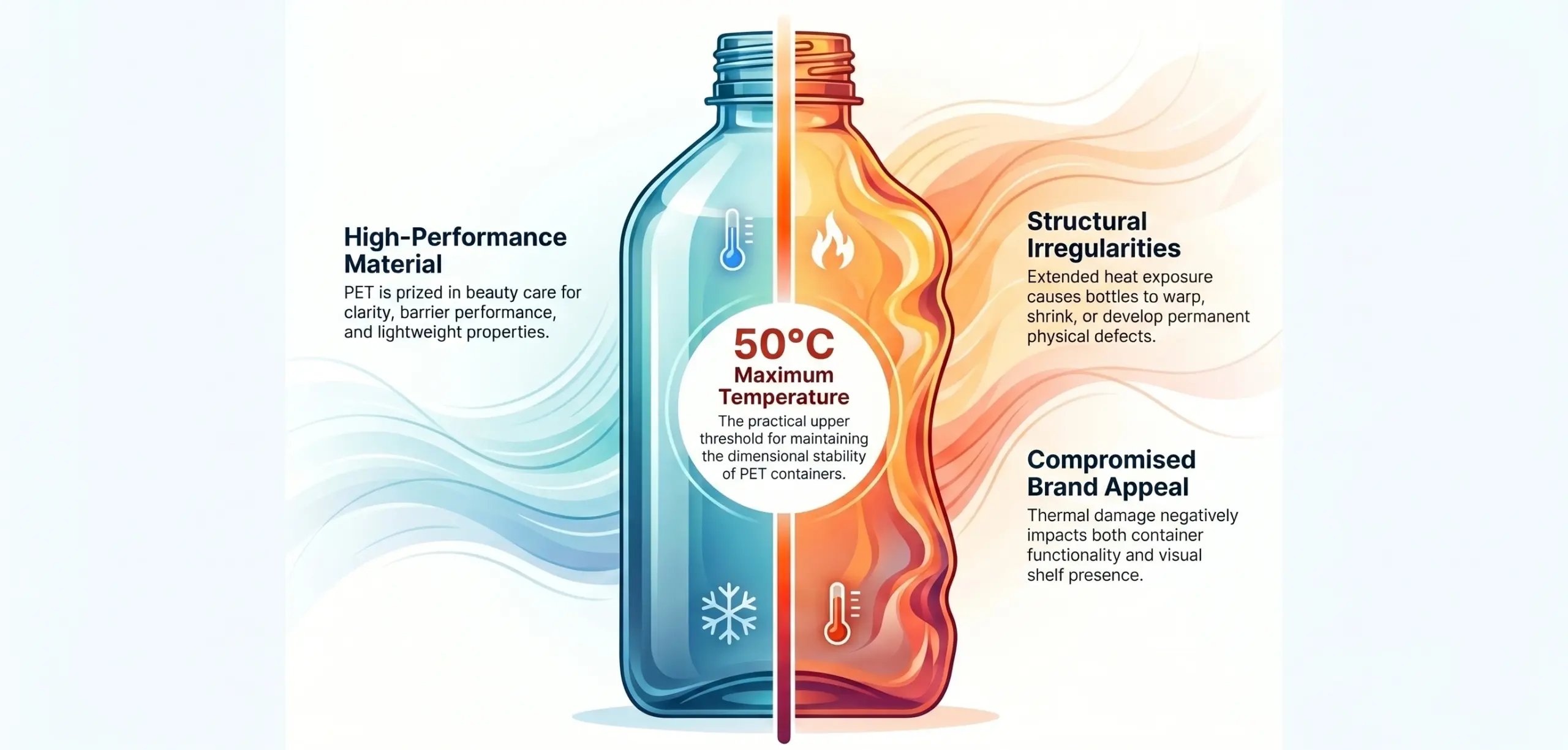
PET (polyethylene terephthalate) plastic, widely used in beauty and personal care packaging for its clarity, lightweight properties, and barrier performance, has a practical upper temperature threshold of approximately 50°C for maintaining dimensional stability. When exposed to temperatures above this threshold for extended periods, PET bottles and containers can undergo thermal deformation — warping, shrinking, or developing structural irregularities that compromise both functionality and visual appeal.
This was precisely the challenge we encountered. The high-temperature environment inside shipping containers during transit to the Philippines caused a measurable incidence of PET bottle deformation. The observed deformation rate was approximately 0.3% — roughly three cases per one thousand units shipped.
To place this figure in context, it is important to understand how the industry typically evaluates deformation rates in cross-border shipments. A 0.3% deformation rate is generally considered to fall within acceptable tolerance ranges for cross-border plastic packaging shipments under challenging climate conditions. This is not an indication of manufacturing failure; it is a foreseeable consequence of the logistics environment.
Nevertheless, even a 0.3% defect rate has real consequences. For an order of, say, 100,000 units — not an unusual volume for a quarterly procurement cycle at this brand’s scale — a 0.3% deformation rate translates to approximately 300 deformed units. Those 300 units, if they reach consumers, represent 300 potential negative experiences, 300 potential social media complaints, and 300 data points that a competitor or counterfeit producer could exploit to undermine consumer confidence in the brand.
Our after-sales resolution framework addressed this challenge directly. Rather than contesting the deformation incidents or attributing them to logistics factors outside our control, we acknowledged the real-world impact on the client and replaced affected units promptly. This approach converted a potential point of friction into a demonstration of our partnership’s resilience.
Over time, we also jointly invested in understanding the root causes of the deformation incidents more deeply, exploring opportunities to adjust packaging specifications — wall thickness, material grade, bottle geometry — to improve thermal resistance without compromising the brand’s design vision or cost position. This collaborative approach to continuous improvement is a hallmark of mature, trust-based partnerships, and it distinguishes our relationship from the purely transactional dynamic that characterizes less developed vendor arrangements.
The transit temperature challenge also highlights a broader issue increasingly relevant for cross-border beauty brands operating in tropical markets: the need for packaging supply chains to account for climate conditions throughout the entire journey from factory to consumer. This is not merely a technical specification question; it requires a systems-level understanding of the logistics environment, the material properties involved, and the risk tolerance of the brand. Our proactive engagement with this challenge demonstrated precisely this kind of systems-level thinking.
The Counterfeiting Crisis and the Embossed Logo Solution
The second major challenge we addressed together was of a fundamentally different nature — less a logistics problem and more a brand integrity crisis.
Our client’s success, driven by its influencer marketing strategy and strong consumer loyalty among young women, made it a target for counterfeiters. As the brand’s visibility grew and its products became widely recognized in the Philippine market, a parallel ecosystem of fake and substandard products began to emerge. These counterfeits ranged from low-quality imitations packaged in generic containers to more sophisticated forgeries that closely replicated the brand’s visual identity.
The consequences of widespread counterfeiting for a beauty brand are severe and multidimensional. At the most immediate level, counterfeit products displace genuine sales — every fake unit sold is a unit of revenue lost to the brand. But the reputational damage is potentially even more serious. When a consumer purchases a counterfeit skincare product expecting the formulation quality and safety standards of the genuine article, and instead receives a product that irritates her skin, underperforms, or even causes harm, her negative experience is attributed to the brand itself. And in a social media environment, she may very well share that experience publicly.
For a brand whose entire equity rests on authentic consumer trust and peer-to-peer recommendation, a counterfeiting problem that damages consumer experiences has the potential to unravel years of relationship-building. This was not a marginal concern for our client; it was a genuine existential threat to its market position.
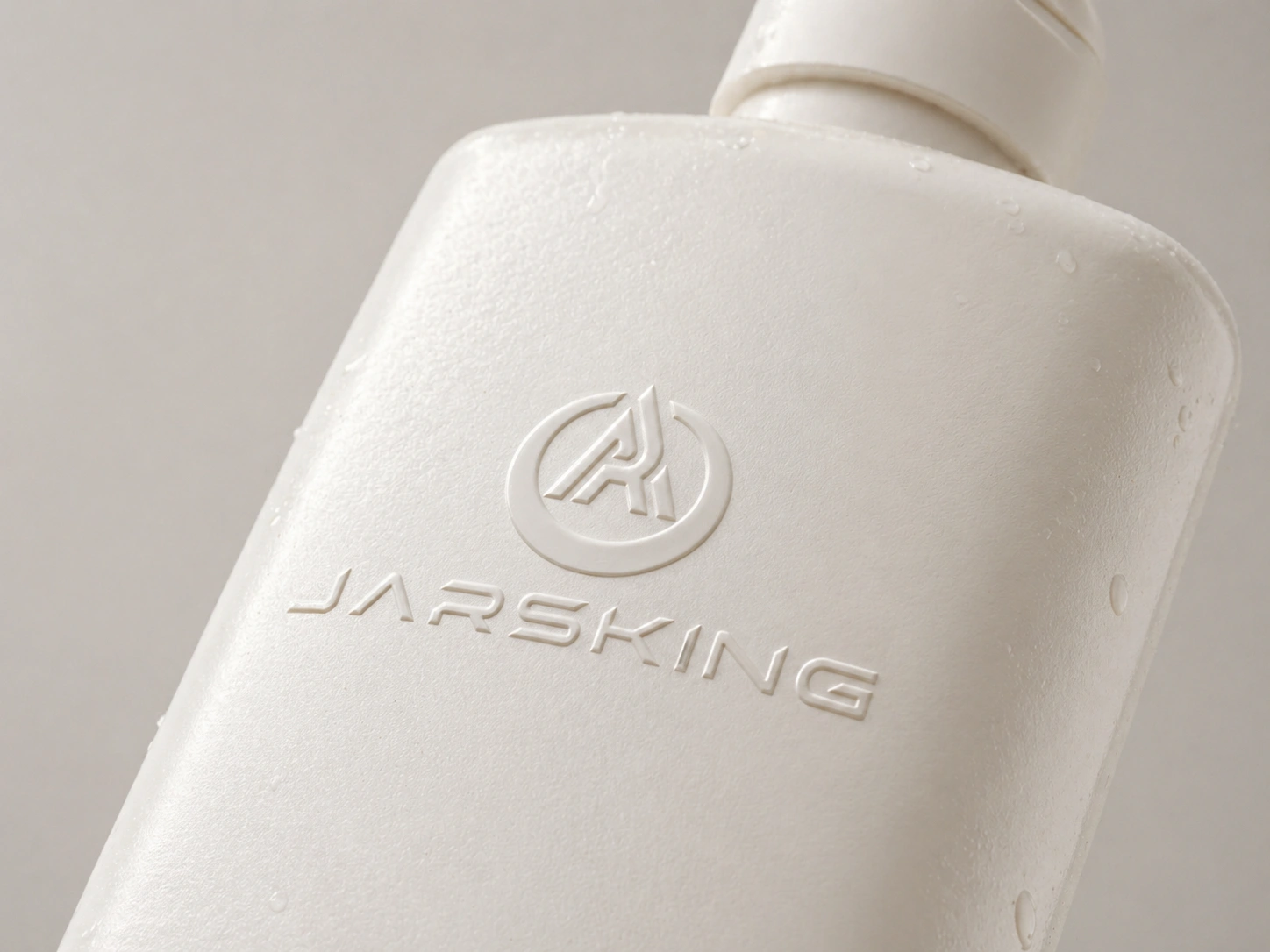
Our response demonstrated a level of ingenuity and genuine partnership commitment that went well beyond the standard scope of a packaging producer’s responsibilities. Working in close collaboration with the brand’s design team, we developed and implemented a specialized manufacturing process featuring embossed logos on the packaging.
Embossing — the process of creating a raised or recessed three-dimensional design element directly in the packaging material — is a powerful anti-counterfeiting tool for several interconnected reasons. First, it requires specialized tooling and manufacturing expertise that is not accessible to low-capability counterfeit producers. The upfront investment required to replicate an embossed logo accurately is significantly higher than that required to print a visual copy of a label or graphic design. This raises the barrier to entry for counterfeiters and makes sophisticated imitation substantially less economically attractive.
Second, embossed logos create a tactile brand signature that consumers can verify with their fingertips, not just their eyes. In a market where consumers have become alert to visual counterfeiting, the addition of a tactile authentication element adds a second sensory dimension to brand verification. A consumer who knows to feel for the embossed logo can make an immediate, confident assessment of product authenticity — without any special equipment or technical knowledge.
Third, the embossing solution enhanced the brand’s overall visual distinctiveness in a way that went beyond anti-counterfeiting utility. Embossed packaging has an inherently premium aesthetic quality that elevates the perceived value of the product. For a brand positioned at an affordable price point but seeking to project quality and aspiration, this elevated aesthetic was a meaningful competitive enhancement. The brand was not merely adding a security feature; it was simultaneously upgrading the consumer experience of interacting with its packaging.
Implementing this solution required close coordination between our technical team and the brand’s design team. Translating a two-dimensional logo design into a precisely executed three-dimensional emboss requires careful attention to depth, relief angle, surface area, and material behavior during the embossing process. We invested in the necessary tooling and development as part of our partnership commitment — a further demonstration of the relationship’s depth.
The results were significant. Following the implementation of embossed packaging, the incidence of credible counterfeits in the Philippine market declined markedly. Consumers and retail partners developed a reliable visual and tactile means of distinguishing genuine products from imitations. The brand’s reputation, which had been under pressure from the counterfeiting problem, stabilized and continued to strengthen. And the packaging itself became a more powerful vehicle for brand identity — not just a container for the product, but an active communicator of quality and authenticity.
7. The Competitive Dynamics: Why Cross-Border Won Over Local
One of the most analytically interesting dimensions of this partnership is our client’s deliberate choice to continue sourcing packaging from us — an overseas manufacturer — rather than switching to local Filipino suppliers, despite the availability of domestic alternatives at comparable price points.
This decision runs counter to several forces that typically favor localization in packaging supply chains. Local suppliers offer shorter lead times, reduced logistics costs, easier communication, and simpler contract enforcement. They understand the local regulatory environment and can respond quickly to urgent requests. For a brand that prides itself on agility and speed-to-market, the operational case for local sourcing is, on paper, compelling.
And yet the brand chose to deepen its cross-border partnership with us. Understanding why requires looking beyond the surface-level comparison of price and lead time to the deeper dimensions of value we provided.
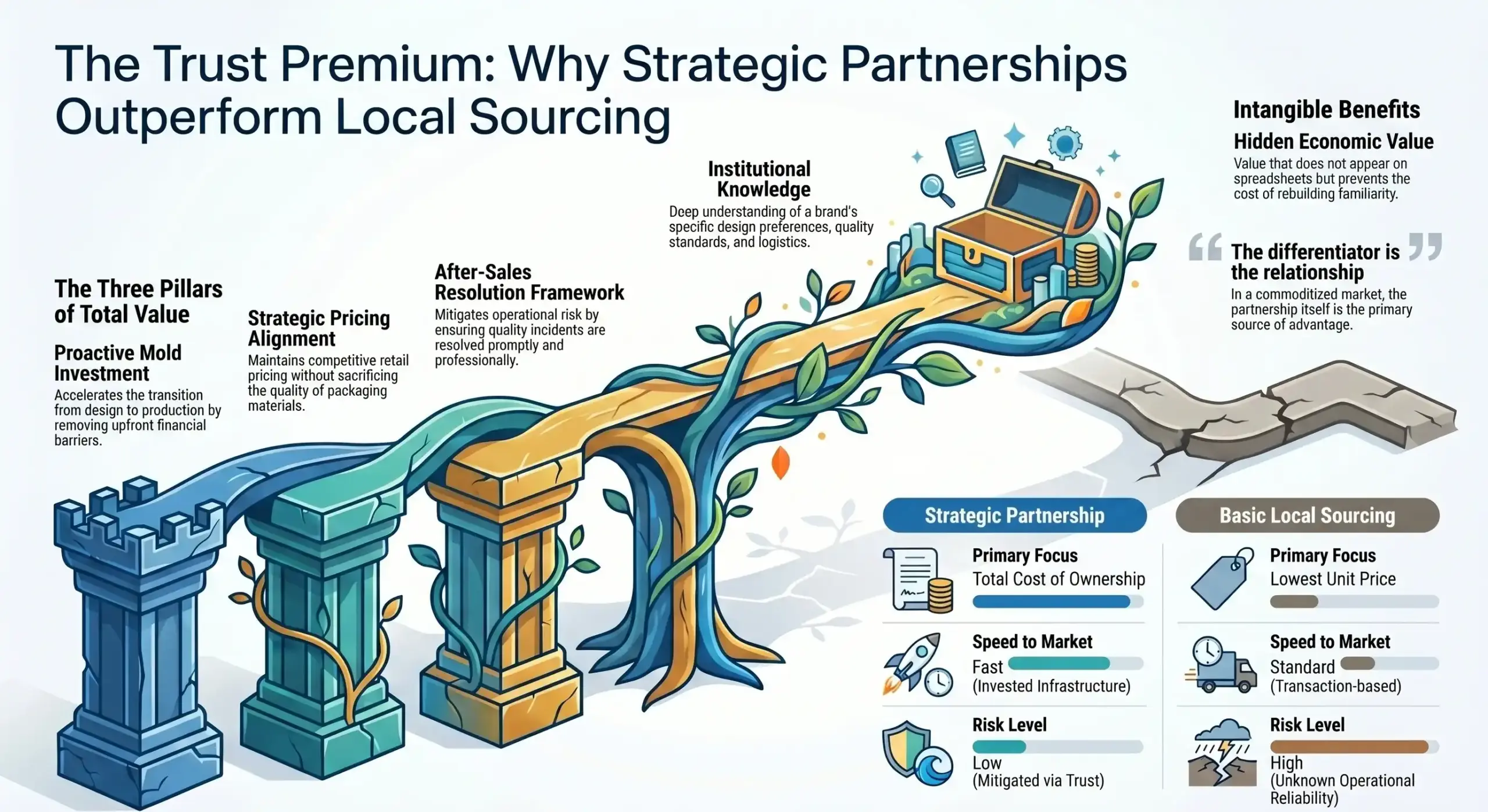
Our three pillars of support — proactive mold investment, pricing alignment, and after-sales resolution — represented a level of service commitment that the brand had not encountered from local suppliers. These are not small operational details; they are the structural elements that determine whether a sourcing relationship is a source of competitive advantage or a source of ongoing operational risk.
Consider the cumulative effect from the client’s perspective. With mold costs covered by us, the brand can move more quickly from design to sample to production. With pricing precisely calibrated to its market positioning, the brand can maintain competitive retail price points without sacrificing packaging quality. And with our robust after-sales resolution framework in place, the brand can ship product with confidence, knowing that any quality incidents will be resolved promptly and professionally.
This total value proposition — faster, cost-aligned, and risk-mitigated — proved more compelling than the logistical convenience of local sourcing. The brand’s decision reflects a sophisticated understanding of total cost of ownership: the recognition that the cheapest or most convenient option is not always the best value option when the full spectrum of operational, reputational, and relationship risks is taken into account.
There is also a trust premium embedded in this decision. We had built, over the course of our re-engaged partnership, a level of mutual understanding and operational alignment that takes time and genuine investment to develop. Switching to a local supplier — even one offering nominally similar products at comparable prices — would have required rebuilding this operational familiarity from scratch. The institutional knowledge embedded in our relationship — our understanding of the brand’s design preferences, quality standards, and logistics requirements — has real economic value that does not appear on any price comparison spreadsheet.
This trust premium is, ultimately, the most powerful force keeping our partnership intact. In a world where commoditized packaging components can be sourced from multiple suppliers, the differentiator is not the product; it is the relationship.
8. Conclusion: The Architecture of Partnership Trust
The story of our collaboration with this Filipino beauty brand is, at its deepest level, a story about what it means to be a genuine business partner in a complex, fast-moving, and high-stakes commercial environment.
We did not simply produce bottles and ship them. We understood our client’s market position, its consumer dynamics, its operational constraints, and its strategic vulnerabilities. We designed our service model around these realities — investing upfront where the client needed speed, absorbing costs where the client needed price alignment, and standing behind our products unconditionally where the client needed confidence.
The result was a partnership that outlasted dormancy, weathered operational challenges, and delivered genuine competitive value to a brand navigating one of the world’s most dynamic consumer markets. When the brand faced deforming bottles, we had a solution. When the brand faced counterfeiters, we had an answer. When the brand faced local sourcing alternatives, it chose the partner it trusted.
That is the architecture of partnership trust: not a single grand gesture, but a consistent, cumulative demonstration of genuine commitment — built bottle by bottle, order by order, challenge by challenge — until the relationship itself becomes a competitive advantage that neither party would willingly surrender.
For brands and manufacturers navigating the growing complexity of cross-border e-commerce supply chains, our experience with this client offers a template worth studying closely. In a world where commodity products are everywhere and genuine partners are rare, the ability to build and maintain trust across borders is, ultimately, the scarcest and most valuable capability of all.
FAQs
What types of packaging do you produce for beauty and skincare brands?
We specialize in plastic packaging for beauty and personal care products, including PET bottles, caps, and other containers across a full range of skincare and FMCG categories. We handle production to exact client specifications, making us an ideal partner for brands with their own in-house design teams.
Do you work with brands that have their own design teams?
We have a team of experienced designers capable of transforming your ideas into tangible packaging — offering a truly comprehensive, one-stop packaging solution. Whether you come to us with a fully realized concept or just a spark of inspiration, we have the expertise to bring your vision to life with precision and creativity.
How do you handle the problem of packaging deformation during shipping to tropical markets?
PET plastic performs best when stored below 50°C, but shipping containers in tropical transit routes can exceed this threshold. We work proactively with clients to optimize packaging specifications — including wall thickness and material grade — to improve thermal resilience. And when deformation does occur within industry-standard tolerance ranges, our after-sales replacement policy ensures the issue is resolved swiftly.
Can your packaging help protect against product counterfeiting?
Yes. We offer specialized manufacturing processes including embossed logos directly on the packaging surface. Embossing requires precision tooling that counterfeit producers cannot easily replicate, and it gives consumers a reliable tactile authentication cue. For our Filipino client, this solution significantly reduced the circulation of credible fakes in their market.
How long have you been working with cross-border beauty and skincare brands?
We have been partnering with beauty and skincare brands across around the world and beyond since 2003. Over the years, we have developed a deep understanding of the unique challenges that cross-border sourcing presents — from customs and logistics to climate-related quality risks — and we have built our service model specifically to address them.
What makes your partnership approach different from a standard supplier relationship?
We do not see ourselves as simply fulfilling purchase orders. We invest in understanding your brand’s market positioning, growth trajectory, and operational constraints — and we design our support around those realities. From covering mold costs to developing anti-counterfeiting solutions, we consistently go beyond the transactional to deliver the kind of partnership that becomes a genuine competitive advantage for your brand.