

1. Why Your Jar Supplier Decision Matters More Than You Think
Choosing a cosmetic jar supplier is one of the most consequential decisions a beauty brand makes — and one of the most underestimated. Most founders spend months perfecting their formulation, only to rush through packaging procurement and end up with jars that leak, discolor under UV light, or arrive six weeks late before a product launch.
Your jar is not just a container. It is the first physical touchpoint between your brand and your customer. The weight of the glass, the precision of the lid thread, the clarity of the acrylic — all of it communicates quality before a single drop of product is applied. A mismatch between packaging and formulation can compromise shelf life, trigger regulatory non-compliance, and erode consumer trust in one stroke.
For B2B buyers — brand owners, contract manufacturers, formulators, and private-label startups — the stakes are even higher. You are not purchasing 50 units. You are committing to 10,000, 50,000, or 100,000 units, often months in advance, with capital locked in. A wrong supplier choice at that scale is not just inconvenient — it is a potential business setback.
This guide gives you a structured, field-tested checklist to evaluate any cosmetic jar supplier before you sign a purchase order. It covers materials, certifications, MOQs, customization, lead times, sustainability, and red flags to avoid — everything a serious buyer needs to source with confidence.
2. Step 1: Define Your Product Requirements Before Contacting Any Supplier
The single biggest sourcing mistake buyers make is approaching suppliers before they have defined their own requirements. A supplier can only give you a useful quote if you come to the conversation knowing exactly what you need.
Before you reach out to a single manufacturer, document the following:
Formulation type: Is it a water-based cream, an oil-rich balm, a physical scrub with exfoliants, or a clay mask? Viscosity, pH, and oil content all affect material compatibility.
Fill weight and volume: Cosmetic jars typically range from 3g to 1,000ml, with 15ml to 100ml being the most common for retail skincare. Know your exact capacity.
Closure mechanism: Do you need a screw-top lid, a press-on cap, an inner liner for airtight sealing, or a spatula lid? Each has different tooling requirements.
Decoration goals: Are you looking for a matte frosted finish, a metallic hot-stamp logo, a full-wrap label, or silk-screen printing directly on the jar?
Target markets: Selling in the EU, US, or Canada triggers specific regulatory requirements around materials, labeling, and chemical compliance. Know your markets before you ask about compliance.
Annual volume forecast: This determines whether you need a stock jar (off-the-shelf, low MOQ) or a custom OEM/ODM mold program.
Having clear answers to these six questions transforms every supplier conversation from vague to productive. It also allows you to compare supplier quotes on an apples-to-apples basis, because you are specifying the same product to every vendor.
3. Step 2: Understand the Material Options and Their Trade-Offs
Cosmetic jar materials are not interchangeable. Each has distinct chemical compatibility profiles, branding aesthetics, sustainability credentials, and cost implications. The right material for your product depends on the intersection of your formulation chemistry, your brand positioning, and your supply chain requirements.
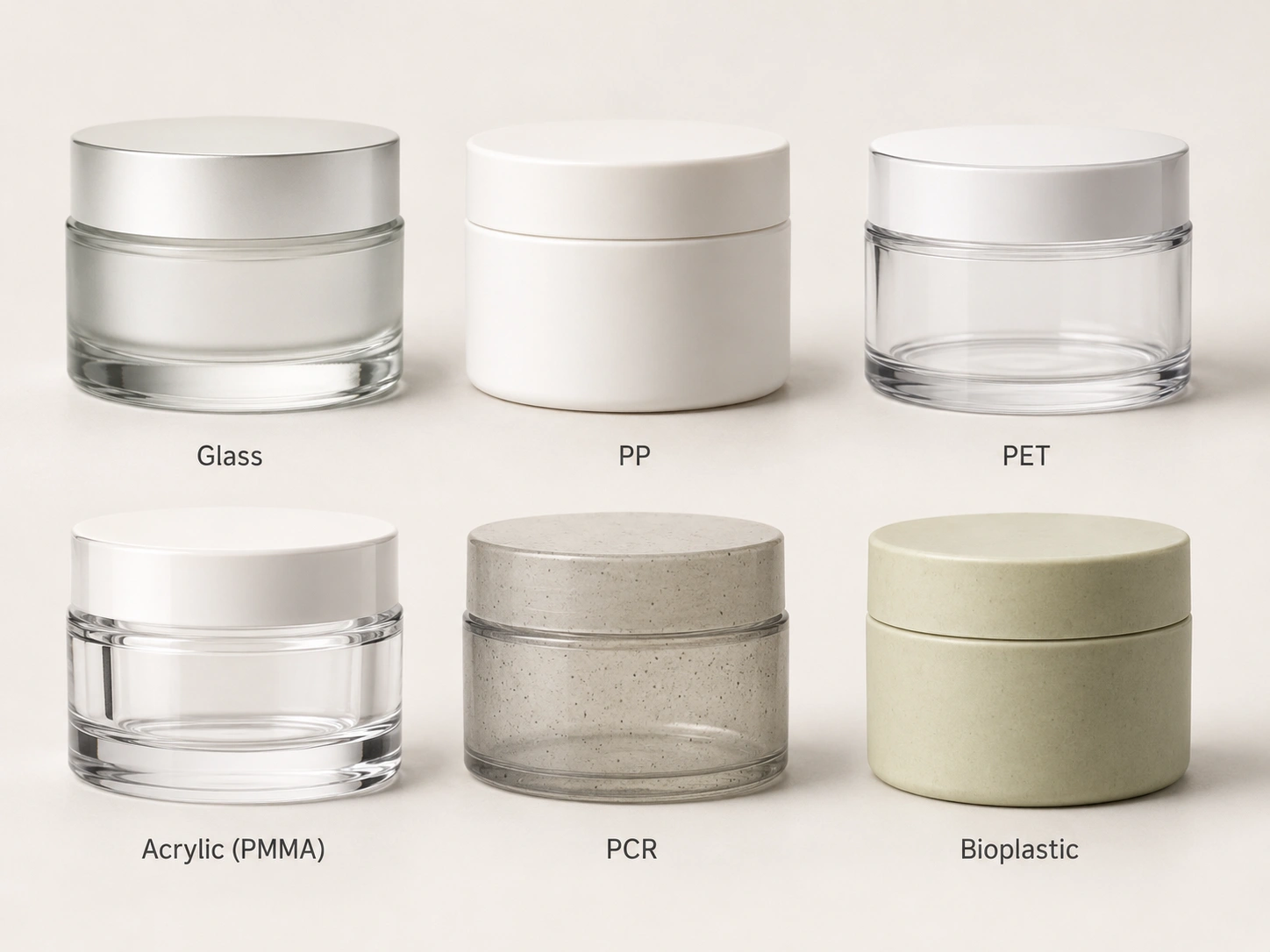
Glass
Glass is the premium standard for skincare, particularly for anti-aging creams, serums-in-jars, and prestige facial treatments. It is chemically inert, meaning it will not react with active ingredients like retinoids, vitamin C, or AHAs. It blocks oxygen penetration, which extends oxidation-sensitive formulation shelf life. Amber glass adds UV protection, critical for photosensitive ingredients like certain oils and botanicals.
The trade-offs are real: glass is heavier (higher shipping costs), fragile (higher breakage risk in transit), and typically carries a higher unit cost than plastic alternatives. For brands targeting a luxury positioning, however, these costs are usually justified by the perceived value uplift.
Polypropylene (PP)
PP is the workhorse of cosmetic packaging — chemically resistant, lightweight, durable, and cost-effective. It handles a wide range of formulations well, including water-based and oil-rich products, and is compatible with standard decoration techniques. PP jars are an excellent choice for everyday skincare, body butters, and professional salon-use products where durability and cost efficiency matter more than visual luxury.
PET (Polyethylene Terephthalate)
PET offers excellent clarity (a near-glass look at plastic weight and cost), making it popular for brands that want premium aesthetics at a lower price point. It is widely recyclable, which supports sustainability claims. The key limitation is impact resistance — PET is more prone to cracking under impact than PP, which matters for international shipping or retail environments where jars may be dropped.
Acrylic (PMMA)
Acrylic jars are increasingly popular in the premium skincare segment because they combine the visual weight and clarity of glass with significantly lower fragility. High-quality acrylic has a smooth, optical-grade clarity that photographs beautifully — an advantage in an era where unboxing content and social media aesthetics drive purchasing decisions. Acrylic requires more careful supplier evaluation, however, because quality varies significantly between manufacturers.
PCR (Post-Consumer Recycled) Plastics and Bioplastics
As sustainability becomes a key purchasing driver in the EU and North American markets, PCR content (plastic made from recycled consumer waste) and bioplastics (plant-derived polymers) are increasingly requested. These materials come with additional sourcing complexity: PCR content must be certified (look for GRS — Global Recycled Standard certification), and bioplastics require careful compatibility testing. Brands making sustainability claims without verified material certifications face growing regulatory scrutiny in markets like the EU, where the Green Claims Directive is tightening the rules on environmental marketing.
Material selection matrix at a glance:
| Material | Best For | Key Advantage | Key Limitation |
| Glass | Prestige skincare, actives | Chemically inert, premium feel | Heavy, fragile, higher cost |
| PP | Everyday skincare, body care | Durable, chemical-resistant, economical | Less visual premium |
| PET | Clear jars, sustainable claims | Recyclable, glass-like clarity | Lower impact resistance |
| Acrylic | Premium brand aesthetics | Lightweight, high clarity, photo-ready | Quality varies by supplier |
| PCR Plastic | Eco-conscious brands | Verified recycled content | Needs certification, costs more |
| Bioplastic | Sustainability-first brands | Plant-derived, low carbon | Compatibility testing required |
4. Step 3: Evaluate Supplier Credentials and Certifications
Once you know what you need, the next phase is supplier qualification. In a global market flooded with manufacturers — particularly out of China, Vietnam, and India — credential verification is not optional. It is the filter that separates reliable partners from high-risk vendors.
Certifications to Request
ISO 9001: Quality management system certification. This tells you the supplier has documented processes for production consistency and quality control. It is the baseline expectation for any serious manufacturer.
ISO 14001: Environmental management system certification. Increasingly required by brands with ESG commitments and important for suppliers claiming sustainable production practices.
FDA Compliance (for the US market): Packaging materials that come into contact with cosmetic products must comply with FDA regulations under 21 CFR. Request compliance documentation for the specific materials used in your jar.
EU REACH Compliance: The EU’s REACH regulation restricts the use of hazardous chemicals in products sold in Europe. Any supplier shipping to EU-market brands must be able to provide REACH compliance statements for the chemical compounds in their materials.
GRS (Global Recycled Standard): Required if the supplier is claiming PCR content. Do not accept a supplier’s verbal claim of recycled content without a GRS certificate number that you can independently verify.
FSSC 22000 or food-grade certification: While cosmetics are not food, food-grade material certification is often used as a proxy for purity and chemical safety standards. Request it when sourcing jars for natural, organic, or baby skincare lines.
Critical verification step: Never accept a PDF of a certificate at face value. Ask for the certificate number and the name of the issuing certification body, then verify the certificate independently on the certifying organization’s registry. Certificate fraud is a documented issue in the global packaging supply chain.
Factory Audit and Transparency Signals
Beyond paper credentials, look for transparency signals that indicate a mature, professionally run manufacturing operation:
Does the supplier offer factory visits (virtual or in-person)?
Do they have a published quality control protocol with AQL (Acceptable Quality Level) standards?
Can they provide third-party lab test reports for material safety (e.g., heavy metal content, migration testing)?
Do they have a dedicated QC team, or is quality control managed ad hoc?
A supplier that is evasive about any of these questions is a supplier you should approach with caution.
5. Step 4: Assess MOQ, Pricing Structure, and Total Cost of Ownership
Minimum order quantity (MOQ) is often the first number buyers look at — but it should never be the only number. The true cost of a cosmetic jar supplier relationship is a composite of unit price, mold investment, tooling amortization, shipping, duties, defect rate, and reorder flexibility.
Understanding MOQ Tiers
Sourcing strategies generally fall into three categories:
Stock (off-the-shelf) orders: Fast delivery (often 1–2 weeks), low or no MOQ, no mold fees, but limited design differentiation. Best for startups, product testing, or urgent restocks.
Custom OEM/ODM manufacturing: You retain complete control over product shape, color, surface finishes, and branding. The Minimum Order Quantity (MOQ) typically starts at 10,000 units. Tooling fees—a standard initial investment—are charged based on the number of molds required.
Hybrid strategy: Use stock jars for core SKUs to maintain cash flow flexibility, and custom molds for hero or limited-edition SKUs where visual differentiation drives a premium price point.
For brands with 10,000-unit minimums as a baseline, a hybrid approach is often the most commercially intelligent — it preserves working capital while still building brand equity through selective customization.
Calculating Total Cost of Ownership
When comparing supplier quotes, go beyond unit price. Build a total landed cost model that includes:
Unit cost (ex-factory price)
Mold/tooling fees (amortized over the production run)
Freight and logistics (sea vs. air; origin port to destination)
Import duties and tariffs (varies by country of origin and HS code for your jar type)
Quality control costs (third-party inspection fees, if applicable)
Defect replacement cost (what is their defect rate, and do they replace defective units free of charge or at reduced cost?)
Warehousing and inventory carrying cost (if you are buying 6–12 months of supply in one order)
6. Step 5: Evaluate Customization Capabilities
For brands building a distinct visual identity, customization capability is a critical supplier selection criterion. Not all suppliers have the same tooling, finishing, and decoration capabilities — and the gap between what a supplier claims and what they can reliably execute at scale can be significant.
Key Customization Dimensions
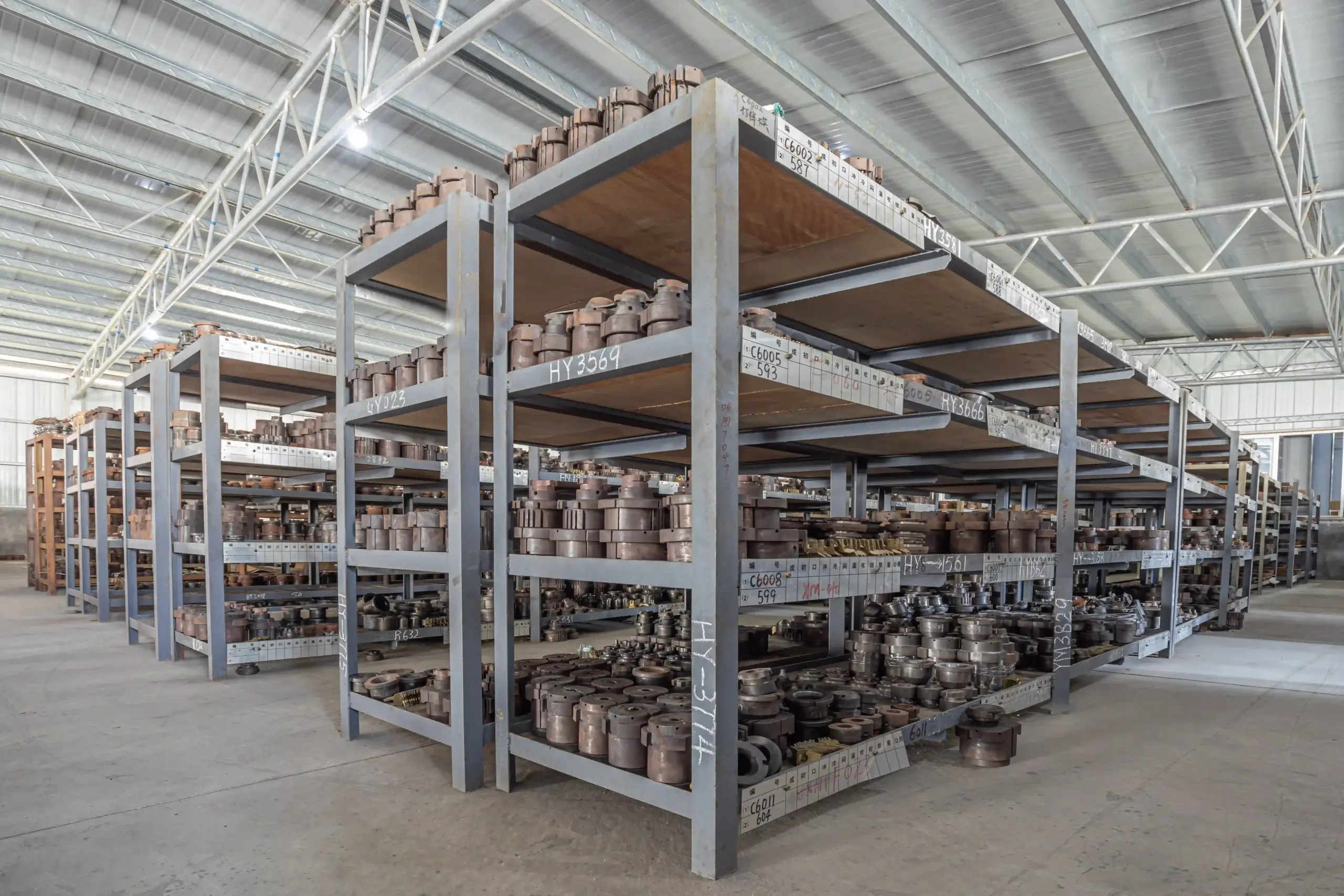
Shape and structure: Does the supplier have an existing mold library you can customize from, or are they set up for full custom mold development? Reviewing their mold catalog is the fastest way to assess the design range available to you.
Surface finishes: Common options include matte frosting, gloss, soft-touch coating, metallic electroplating, and UV varnish. Each has a different cost, lead time, and durability profile. Ask for physical samples of each finish — digital mockups are insufficient for making finish decisions.
Decoration techniques: Premium jars are typically decorated using hot stamping (metallic logos), silk-screen printing (multi-color graphics directly on the jar surface), pad printing (curved surfaces), in-mold labeling, or sleeve shrink labels. Confirm which techniques are done in-house versus outsourced, since outsourced decoration adds lead time and cost.
Color options: Ask how colors are achieved (spray coating, tinted resin, electroplating) and request color consistency standards. For luxury brands, color matching across production batches is critical for visual brand coherence.
Lid and closure customization: Lid customization (metal lids, custom-colored inner liners, press-on caps with soft-touch rubber) is often where the biggest visual differentiation comes from. Assess lid tooling capabilities as carefully as jar tooling.
The Sample Imperative
Never commit to a production run without physical samples. Request at minimum:
A material sample (to assess weight, clarity, and surface quality)
A fit sample (to confirm lid thread engagement and seal integrity)
A decorated sample (to evaluate print registration, color accuracy, and finish durability)
A stress test sample (drop test, fill compatibility test, and a time-in-product test where the jar is filled with your actual formulation and checked at 30, 60, and 90 days)
A supplier that refuses to provide samples before a production commitment is a supplier that does not stand behind its own quality.
7. Step 6: Scrutinize Lead Times, Production Capacity, and Supply Chain Resilience
Lead time failures are among the most common — and most damaging — sourcing problems beauty brands face. A 2-week delay in packaging can push a product launch by a month, cascade into retailer listing penalties, and create a cash flow crisis.
Questions to Ask About Lead Times
What is the standard production lead time from deposit to shipment for your order size?
How does lead time change during peak seasons (typically Q3–Q4 ahead of the holiday period)?
What is your factory’s current utilization rate, and how much buffer capacity do you have?
Have you had any lead time failures in the last 12 months? What caused them, and how were they resolved?
What is your on-time delivery rate? Can you provide references or data?
Suppliers with 100% on-time delivery records are not fiction — they exist, but they require smaller, more reliable order books and strong production planning. Ask for references from buyers who have placed repeat orders, not just one-time transactions.
Geographic and Geopolitical Risk Factors
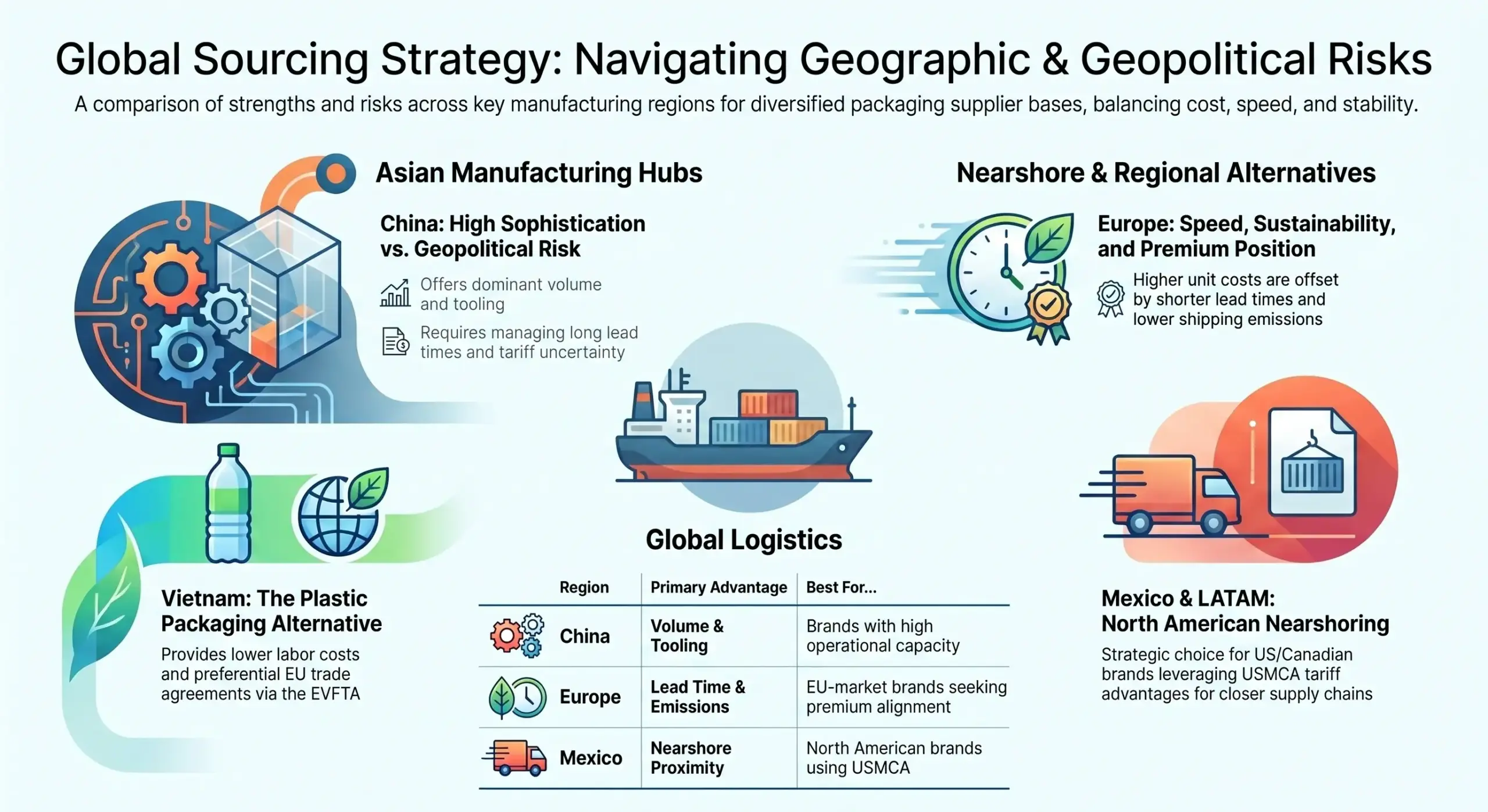
The global packaging supply chain has experienced significant disruption in recent years — from pandemic-era factory shutdowns to port congestion, raw material shortages, and escalating tariffs on Chinese-made goods in the US and EU markets. A prudent sourcing strategy accounts for geographic risk.
Consider diversifying your supplier base across geographies:
China: Dominant in volume, tooling sophistication, and price competitiveness. Best for brands with established supply chains and the operational capacity to manage longer lead times and geopolitical uncertainty.
Vietnam: An increasingly attractive alternative to China for plastic packaging, offering lower labor costs, growing manufacturing capability, and preferential trade agreements with the EU under EVFTA.
Europe (Poland, Italy, France): Higher unit costs but shorter lead times, lower shipping emissions, easier regulatory alignment for EU-market brands, and premium positioning potential.
Mexico and LATAM: Growing capability for North American brands seeking nearshore supply chains with USMCA tariff advantages.
For brands selling primarily into the US and EU — the world’s two largest premium beauty markets — having at least one nearshore backup supplier reduces catastrophic supply chain risk without significantly compromising cost structure.
8. Step 7: Assess Sustainability and ESG Credentials
Sustainability is no longer a differentiator in premium beauty packaging — it is rapidly becoming a baseline expectation, particularly in European and North American markets where consumers, retailers, and regulators are all raising the bar simultaneously.
What Credible Supplier Sustainability Looks Like
Recycled content: Does the supplier use PCR plastic, and is it GRS-certified? What percentage of PCR content can they reliably deliver across production batches? Consistency matters — a jar that is 30% PCR in one batch and 12% in the next is not a sustainable solution; it is a marketing liability.
Refillable and reusable design: Leading suppliers are now offering jar architectures designed for refillability — typically a permanent outer shell combined with a removable inner pod. This reduces single-use plastic per purchase cycle and aligns with EU extended producer responsibility (EPR) legislation.
Mono-material construction: Jars made from a single resin (e.g., all-PP, including the lid and inner liner) are significantly easier to recycle than multi-material designs. Ask whether the jar and all its components are mono-material recyclable.
Factory environmental practices: Look for ISO 14001 certification, solar-powered manufacturing facilities, and documented waste reduction programs. Brands making environmental claims about their packaging face increasing scrutiny from regulators and NGOs, and supplier-level environmental credentials are part of the substantiation chain.
Carbon footprint data: Best-in-class suppliers can now provide product carbon footprint (PCF) data for their jars — a Life Cycle Assessment (LCA) figure measured in kg CO₂e per unit. This data is increasingly requested by large retail buyers and is required for compliance with the EU’s forthcoming Digital Product Passport framework.
9. Step 8: Evaluate Communication Quality and After-Sales Support
The most technically capable supplier in the world is only as valuable as their ability to communicate clearly, resolve problems quickly, and stand behind their products when something goes wrong. Communication quality is a proxy for operational reliability, and it is something you can assess before committing to any order.
Communication Red Flags
Response times exceeding 48 hours for initial inquiries
Vague or evasive answers to specific technical questions
Inability to provide documentation in your required language
High staff turnover in account management roles (signals internal instability)
No dedicated account manager for your order — only general inquiry contacts
After-Sales Support Standards
Establish expectations in writing before placing your first order:
Defect replacement policy: What is the threshold AQL defect rate that triggers free replacement? What is their documented process for handling a defective batch?
Batch traceability: Can the supplier trace a defective jar back to a specific production batch, resin lot, and processing date? This is critical for quality investigations.
Reorder consistency: Can they guarantee color, finish, and dimensional consistency across repeat orders placed months apart? Ask for their batch-to-batch consistency specification tolerance.
Warranty and liability terms: Clearly defined in the purchase agreement — not assumed from verbal assurances.
A supplier with strong after-sales support will often proactively offer these specifics. One that becomes evasive or defensive when you raise these topics is one worth treating as a risk.
10. Step 9: Run a Competitive Multi-Supplier RFQ Process
Before selecting a supplier, run a formal Request for Quotation (RFQ) process with at least three to five candidates. This gives you market price benchmarks, reveals supplier responsiveness, and creates negotiating leverage.
Your RFQ document should include:
Product specification (material, volume, closure type, finish)
Decoration requirements (print method, colors, logo placement)
Order quantity (initial order and projected annual volume)
Target market(s) and regulatory requirements
Required certifications
Requested lead time
Incoterms (FOB, CIF, DDP — define who pays shipping and assumes risk)
Sample request and timeline
Payment terms requested (30% deposit, 70% before shipment is a common starting point)
After-sales and defect replacement policy request
Standardizing the RFQ means every supplier is responding to the same specification — making comparison meaningful. Suppliers who respond incompletely or ask basic clarifying questions that your RFQ already addressed are demonstrating that they have not read your brief carefully. That tells you something important.
11. Step 10: Conduct Reference Checks and Due Diligence
Before placing a first production order — especially a large one — conduct independent reference checks on your shortlisted supplier. This is standard practice in professional procurement and still widely skipped by smaller brands who are in a rush to launch.
Reference check questions:
How long have you worked with this supplier?
What is their typical lead time performance versus promised lead time?
Have you had any quality issues? If so, how were they handled?
Would you recommend them for a buyer at our volume level?
Are there any aspects of working with them you wish you had known upfront?
In addition to references, run basic due diligence:
Verify legal entity existence: Confirm the supplier’s registered business name, registration number, and country of incorporation. For Chinese suppliers, you can verify on the National Enterprise Credit Information Publicity System (NECIPS).
Confirm factory ownership: Some trading companies present themselves as factories. This is not necessarily a disqualifier, but it affects pricing transparency, lead times, and your ability to conduct a factory audit. Know who you are actually buying from.
Check for litigation history or unresolved disputes on trade platforms and buyer forums.
Review reorder rate data: On platforms like Alibaba, reorder rate is a published metric. A high reorder rate (25%+) among verified buyers is one of the strongest signals of consistent supplier performance.
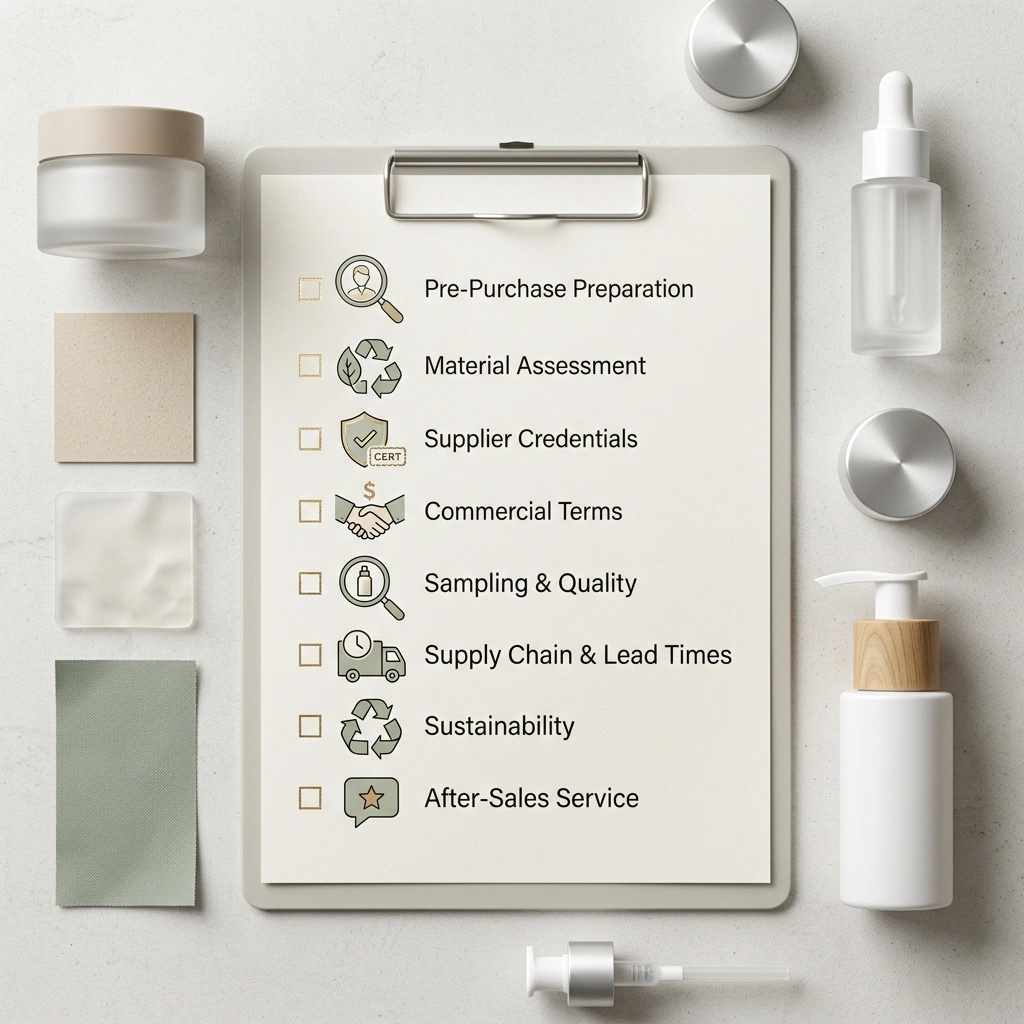
12. The Complete Buyer’s Checklist: Quick Reference
Use this checklist before signing any cosmetic jar supplier agreement:
- Pre-Sourcing Preparation
Formulation type and pH documented
Volume and fill weight confirmed
Closure and decoration requirements specified
Target markets and regulatory requirements identified
Annual volume forecast established
- Material Evaluation
Material compatibility with formulation confirmed
Recyclability and sustainability credentials assessed
UV and barrier protection needs addressed
Physical material sample reviewed
- Supplier Qualification
ISO 9001 certificate verified with issuing body
FDA/EU REACH/GRS compliance documentation reviewed
Factory audit conducted (virtual or in-person)
AQL defect standards documented
- Commercial Terms
MOQ and pricing tier structure confirmed
Mold/tooling fees clearly quoted (if custom)
Total landed cost model built (unit + freight + duties + QC)
Payment terms and incoterms agreed in writing
- Sampling and Quality
Material sample received and reviewed
Fit sample tested (lid engagement, seal integrity)
Decorated sample assessed
Fill compatibility test conducted at 30/60/90 days
- Supply Chain and Lead Time
Standard production lead time confirmed
Peak season capacity discussed
On-time delivery rate documented
Geographic risk and backup supplier plan established
- Sustainability
PCR content certification verified (if applicable)
Mono-material recyclability confirmed
Supplier environmental certifications reviewed
- After-Sales and References
Defect replacement policy in writing
Batch traceability process confirmed
Minimum 2 buyer references contacted
Legal entity and factory ownership verified
13. Common Mistakes to Avoid
Even experienced buyers fall into patterns that create avoidable problems. The following are the most consequential errors in cosmetic jar supplier selection:
Accepting digital images as proof of quality. A rendered mockup or product photo proves nothing about the physical jar you will receive. Always request production-grade physical samples.
Assuming “food-grade” means cosmetic-safe. Food-grade certification confirms the material is safe for food contact — it does not validate compatibility with your specific cosmetic formulation. Run your own fill compatibility tests.
Ignoring mold amortization in custom projects. Mold fees paid upfront are a sunk cost, but the effective per-unit cost decreases as you produce more units. Model your break-even mold amortization point before committing to a custom program.
Skipping batch-to-batch consistency checks. A first sample can be perfect; a third production run six months later can have color drift, dimensional variation, or finish differences. Build batch consistency tolerances into your purchase agreement.
Choosing the lowest quoted unit price. As detailed above, unit price is only one component of total landed cost. The cheapest jar ex-factory can easily become the most expensive jar in your warehouse after defects, delays, and freight are accounted for.
Not defining acceptable defect rates in writing. Without a contractually defined AQL level, you have no legal basis to demand replacement for a defective batch. Define it before you order.
14. Conclusion: Choose a Partner, Not Just a Supplier
The best cosmetic jar suppliers are not vendors — they are partners in your brand’s growth. They flag compatibility issues before production begins. They proactively communicate delays when they happen, not after. They invest in sustainable materials and processes because they understand where their clients’ markets are heading. And they maintain quality and consistency batch after batch, year after year, because they understand that your brand’s reputation depends on it.
Use this checklist not as a bureaucratic exercise, but as a tool for building supplier relationships grounded in transparency, accountability, and mutual commercial value. The sourcing process you run today determines the packaging reliability you experience 12 months from now — when your brand is on shelves, in the hands of customers, and representing everything you have worked to build.
Qualified buyers who approach suppliers with professionalism, clear specifications, and defined expectations consistently secure better pricing, better service, and better outcomes. Be that buyer.
FAQs
What certifications should a cosmetic jar supplier have?
At a minimum, look for ISO 9001 (quality management), FDA compliance documentation for US-market brands, and EU REACH compliance for European markets. If the supplier claims PCR content, require a GRS (Global Recycled Standard) certificate with a verifiable certificate number. ISO 14001 (environmental management) is important for brands with ESG commitments. For natural, organic, or baby skincare lines, food-grade material safety testing is also advisable.
What is the difference between OEM and ODM cosmetic packaging?
OEM (Original Equipment Manufacturer) means the supplier manufactures jars to your exact proprietary specifications and designs — you own the mold and the design IP. ODM (Original Design Manufacturer) means the supplier offers existing designs from their mold library that you can customize with your branding, colors, and decoration. ODM is faster and less expensive upfront (no custom mold fee), while OEM gives you full design exclusivity. Most suppliers offer both options, and many brands use ODM for standard SKUs and OEM for hero or flagship products.
How do I test whether a cosmetic jar is compatible with my formulation?
Conduct a fill compatibility test by filling the jar with your actual formulation and storing it under both standard conditions (room temperature) and stress conditions (40°C/75% relative humidity) for a minimum of 30, 60, and 90 days. Inspect for color migration, warping, lid seal degradation, odor transfer, and any changes to the formulation’s appearance or consistency. Never skip this test — certain ingredients (high-concentration oils, AHAs, essential oils, and alcohol-based formulas) can degrade specific resins or compromise lid seals over time.
Can I order cosmetic jars with sustainable or eco-friendly materials?
Yes — many professional cosmetic jar suppliers now offer jars made with PCR (post-consumer recycled) plastic, bioplastics derived from plant-based polymers, and mono-material recyclable constructions. When evaluating sustainability claims, always request a GRS certificate for PCR content, confirm the percentage of recycled content per production batch, and ask whether all components (jar body, lid, liner) are mono-material recyclable. Some suppliers also offer refillable jar systems designed to reduce single-use plastic consumption per purchase cycle.
What should I include in a cosmetic jar RFQ (Request for Quotation)?
A complete RFQ should specify: jar material, volume/fill weight, closure type, surface finish and decoration requirements, target order quantity and annual forecast, target markets (for regulatory alignment), required certifications, desired lead time, preferred incoterms (FOB, CIF, or DDP), requested payment terms, and sample requirements. A detailed RFQ allows you to compare multiple suppliers on a true apples-to-apples basis and signals to suppliers that you are a serious, qualified buyer — which typically results in more competitive pricing and prioritized service.
What are the most common mistakes buyers make when choosing a cosmetic jar supplier?
The most common mistakes include: choosing a supplier based on the lowest quoted unit price without calculating total landed cost (including freight, duties, and defects); accepting digital renderings instead of physical samples; failing to run a fill compatibility test before production; not defining acceptable defect rates (AQL standards) in a written purchase agreement; and skipping reference checks on the supplier’s existing clients. Buyers who skip due diligence steps to save time frequently spend far more time — and money — resolving quality and delivery problems after the order is placed.