
The exhibition date was fixed. The packaging was not yet ready.
For this established personal care business, the exhibition represented an important change in direction. One of its brands was moving beyond its mass-market positioning, and the new packaging needed to make that ambition visible.
Othilapak’s assignment brought two priorities together: achieve a presentation the client could confidently put before buyers, and coordinate the remaining work around an immovable deadline.
The samples reached the exhibition. The client welcomed the result and chose to continue the relationship despite a lower-priced alternative. Yet the experience also exposed areas requiring further development, particularly color consistency and launch planning. Its value lies in both the delivery achieved and the improvements it made necessary.
1. Translating Brand Positioning into Packaging Decisions
The client already had three principal brands, established distribution, and an internal design team. Much of its existing business served the everyday personal care market. It understood product development and had experience working with packaging suppliers.
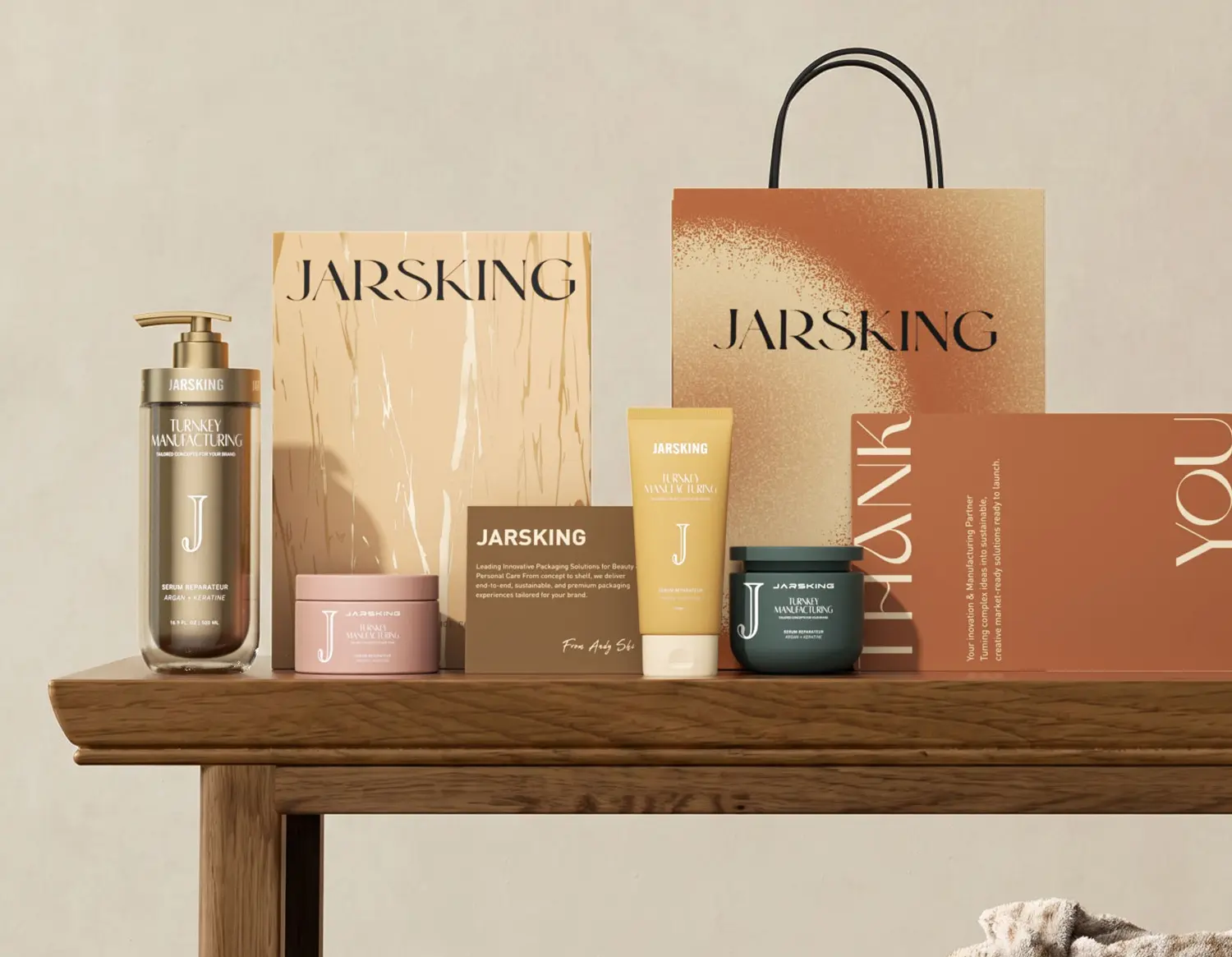
This project required a different expression of that business. The client wanted one brand to appear more premium and visually distinct from its existing ranges. Packaging material, decoration, and the relationship between components therefore became central decisions.
Glass was a deliberate choice. A plastic alternative was discussed, but the client preferred the weight and presentation of glass for the intended range. Cost remained relevant; it simply was not the only consideration. A less expensive option would have offered little value if it weakened the appearance the client was trying to establish.
The project used existing packaging formats rather than a newly developed bottle structure. The client supplied the artwork, while Othilapak provided printable-area information and coordinated the packaging development. Customization focused on color, printing, and surface decoration.
That approach avoided introducing a new bottle mold into the schedule. It did not eliminate the need to assess the finished package. A familiar container can acquire a very different appearance through decoration, and the bottle, cap, and artwork still need to work together.
2. Resolving the Quotation Through a Physical Reference
The first significant obstacle concerned a large-area decorative printing requirement, described by the project team as a three-dimensional surface effect. The challenge involved the finish, rather than a new structural component.
Different finish levels carried different costs. Purchasing was reluctant to confirm a final price before sampling, while the customer was ready to order and needed a firm quotation to proceed.
Both concerns were reasonable. An unsupported price commitment could create disagreement once the actual finish became visible. Waiting for a new sample before resolving the quotation, however, would consume more of the limited development window.
The sales colleague brought the issue to the relevant colleagues and management. Rather than continue discussing quality in general terms, the team identified an existing sample with a comparable decorative effect.
That reference was sent to the client with an explanation of the finish available at the proposed price. It gave her something tangible to assess and gave the supplier a clearer basis for its commitment.
3. The client accepted the reference. The quotation was agreed, and the deposit followed.
The decision resolved a specific uncertainty: what appearance the quoted price represented. It did not establish that every subsequent color, artwork variation, or component combination had already been approved. Those details still belonged to the development process.
This distinction matters in customized packaging. A reference sample can establish direction efficiently, but its purpose should be explicit. One reference may demonstrate a decorative finish; another may define color or the complete assembled appearance. Treating every reference as approval of the entire package can create confusion later.
In this case, the existing sample allowed the commercial discussion to move forward without waiting for a fully customized prototype. The remaining challenge was to translate that agreed direction into exhibition samples within the time available.
For subsequent orders, retaining the accepted reference alongside the quotation would make that agreement easier to reproduce. The record should identify the characteristics the client accepted and any details still awaiting confirmation. If the artwork or component changes, the team can then determine whether the original reference remains applicable, rather than assuming that a familiar process will produce an identical appearance on every version.
4. The Client’s Response: Recognition Beyond the Quotation
When the team subsequently visited the stand, the difference between the new range and the client’s existing products helped explain her reaction.
The client also reported that an existing supplier had seen the samples and offered a lower-priced alternative. She nevertheless chose to continue with Othilapak, citing the team’s patience in addressing problems and its timely responses throughout the project.
The competing offer was not independently reviewed, so no like-for-like technical or price comparison can be made. The significance was the client’s stated reason for continuing: she had experienced how the team worked when difficulties emerged.
At the time of the review, the confirmed outcome was an exhibition presentation, positive client feedback, and an intention to continue cooperating. Retail performance and further orders remained to be established. The event created an opportunity; subsequent execution would determine its longer-term commercial value.
5. Project Review: What Needed to Improve
The exhibition marked a successful stage, not the completion of every development requirement. Bottle-to-cap color differences remained under review, and further sampling was needed.
The team discussed establishing the cap color first and then matching the bottle to it. This was a proposed adjustment to the development sequence, rather than a verified solution. Its usefulness would depend on the constraints of the selected components and finishes.
The review also identified three broader improvements.
Earlier Technical Involvement
The decoration quotation would have benefited from earlier discussion between sales, purchasing, and the relevant technical specialists. A finish that affects both cost and feasibility should be examined before it becomes the last unresolved condition for placing an order.
Comparable samples can help, provided the team records what they represent. The quotation should make its assumptions clear, and the client should know which details remain subject to development.
More Rigorous Supplier Coordination
Slow responses and uncertain accessory sampling dates created pressure during the project. Future supplier evaluation should consider development cooperation alongside manufacturing capability and price.
An accountable contact, a credible sampling date, and prompt notice of delays are practical requirements for this type of work. Backup suppliers should also be assessed early enough for their components to be reviewed, rather than introduced through an unverified last-minute substitution.
Clearer Approval and Version Control
The final assembled package should be the basis for production approval. Artwork files, color references, component specifications, and revision records need to identify the same approved version.
Exhibition acceptance should remain distinct from bulk-production release. Likewise, visual approval does not establish compatibility, transport performance, or other laboratory results. Any such claims require relevant test records; none is inferred here from the successful display.
These improvements would give the next project more time for decisions and reduce reliance on urgent intervention near departure.
6. Planning Larger Launches Around the Commercial Calendar
Emergency coordination can protect a single exhibition deadline. A larger launch requires a schedule that connects packaging development with buyer decisions, inventory availability, and the intended selling season
The following recommendations extend the lessons of this case; they are not presented as systems already implemented for this client.
The central planning question is when the product must be ready for its next commercial use. An exhibition sample, a retailer evaluation sample, and saleable stock serve different purposes. Each needs its own requirements and deadline.
Align Exhibition, Ordering, and Stock Availability
At the beginning of a project, the brand should define three dates: when presentation samples are required, when channel partners need to make purchasing decisions, and when saleable inventory must be available at the agreed destination.
Those dates should be discussed together. If an exhibition is intended mainly to test a concept, the development plan may allow further refinement afterward. If the objective is to take orders for an approaching season, the brand will need a more developed specification, quotation, and delivery plan.
This case illustrates the distinction. The exhibition samples achieved their immediate purpose, while color work still remained. A larger rollout would need to account for that unfinished development before making firm production commitments.
Clear dates also improve communication with prospective buyers. The brand can explain what is available for evaluation, what has been approved, and when supply can realistically begin.
Work Backward from the Market Deadline
A launch schedule should begin with the required warehouse receipt or market availability date, then work backward through transport, filling, packaging delivery, production approval, testing, and development.
Each stage must reflect the actual partner’s requirements. In this project, local filling needed two to three days after packaging arrived. A larger program could involve additional coordination across filling capacity, assembly, receiving appointments, and distribution.
The schedule should therefore include handovers, not merely processing times. A bottle may be complete while its closure is still pending. A finished shipment may arrive before the receiving facility can accept it. These dependencies need to be resolved with the parties involved.
The result should be a shared plan with named owners and approval dates. No universal development period can replace that project-specific assessment, particularly when new tooling, unfamiliar decoration, or multiple destination markets are involved.
Connect Seasonal Sales to Channel Buying Windows
The consumer selling season is only one point in the commercial calendar. Where retailers or distributors are involved, their product reviews, sample requests, purchasing decisions, and delivery requirements may fall earlier.
Brands should confirm these dates directly with their intended partners. For an online launch, photography, product-page preparation, stock availability, and fulfillment readiness may also need to be coordinated before promotion begins.
A seasonal gift set, for example, may require buyer samples, final packaging, assembly, and delivery well before its consumer-facing campaign. The relevant lead times depend on the product and channel; they should not be assumed from the holiday date alone.
For exhibition-led projects, the same discipline applies. Interest generated at a stand is more useful when the brand can follow it with clear specifications and a credible supply schedule. Packaging planning should help connect that initial interest to the intended sales window.
Presentation materials also deserve a place in this sequence. If photography or buyer presentations use an early sample, later changes to its color, decoration, or closure may require those materials to be updated. Agreeing which version is suitable for public presentation helps the commercial team avoid promoting an appearance that is still being revised. Sample approval and marketing preparation therefore need a shared reference.
Resolve High-Risk Decisions Early
Development effort should focus first on uncertainties that could change the design, cost, or production route. In this case, the decorative finish and coordinated colors deserved early attention.
Other projects may be constrained by bottle-closure fit, formula compatibility, a new mold, or filling-line requirements. These are different problems and need different validation plans.
The purpose of early technical review is to identify which decisions must be settled before downstream work can safely proceed. Independent activities may run in parallel, but a required test or approval cannot be replaced by urgency.
For a multi-product launch, the team should also identify shared components. A delayed cap or unresolved decorative process can affect several products simultaneously. Understanding that exposure early makes it easier to choose sensible alternatives while the schedule still allows them.
Preserve Time for Revision and Control Changes
A schedule with no revision allowance assumes every sample will be accepted immediately. This project showed why that assumption is fragile: several days were needed for color matching, and further adjustments remained afterward.
Contingency should be placed where uncertainty exists, including sample revisions, supplier holidays, and international handovers. Its size should follow the risk of the work, rather than an arbitrary allowance added at the end.
The brand and supplier should also agree when artwork, materials, colors, and components are to be finalized. A later change may still be possible, but its implications for cost, validation, and delivery should be reviewed before approval.
This gives the brand a meaningful choice. It can decide whether a modification justifies a revised date, rather than discovering the consequence after production has already been scheduled.
Set Priorities Across the Range
When several products share a launch date, the slowest critical item may determine the readiness of the entire collection. Planning should examine that dependency before all products are promised simultaneously.
If the schedule becomes constrained, the brand and supplier can consider prioritizing approved core products, using an established format, or simplifying nonessential decoration. Any adjustment must preserve the agreed positioning and required validation.
A phased introduction may be appropriate where the commercial plan allows it. In other cases, the collection may need to remain intact, making an earlier development start or a revised date the more responsible choice.
The value of advance planning is having these options available while there is still time to evaluate them.
7. From an Urgent Debut to a More Predictable Launch
This project gave the client a tangible expression of her brand’s next direction and brought it to the exhibition on time. The relationship strengthened through specific actions: an existing reference that resolved the quotation, sustained sampling work, and a local handover coordinated through to the filling partners.
The remaining color work also made the next responsibility clear. The presentation standard needed to be resolved into an approved package suitable for the subsequent production stage.
For future launches, the aim is to preserve that responsiveness within a more deliberate plan: earlier technical decisions, clear approvals, and delivery dates aligned with channel requirements and selling seasons.
Brands preparing a new range can begin by sharing their target market, packaging requirements, expected quantities, exhibition date, and first-stock deadline with Othilapak. These details provide a basis for discussing feasibility, priority checks, and the sampling and approval milestones needed to support the launch.
FAQs
How do I choose a personal care packaging supplier for a new product launch?
Look for a supplier that can explain how your packaging will move from an initial brief to an approved, deliverable product. Ask for comparable projects, physical samples, and a development schedule identifying key approvals and responsibilities. For projects involving multiple components or unfamiliar decoration, technical coordination matters as much as manufacturing capability.
Can a packaging supplier work with our existing designs and in-house creative team?
Yes, provided the supplier reviews the artwork against the selected packaging and production process. Your design team can retain creative control while the supplier checks print areas, artwork placement, achievable finishes, and component fit. In this case, the client supplied the design direction, while Othilapak helped resolve the practical questions involved in producing it.
Do we need custom molds to create distinctive personal care packaging?
Not necessarily; ask your supplier to evaluate existing formats before committing to new tooling. A suitable bottle or jar can be differentiated through decoration, color, surface finish, and coordinated closures. Custom tooling becomes relevant when existing formats cannot meet the required shape, function, or brand identity—not simply because the project needs a distinctive appearance.
How can I assess whether a supplier’s delivery promise is realistic?
Ask for a milestone schedule rather than a single delivery date. The supplier should explain when the lead time starts, which approvals it depends on, and whether it covers production only or arrival at your filling facility. For urgent projects, request a clear account of the remaining risks and available alternatives before committing to the schedule.
What quality and testing evidence should I request from a packaging supplier?
Request records relevant to the exact packaging configuration and its intended use, not simply a general certificate collection. Depending on the project, these may include dimensional inspections, closure-fit checks, decoration assessments, and agreed leakage or compatibility testing. Confirm which samples were tested, under what conditions, and against which acceptance criteria; visual approval alone does not establish functional suitability.
Can a packaging supplier coordinate delivery with our filling partner and launch schedule?
A supplier can support that coordination when the scope, receiving locations, and responsibilities are agreed in advance. Share your filling dates, required quantities by location, and stock-availability deadline—not just the public launch date. For seasonal launches, build the schedule around when your sales channels need inventory, allowing time after packaging delivery for filling, inspection, and distribution.