

1. What Exactly Is a Cosmetic Jar?
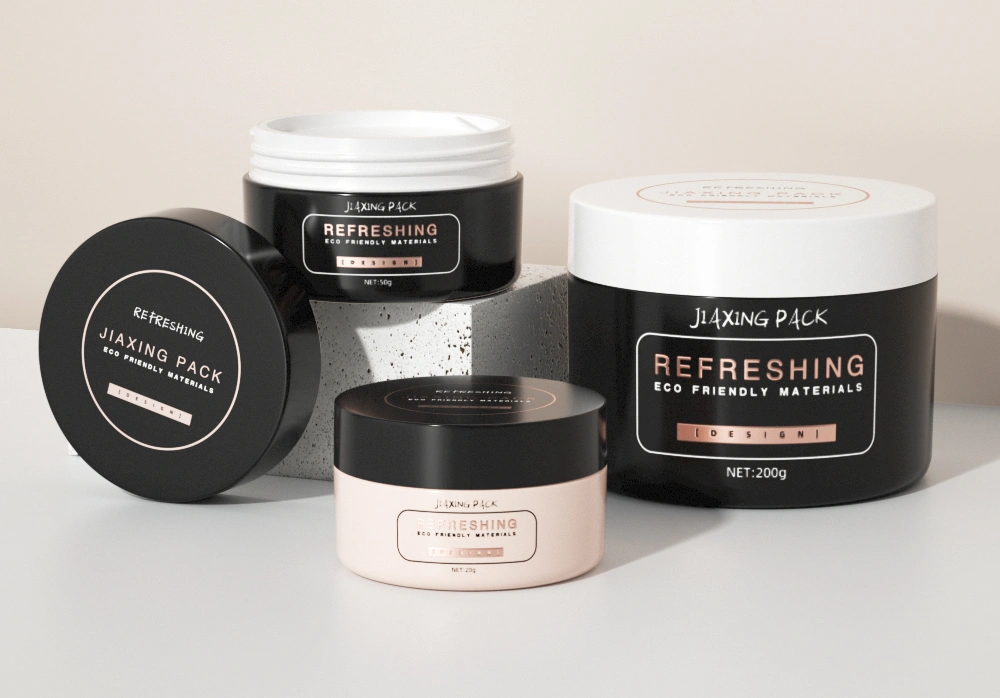
At its most basic, a cosmetic jar is a wide-mouthed rigid container built to hold formulations that are too thick or solid to pour or pump out. That wide opening is the defining feature — it’s what separates a jar from a bottle, and it’s what makes jars perfect for creams, balms, scrubs, masks, body butters, and powders.
Most jars are made up of three components: the body, the lid, and often an inner liner or disc that sits between the two to create an airtight seal and keep contamination out. They come in an enormous range of sizes — from tiny 5ml lip balm pots you can tuck into a coat pocket, to 500ml professional-grade containers you’d find on the shelf of a high-end spa treatment room.
It’s a simple concept on the surface, but every detail — the material, the shape, the closure system, the size — has a real downstream effect on your formula’s stability, your customer’s daily experience, your brand’s visual identity, and your bottom line.
2. Types of Cosmetic Jars
There’s no universal “best” jar shape. The right one depends on your formulation viscosity, your brand personality, your price point, and how your customer is going to interact with the product in their everyday routine. Here’s a thorough breakdown of the main styles and where they shine.
Round Jars
The classic cosmetic jar. Round jars are the most widely used container shape in the beauty industry, and they’ve held that position for good reason — they’re efficient, straightforward to label and decorate, and available in every material, color, size, and price range you can imagine. If you’re formulating a face cream, moisturizer, hair mask, or overnight treatment and you’re not quite sure where to start your packaging journey, a well-made round jar is almost never a wrong choice. They fill efficiently, they ship without wasted space, and they feel familiar and reassuring in a customer’s hands.
Square and Rectangular Jars
These have a cool, architectural quality that round jars simply can’t replicate. Square jars sit beautifully in a row on a bathroom shelf, pack efficiently in a retail box, and give your brand a modern, editorial quality that photographs exceptionally well for e-commerce and social media. They do cost a little more to produce due to the additional mold complexity, but if your aesthetic leans minimalist and contemporary, the investment tends to pay back in perceived value and shelf presence.
Straight-Sided Jars
Imagine a jar with perfectly vertical walls — no taper, no shoulder, no curve whatsoever. That’s a straight-sided jar, and it’s a genuinely practical choice for thick, dense formulations. If you’re selling a sugar scrub or a whipped body butter, your customers need to be able to scoop product all the way down to the very bottom of the jar. Straight walls make that easy — no awkward angles, no wasted product stuck in corners. The perfectly flat sidewall also gives you a generous, consistent surface for label adhesion and decoration, which can translate to real savings on label printing and application.
Low-Profile Salve Jars
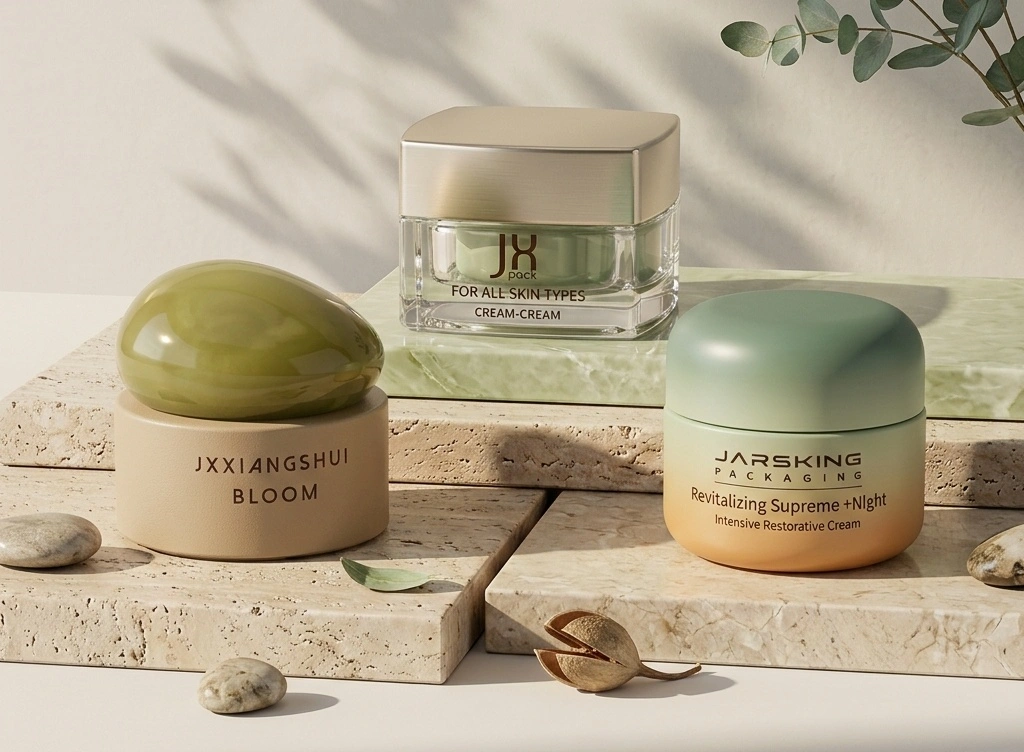
Short, wide, and wonderfully compact. These shallow pots are designed for solid and semi-solid products — lip balms, cuticle creams, solid perfumes, tattoo aftercare salves, solid highlighters. They’re stackable, extremely travel-friendly, and they have a charming, apothecary-inspired quality that resonates beautifully with artisan, natural, and wellness brands. At the checkout counter or in a travel kit, a well-designed low-profile jar can be an almost irresistible impulse purchase.
Double-Walled Jars
When you want your jar to feel like a gift before anyone has even opened the box, double-walled jars are your answer. The construction — an outer decorative shell with a visible air gap around an inner product container — creates a noticeably weightier, more substantial feel that signals luxury the moment the jar is lifted. That heft communicates value in a way that is genuinely difficult to fake. Double-walled jars are commonly used for prestige eye creams, anti-aging formulations, and high-concentration serums in jar format. They’re typically made from acrylic or glass, and they’re one of the most effective tools in a beauty brand’s arsenal for justifying a premium price point.
Airless Jars
If your formula contains actives that are sensitive to air and oxidation — vitamin C, retinol, niacinamide, certain peptides — an airless jar is worth every extra cent you’ll invest in it. The mechanism is elegant: a piston at the bottom of the jar rises as product is used, keeping the remaining formula permanently separated from air. The result is superior ingredient stability, a significantly longer shelf life, and dramatically reduced reliance on heavy preservative systems. That last point is a major selling proposition for clean beauty brands, which are facing increasing consumer scrutiny of their preservative choices.
Airless jars do cost more than standard screw-top containers, but when you factor in reduced product waste, fewer customer complaints about product going rancid, and the marketing story they enable, many brands find they more than pay for themselves.
Apothecary and Boston Round Jars
Inspired by the aesthetics of old pharmacy vessels, apothecary jars have gently rounded shoulders that taper to a narrower base, giving them a timeless, slightly old-world quality that modern consumers are reconnecting with as part of a broader wellness and ritual-focused beauty movement. They communicate heritage, purity, and care before a word of copy is read. Boston round jars — a slightly more cylindrical version of the same tradition — are particularly popular with natural, clinical, and herbalist-inspired brands that want their packaging to tell a story of expertise and craft.
3. The Big Decision: Choosing Your Jar Material
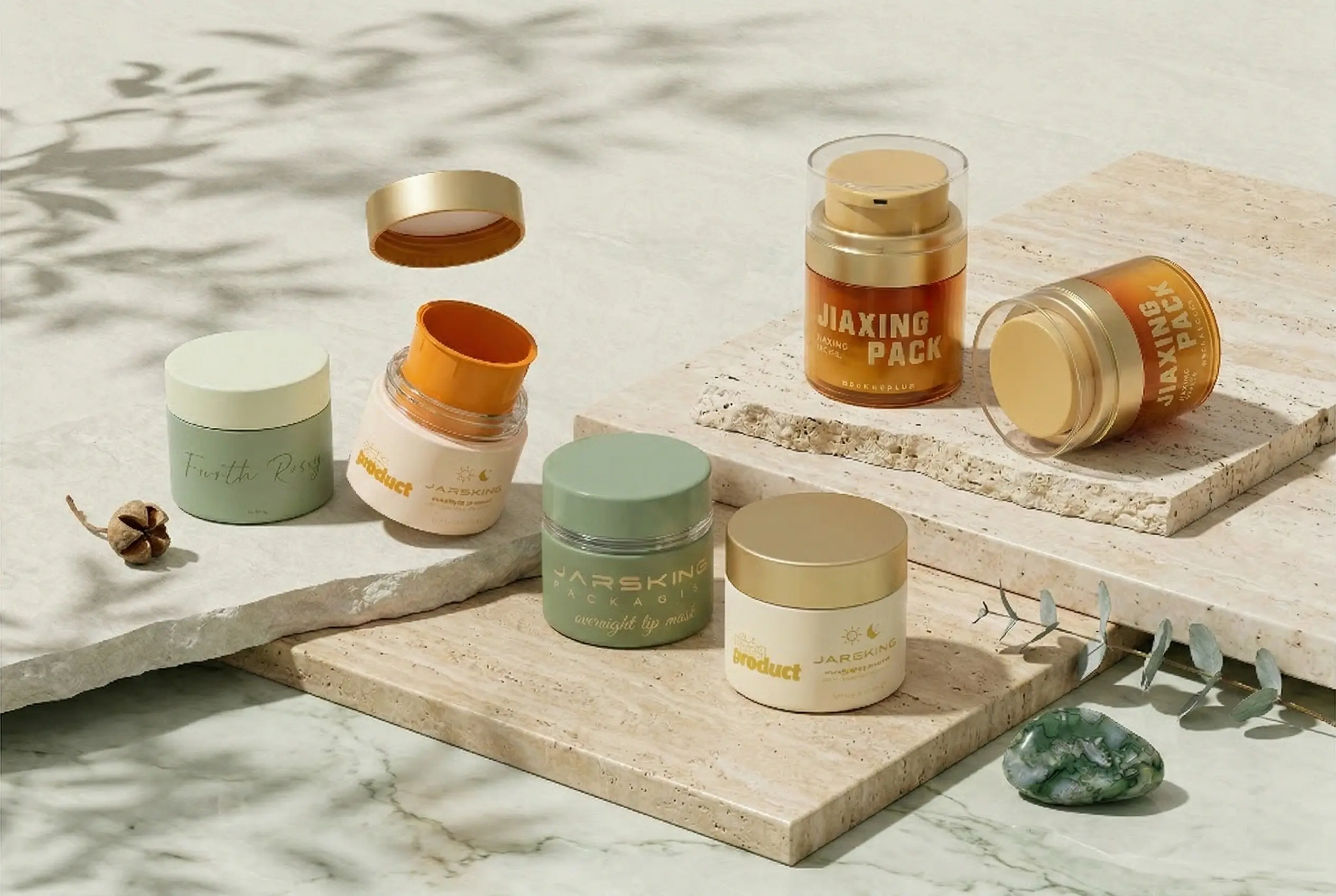
This is where many brands get genuinely tripped up. Material selection affects not just the look and feel of your jar, but its performance, its compatibility with your formula, its sustainability credentials, its shipping weight, and its cost structure. Here is an honest and thorough look at your main options.
Glass: The Timeless Classic
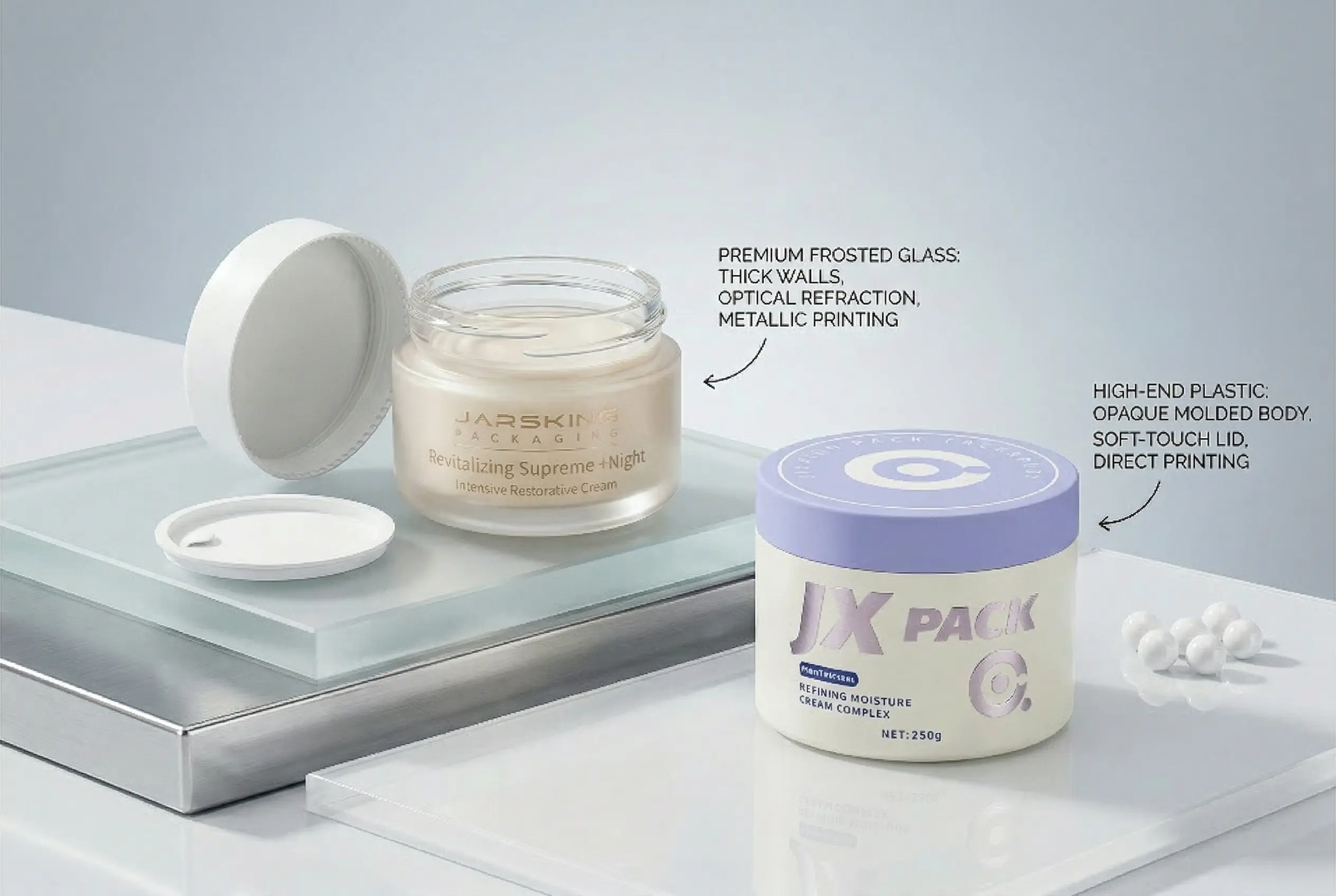
There’s a reason that luxury skincare — from La Mer to La Prairie to the most expensive serums at Sephora — almost universally comes in glass. Glass is chemically inert, meaning it will not react with even the most complex, acidic, or volatile formulations. It creates a completely impermeable barrier against moisture and oxygen. It’s endlessly recyclable without any loss of material quality. And there is something genuinely irreplaceable about the weight of a glass jar in your palm, the satisfying click of a heavy glass lid, the way light moves through a frosted or colored glass wall. It feels premium in a way that no other material quite manages to replicate.
Colored glass adds practical value beyond aesthetics. Amber glass blocks UV rays particularly effectively, protecting photosensitive ingredients like retinol and vitamin C from light-induced degradation. Cobalt blue filters different wavelengths. Frosted glass reduces light transmission across the spectrum while simultaneously creating an extremely elegant, spa-like visual. So when a brand chooses colored or frosted glass, they’re not just making a style decision — they’re making a stability decision too.
The honest trade-offs: glass is heavier, which means higher shipping costs and a more significant carbon footprint during transport. It’s breakable, which creates real challenges for e-commerce brands whose products spend time in cardboard boxes being thrown around by logistics networks. For a small indie brand, that level of commitment is a big ask. But for a brand that has found its audience and wants to communicate quality at the highest possible level? Glass is difficult to beat.
Perfect for: Luxury serums, premium face creams, retinol formulations, essential oil-based products, brands at the prestige tier.
Plastic: Practical, Versatile, and Getting Greener
Before you mentally file plastic under “boring and bad for the planet,” consider this: plastic has evolved considerably, and the right plastic jar can be both highly functional and genuinely beautiful. The three most important plastic types for cosmetic jars are worth understanding individually.
PET (Polyethylene Terephthalate) is crystal clear and looks remarkably similar to glass at a fraction of the weight. It’s shatter-resistant — a real and meaningful advantage for e-commerce brands whose packaging goes through sorting machines and delivery vans — and it’s one of the most widely recycled plastics in the world. Many brands who want the visual clarity of glass but can’t afford the breakage risk choose PET as their compromise, and it’s a genuinely good one.
PP (Polypropylene) is the workhorse of the cosmetic packaging industry. It’s durable, chemically resistant to an extremely wide range of ingredients including oils, waxes, and most preservative systems, and it’s cost-effective enough to use across every product tier. Most screw-top jar lids in the industry are made from PP, regardless of what the jar body itself is made from.
Acrylic (PMMA) gives you the glass-like clarity and visual weight of premium packaging at a lighter mass and typically a lower cost. It’s the go-to for double-walled jar constructions and for frosted or tinted effects in the mid-to-luxury tier. The caveat: acrylic is not as chemically resistant as PET or PP, and it is generally not recyclable through standard municipal streams — which is an increasingly relevant downside as sustainability scrutiny intensifies.
The most important sustainability development in the plastic jar space right now is post-consumer recycled (PCR) content. PCR plastic is made from recovered consumer waste — recycled water bottles, packaging materials, and similar — and incorporating it into your jars significantly reduces the environmental footprint of your packaging without any meaningful change in appearance or performance. Many leading suppliers now offer 30%, 50%, or even 100% PCR content options. If you’re going with plastic, make asking about PCR a standard part of your supplier conversation.
Perfect for: Body butters, scrubs, hair masks, travel sizes, e-commerce-focused brands, products at accessible and mid-range price points.
Aluminum: The Sustainability Star of 2026
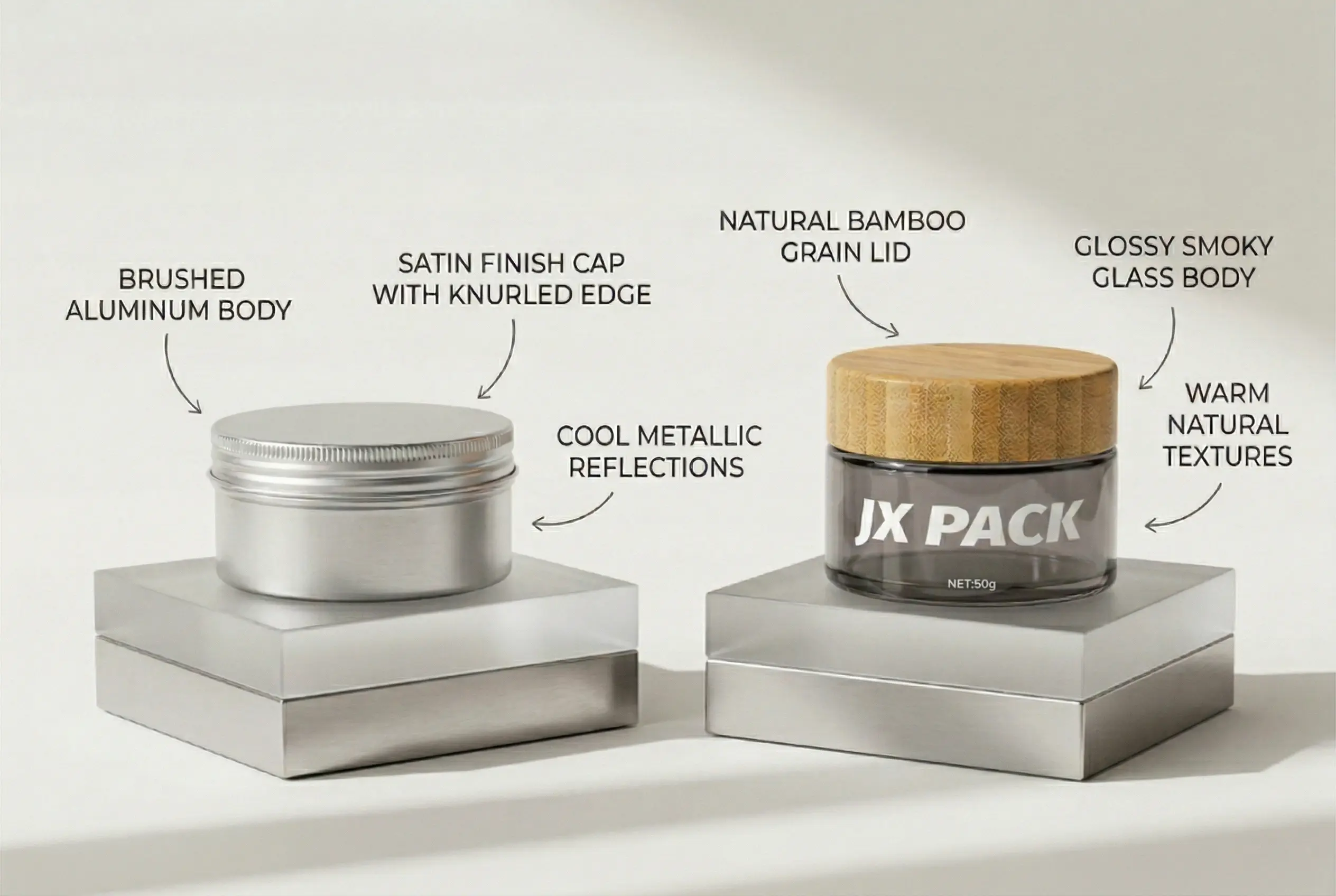
Aluminum is genuinely having its moment in cosmetic packaging right now, and it’s a well-earned rise. It’s lightweight, rust-resistant, and — this is the critical point — infinitely recyclable without any degradation in material quality whatsoever. Unlike most plastics, which can only travel through the recycling stream a limited number of times before the polymer chains break down, aluminum can go around the circular economy loop endlessly. That’s a genuinely powerful sustainability story, and brands that can tell it clearly have a compelling differentiator.
BeautyMatter’s 2026 packaging trend report identifies aluminum as one of the fastest-growing format choices in the beauty industry, adopted by brands across every price tier from artisan indie labels to prestige luxury houses. Aluminum jars can be finished in a polished silver, powder-coated in virtually any color, or given a matte texture that feels sophisticated and deliberate. An inner wax or lacquer lining protects your formulation from direct contact with the metal surface, making aluminum compatible with the vast majority of cosmetic formulations.
Perfect for: Natural and organic balms, solid cosmetics, lip care products, zero-waste brands, any brand with sustainability genuinely at the center of its identity and storytelling.
Bamboo, Bioplastics, and the Eco-Friendly Frontier
The sustainable packaging landscape is expanding rapidly, and a few emerging materials deserve attention even if they’re not yet mainstream:
Bamboo is most commonly used as a decorative outer shell around a glass or plastic inner container rather than as a structural material on its own. It communicates natural, sustainable values immediately and photographically, even when the functional inner jar is still conventional plastic. For brands whose customer base is particularly aligned with natural and wellness aesthetics, the visual cue bamboo creates is powerful.
Bio-based PE (sugarcane-derived polyethylene) is chemically identical to conventional polyethylene but produced from the ethanol extracted from sugarcane. Because sugarcane absorbs CO₂ as it grows, the material has a significantly lower net carbon footprint. It’s a drop-in replacement that requires no changes to your filling line or process.
Wheat straw composite can be molded into jar-style containers and produces a warm, matte, earthy aesthetic that suits natural beauty brands extremely well. It’s genuinely a beautiful material to hold.
Mushroom mycelium and paper pulp remain in early commercialization but represent the leading edge of fully compostable cosmetic packaging. A small number of pioneering brands are already using these materials to create completely compostable packaging for their entire product line.
The critical thing to understand in 2026 is that regulatory pressure and well-informed consumer skepticism are converging to make vague sustainability claims a real liability. “Eco-friendly” and “green” are no longer enough. Brands and their suppliers are now expected to provide concrete carbon metrics, defined and verified recycled content percentages, certified compostability data, and traceable supply chain documentation. When you’re choosing a sustainable material, make sure you can support the claim with real evidence — not just good intentions.
4. Lids, Closures, and the Details That Shape the Experience
The lid might feel like a secondary consideration, but it shapes the entire user experience more than most brands realize. A lid that’s difficult to open frustrates your customer at 6 a.m. A lid that doesn’t seal properly oxidizes your formula and generates returns. A beautiful, well-weighted lid elevates an ordinary jar into something that feels worth keeping on a countertop.
Screw-Top (Continuous Thread) Lids
The most universal closure for cosmetic jars. Continuous thread lids twist onto a matching neck finish and are available in smooth, ribbed, and dome profiles at every price point. They’re simple, reliable, and immediately familiar to every consumer who uses a cosmetic product — which is essentially everyone.
The ribbed variant deserves special mention for body care products: the textured grip surface makes opening and closing the jar significantly easier with wet or lotion-covered hands, which is almost always the context in which your customer is using the product.
Snap-On and Press-On Lids
Snap-on lids click onto a raised ridge around the jar neck and come off with a firm pull — no twisting. They’re the right choice for powder jars, loose pigment containers, setting powder compacts, and travel formats where access speed is more important than an airtight seal. The satisfying click of a snap-on lid closing is a tiny but meaningful sensory detail that good product designers pay attention to.
Inner Disc Liners and Foil Induction Seals
This is the genuinely underappreciated hero of cosmetic jar packaging. That thin disc that sits between the lid and the jar’s opening creates an airtight, tamper-evident seal that protects your formula during storage and shipping, and signals product integrity to your customer when they open it for the very first time. If you’re using a screw-top closure, always specify an inner liner — whether that’s a PE foam disc, a pulp board liner, or a foil induction seal — in your packaging brief. It’s a small detail that has an outsized effect on product quality and customer trust.
Dome Caps and Specialty Closures
Dome caps have a beautifully rounded convex profile that looks especially refined on round glass jars. They’re a favorite with prestige skincare brands for the sculptural quality they give a jar’s silhouette. Beyond the dome, there’s a whole world of specialty closures worth knowing: magnetic closures for high-end gift packaging, mirror-equipped lids for compact-style jars, integrated spatula lids for eye cream and treatment products, and — increasingly relevant in 2026 — lids with embedded NFC chips that connect the physical jar to a digital brand experience.
5. Getting the Size Right
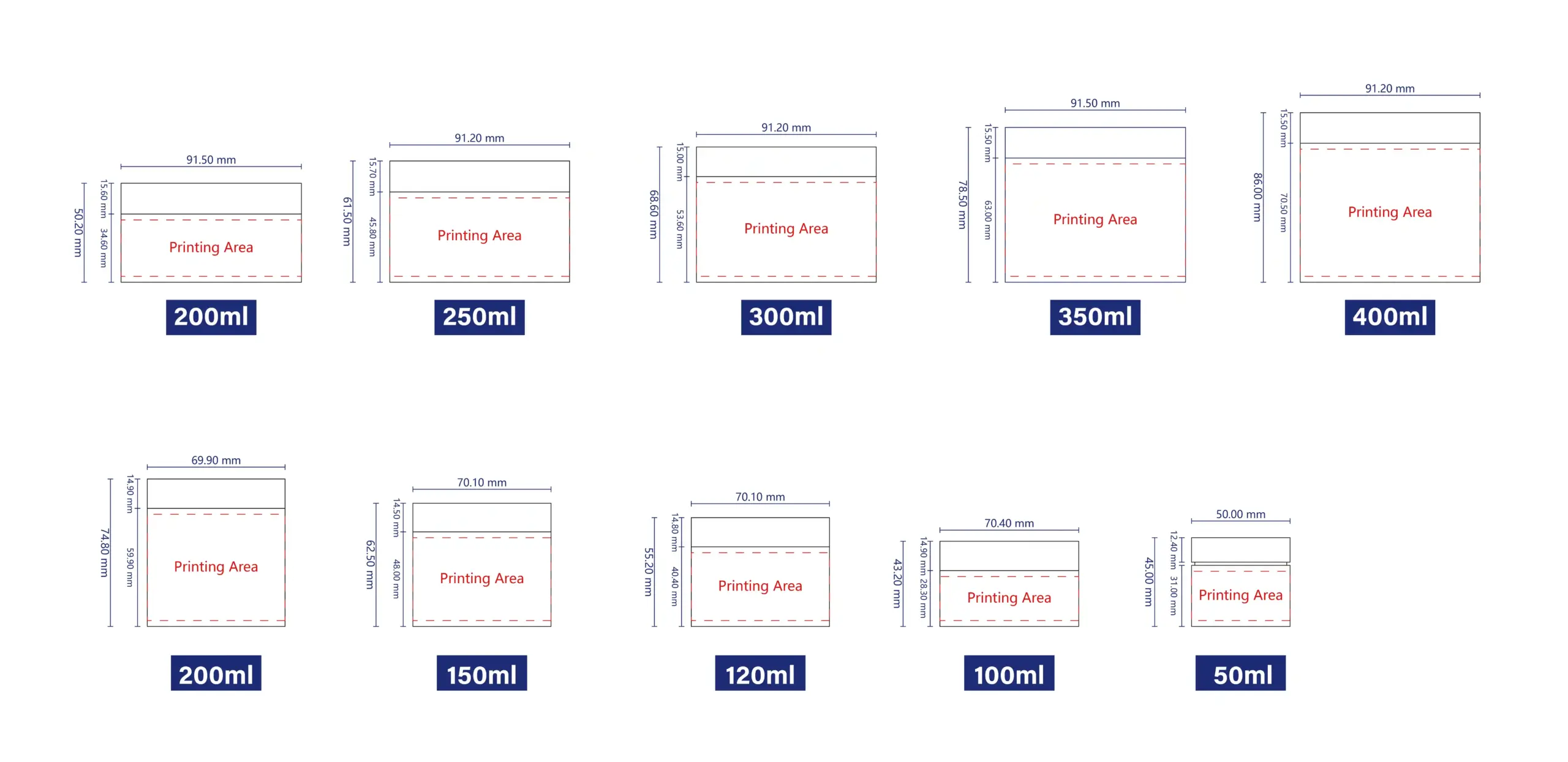
Jar sizing is a more strategic decision than it might initially appear. The right size is where your formulation’s dosage requirements, your target consumer’s usage habits, your price point architecture, and your shelf or e-commerce presence all intersect.
Here’s a practical size framework:
5ml – 15ml: Sample sizes, eye creams, highly concentrated treatments, cuticle care, travel pots — small sizes that drive trial and travel repurchase
30ml – 60ml: The undisputed sweet spot for facial skincare, where most full-size face creams and eye treatments sit. Approachable enough not to feel intimidating, substantial enough to justify a meaningful price
100ml – 200ml: Body moisturizers, hair masks, salon-format skincare products, products used in more generous applications
250ml – 500ml: Professional use, spa-size containers, bulk formulations for practitioners and wholesale buyers
The key calculation to make for any jar size decision: how much does your customer use per application, and how often? A 50ml jar of a twice-daily face cream should last approximately 60 days at typical usage. A 30ml eye cream used once nightly might last 90 days. Getting this math right is directly tied to your repurchase rate, your subscription model design, and the price your customer feels is fair for what they’re getting.
6. Regulatory Compliance: What You Need to Know
Every cosmetic jar that comes into contact with your formulation must meet applicable material safety standards in your target markets. This area is non-negotiable, and getting it wrong can result in product recalls, regulatory fines, and lasting reputational damage.
The most critical compliance considerations for 2026:
BPA-free certification for all plastic jars intended for skin-contact use — this should be a baseline requirement from every supplier you work with, not a premium option
Heavy metal testing (lead, cadmium, chromium VI) for all decorative coatings, pigmented finishes, and metallic elements — particularly important for jars sold to children or used in sensitive skin formulations
REACH compliance for SVHCs (Substances of Very High Concern) across any EU-bound packaging — your supplier should be able to provide a REACH compliance declaration
California Proposition 65 compliance for any product sold in California, which covers a broad list of chemicals known to the state to cause cancer or reproductive harm
FTC Green Guides compliance for any recyclability, compostability, or recycled content claims made on US packaging — the FTC updated its Green Guides most recently in 2024 and has increased enforcement activity since
7. 2026 Trends Shaping the Cosmetic Jar Market
The cosmetic jar category is in a genuinely interesting moment of evolution in 2026, shaped by converging forces of sustainability regulation, ingredient transparency, and sensory innovation.
Aluminum’s rise is accelerating. BeautyMatter’s 2026 packaging trend report identifies aluminum tins and jars as one of the dominant sustainable format stories of the current period, with adoption spreading from indie naturals into prestige skincare. Its infinite recyclability and premium tactile quality make it a rare case of sustainability and luxury coexisting naturally.
Refillable systems are becoming expected, not exceptional. What was a niche sustainability proposition three or four years ago has matured into a mainstream expectation from an increasingly significant portion of beauty consumers. Brands across every tier are launching refillable jar systems — a durable outer vessel purchased once, with cartridge or pod refills at reduced cost and packaging footprint. The model simultaneously builds brand loyalty and reduces waste, which is a combination that is hard to argue with commercially or ethically.
Smart packaging is arriving for real. QR codes embedded in labels have been around for years, but 2026 is seeing genuine proliferation of NFC chips and RFID tags integrated directly into jar lids. A consumer taps their phone to a jar lid and is taken directly to a batch-specific ingredient sourcing page, a personalized usage routine, a refill ordering flow, or a loyalty program. The physical jar is becoming a persistent connection point between brand and consumer, not just a one-time purchase.
Transparency is the new luxury. In a market where consumers are increasingly reading ingredient labels, following cosmetic chemists on social media, and running their purchases through apps that evaluate ingredient safety, transparency is no longer just a nice-to-have. The brands that are winning right now are the ones that communicate openly — about their ingredients, their packaging choices, their supply chain, their environmental footprint. Your jar and its decoration can actively support this story or quietly undermine it.
Minimalism with intention. The dominant visual direction for cosmetic jars in 2026 is purposeful restraint — clean forms, considered materials, limited color palettes, and confident type-forward design. The brands that are standing out are not the ones with the most complex packaging, but the ones that have had the discipline to simplify and the confidence that their formula can carry the weight of a minimal presentation.
8. Quick Reference: Matching Product to Jar
| Product Type | Best Jar Style | Best Material | Key Closure |
| Luxury face cream | Round or square straight-sided | Glass or acrylic | Dome lid with inner disc liner |
| Body butter / scrub | Wide-mouth straight-sided | PET or PP plastic | Ribbed screw cap for easy grip |
| Lip balm / solid perfume | Low-profile salve jar | Aluminum or glass | Snap-on or metal screw top |
| Eye cream | Small double-walled (5–15ml) | Acrylic or glass | Dome lid with spatula |
| Loose powder / pigment | Wide, flat, low-profile jar | PP plastic or glass | Snap-on lid with sifter insert |
| Retinol / vitamin C cream | Airless jar or UV glass | Amber glass or airless PP | Airless piston or UV-sealed screw |
| Natural / zero-waste balm | Tin or aluminum jar | Aluminum | Friction-fit or metal screw top |
| Whipped body mousse | Wide-mouth straight-sided | PP or PCR plastic | Wide dome screw cap |
| Apothecary / herbal treatment | Apothecary round | Amber or frosted glass | Lug cap or smooth screw top |
| Luxury solid face mask | Square straight-sided | Double-walled acrylic | Magnetic dome closure |
9. Your Pre-Order Checklist
Before placing any cosmetic jar order — whether it’s your first 5000-unit stock run or a 50,000-unit custom production — run through this checklist to make sure nothing has been missed:
- Formulation compatibility confirmed through real stability testing with the actual jar
- Jar size validated against fill weight, formulation density, and expected usage duration
- Material selected based on ingredient chemistry, sustainability goals, and target price tier
- Lid style confirmed with inner liner or seal specification for airtight preservation
- Decoration method selected and print-ready artwork prepared to supplier specifications
- MOQ and production lead time aligned with your launch date and inventory financing
- Sample drop test, fill compatibility test, and full visual evaluation completed
- Regulatory documentation — BPA-free, REACH compliance, FDA material safety data — obtained from supplier in writing
- Incoterms, payment terms, quality claim process, and reorder lead times agreed in writing
- Any sustainability claims reviewed against FTC Green Guides (US) or EU Green Claims Directive (Europe)
- Customs classification (HTS code) confirmed with your freight forwarder to avoid import surprises
10. The Jar Is Your Brand
Here’s the truth nobody tells you when you first start building a beauty brand: the jar is not just a container. It is the physical embodiment of everything you believe about your product and your customer. The material makes a statement. The weight makes a statement. The texture of the lid, the sound it makes when it closes, the way the light catches the finish on the glass — all of it communicates something, whether you’ve intentionally designed it to or not.
Getting the jar right is one of the most satisfying decisions in the entire product development process — because when you finally find the one that fits, you feel it immediately. Everything clicks into place. The product has a home. The brand has a face. The formula finally has a package that does it justice.
Spend the time on this decision. Test samples rigorously. Ask hard questions of your suppliers. Visit trade shows and hold jars in your hands before you commit. Don’t treat packaging as a cost to be minimized — treat it as a brand investment to be optimized.
Because the brands that endure in the beauty industry are almost always the ones where someone cared deeply about every detail — including the jar.
FAQs
Which cosmetic jar material is the most hygienic?
Glass and aluminum are the most hygienic options because neither is porous and neither will leach chemicals into your formulation over time. For any jar where customers are repeatedly dipping fingers directly into the product, pairing your container with an inner disc liner — and including a spatula with the product — significantly reduces the risk of contamination and extends shelf life.
Are plastic cosmetic jars safe for skin care products?
Yes, when the right plastic is matched to the right formulation. PET and PP plastics are safe for the vast majority of cosmetic formulations. Always request BPA-free certification from your supplier, and confirm compatibility through stability testing before committing to production. Avoid acrylic with alcohol-heavy or high-pH formulations, as these can cause clouding or degradation over time.
How do I know if my formulation is compatible with a specific jar material?
You run a stability test — and there’s really no shortcut around this. Fill the jar with your actual formula, seal it, and store it at accelerated conditions (typically 40°C and 75% relative humidity) for four to eight weeks. Check regularly for discoloration, separation, odor changes, warping, or seal failure. If anything looks or smells off after the test, the material is not the right fit for your product, no matter how beautiful the jar looks.
What size cosmetic jar should I use for a face cream?
The 30ml to 60ml range is the industry sweet spot for full-size facial skincare. A 50ml jar of a rich face cream used twice daily will typically last a customer between 45 and 90 days — long enough to experience real results and motivate a repurchase, but not so large that the price feels intimidating. For eye creams and targeted treatments, 15ml to 30ml is more appropriate given the smaller application area and higher ingredient concentration.
What decoration method gives cosmetic jars the most premium look?
Embossing or debossing — where your logo or brand mark is pressed directly into the jar wall or lid — is the most permanent and premium form of decoration available. It requires custom tooling but creates a jar that feels entirely proprietary. Hot stamping with gold or silver foil is a close second and can be applied to both stock and custom jars at a more accessible cost. For maximum design flexibility at scale, full-wrap sleeve labels offer photography-quality printing that rivals the most elaborate custom jar decoration.
What cosmetic jar trends should beauty brands pay attention to in 2026?
Three trends stand out right now. First, aluminum jars and tins are being adopted broadly across price tiers because of their infinite recyclability and premium feel — it’s a rare case where sustainability and luxury genuinely align. Second, refillable jar systems are moving from niche to mainstream, building customer loyalty while meaningfully reducing packaging waste. Third, purposeful minimalism is defining the most compelling visual direction — clean forms, restrained palettes, and confident simplicity. The brands winning shelf space and social feeds in 2026 are the ones that have the discipline to do less, better.