
1. Why Cosmetic Jar Selection Is a Strategic Decision, Not a Logistics One
Here’s the uncomfortable truth most packaging conversations avoid: consumers don’t evaluate a jar and a formula separately. They experience them as a single, unified product.
The weight of a container creates a quality signal. The resistance of the lid creates a satisfaction signal. The texture of the surface creates an emotional signal. These judgments happen in the first three seconds of physical contact — long before rational analysis kicks in. Neuroscience researchers studying purchase behavior call this the haptic premium effect: the measurable tendency for heavier, better-textured objects to be rated as higher quality, regardless of their actual contents.
This isn’t abstract psychology. It’s the mechanical explanation for why two identical face creams — one in a thick acrylic jar with a weighted cap, one in a standard plastic tub — can command price points that differ by 300%.
The implications for beauty brands are straightforward: your jar isn’t just holding your product. It’s continuously arguing, in every customer’s hands, that your product is worth what you’re charging for it.
Get that argument wrong, and even a genuinely excellent formula can feel ordinary.
2. Face Cream Jars: The Category Where Packaging Pressure Is Highest
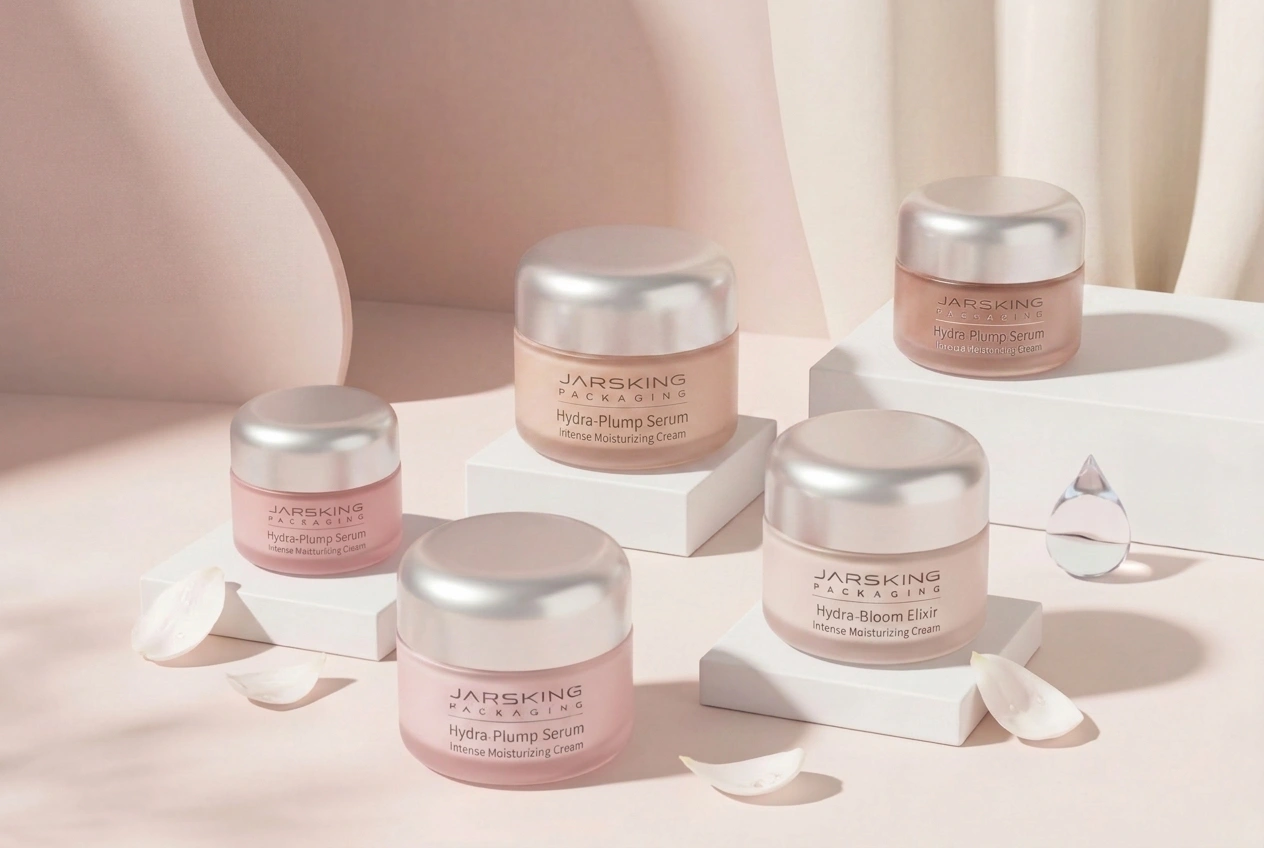
Face moisturizers are the most competitive shelf in skincare. Consumers have handled thousands of face cream jars. They’ve developed finely tuned instincts for what premium feels like — and what doesn’t quite make it.
Thick-Wall Acrylic: Engineering the Illusion of Glass
Thick-wall acrylic has become the dominant material for luxury face cream packaging for a reason that has nothing to do with cost savings: done well, it delivers a sensory experience that rivals glass without the fragility. The optical depth of high-quality acrylic, combined with the weight of a thick wall, creates a premium tactile impression that many consumers cannot distinguish from glass in blind tests.
What makes acrylic particularly powerful as a branding canvas is its decoration flexibility. Electroplating, hot stamping, UV matte and gloss textures, silk-screen printing — all of these bond cleanly to acrylic surfaces. A brand can move from cold Scandinavian minimalism to warm Parisian luxury simply by changing the finish language on the same base structure.
The one honest limitation: acrylic is not recyclable in most municipal systems. For brands building a sustainability narrative, this creates a tension worth planning around rather than ignoring.
Frosted Glass: The Visual Language of Trust
Frosted glass has earned its position as the signature format for clean beauty, organic skincare, and dermatologist-positioned brands. It works because the aesthetic carries a specific semantic weight: the soft diffusion of a frosted surface communicates nothing to hide. It reads as transparent even when it isn’t fully transparent. For brands whose identity is built on ingredient integrity and formulation trust, this visual signal is extraordinarily well-aligned.
Glass is also chemically inert in a way that no plastic fully replicates. It will never interact with a skincare formula — no migration, no leaching, no compatibility questions. For brands making clinical or therapeutic claims, this material certainty has real value.
The practical trade-offs are real: glass is heavier, more expensive to ship, and breaks. Brands that choose glass need to build those logistics realities into their margin structure from the start.
Airless Jars: Protecting What You’re Selling
If your formula contains retinol, vitamin C, peptide complexes, or any other oxidation-sensitive active, an open-top jar is working against your product efficacy every single day it’s in a customer’s bathroom. Each time someone opens the jar, oxygen and ambient bacteria enter the formula. Over weeks and months, the actives that justify your price point are quietly degrading.
Airless jar systems solve this by eliminating the air headspace entirely and preventing contamination on each use. For brands making efficacy claims — clinically proven results, visible improvement in 28 days — switching to airless isn’t just a packaging upgrade. It’s protecting the credibility of the claim itself.
The counterintuitive business case: airless packaging allows brands to use lower preservative loads, which increasingly appeals to consumers reading INCI lists. Less preservative need + better active stability + cleaner ingredient story. It’s a compounding benefit.
Recommended sizes: 30ml (travel/trial), 50ml (hero SKU), 100ml (repurchase size)
3. Body Butter & Scrub Jars: Packaging That Works in the Shower
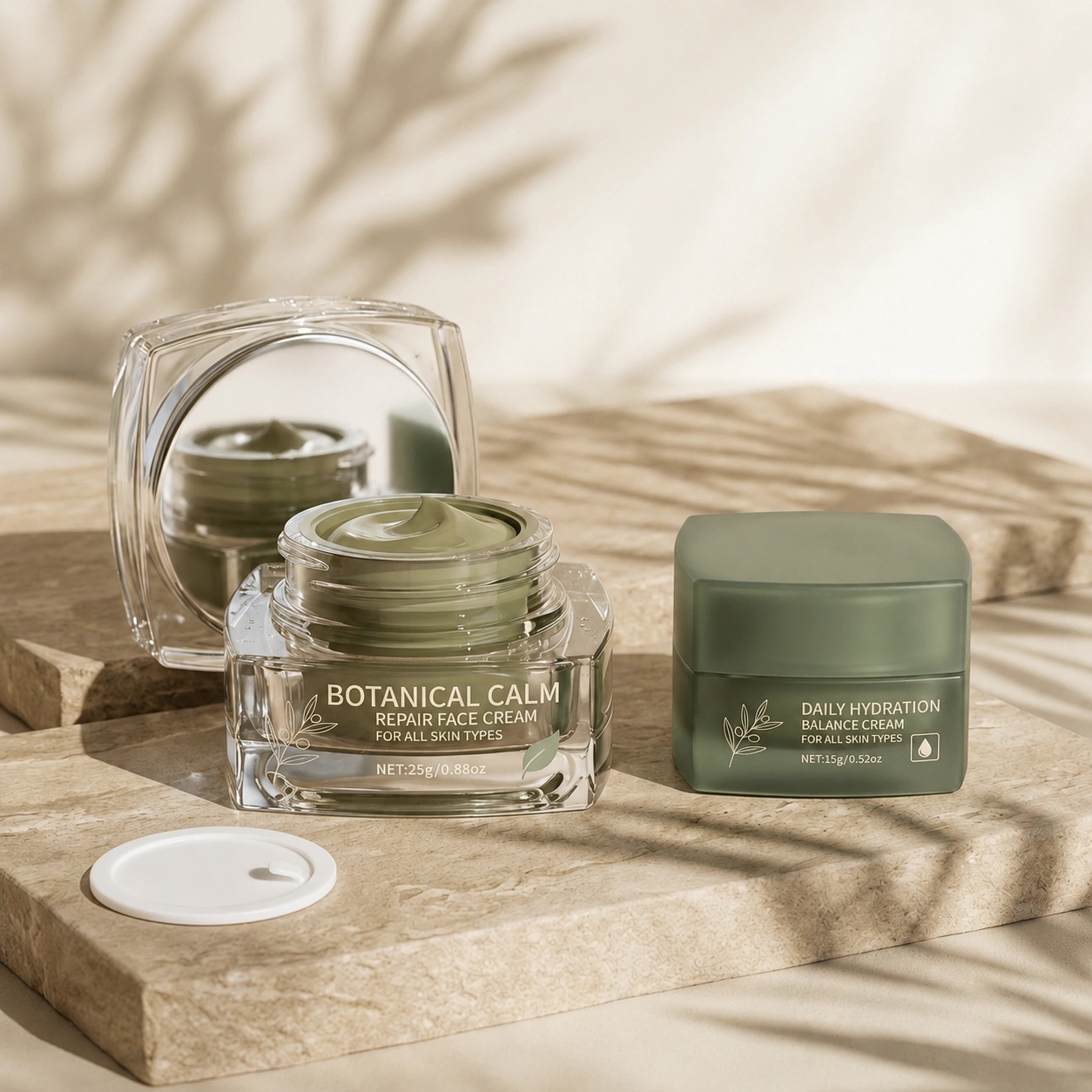
Body care packaging operates in the harshest home environment any cosmetic jar will ever face: a steam-filled bathroom, with both hands wet, usually one hand busy, and no patience for difficult packaging.
The wide-mouth opening is the single most important structural feature in this category — more important than material choice, more important than finish, more important than any decorative decision. If a customer has to work to get product out of a body butter jar, they’ll use less per application, finish the product more slowly, and register a low-grade friction with your brand every time they use it. That friction accumulates. It shows up in reviews. It shows up in repurchase rates.
PET jars handle the body care category well for most brands. They’re lightweight at the 200ml–300ml fills typical for body products, crystal clear for showcasing product color and texture, and impact-resistant enough to survive being knocked off a wet shower shelf. The transparency deserves particular attention: a rich golden shea butter, a deep brown coffee scrub, or a pastel sugar scrub with visible botanicals is a product that sells itself when visible. Don’t hide it in an opaque container.
PP jars are the right call when formulation chemistry demands it. High essential oil concentrations, acidic pH exfoliants, enzyme-based treatments — these can degrade PET over time in ways that aren’t immediately visible but affect structural integrity. PP handles aggressive formulations without compromise.
One underappreciated detail: a matte or lightly textured exterior finish provides measurable grip improvement when hands are wet. This is a genuine functional benefit, not just an aesthetic choice. In a product category where containers are routinely handled under shower conditions, it reduces drops and improves the overall use experience.
Recommended sizes: 100ml, 200ml, 250ml, 300ml
4. Eye Cream Jars: Small Container, Enormous Stakes
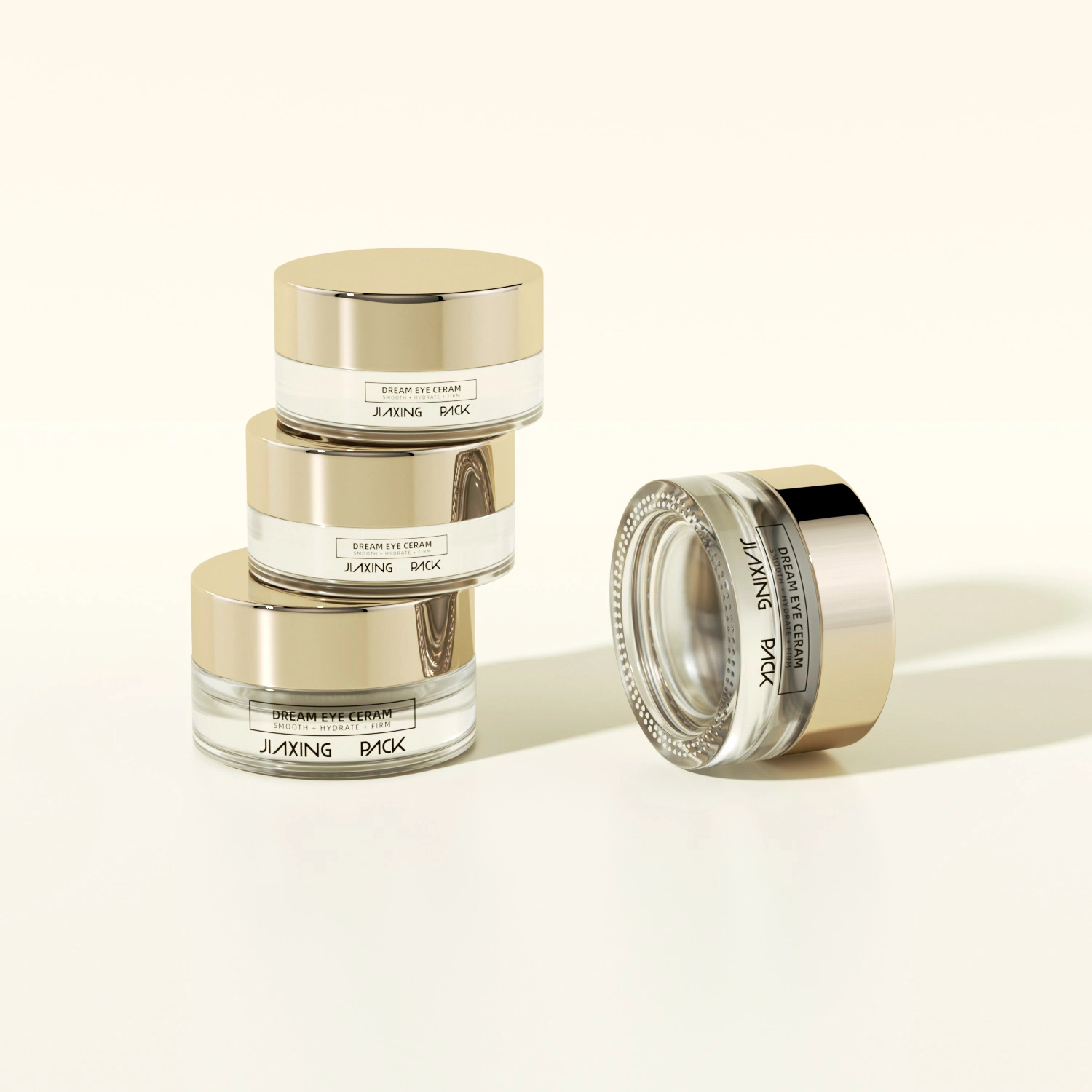
Eye creams carry the highest margins in most skincare lines. A 15ml jar retailing at $80, $100, or $150 is entirely normal in premium skincare — and at those price points, every packaging decision is being held to a different standard.
The compact sizing of eye cream jars is deliberate perception architecture. Small, heavy, meticulously finished containers communicate concentration, precision, and rarity in ways that larger formats cannot. The psychological principle is simple: scarcity signals value. A 10ml jar that feels like it was carved from solid material will consistently be rated as more efficacious than a 50ml tub, regardless of formula content.
One thing many brands discover too late: standard open-top jars are actively problematic for eye care formulas. Eye treatments carry disproportionately high concentrations of sensitive actives — retinol derivatives, peptide complexes, caffeine, growth factors. These degrade significantly faster under repeated air and contamination exposure. An airless eye cream jar that maintains formula potency from first to last use isn’t just better packaging. It’s a product quality decision with real clinical implications.
The spatula or mini-scoop detail is worth more attention than it typically receives. Beyond preventing contamination, it creates a ritualistic, deliberate application behavior that consumers associate with professional-grade skincare. It slows down the use moment. It makes customers feel like they’re doing something precise and intentional — which is exactly the emotional territory that justifies a premium eye cream price.
Key features for premium eye cream jars:
Airtight inner seal or airless mechanism
Spatula or precision applicator
Tactile weight disproportionate to size
Metallic, frosted, or electroplated finish
Dimensions that feel architectural in the hand
Standard sizes: 5ml, 10ml, 15ml
5. Lip Balm & Lip Mask Jars: Where Packaging Became the Product
Something shifted in lip care packaging about four years ago, and it hasn’t shifted back. Lip masks, tinted balms, and overnight lip treatments stopped being commodity items and became collectibles — objects people display on their vanity, carry visibly in clear bags, and photograph deliberately for social content.
For beauty brands, this shift has a specific practical implication: in lip care, the packaging is part of the value proposition. A beautifully made 10ml acrylic lip jar that looks like a tiny jewel box isn’t just pretty. It’s earning its cost in social visibility, gift appeal, and the customer’s decision to carry your product publicly rather than keep it in a drawer.
Mini acrylic jars (5ml–15ml) dominate the premium lip care segment for this reason. The optical depth and surface quality of acrylic at small scales creates an almost gem-like appearance that translates extraordinarily well to photography. Pastel tints, transparent finishes that show the product’s color, and metallic caps all amplify this effect.
The functional detail that matters most in lip care and is most often neglected: closure quality. Lip jars live in handbags. They get tumbled, compressed, inverted, and forgotten in coat pockets. A closure that leaks under these conditions creates a messy, brand-damaging experience. The torque resistance and snap-fit quality of the lid is not a secondary consideration — it’s a customer satisfaction variable.
Standard sizes: 3ml, 5ml, 10ml, 15ml
6. Hair Mask Jars: The Honest Workhorse of Haircare
Hair masks are functional products. Customers don’t typically photograph them, display them on vanities, or bond with them emotionally the way they might with a face cream or eye treatment. They use them, rinse them away, and replace them when they run out.
This functional reality doesn’t mean packaging doesn’t matter — it means the packaging priorities shift toward durability, usability, and brand professionalism rather than decorative luxury.
PP jars remain the most logical choice for this category. Hair mask formulas frequently contain high concentrations of essential oils, protein complexes, chelating agents, and acidic conditioning actives — a chemical profile that PP handles with consistent stability over the full shelf life. The structural rigidity of PP also holds up under repeated exposure to shower heat in a way that some other plastics don’t.
The most successful hair care brands tend to lean into minimalist design for exactly this reason: clean typography, matte neutral finishes, clear ingredient hero callouts. The message is quiet professional confidence — this formula does what it says, and the packaging doesn’t need to shout about it. That aesthetic telegraphs salon credibility, which is the highest aspiration point for most premium hair care brands.
Wide-mouth design matters here too, for the same reason it matters in body care: hair masks are applied generously, with fingers, to wet hair. Any packaging that makes this application awkward will frustrate customers every wash day.
Recommended sizes: 200ml, 300ml, 500ml
7. Sleeping Mask Jars: Packaging for the Self-Care Ritual Economy
Sleeping masks occupy a unique emotional space in modern skincare. They’re applied at the end of the day, in a quiet, deliberate moment before sleep. They’re associated with recovery, luxury, and the kind of intentional self-care that consumers increasingly treat as a personal value rather than just a beauty habit.
This emotional territory makes sleeping mask packaging one of the most brand-defining choices in skincare. The jar sitting on a nightstand is seen every morning. It’s photographed in bedtime routine content. It becomes part of the aesthetic landscape of someone’s private space — which is an intimate brand presence that few other product categories can claim.
Double-wall acrylic jars have become the signature format for this category because they create an unusually compelling visual illusion: the air gap between inner and outer walls gives the jar an appearance of exceptional material depth and thickness, making even modestly priced products look architecturally premium. The nightstand effect is real — a beautifully proportioned double-wall jar in a warm peach or dusty lavender finish genuinely elevates the room it sits in.
The inner lid detail deserves specific attention. Sleeping masks are left open overnight in a bedroom — an environment with ambient dust, varying humidity, and temperature fluctuations. An inner seal or membrane lid protects the formula between uses, prevents the top layer from drying out, and communicates to the customer that you’ve thought carefully about their experience all the way through.
Key features for sleeping mask jars:
Double-wall or thick single-wall acrylic construction
Inner sealing membrane
Wide mouth for spatula or finger application
Proportions that look intentional on a nightstand
Finish and color that photographs well in natural light
8. Cosmetic Jar Materials: Choosing What Actually Fits Your Product
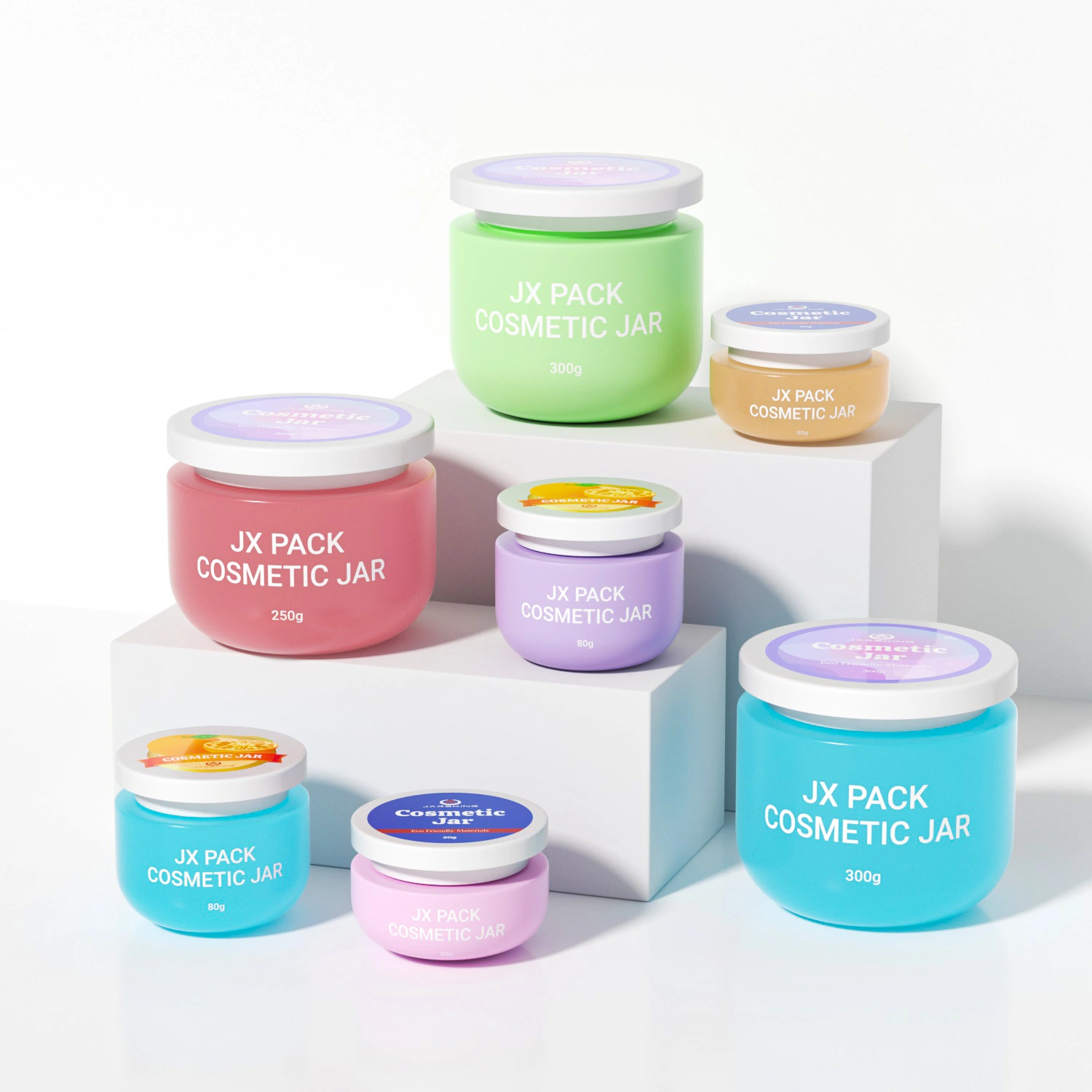
Every material carries a different set of trade-offs. The right choice depends not just on aesthetic preference, but on formula chemistry, target consumer, price positioning, sustainability commitments, and shipping logistics.
| Material | Best Product Fit | Core Strength | Real Trade-Off |
|---|---|---|---|
| Thick-wall Acrylic | Luxury face creams, eye creams | Premium aesthetics, lightweight, customizable | Limited recyclability |
| Frosted Glass | Organic skincare, clean beauty | Chemical inertness, recyclable, permanent feel | Weight, breakage, shipping cost |
| PET | Body care, hair care, mass market | Transparent, lightweight, cost-effective | Lower luxury perception |
| PP | Hair masks, scrubs, active formulas | Chemical & heat resistance, structural durability | Limited premium finish options |
| PCR Plastic | Sustainable brand positioning | Reduces virgin plastic, credible eco-claim | Color variability, slight cost premium |
| Airless Systems | Active serums, eye creams, anti-aging | Formula protection, contamination prevention | Higher unit cost, limited sizes |
One material trend worth watching closely through 2026: PCR (Post-Consumer Recycled) content requirements are moving from voluntary brand choice toward regulatory expectation in the EU and several Asian markets. Brands that have already incorporated PCR into their packaging will be ahead of compliance timelines — and ahead of the consumer expectation curve that typically precedes regulation.
9. Customization: The Difference Between Packaging That Looks Good and Packaging That Is Unmistakably Yours
There’s a meaningful gap between packaging that looks polished and packaging that is so distinctly recognizable that customers could identify your brand from a shelf photo cropped to show only the jar.
The second kind requires deliberate customization investment. And it pays back in ways that are difficult to fully quantify but very easy to observe: higher repurchase rates, stronger social sharing, easier retail sell-in, more defensible brand positioning against competitive pricing pressure.
The highest-impact decoration techniques:
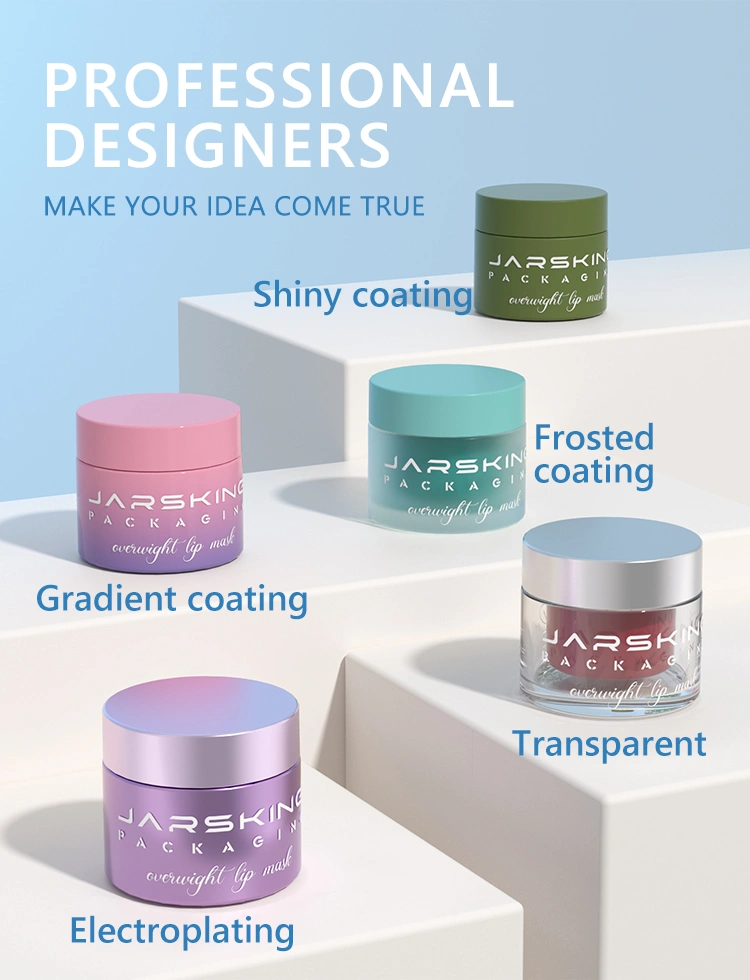
Electroplating creates mirror-finish metallic surfaces that are extraordinarily eye-catching in retail environments and photograph with immediate visual authority
Hot stamping delivers genuine metallic gold or silver effects — the warm, pressed-foil quality reads as premium in a way that printed metallic inks simply don’t replicate
Frosted UV coating creates selectively matte or satin areas on otherwise glossy surfaces, enabling sophisticated contrast work within a single piece
Custom color matching — Pantone-matched jar bodies in brand-specific colors are increasingly the baseline expectation for premium skincare lines rather than a luxury add-on
Color strategy deserves more deliberate thought than most brands give it. The dominant palette in 2025–2026 skincare packaging runs toward warm architectural neutrals — soft terracotta, sage green, dusty rose, warm ivory, and deep matte forest tones. These communicate the emotional qualities modern skincare consumers are seeking: calm, intentional, sophisticated, ingredient-honest. Cool clinical whites and hard luxury blacks are receding. Warm, quiet confidence is advancing.
10. Sustainable Packaging: What’s Real and What’s Marketing
Sustainability in beauty packaging has moved from differentiator to baseline expectation. Consumers are more literate about greenwashing than they were three years ago — a vague “eco-friendly packaging” claim lands with significantly less credibility than it once did.
The most credible sustainability signals available to beauty brands right now:
PCR content with verified percentages. “Made with 50% post-consumer recycled PET” is a specific, verifiable claim. It’s measurably better than virgin plastic, and consumers understand what it means. Pair it with visible certification and it becomes a genuine purchase driver for eco-conscious buyers.
Refillable systems. The strategic logic of refillable cosmetic jars is compelling beyond just waste reduction: a beautifully made outer jar becomes a permanent object the customer forms an attachment to — an anchor product — while refill pods reduce the ongoing packaging footprint. Brands that execute this well report that refill programs drive higher purchase frequency and stronger brand loyalty.
Honest trade-offs. Bamboo lid components create a distinctive natural aesthetic and appeal strongly to botanical or holistic brand positioning. The honest caveat: bamboo requires humidity-resistance treatment for bathroom use, and long-term durability varies by treatment quality and supplier. Brands that acknowledge trade-offs in their sustainability communication are consistently perceived as more trustworthy than brands that present every eco-choice as purely positive.
The consumer who is genuinely motivated by sustainability is also the most likely to research claims, read ingredient lists, and share opinions online. That audience rewards honesty and penalizes overstatement. Build your sustainability story on specifics.
11. How to Choose a Cosmetic Jar Manufacturer You Can Actually Build With
The manufacturer you choose isn’t just a vendor — they’re a long-term partner in your product’s physical existence in the world. The wrong choice creates a cascade of problems: delayed launches, quality inconsistencies, communication failures, and expensive re-tooling cycles that drain resources at exactly the moments when you need capital for growth.
The questions worth asking before committing to a packaging supplier:
Can they explain why, not just what? A manufacturer with genuine material expertise can tell you why a specific acrylic grade is or isn’t compatible with your formula, why a particular decoration technique will hold better long-term than an alternative, why a wall thickness recommendation is a formula protection decision rather than a cost-cutting suggestion. Suppliers who can only tell you what they produce are order-takers. Suppliers who can tell you why are partners.
Where does their decoration happen? In-house decoration capability means fewer handoffs, faster timelines, and single-point accountability for quality. Outsourced decoration means additional lead time and a gap in the quality control chain that no contract can fully close.
How do they handle problems? Every production run generates variance occasionally. Request information on how they communicate quality issues — proactively before shipment or reactively after you discover defects. The answer tells you more about the relationship than any RFQ response will.
What does their MOQ structure say about their business model? A supplier with flexible minimum order quantities is building for long-term relationships across customer growth stages. A supplier with very high fixed minimums is optimizing for production efficiency at the expense of partnership. Neither is wrong — but knowing which you’re working with matters for planning.
12. The Trajectory: Where Cosmetic Jar Packaging Is Heading
The direction of beauty packaging through the remainder of this decade is increasingly clear, and the underlying driver is consistent: consumers are becoming more sophisticated, more values-driven, and more visually articulate about what premium means to them.
Airless technology is moving from premium feature to category standard in active skincare. The efficacy argument is too compelling to remain optional as consumers become more ingredient-literate.
Refillable systems are expanding from luxury flagships into mid-market price points. The infrastructure — refill pods, retail return programs, direct-to-consumer replenishment subscriptions — is maturing rapidly.
Minimalist material honesty is replacing decorative maximalism as the dominant luxury aesthetic. Consumers increasingly read heavy ornamentation as overcompensation. Quiet, considered, architecturally beautiful packaging is the new premium signal.
PCR content requirements will shift from voluntary to regulated in major markets within the next several years. Brands building PCR into their packaging now are buying compliance lead time and consumer goodwill simultaneously.
The brands that treat cosmetic jar selection as a strategic priority — not a last-step logistics task — will be measurably better positioned to compete. Because in the end, the right jar doesn’t just hold your product. It holds your brand’s first and most persistent argument for why it deserves a place in someone’s life.
That argument is worth making carefully.
FAQs
What is the best cosmetic jar material for luxury face cream packaging?
Thick-wall acrylic is the most widely used material for luxury face cream jars because it delivers a glass-like aesthetic at a fraction of the weight and shipping cost. It accepts premium decoration techniques — electroplating, hot stamping, UV coating — with excellent results. For brands with an organic or clean beauty positioning, frosted glass is the stronger choice, as it carries inherent signals of ingredient transparency and recyclability that acrylic cannot replicate.
What's the difference between airless cosmetic jars and standard open-top jars?
A standard open-top jar exposes your formula to air, ambient bacteria, and moisture every time it’s opened. Over weeks of daily use, this can degrade oxidation-sensitive ingredients like retinol, vitamin C, and peptide complexes — meaning your customer isn’t getting the full efficacy of the product by week four or five. Airless jars eliminate the air headspace entirely and prevent contamination on each use, preserving formula potency from first to last application. For active skincare products, airless technology is a formulation protection strategy, not just a packaging upgrade.
What cosmetic jar size should I use for a hero face cream SKU?
50ml is the industry standard for hero face cream SKUs and has been for good reason. It balances the practical usage quantity most consumers need from a daily moisturizer with a jar footprint that photographs well, displays confidently on a retail shelf, and communicates premium value without feeling oversized. 30ml works well for travel sizes and trial products. 100ml suits value-tier or professional-use positioning where quantity per dollar is part of the brand narrative.
Why do body butter jars need wide-mouth openings?
Body butters and scrubs are typically used with wet or lotion-covered hands in a shower or bathroom environment. A narrow opening forces customers to work harder to access the product — which increases frustration, reduces the amount they use per application, and creates a low-grade negative association with your brand at every single use moment. Wide-mouth jars remove that friction entirely and make generous, comfortable scooping the natural default. In a category built on sensory pleasure, friction-free usability is not optional.
How do I choose between glass and acrylic for premium skincare jars?
The decision usually comes down to three factors: brand identity, logistics, and sustainability. Glass signals ingredient trust and chemical purity in a way acrylic cannot — it’s genuinely chemically inert and recyclable, making it the stronger material choice for organic, clinical, or clean beauty positioning. Acrylic wins on logistics: it’s lighter, far less likely to break in transit, and more versatile as a decoration surface. If your brand story centers on formulation integrity and natural values, invest in glass. If your brand is luxury-aesthetic-forward and ships broadly across retail channels where breakage risk is real, acrylic is the more practical premium option.
Are refillable cosmetic jars actually practical for beauty brands, or just a sustainability trend?
Refillable packaging has moved well past trend status — it’s becoming a viable business model particularly for premium and mid-market skincare brands. The mechanics are straightforward: a beautifully crafted outer jar becomes a permanent object that customers form emotional attachment to, while refill pods significantly reduce ongoing packaging waste and cost. Brands that have implemented refill programs report measurable increases in purchase frequency, because the refill replenishment behavior creates a more consistent, ritualized buying pattern than single-unit purchases. The main execution challenge is logistics — refill pod formats need to be convenient enough that customers actually use them rather than defaulting to buying a full new jar.